

I have seen good factories and risky ones. Verification is simple if you follow official records and match documents to shipping reality. This guide shows my exact steps.
I verify through GSXT for registration, MOFCOM foreign trade filing, GACC customs registration, and tax invoice checks. I request business license, foreign trade filing, customs registration, bills of lading, and sample declarations. I match names, codes, and ports.
This topic is urgent for heavy parts like track chains 1 and rollers. Mistakes cost time and money. I will keep this simple, practical, and focused on official checks.
What specific documents should I request to see their business license and export permit?
I ask for core legal documents first. Then I match names and codes on invoices and shipping papers. Simple checks catch most problems fast.
I request the Business License, Foreign Trade Operator Filing, GACC Customs Registration Certificate, sample Export Declarations for my HS codes, recent Bills of Lading, VAT e-invoices, ISO9001 or SGS certs, and any export agent agreement if used.
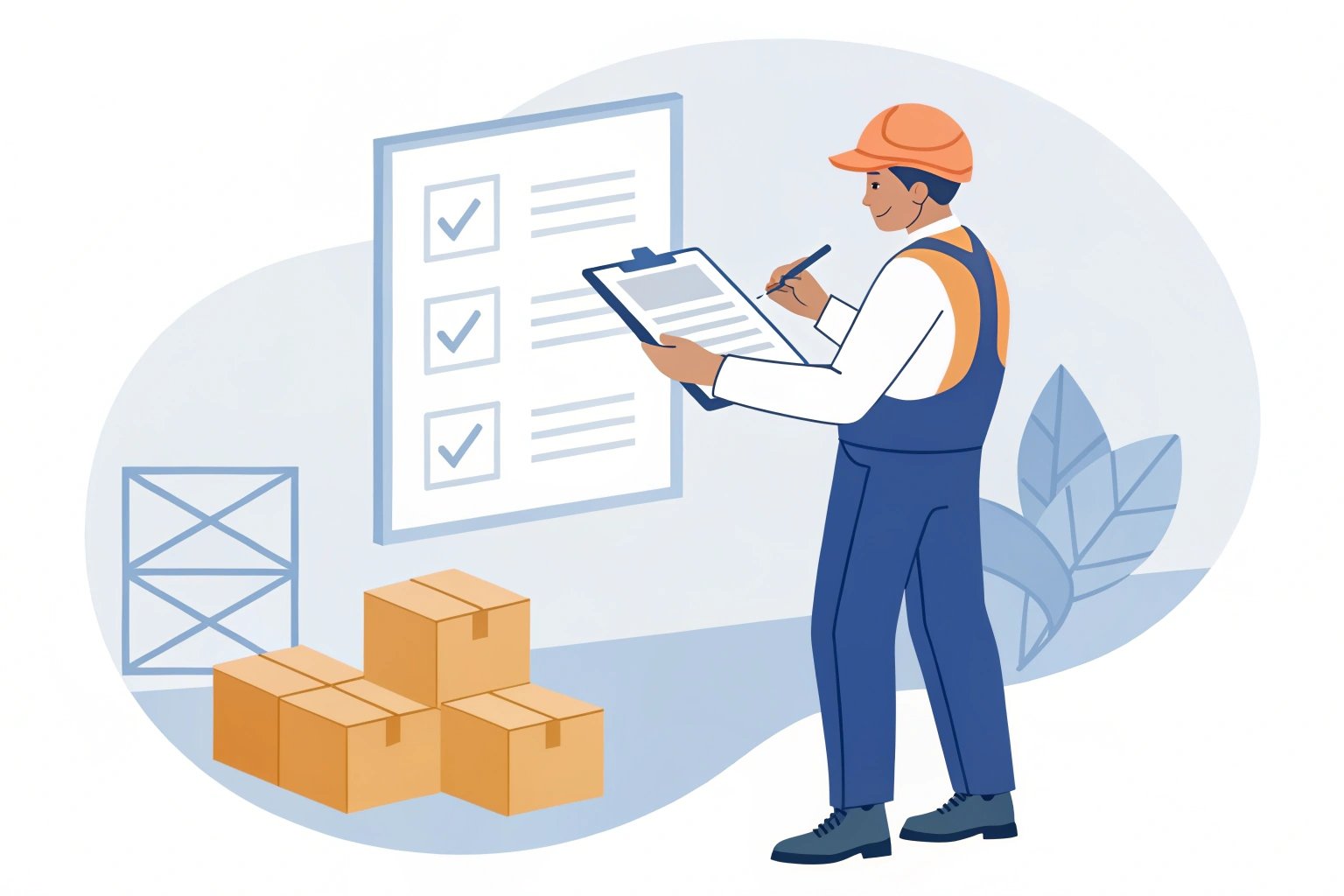
Step-by-step document pack
Start with the legal base. The Business License must show the 18-digit Unified Social Credit Code 2 (USCC), the legal name, the legal representative, and the registered address. The business scope should include manufacturing of machinery parts and import/export of goods. If these lines are missing, pass.
Next, confirm the Foreign Trade Operator Filing 3. Ask for the MOFCOM filing page or a copy of the registration certificate. Then, confirm GACC Customs Registration. Ask for the customs registration certificate or the customs code. Without this, the supplier cannot file export declarations under their own name.
Ask for sample Export Declarations for your HS codes 4, such as track rollers, sprockets, track chains, and track shoes. The exporter name must match the registered entity name on the Business License. Ask for recent Bills of Lading showing the supplier as “Shipper.” If a trading company ships, ask for the agent agreement. Ask for VAT e-invoices for recent sales. Verify each invoice online. Finally, request ISO9001 and SGS certificates. These support quality and compliance.
Match the bank account name exactly to the registered legal name. Reject personal accounts. Check the factory address on Google Maps. Request site photos and short videos with dates, showing machines, work-in-progress, and packing. Heavy parts need real plants, not empty offices.
Document anatomy and key fields to match
| Document | Why it matters | Key fields to match | Where to verify |
|---|---|---|---|
| Business License | Proves legal registration | USCC, legal name, address | GSXT.gov.cn |
| Foreign Trade Operator Filing | Proves export registration | Filing number, legal name | MOFCOM public query |
| GACC Customs Registration | Allows export declarations | Customs code, legal name | GACC portals |
| Export Declaration | Confirms real exports | Exporter name, HS code, date | Customs records |
| Bill of Lading | Confirms shipping role | Shipper name, port | Carrier verification |
| VAT e-invoice | Proves tax compliance | Legal name, tax number | Tax bureau portal |
| ISO9001/SGS certificates | Supports QC and compliance | Certificate number, scope | Issuing body |
| Bank details | Avoid fraud | Corporate account name | Bank confirmation |
Simple actions that save you trouble
- Require all files as clear scans with visible seals.
- Check dates, validity, and consistency across documents.
- Confirm the nearest port and typical trucking route for heavy parts.
- Keep a checklist and log each match.
Are there official government websites where I can check a Chinese company's registration status?
I never trust PDF files alone. I confirm each record in official systems. It takes minutes and it prevents loss.
I use GSXT for registration and status, MOFCOM for foreign trade filing, GACC for customs registration and exporter codes, and the tax bureau for VAT e-invoice checks. I add MIIT ICP BEIAN for website legitimacy.

Core official portals
The National Enterprise Credit Information Publicity System 5 (GSXT) is the first stop. Search by the 18-digit USCC. Confirm the legal representative, address, business scope, registration status, abnormal operations, administrative penalties, and serious violations. This page tells you if the company is active and if it has trouble.
Use MOFCOM’s Foreign Trade Operator public query to confirm the filing for exports. Confirm the legal name matches the Business License. Use GACC portals to check importer–exporter registration and customs codes. You can also verify customs declarations through your forwarder or broker.
For tax, verify VAT e-invoices through the tax bureau’s online system. Each invoice must match the legal name and tax number. If you see mismatched names, that is a red flag. For a company website, check the MIIT ICP BEIAN 6 record. A real Chinese site has an ICP record at the page bottom. The BEIAN number should resolve to the same company.
Official checks and what each site shows
| Portal | Purpose | Key data you can confirm | Action if mismatch |
|---|---|---|---|
| GSXT.gov.cn | Company registration and credit | USCC, name, status, penalties | Stop and clarify |
| MOFCOM filing | Export registration | Filing status, legal name | Ask for agent details |
| GACC registration | Exporter/importer code | Customs code, entity | Switch supplier |
| Tax bureau | Invoice authenticity | Legal name, tax number | Reject the order |
| MIIT ICP BEIAN | Website legitimacy | ICP number and registrant | Use caution |
What are the common red flags I should look for in a supplier's business documents?
I learned to spot bad signs early. These patterns repeat with risky suppliers. They show up in names, codes, seals, ports, and bank details.
I watch for mismatched USCC, blurred or expired licenses, missing export filing, personal bank accounts, Hong Kong shells for mainland shipments, wrong business scope, and BOL shipper names that do not match the registered entity.

The red flags that matter
A mismatched USCC across the Business License, contract, and invoice is a strong warning. A personal bank account or a corporate account name that does not match the legal name is another. Blurred seals, missing chop marks, or changed fonts on certificates are risky. Expired licenses or certificates show weak discipline.
Missing MOFCOM foreign trade filing or missing GACC customs registration means they cannot export under their name. If they push a Hong Kong shell company 7 name for shipments from mainland China, ask hard questions. It might be a shell to hide issues. Bills of Lading that list another trading company as shipper without a clear agent agreement are risky.
Watch for wrong business scope. If the scope does not include manufacturing of engineering machinery parts, the company may be a broker. Confirm the nearest port logic. Heavy undercarriage parts ship from ports close to the factory. Port stories that make no sense are red flags. Ask for site photos and videos with dates. If they refuse or send stock photos, take care. Check GSXT for abnormal operations, penalties, or serious violations.
Does having an export license guarantee that the supplier is the manufacturer?
I see this mistake often. People assume a license proves a factory. It does not. A license proves export ability, not manufacturing capacity.
I confirm manufacturing by on-site proof: machine lists, process photos, work-in-progress, and worker interviews. I match the factory address to maps. I ask for dated videos, sample export declarations, and BOLs. I verify agent chains when used.
How to separate exporter from manufacturer
An export license shows that a company can file export paperwork. It does not show that the company makes track chains, rollers, idlers, or sprockets.
Confirm who makes the parts. Ask for a machine list: CNC lathes, machining centers, induction hardening equipment 8, forging presses, and test rigs. Ask for process flow photos: cutting, machining, heat treatment, assembly, and packing. Ask for work-in-progress photos with date stamps. Ask for videos that show lines running and QC checks.
Match the factory address to Google Maps. The address must exist and show an industrial area. Ask for the nearest port and the trucking plan. Heavy parts ship from logical ports like Xiamen, Ningbo, Qingdao, Shanghai, or Tianjin. If the port plan is wrong, the story is weak.
If they use an export agent, ask for the export agent agreement 9. Verify the agent’s MOFCOM filing and GACC registration. Confirm sample Export Declarations for your HS codes. The exporter name on the declaration will be the trading company, not the factory. That is fine if you know the chain. It is risky if hidden.
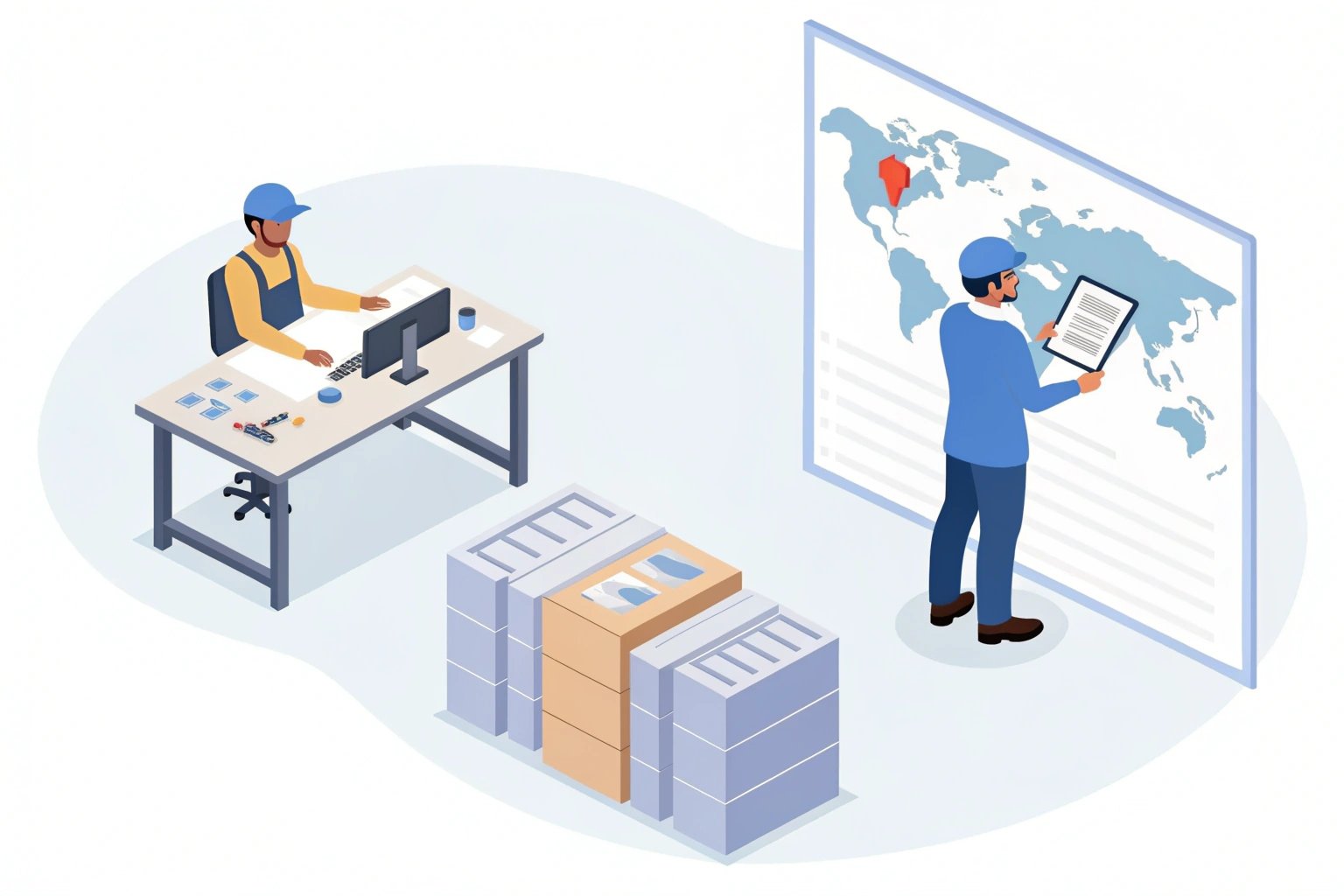
Practical manufacturing proof you can request
- Dated photos and videos of machining and heat treatment.
- A list of machines with brand, model, and quantity.
- QC reports: hardness profiles, case depth maps.
- A tour via live video call from the factory floor.
Verification Summary Table
| Item | Field to check | Must match with | Why it matters |
|---|---|---|---|
| Business License | USCC, legal name | Contract, invoice | Legal identity |
| MOFCOM filing | Legal name | Business License | Export rights |
| Export Declaration | Exporter name | GACC and MOFCOM | Real activity |
| VAT e-invoice | Tax number | Business License | Tax compliance |
| Bank account | Corporate name | Business License | Payment safety |
Conclusion
Use official portals, match names and codes, and confirm port logic. Demand real factory proof. Verify VAT e-invoices 10 and check for red flags. Then move to samples and audits with confidence.
Footnotes
1. Understand the technical specifications and manufacturing standards for excavator track chains. ↩︎
2. Learn how to decode and verify the 18-digit Unified Social Credit Code for Chinese firms. ↩︎
3. Guide to verifying a supplier's legal right to export through MOFCOM records. ↩︎
4. Reference for common Harmonized System codes used for heavy machinery undercarriage components. ↩︎
5. Official guide on using the GSXT system to check Chinese company credit and status. ↩︎
6. Importance of ICP Beian registration for verifying the legitimacy of a supplier's website. ↩︎
7. Analysis of the risks and transparency issues when dealing with offshore shell companies. ↩︎
8. Technical overview of induction hardening required for high-quality undercarriage part durability. ↩︎
9. Key legal clauses and requirements for legitimate export agency agreements in China. ↩︎
10. Official procedure for verifying Chinese VAT e-invoices to ensure tax and legal compliance. ↩︎