
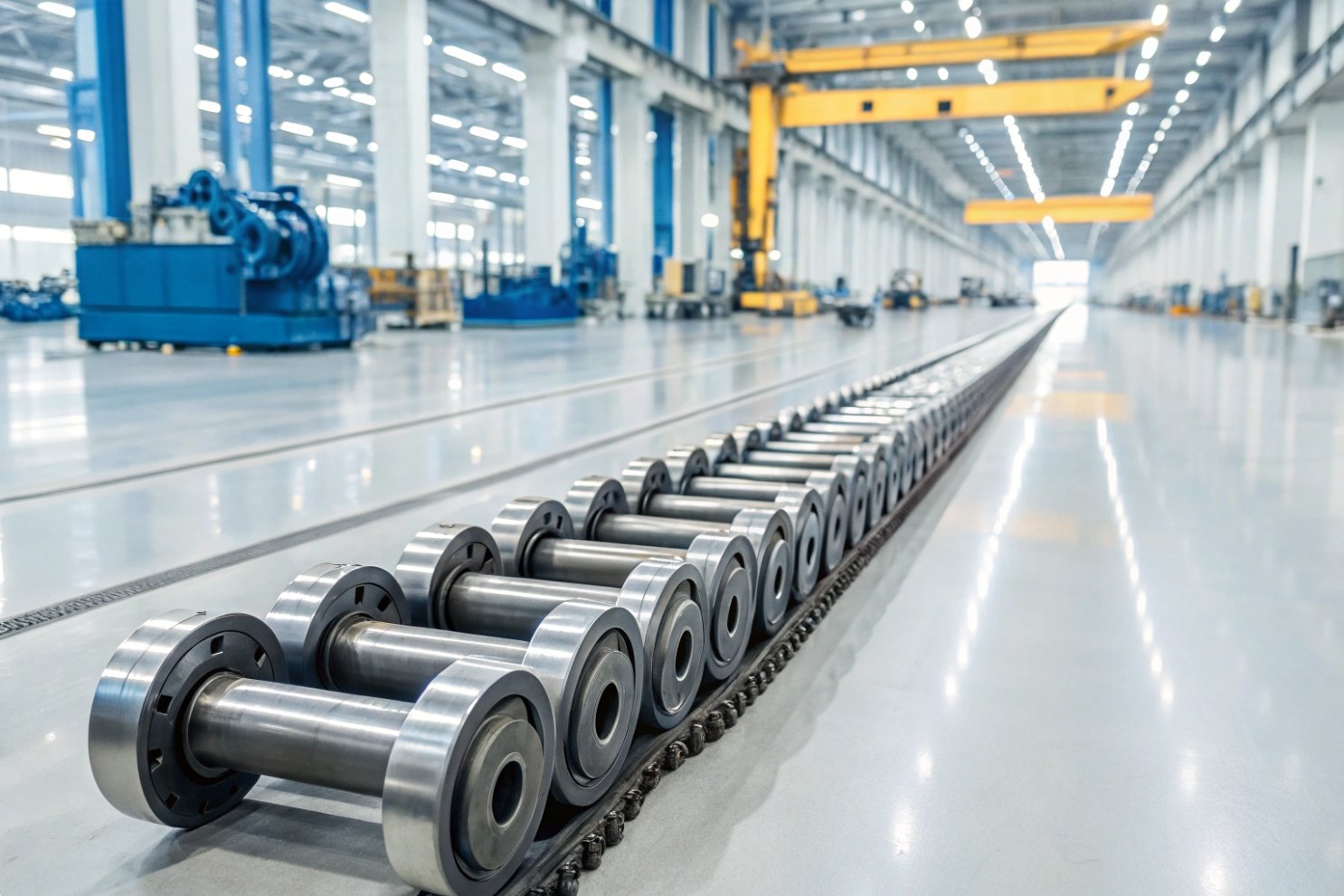
I know you need parts fast. Delays in delivery cost you money and jobs. Is there a way to get reliable parts without a long wait?
For standard undercarriage parts like track chains and rollers, our average production lead time is about 15 to 30 days after we confirm the order. This timeframe is typical for the best manufacturers in China, but it always depends on the specific part, order size, and our current production schedule.
You must be wondering if this time includes everything or just the manufacturing part. Let's look deeper into how we manage our production line 1 to keep your projects moving.
How does the lead time change if I order custom or non-stock parts?
I hear you asking, "Will ordering a special part take forever?" It is a good question because custom parts are a puzzle. If I order a standard part, I expect it quickly. But what about a special one?
When you order custom-engineered or non-stock undercarriage parts, the lead time will be much longer, usually ranging from 8 to 16 weeks or even more. This extended time is needed because we must first design the part, source special materials, create new tooling, and then run tests before the mass production can start.

When you need something unique, the clock starts much earlier. Standard parts are like getting a shirt off the rack; they are ready, and we just need to pack them. Custom parts are like hiring a tailor; we need to measure, design, and sew from scratch. This takes time, but the final product is perfect for your needs.
Why Custom Parts Take More Time
For custom parts, especially those for specialized mining equipment or an older machine, the process is not simple manufacturing. It is a full engineering project.
- Design and Blueprint Confirmation: First, our technical team works with your specifications. We create the precise technical drawings. This step alone can take one to two weeks, depending on how complex the part is and how fast you can approve the drafts.
- Special Material Sourcing: Standard parts use common steel grades. Custom parts often need high-grade alloys 2 or specific heat treatment parameters. Sourcing these specialized materials takes longer, maybe an extra two to four weeks. I must make sure the material arrives with the correct certifications.
- Tooling and Molding: We cannot use the standard molds. If the part is new, we must design and create new tooling. This is a critical process for getting the perfect shape and size. A new mold can take four to six weeks to finish and test.
| Custom Part Stage | Estimated Time Addition | Description |
|---|---|---|
| Design Approval | 1 - 2 Weeks | Finalizing technical drawings and specifications. |
| Material Sourcing | 2 - 4 Weeks | Ordering and receiving specialized steel or alloy. |
| New Tooling/Mold | 4 - 6 Weeks | Manufacturing and testing new production molds. |
| First Article Test | 1 Week | Producing and inspecting the first sample part. |
This upfront engineering work is crucial. If we rush it, the final part will not perform correctly in the field. Our goal is to provide reliable parts that match or exceed OEM quality 3. I remember one time, a competitor rushed a custom order for a customer. The parts cracked on the job site after just 100 hours. This is why we never skip these steps.
Comparing Stock, Standard, and Custom Lead Times
It is helpful to see the big picture. Most customers order standard parts, but for major clients like a large OEM or a big mining company, custom orders are common. At Dingtai, we manage these different demands every day.
- Stock Parts: These are our fast-moving items, like common excavator track rollers for Komatsu PC200 or Cat 320. We keep them in our warehouse. The lead time is basically the packing and shipping preparation time.
- Standard Production Parts: These are parts we make often but do not keep large amounts in stock, like a less common bulldozer track chain. We put them into the next production run. This is the 15-30 day window.
- Custom/Non-Stock Parts: These are the unique parts that start the entire R&D process.
We must remember that our factory is in China. The time it takes for us to build the part is only half of the story. The total time until you get it must include the shipping time across the ocean, which can easily add three to six weeks.
The key for you, as a procurement director like David Miller, is to communicate early. If you know you will need a special run of heavy-duty track links 4 in six months, tell us now. We can start the design and material sourcing while you focus on other things. This way, we cut the waiting time down a lot. I always tell my clients, "Start the clock for custom parts the minute you think of them."
When does the lead time start (e.g., from order confirmation or deposit)?
I am always careful about when a promise truly begins. I need to know exactly when the clock starts ticking for my order. Does it start when I hit 'send' on the email or after my money clears?
The official production lead time at Dingtai starts the moment two things are complete: we receive your formal Purchase Order (PO) and we receive the agreed-upon deposit payment (usually 30% of the total cost). Both steps must be finished before we can secure raw materials and allocate factory time for your specific order.

It is important to be clear: the time is not counted from the day you send your initial inquiry. It starts when the order is officially locked in. This protects both of us. It makes sure that you are committed to the order, and it makes sure that our factory is not wasting valuable production slots on unconfirmed jobs. I need to be sure before I schedule my workers.
The Two Conditions for Starting Production
We call this the "Order Activation" phase. It is a quick but necessary step to move from a price quote to actual production.
- Purchase Order (PO) Receipt: We need a formal document from you. This PO must clearly list all the product details: part numbers, quantities, pricing, and agreed-upon specifications. This document is our production instruction manual.
- Deposit Payment (Money Arrival): In B2B manufacturing, cash flow 5 is important. I use your deposit to immediately buy the steel and other raw materials needed for your specific parts. The time it takes for your wire transfer to reach our Chinese bank account can add one to three business days, so we must count from when it is received and confirmed.
| Step in the Order Process | Timing Impact on Lead Time | What We Need From You |
|---|---|---|
| Initial Inquiry | 0 Days (Pre-Start) | Your part requirements and specifications. |
| Order Confirmation | 0 Days (Pre-Start) | Your agreement on the price and terms. |
| PO and Deposit Sent | 1 - 3 Days (Banking Time) | Timely wire transfer of the 30% deposit. |
| Order Activation | Lead Time Starts Now | Formal PO received and deposit confirmed in our bank. |
If you send the PO on Monday, but the deposit arrives on Thursday, the lead time starts on Thursday. Being aware of this small detail can save you a few days on a large, time-sensitive order. As a large distributor, David, I know you value efficiency. You want to see results quickly.
Why We Cannot Start Before Payment
Some customers ask us to start production before they send the deposit. We cannot do this, and here is why:
- Material Costs: Raw steel 6 is a commodity with a volatile price. We lock in the material cost after the deposit is received. If we start production and the steel price drops, we have a problem. If it rises, we take the hit. The deposit acts as a contract to buy the materials at that time.
- Factory Scheduling: Our production lines are always busy with orders from clients all over the world—North America, Europe, South America. We allocate the machine time only to confirmed, paid-for jobs. If we block out a machine for your job without a deposit, and you cancel, that time is lost.
We are a manufacturer. We are not a bank. We rely on the agreed-upon payment terms to manage our inventory management 7 and production flow. We promise to start the work immediately once the money arrives. My personal story is that I once trusted a customer and started production before payment. The customer's order was canceled one week later, and we were left with a warehouse full of specialized steel for an unneeded part. Now, we follow the rule strictly. This rule is what lets us offer you high quality and competitive prices consistently.
How accurate are your lead time estimates?
I have dealt with many suppliers who make promises they cannot keep. When I get a delivery date, I need it to be real. How close to the estimated time will the parts actually arrive at the port? This is what I need to know for my inventory planning.
At Dingtai, we pride ourselves on having an on-time delivery rate consistently above 95% for standard parts, and our lead time estimates are highly accurate because we use a transparent, real-time production tracking system. We plan for common delays in advance and give you a realistic timeline, not just the fastest possible one.
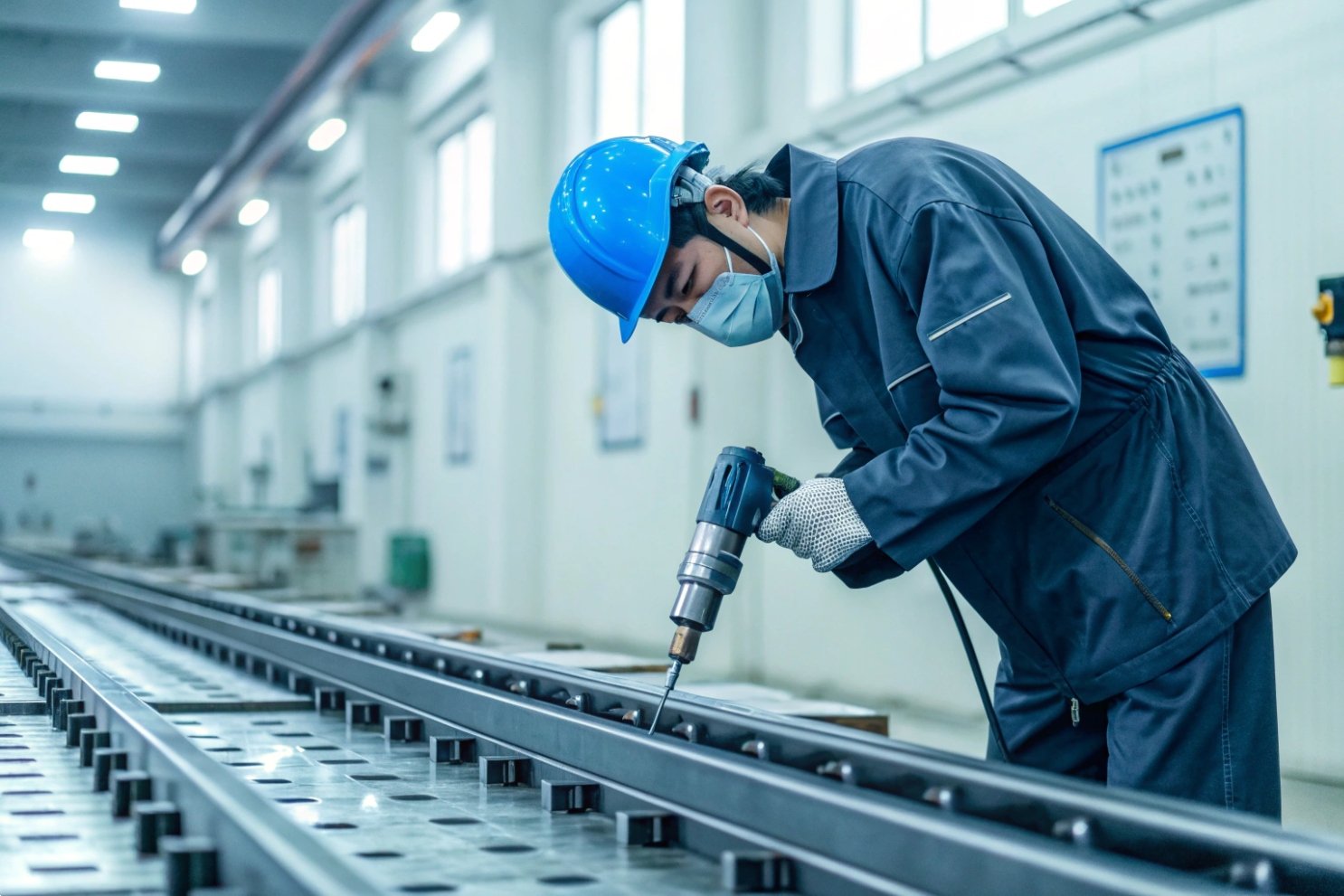
The difference between a good supplier and a great one is not just quality. It is reliability. Our promise is simple: the date we give you is the date your parts will be ready for pickup at our factory. We achieve this high accuracy through careful planning and a bit of a buffer.
The Science Behind Our Lead Time Calculation
We do not just guess a delivery date. We use a formula that is based on real-world data from our production floor. Every order is calculated using three main factors:
- Capacity Load: We check how many other orders are already booked for the next 30 days. If the factory is at 80% capacity, your order is scheduled normally. If it is at 100% capacity, we add a few days to the estimate. This avoids over-promising.
- Part Complexity: A track link assembly is more complex than a simple bolt. We use a standard time code for each part type. Complex parts get more time allocated for the forging, heat treatment 8, and assembly stages.
- Quality Control (QC) Time: We build in a mandatory 3-day buffer at the end of every order for a 100% quality check. This QC step is never skipped, and the time for it is already part of the total lead time we quote you.
| Lead Time Component | Description | Time Factor |
|---|---|---|
| Material Prep | Raw material cutting and pre-treatment. | 5 days |
| Manufacturing | Forging, welding, and machining. | 10 - 20 days |
| Heat Treatment | Hardening for wear resistance (crucial step). | 3 - 5 days |
| Final Assembly | Assembling links, pins, and bushings. | 2 days |
| Quality Check | Full 100% inspection before packing. | 3 days |
Mitigating Common Delay Factors
We know what causes delays in China's manufacturing. I have been doing this for over 20 years. We have strategies to deal with the most common problems before they affect your delivery date.
- Public Holidays: Chinese New Year 9 (CNY) is a huge disruption, causing four to six weeks of closure and backlog. We tell all our global customers to place their orders at least three months before CNY. Our quote will always include any known holiday periods.
- Equipment Breakdown: Machines can fail. We have a maintenance team that does preventive checks every week. We also keep a spare set of critical components for our main forging presses. This way, a machine failure causes hours of delay, not days.
- Raw Material Delay: Sometimes, the steel mill is slow. We keep a small buffer of the most common steel grades in our own yard. This acts as a safety stock to cover small delays from our material suppliers.
Our goal is not to be the fastest supplier in the quote. Our goal is to be the most reliable supplier in the delivery. When I tell David Miller that his track chains will be ready on the 15th of the month, he knows he can trust that date for his onward logistics planning. This trust is the foundation of our long-term B2B relationships. I only want to promise what I know I can deliver.
What happens if my order is delayed?
A delay is bad news for any business, especially mine. I have promised my customers in the US market a delivery date. If you miss the factory date, my entire schedule is ruined. I need to know what protection I have and what action you take when things go wrong.
If your standard order is delayed beyond the agreed-upon, confirmed ready date due to a failure on our side, Dingtai will notify you immediately and transparently, and we will offer a penalty or compensation as stipulated in our supply contract. We will also switch your shipment to a faster logistics method 10, like a priority sea freight booking, to minimize the overall delay.
It is a simple fact of manufacturing: sometimes things go wrong. A power outage might affect the heat treatment process, or a batch of steel might fail the chemical test. When a problem happens, we do not hide it. I contact you right away. Our job is to manage the problem and its impact on your business.
Our Policy for Unavoidable Delays
Our contracts with our long-term distributors, like David Miller's company, include clear terms for late delivery. This is a sign of our commitment and professionalism.
- Immediate Notification: The moment our quality control team or production manager confirms a delay that will impact the shipping date, your dedicated sales contact (like Linda) will call or email you. You will know within 24 hours of the issue appearing.
- Reason and New Timeline: We explain exactly why the delay happened (e.g., "The latest batch of pins failed the hardness test and must be re-treated"). We then give you a firm, new ready date. This transparency is key to maintaining trust.
- Contractual Compensation: For a delay of more than five business days past the confirmed ready date, we typically offer a small penalty deduction from the final balance payment. This is a percentage of the total order value for each week of delay. This is not to make you rich, but to cover some of your inconvenience.
How We Fix the Delay After it Happens
Our main focus is to stop the delay from becoming a huge disaster for you. We use several fast-action steps to catch up on the lost time.
- Increased Labor: We immediately put your order on overtime. Our workers might work a double shift to catch up on the lost production hours. We pay the extra labor cost, not you.
- Logistics Upgrade: If your order is delayed by one week in the factory, we try to cut one week from the shipping time. We work with our logistics partners to book a faster boat (if available) or switch to a better shipping route to get your container to port faster. This is part of our service recovery.
- Separate Urgent Parts: If your order has 20 different items, but you only urgently need five of them, we can finish those five items first, pack them, and ship them via air freight or fast express service at a subsidized cost. This allows you to serve your most critical customer quickly.
This table shows a typical compensation structure:
| Delay in Business Days | Compensation Offered (Discount on Final Bill) | Action Taken by Dingtai |
|---|---|---|
| 1 - 5 Days | 0% | Overtime production, no cost to you. |
| 6 - 10 Days | 0.5% of Goods Value | Overtime, plus priority logistics booking. |
| 11 - 15 Days | 1.0% of Goods Value | Overtime, logistics upgrade, potential air freight subsidy. |
My experience tells me that David Miller cares less about the compensation check and more about the truth. He needs a stable supply chain. Our commitment to prompt communication and proactive problem-solving is what makes us a reliable partner, even when problems happen. It is always better to face the issue head-on than to pretend it does not exist.
Conclusion
The lead time for standard parts is 15-30 days, starting with payment and PO. Custom parts take longer due to engineering. We ensure high accuracy and compensate you if we cause a delay.
Footnotes
1. Understanding the sequence of steps in a factory production line. ↩︎
2. Technical properties and benefits of using high-grade alloys in machinery. ↩︎
3. Definition and importance of Original Equipment Manufacturer (OEM) quality standards. ↩︎
4. Community discussions and technical insights on heavy-duty track links for machinery. ↩︎
5. Explanation of why managing cash flow is vital for manufacturing operations. ↩︎
6. Global resources and data on raw steel production and pricing. ↩︎
7. Comprehensive guide to modern inventory management strategies. ↩︎
8. Detailed overview of heat treatment processes used to harden metals. ↩︎
9. Analysis of how the Chinese New Year impacts global manufacturing timelines. ↩︎
10. Information on international logistics methods and freight shipping options. ↩︎