
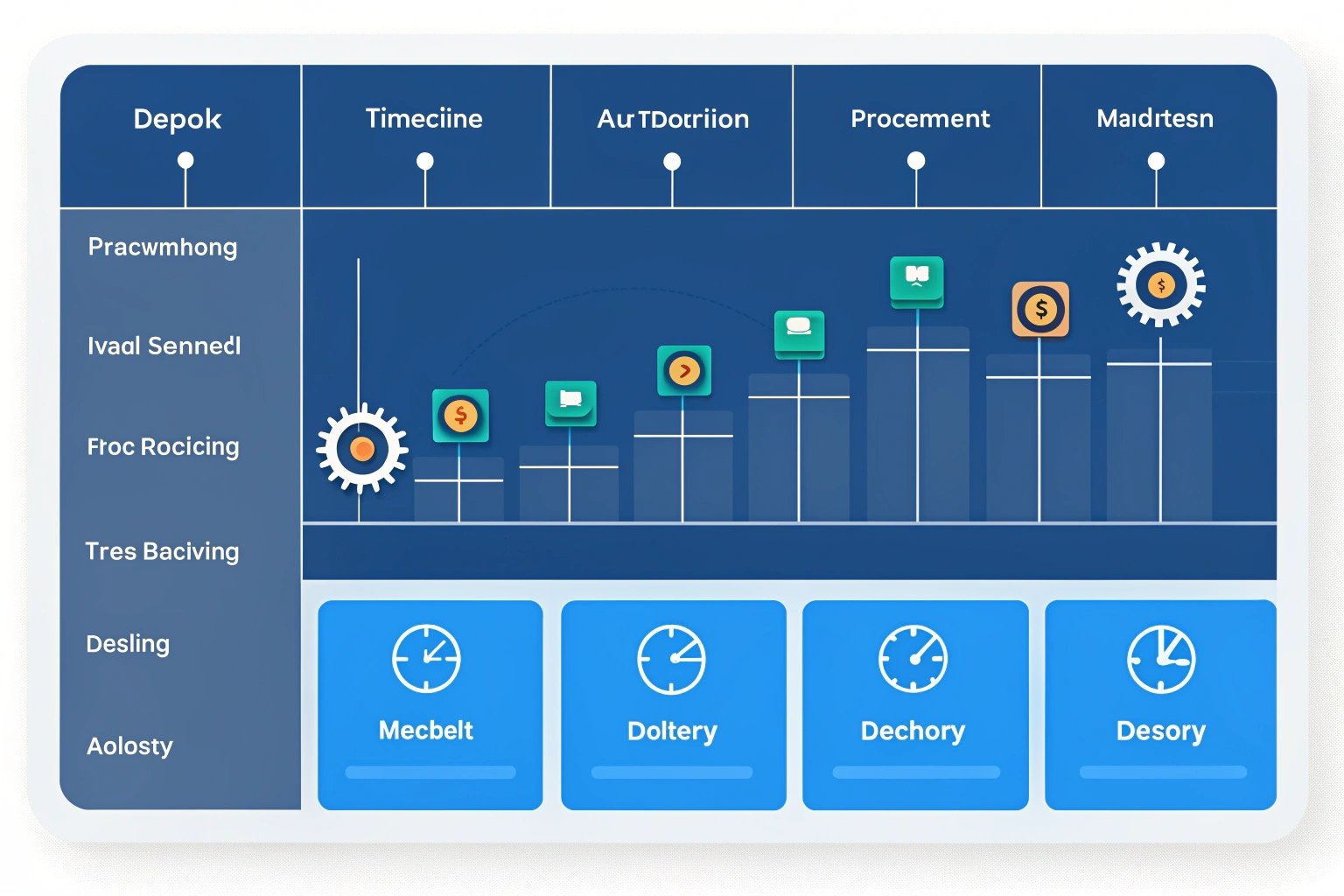
The production lead time 1 for excavator undercarriage parts typically spans from 30 to 45 days post-deposit, encompassing material procurement and manufacturing cycles.
Average lead time post-deposit confirmation is 30 to 45 days, influenced by production capacity 2, material availability, and custom specifications.
Does the lead time start from the date of my PO or the date they receive my deposit?
Lead time commencement depends on deposit fulfillment.
Lead time calculations typically begin once the deposit is received 3 and technical specifications are verified, ensuring full alignment in order execution.
Key starting points
- Post-Deposit Receipt: Alignment with payment confirmation.
- Technical Confirmation: Ensures manufacturing readiness.
Initiation criteria
| Stage | Timing | Confirmation |
|---|---|---|
| Deposit Receipt | Initiates | Timing confirmation |
| Technical Drawings | Verified | Operational start |
How much longer should I expect the lead time to be for custom-made parts?
Custom orders extend lead times.
Custom-manufactured parts generally extend lead times by several weeks due to design, tooling 4, and specialized processing requirements.
Customization impacts
- Design Complexity: Additional engineering time.
- Tooling Requirements: Design and fabrication extend durations.
Custom considerations
| Impact Factor | Extension Time | Reason |
|---|---|---|
| Tooling | Additional Weeks | Custom process |
| Design Approval | Extended Schedule | Engineering |
Does the lead time they quote include the time for packaging and arranging shipment?
Comprehensive lead times should account for all steps.
Quoted lead times usually encompass production, quality checks 5, and packaging, with shipment logistics often requiring separate coordination.

Full-cycle lead times
- Standard Packaging: Included in timelines.
- Shipping Coordination: Usually managed post-production.
Process inclusions
| Aspect | Included | Additional Time |
|---|---|---|
| Packaging | Typically | Coordination dependent |
| Shipment | Arranged | Separately |
What are the main factors that could cause a delay in the production lead time?
Multiple elements impact lead time variability.
Delays in production cycles can stem from raw material scarcity 6, peak production periods, custom design complexities, and seasonal factors like Chinese New Year 7.
Delay contributors
- Material Availability: Delays sourcing process.
- Seasonal Peaks: Overburden resource allocation.
- Complex Designs: Extended engineering and tooling durations.
Delay elements
| Cause | Additional Weeks | Description |
|---|---|---|
| Material Scarcity | +2 Weeks | Availability issues |
| Seasonal Workload | +2-3 Weeks | High volume |
Conclusion
Understanding the factors influencing production lead times aids in planning and managing expectations for importing undercarriage parts 8, ensuring strategic alignment in logistics and supply chain management.
Footnotes
1. Guide to calculating and optimizing the total time from placing an order to receiving the finished goods in inventory. ↩︎
2. Methods for assessing a manufacturer's production volume and how it impacts the queue time for new orders. ↩︎
3. Explanation of why the payment confirmation date, rather than the purchase order date, is the true start of the production schedule. ↩︎
4. Insights into the time needed for designing, fabricating, and testing new molds or dies required for specialized components. ↩︎
5. Overview of in-process and final inspection procedures, and the time required to perform comprehensive quality assurance tests. ↩︎
6. Analysis of how global market volatility in steel and raw alloy elements can create delays in the procurement phase. ↩︎
7. A planning guide detailing the typical 4-8 week disruption caused by the annual Spring Festival closure in China. ↩︎
8. Key logistics and supply chain considerations specific to handling heavy, dense construction equipment parts for international shipping. ↩︎