
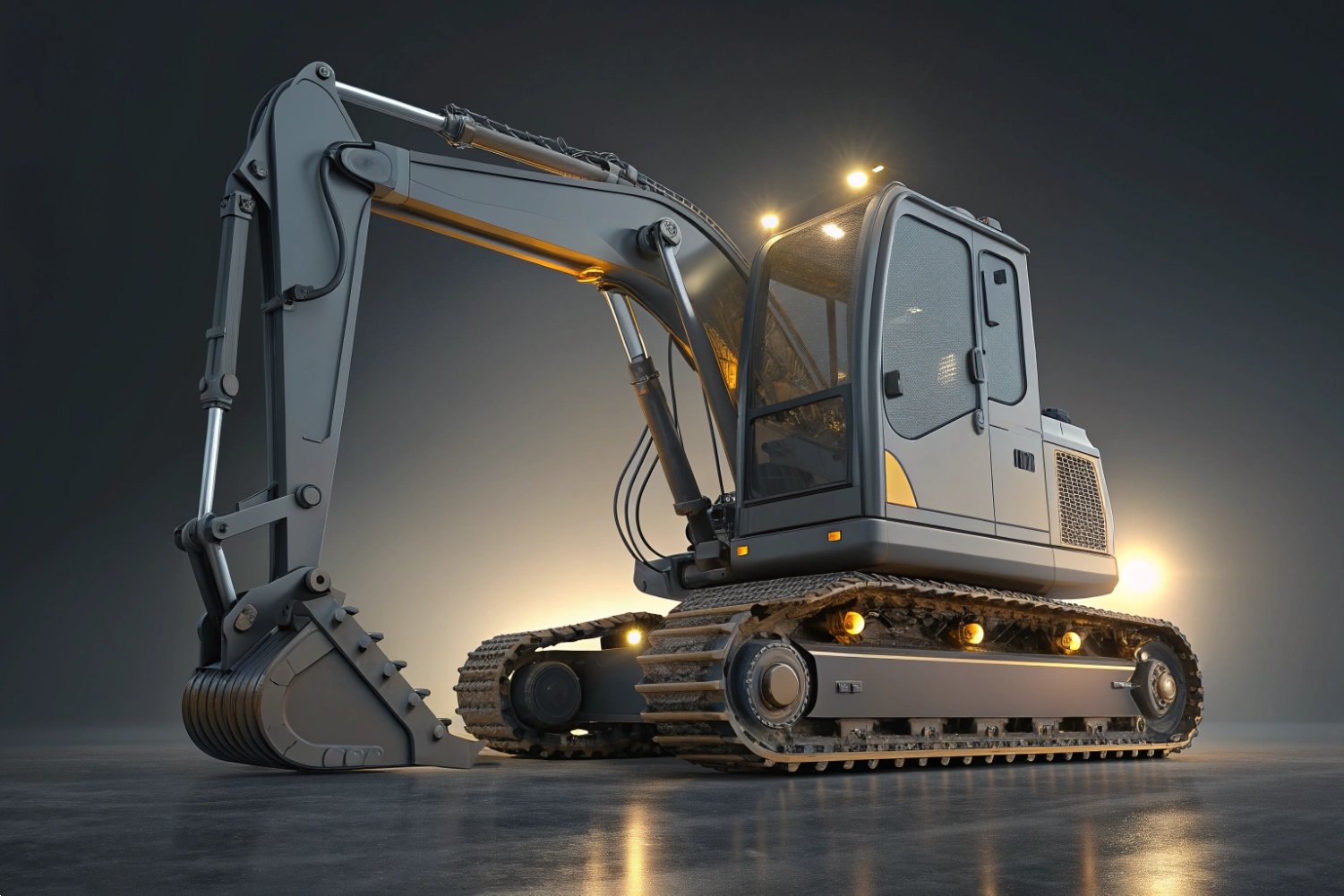
I know how frustrating it is when your mini excavator breaks down in the middle of a job. If your undercarriage fails, your machine stops moving, and you lose money every hour.
The five essential undercarriage parts for a mini excavator are the tracks, drive sprockets, bottom rollers, top rollers (carrier rollers), and idlers. These parts work together to support the machine's weight, provide traction, and ensure smooth movement during operation.
If you want to keep your machine running without expensive repairs, you need to understand these five core parts. Let me explain why these specific components are the lifeblood of your equipment’s mobility.
How do I evaluate the durability of the internal tensioning springs in my mini excavator's idler assembly?
I often see customers focus only on the outside of the idler, but the real secret to a long life is the heavy-duty spring hidden inside the tensioner assembly.
To evaluate idler spring durability, check the material grade of the steel and the tension strength. High-quality springs use premium alloy steel that resists permanent deformation. You should also look for a smooth grease cylinder operation, as this ensures the spring can absorb shocks without snapping.
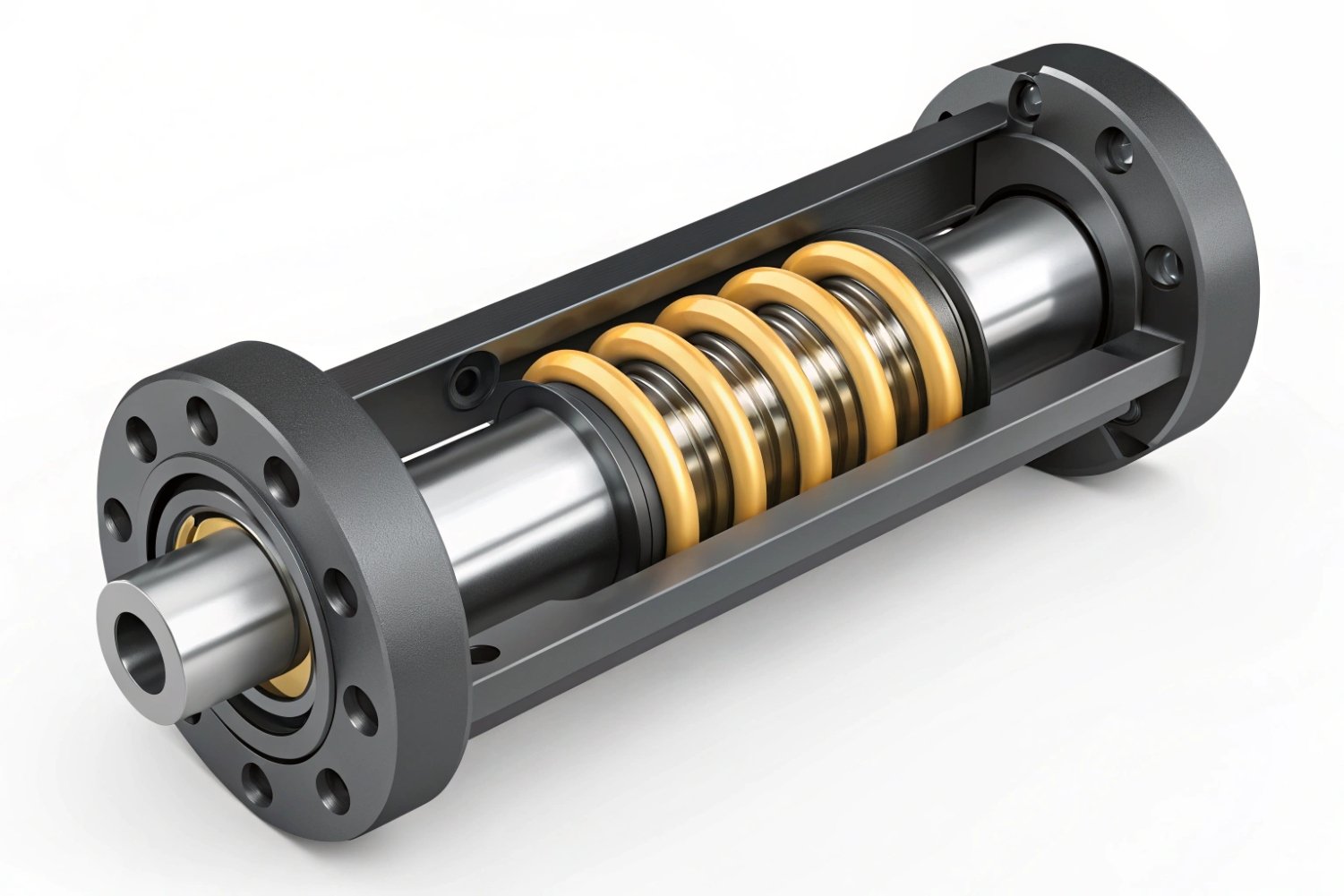
When I talk to fleet managers, I always tell them that the idler is more than just a wheel. It is the "safety valve" for your entire track system. The internal spring, also called the recoil spring 1, has one main job: to protect the track chain and the final drive from sudden impacts. If you hit a large rock, that spring needs to compress and then return to its original shape perfectly.
In our factory, we test these springs by compressing them thousands of times. If a spring loses even a few millimeters of its height, it is a failure. For your mini excavator, a weak spring means your tracks will constantly get loose. This leads to the track "jumping" off, which can damage the track links 2 or even the hydraulic motor.
Comparison of Idler Spring Materials
| Feature | Standard Steel Spring | Premium Alloy Steel (Dingtai) |
|---|---|---|
| Fatigue Resistance | Low (deforms after 1 year) | High (maintains shape for years) |
| Shock Absorption | Basic | Enhanced for rocky terrain |
| Coating | Standard paint | Anti-corrosion industrial coating |
You should also pay attention to the seals. A high-quality idler assembly uses floating seals 3. These seals keep the oil inside the hub so the bearings stay lubricated forever. If you see oil leaking near the idler, the seal has failed, and the internal bearings will seize up very soon. This is why I always check the seal quality before I ship any parts to my customers in the US or Europe.
Why should I prioritize reinforced sprocket teeth to handle the high-torque demands of mini digging?
I have seen many sprockets wear down until the teeth look like sharp needles, and that is exactly when your track starts slipping and losing power.
Prioritizing reinforced sprocket teeth is vital because the sprocket bears the full force of the engine’s torque. Reinforced teeth, usually hardened through induction heat treatment, resist wearing down into a "hook" shape, which prevents track damage and ensures efficient power transfer.
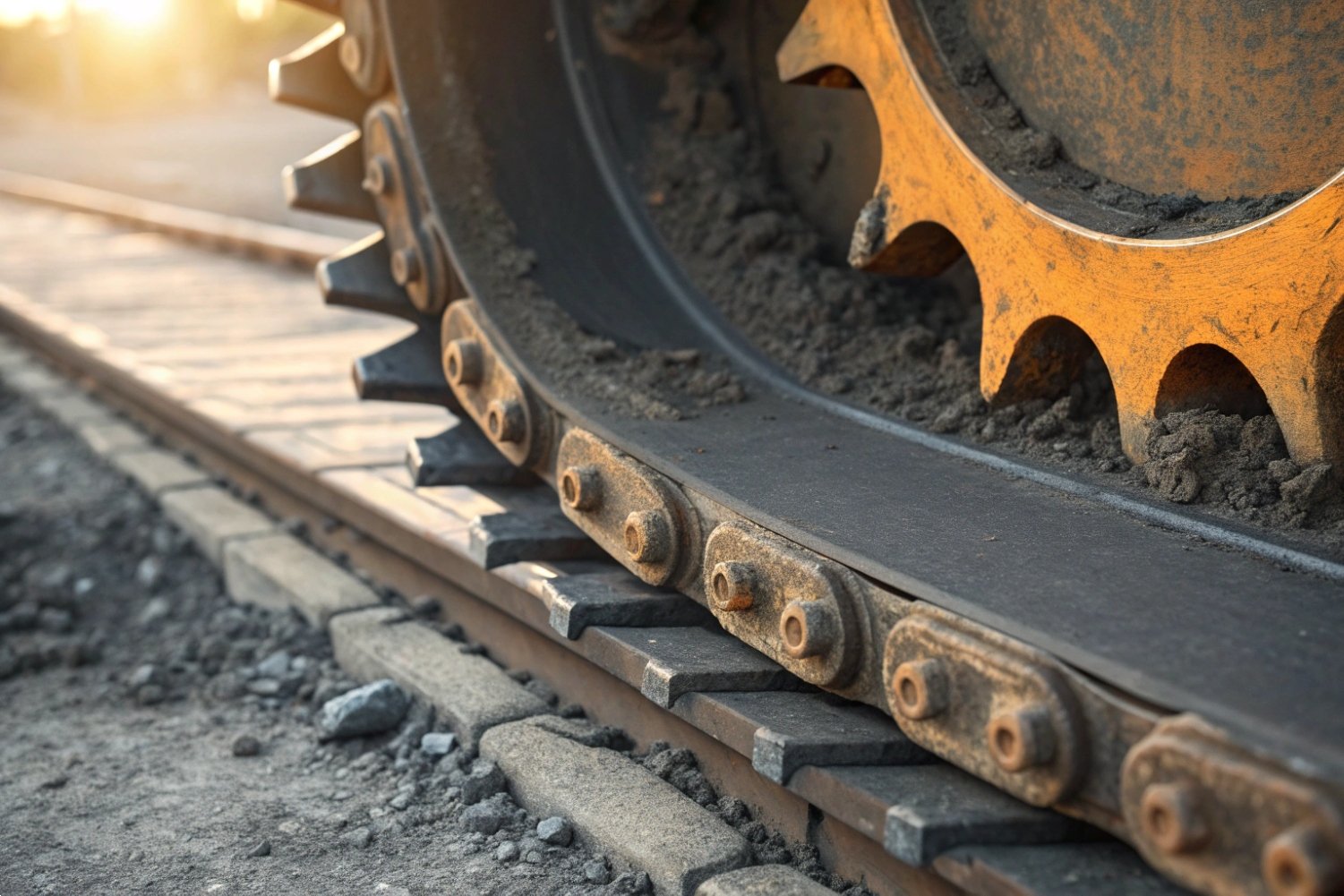
The drive sprocket is the only part of the undercarriage that actually "moves" the machine. In mini excavators, the torque is very high because the machine is small but powerful. If the teeth are soft, the metal will literally rub away every time you climb a pile of dirt. This is why "surface hardness" is a word you will hear me say a lot.
We use a process called induction hardening 4. We heat the teeth of the sprocket to a very high temperature and then cool them instantly. This creates a hard "shell" on the outside while keeping the inside of the tooth tough so it doesn't crack. If you buy a cheap sprocket, it might look the same, but it lacks this deep heat treatment. Within a few months, the teeth will become "pointed," and they will start eating your track shoes 5.
Sprocket Wear Guide
- New Tooth: Flat top, wide surface area for the track link.
- Worn Tooth: Sharp or "hooked" shape; causes the track to vibrate.
- Dangerous Tooth: So thin it can snap under heavy load, causing a total breakdown.
Technical Specifications for Sprockets
| Property | Typical Value | Importance |
|---|---|---|
| Surface Hardness | HRC 45-55 | Prevents rapid metal wear |
| Hardening Depth | 5mm - 10mm | Ensures long life as the metal wears |
| Material | 40Mn2 or 50Mn | Provides the best balance of strength |
If you are working in muddy or sandy conditions, the wear happens even faster. Sand acts like sandpaper between the sprocket and the track. By choosing a reinforced version, you are basically buying insurance for your final drive motor 6. It is much cheaper to replace a sprocket than it is to replace a whole hydraulic motor.
How can I tell if my mini excavator's track rollers have been lifetime-lubricated to OEM standards?
I hate seeing rollers that seize up and stop spinning because they "flat-spot" the track, and usually, it's because the lubrication was poor.
You can tell a roller is lifetime-lubricated to OEM standards by checking for high-quality duo-cone seals and the presence of high-grade gear oil. OEM-standard rollers are factory-sealed and require no maintenance, as the internal oil bath keeps the bearings cool for the entire life of the part.
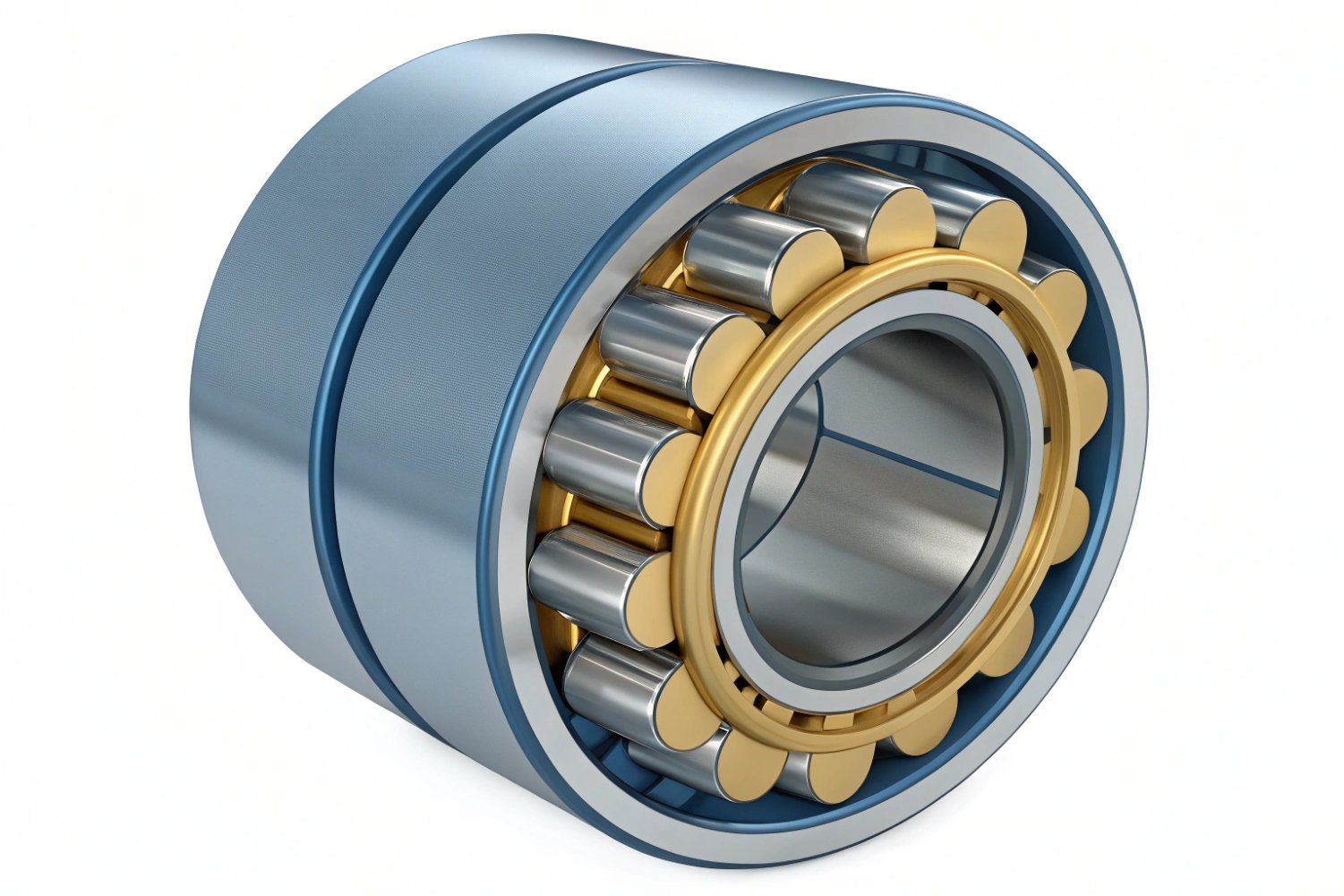
When you hold a new track roller in your hand, you shouldn't feel any "play" or wobbling. It should spin smoothly but with a little bit of resistance—that resistance comes from the thick oil and the tight seals inside. In our factory, we use a vacuum testing 7 machine to make sure every roller is airtight. If air can't get out, oil can't get out, and dirt can't get in.
The "bottom rollers" or "lower rollers" carry the entire weight of your excavator. On a mini excavator, this could be 3 to 8 tons of pressure. If the lubrication fails, the friction creates heat. This heat expands the metal until the roller stops turning. Once it stops turning, the track chain just slides over it, wearing a flat spot into the roller. Within days, your machine will feel like it’s driving over a bumpy road.
Roller Quality Checklist
- The Seal: Does it use "Duo-cone" (floating) seals? These are the industry standard for keeping dirt out.
- The Oil: Is it filled with heavy-duty gear oil or just cheap grease? Oil is much better for cooling.
- The Shell: Is the outer shell forged or cast? Forged shells are much stronger for heavy mini-excavator work.
I always tell my clients like David that spending 10% more on a roller with better seals will save them 50% in labor costs later. Changing rollers in the mud is a job nobody wants to do twice. Our rollers are designed to match the performance of big brands like Komatsu 8 or CAT because we use the same sealing technology.
What specific link thickness should I look for to prevent stretching in my mini excavator's track chains?
I've had customers call me complaining that their tracks are "too long" for the machine, but the truth is the metal links have actually worn down and stretched.
For a mini excavator, you should look for track link thicknesses that meet or exceed OEM specifications, typically ranging from 12mm to 20mm depending on the machine's tonnage. Thicker links with deep hardening provide more "wear volume," which prevents the chain from stretching as the pins and bushings age.
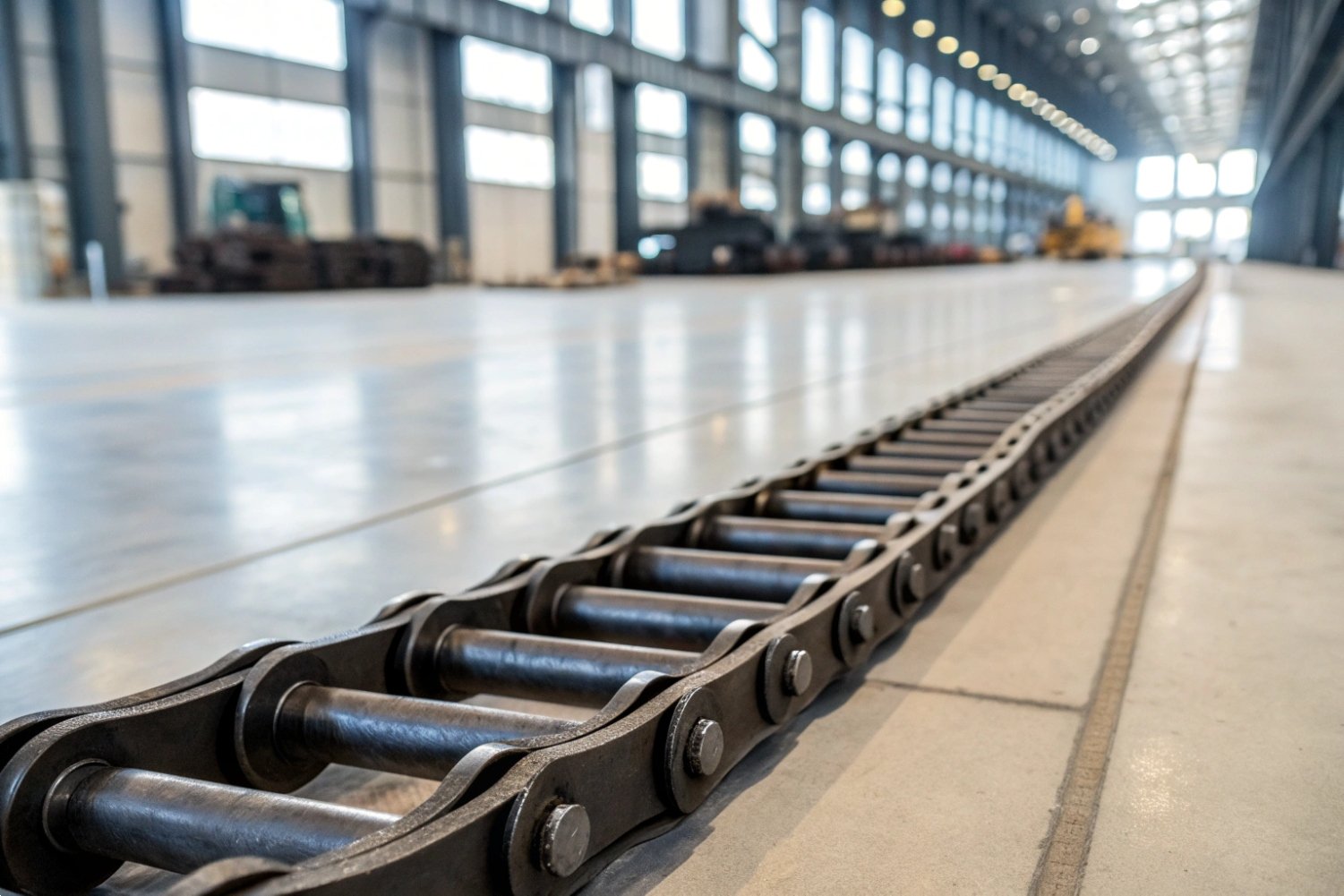
When we talk about a track "stretching," it isn't actually the metal pulling like a rubber band. What is happening is that the pins and bushings 9 inside the links are wearing away. This creates "slack" in every joint. If you have 40 links and each one wears just 1mm, your whole track is now 40mm longer! This is why thickness and heat treatment are so important.
If the "rail" (the part the roller sits on) is thick, the chain can wear down more before it becomes too weak. I always recommend checking the "wear height" of the link. A taller link means you can run the machine for more hours before the roller starts hitting the pin bosses. For our international clients, we provide a data sheet that shows exactly how thick our links are compared to the original parts 10.
Track Chain Dimensions Table
| Machine Size (Tons) | Recommended Link Height | Bushing Diameter | Material Grade |
|---|---|---|---|
| 1.5 - 2.5 Tons | 85mm - 95mm | 30mm - 35mm | 35MnB Boron Steel |
| 3.0 - 5.5 Tons | 100mm - 115mm | 40mm - 45mm | 40Mn2 Alloy Steel |
| 6.0 - 8.0 Tons | 125mm+ | 50mm+ | 40Mn2 Alloy Steel |
Using Boron steel (35MnB) is a big advantage. It allows us to harden the link very deeply without making it brittle. If the link is too hard, it will snap when you hit a curb. If it is too soft, it wears out in 500 hours. Finding that middle ground is what 20 years of experience has taught us at Dingtai. If you are a distributor, you want to sell a chain that stays tight for a long time, so your customers come back happy.
Conclusion
Focusing on these five core undercarriage parts ensures your mini excavator stays productive. By checking tension, hardening, and lubrication, you avoid costly downtime and keep your projects on schedule.
Footnotes
1. Discussion on the importance of recoil springs in heavy machinery. ↩︎
2. Guide to evaluating track link wear and replacement for excavators. ↩︎
3. Technical explanation of floating seals in rotating applications. ↩︎
4. Overview of induction hardening processes for metal durability. ↩︎
5. Insights into track shoe maintenance and performance for construction. ↩︎
6. Expert advice on maintaining and repairing final drive motors. ↩︎
7. Principles of vacuum testing for industrial seal integrity. ↩︎
8. Official site for Komatsu heavy equipment and parts standards. ↩︎
9. How lubrication impacts the life of pins and bushings in chains. ↩︎
10. Information on original equipment manufacturer (OEM) part specifications. ↩︎