
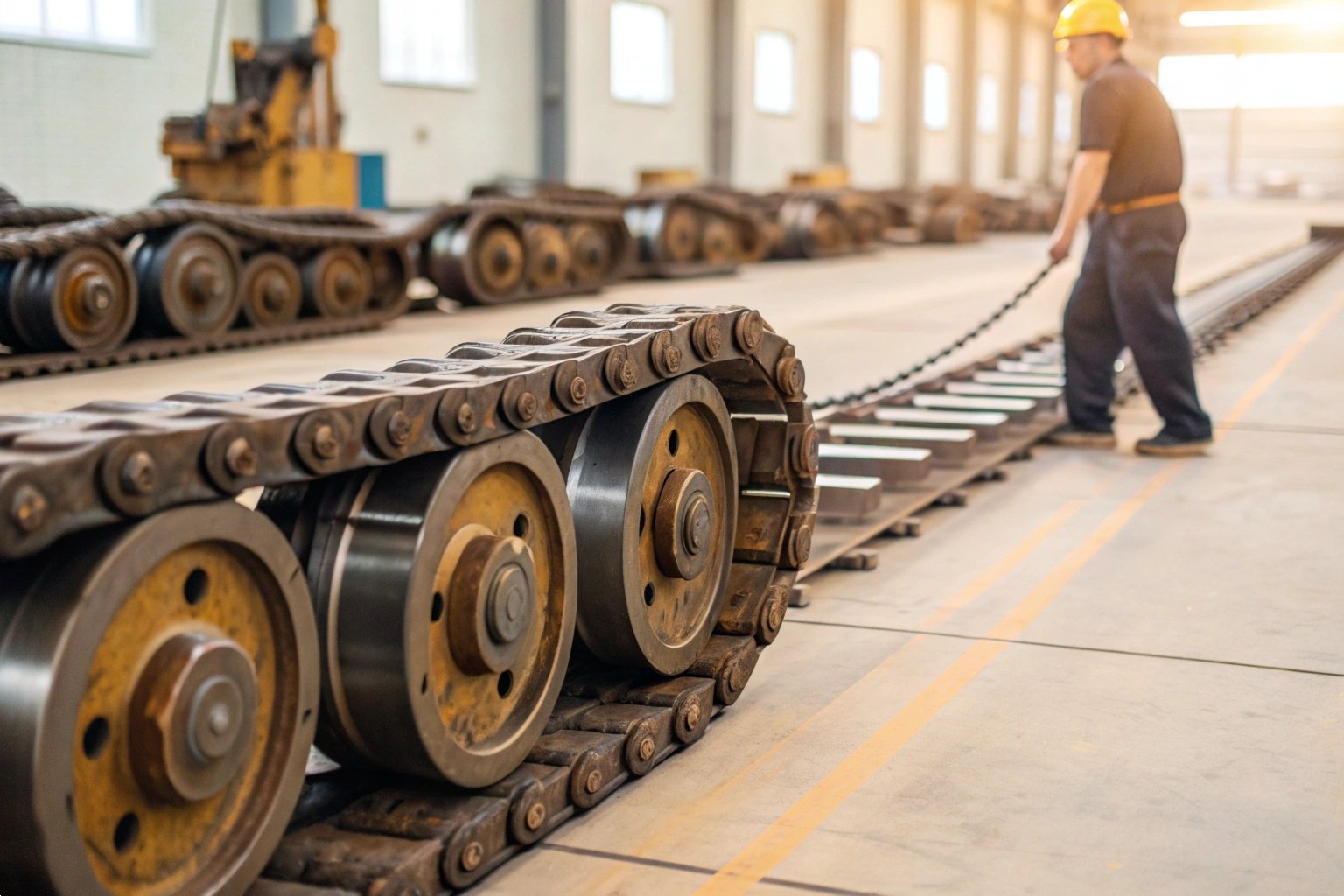
Finding high-quality used Cat parts feels like a gamble when every seller claims their stock is "like new." I have seen many buyers lose thousands by picking parts that looked okay but failed within weeks.
To buy used Cat undercarriage parts successfully, you must verify the part provenance, measure wear thickness with precise tools, match wear levels across components, and check for hidden damage like seal leaks or seized pins before finalizing any purchase agreement.
Choosing the right spare parts 1 is the only way to keep your heavy machinery running without breaking the bank. It is about balancing the immediate cost savings with the long-term work hours you expect to get.
How do I use an ultrasonic thickness gauge to verify the wear status of used Cat track shoes?
Buying used track shoes by eye is a mistake I made early in my career. You might think they look thick enough, but metal wears down in ways that a simple tape measure cannot always catch.
An ultrasonic thickness gauge 2 measures the distance from the surface to the back of the metal by sending sound waves through the part. You place the probe on the grouser or plate, and the digital reading tells you exactly how much steel is left compared to new factory specs.
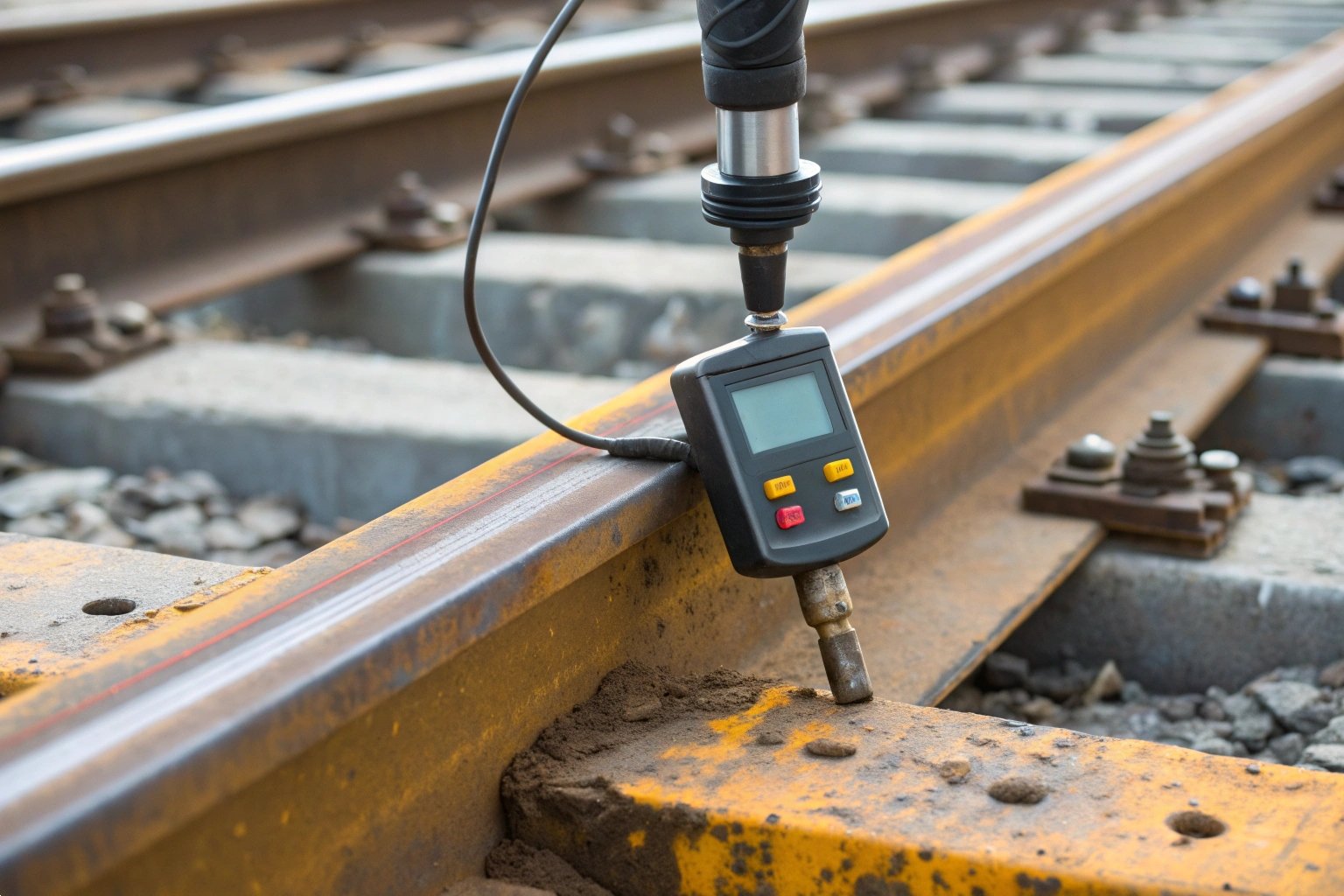
Using a gauge is the most professional way to handle a deal. When I talk to suppliers, I always ask for these readings. If they cannot provide them, I bring my own. You want to measure the "grouser height" and the "plate thickness." For Caterpillar machines, there are specific wear charts 3 that tell you what 100% new should be. If the gauge shows the part is at 40% life, you should not pay 80% of the price of a new one. It is also important to check multiple shoes in a set. Sometimes the shoes from the middle of a chain are in better shape than the ones near the master link.
Wear Comparison for Common Cat Track Shoes
| Part Type | New Thickness (Typical) | 50% Wear Limit | 100% Wear (Replace) |
|---|---|---|---|
| D6 Grouser Height | 65 mm | 32 mm | 10 mm |
| D8 Grouser Height | 80 mm | 40 mm | 15 mm |
| D10 Grouser Height | 100 mm | 50 mm | 20 mm |
Besides the thickness, I always look at the bolt holes. If the holes are "egged out" or stretched, those shoes will never stay tight on your new chain. I also check for cracks around the bolt holes. A cracked shoe is just scrap metal 4 waiting to happen. You should look for "rolling" on the edges of the shoes. If the edges are curled up, it means the machine worked in high-impact rock, and the metal might be fatigued. You must ensure the steel is not brittle.
Why should I avoid used Cat sprockets if I am planning to install a brand-new track chain?
I have seen customers try to save a few hundred dollars by keeping their old sprockets when they buy a brand-new track chain. This is the fastest way to ruin a multi-thousand dollar investment in a very short time.
Used sprockets usually have a "hooked" wear pattern on the teeth. When you put a new chain on worn teeth, the pitch does not match perfectly, causing the new bushings to slide and grind against the sprocket, leading to rapid wear and high heat.
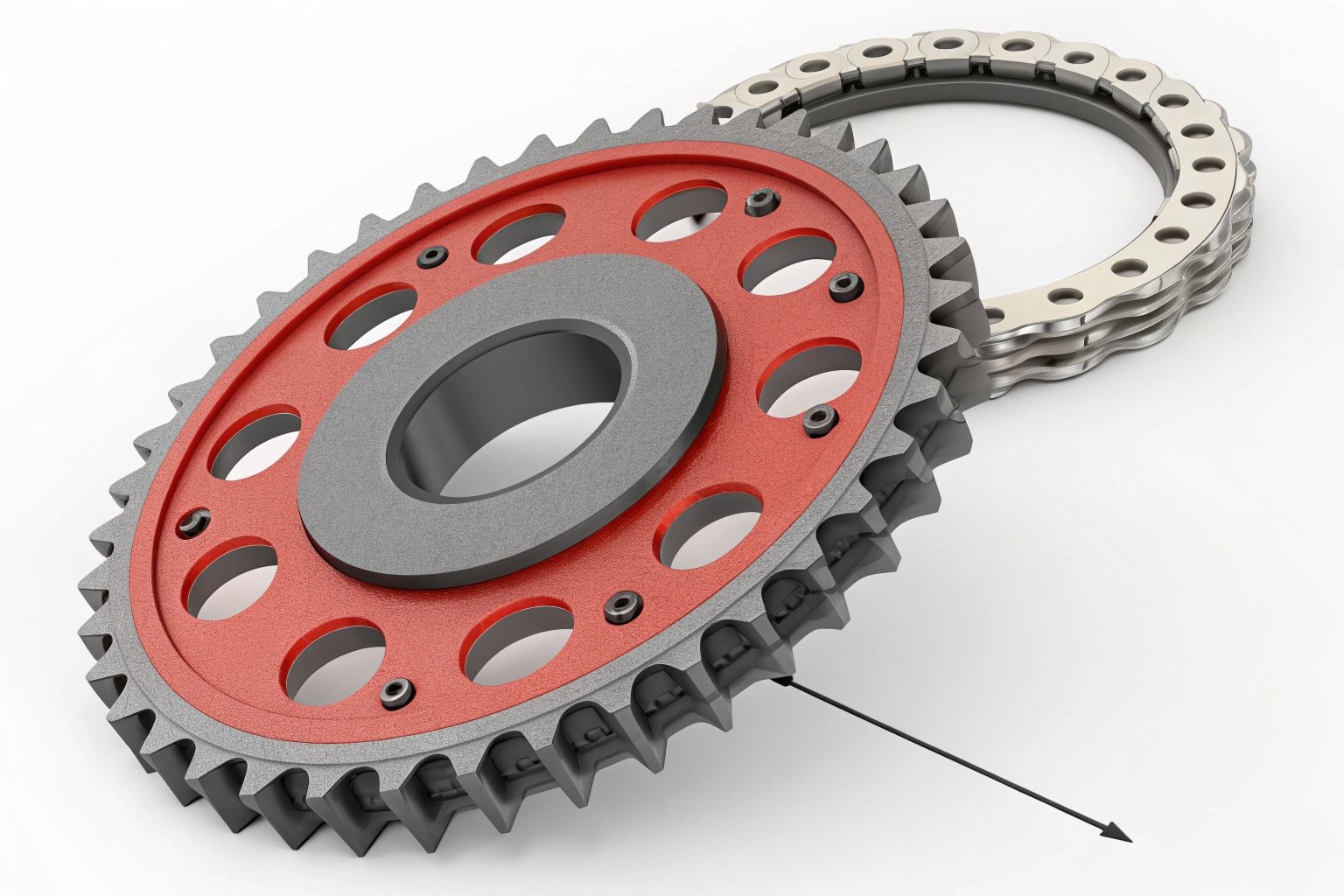
Think of it like putting an old, stretched bicycle chain on a new gear. It jumps and grinds. In heavy machinery, that grinding happens with tons of force. A worn sprocket tooth is shaped like a hook. Instead of the bushing sitting deeply and comfortably in the pocket, it gets pulled against the tip of the tooth. This creates "bushing scrub." I always tell my clients that if your sprockets 5 are past 20% wear, you are better off buying new ones to protect your new chain. It is a small price to pay to ensure your chain lasts its full 3,000 or 5,000 hours.
Sprocket Condition Impact Table
| Condition Level | Visual Sign | Action Required | Effect on New Chain |
|---|---|---|---|
| Good | Rounded tooth tips | Keep for used chain | Normal wear |
| Worn | Slight "hook" shape | Replace if using new chain | Accelerated bushing wear |
| Critical | Knife-edge points | Mandatory replacement | Rapid chain failure |
I once worked with a contractor who refused to change his D7 sprockets. Within three months, his brand-new SALT (Sealed and Lubricated Track) 6 chain started leaking. The mismatched teeth had pushed the bushings so hard that the internal seals failed. He ended up paying for a second set of sprockets and a chain repair. It was a very expensive lesson in "false economy." You should always check the mounting bolts too. If the sprocket was loose before, the hub might be damaged.
How can I confirm that the used Cat rollers I'm buying haven't been "re-filled" with improper oil?
Rollers are tricky because they are "black boxes." You cannot see inside them to check the bearings or the oil. Some dishonest sellers will pump a failing roller full of thick grease or heavy gear oil just to stop it from leaking long enough to sell it.
To confirm oil integrity, look for the "clear" plug on the end of the shaft. Check for signs of fresh tool marks or welding on the plug. If possible, tilt the roller; if it feels "sluggish" or makes a thick squishing sound, it might be filled with grease instead of the standard Cat 30W oil.
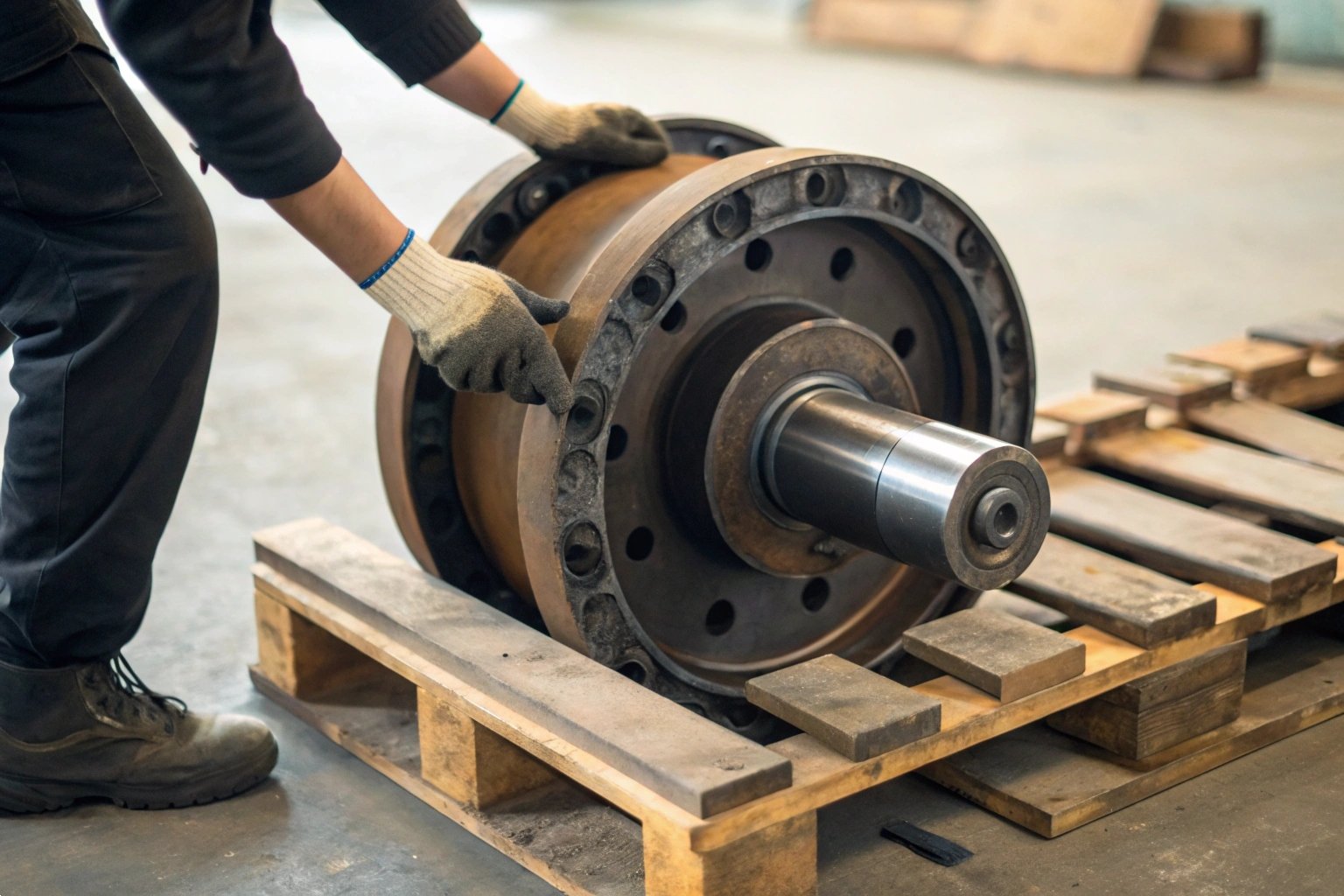
A real Cat roller uses a duo-cone seal 7. These seals are designed to work with thin oil that splashes around to keep the bushings cool. If someone puts grease in there, the grease won't reach the center of the shaft when it is cold. The roller will get hot, the bushings will gall, and the shaft will eventually snap or seize. I always look for "weeping" around the seals. A little bit of dry dust is okay, but wet, sticky oil means the seal is gone. If the roller is too clean—like it was just pressure washed—be suspicious. The seller might be hiding a fresh leak.
Roller Inspection Checklist
| Inspection Point | What to Look For | Red Flag |
|---|---|---|
| Seal Area | Dry or minor dust | Wet oil or thick grease "snakes" |
| Rotation | Smooth, consistent | Grinding, clicking, or too stiff |
| Shaft Play | No movement | "Wobble" when pushed side-to-side |
| Flanges | Sharp or rounded | Cracked or broken chunks |
I also suggest checking the "tread" of the roller. If the roller is worn unevenly—meaning one side is thinner than the other—it means the machine it came from had a bent frame or a misalignment issue 8. You don't want those rollers because they will put uneven pressure on your current track links, causing your chain to wear out sideways. Always spin the roller by hand. It should move freely but feel "oily" and smooth. If it spins too easily like a bicycle wheel, the oil might be completely gone.
What documentation should I request to prove the original machine hours of used Cat undercarriage?
In the world of used parts, "low hours" is a phrase people use very loosely. Without proof, a part with 4,000 hours can be cleaned up to look like it only has 1,000 hours. You need to be a detective to find the truth.
You should ask for the machine's Serial Number and a copy of the "Product Status Report" (PSR) from the Cat ET (Electronic Technician) software. This report shows the total machine hours and the work application history, which helps you verify if the parts are truly original.
Beyond the digital reports, I always ask for Custom Track Service 9 (CTS) reports. These are the physical inspections done by Cat dealers. A CTS report will show the history of measurements over time. If a seller says the parts have 500 hours but the CTS report from six months ago shows 3,000 hours, you know they are lying. I also like to see photos of the "donor machine" before it was taken apart. If the machine looks like it was working in a swamp or a scrap yard, those hours were much harder on the parts than hours spent on a flat construction site 10.
Documentation Importance Level
- Product Status Report (PSR): Essential. Confirms total frame hours and engine history.
- CTS Inspection Sheets: Highly Recommended. Provides a history of wear measurements.
- S.O.S. Oil Analysis: Good for major parts. Proves there is no metal debris inside.
- Sales Invoice: Helpful. To prove the parts were sourced from a legitimate machine.
I remember a deal where the seller promised "near-new" chains. When I checked the serial number of the machine they came from, it turned out the machine was a rental unit from a rocky region. The links looked okay, but the bushings were almost 80% worn internally because of the high-impact environment. Documentation saved me from a $12,000 mistake. Never trust a seller who says they "lost" the paperwork. In this industry, records are as valuable as the iron itself.
Conclusion
Buying used Cat undercarriage parts is a smart way to save money if you stay disciplined. Always verify the part identity, use tools instead of eyes, and never ignore documentation.
Footnotes
1. Official portal for genuine Caterpillar replacement parts and technical specifications. ↩︎
2. Technical details on how ultrasonic waves measure industrial metal thickness accurately. ↩︎
3. Community-driven forum for heavy equipment specifications and wear tolerance charts. ↩︎
4. Industry standards for identifying and recycling damaged heavy machinery steel. ↩︎
5. Manufacturer guide for high-performance sprocket segments and undercarriage components. ↩︎
6. Deep dive into the mechanics of Sealed and Lubricated Track technology. ↩︎
7. Engineering specifications for heavy-duty mechanical face seals used in rollers. ↩︎
8. Professional maintenance tips for preventing premature undercarriage wear and misalignment. ↩︎
9. Overview of Caterpillar's proprietary system for monitoring and managing undercarriage life. ↩︎
10. Safety and operational standards for equipment used on modern construction sites. ↩︎