
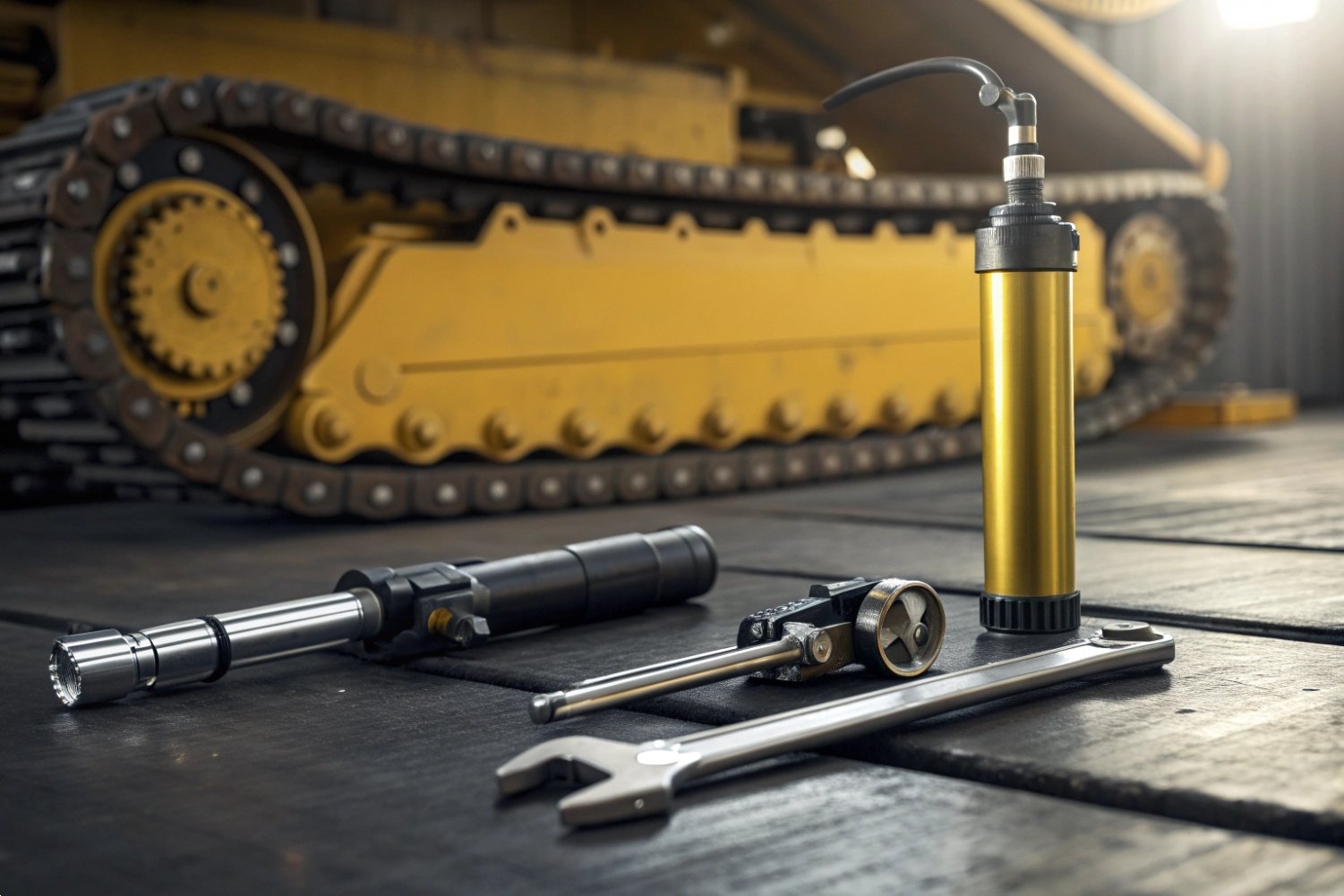
Keeping my heavy equipment running smoothly is a constant battle against wear and tear. I have learned that without the right tools, maintaining a complex undercarriage becomes a dangerous and expensive nightmare.
The 8 must-have tools for undercarriage maintenance include high-pressure washers, heavy-duty jacks, ultrasonic wear gauges, hydraulic track presses, torque wrenches, laser alignment tools, grease guns, and digital calipers. These tools ensure safety, accuracy, and long-term durability for your machinery components.
If you want to stop wasting money on premature part failures and keep your fleet in top shape, you need to know exactly which tools matter. Let’s look at the gear that saves my business time and money every single day.
Why is a high-pressure hydraulic track press essential for my field pin and bushing repairs?
I used to struggle with manual methods for removing stubborn track pins, which often led to damaged links and wasted hours. Now, I never go to a job site without a portable hydraulic track press 1 because it handles the heavy lifting safely.
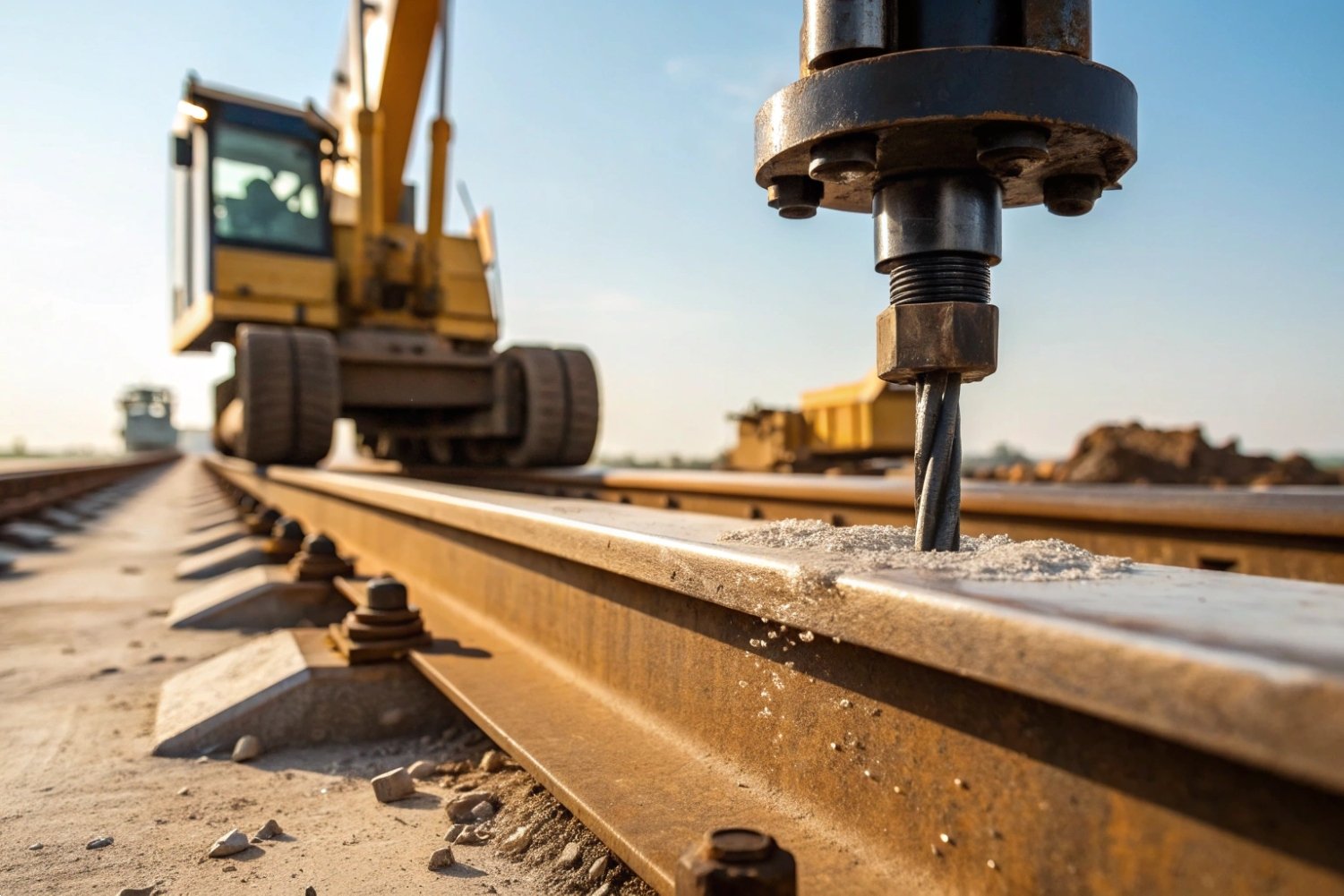
A high-pressure hydraulic track press is essential because it provides the immense force needed to remove and install press-fitted pins and bushings without damaging the track links. It allows for efficient field repairs, reducing downtime by eliminating the need to transport entire tracks to a shop.
The Power of Controlled Force
In my 20 years of experience, I have seen many people try to "beat" pins out with a sledgehammer. This is a mistake. Not only is it dangerous for the worker, but it also creates tiny cracks in the track chain. A hydraulic press uses steady, high-pressure force. This keeps the integrity of the metal intact. When we work with brands like Caterpillar 2 or Komatsu, the tolerances are very tight. You need a tool that respects those measurements.
Versatility Across Different Models
One thing I always look for is a press that fits multiple machines. My team works on everything from small excavators to D8 bulldozers. A good press comes with different "saddles" or adapters. This means I don't have to buy a new tool every time I buy a new machine. It is a one-time investment that covers my whole fleet.
Efficiency and Cost Savings
Time is money in the construction and mining world. If a machine is sitting idle because of a broken track, I am losing profit. The portable press allows my technicians to fix the problem right where the machine sits. We don't have to pay for heavy hauling 3 or wait days for a specialized shop to have an opening.
| Feature | Impact on Maintenance | Benefit for Owner |
|---|---|---|
| 100-Ton Pressure | Easily pushes out seized pins | Faster repair times |
| Portable Frame | Can be used on-site | No hauling costs |
| Multiple Adapters | Fits various chain sizes | High return on investment |
Safety First
Using a hydraulic tool is much safer than manual labor. It has pressure gauges 4 that tell us when we are reaching the limit. This prevents "over-pressing" which could shatter a bushing. My workers feel more confident using a tool designed for the job.
How can an ultrasonic wear gauge help me accurately track my undercarriage's remaining life?
I used to rely on simple rulers to check wear, but I realized I was just guessing. Now, I use an ultrasonic wear gauge 5 to get exact measurements of the metal thickness inside my rollers and idlers.
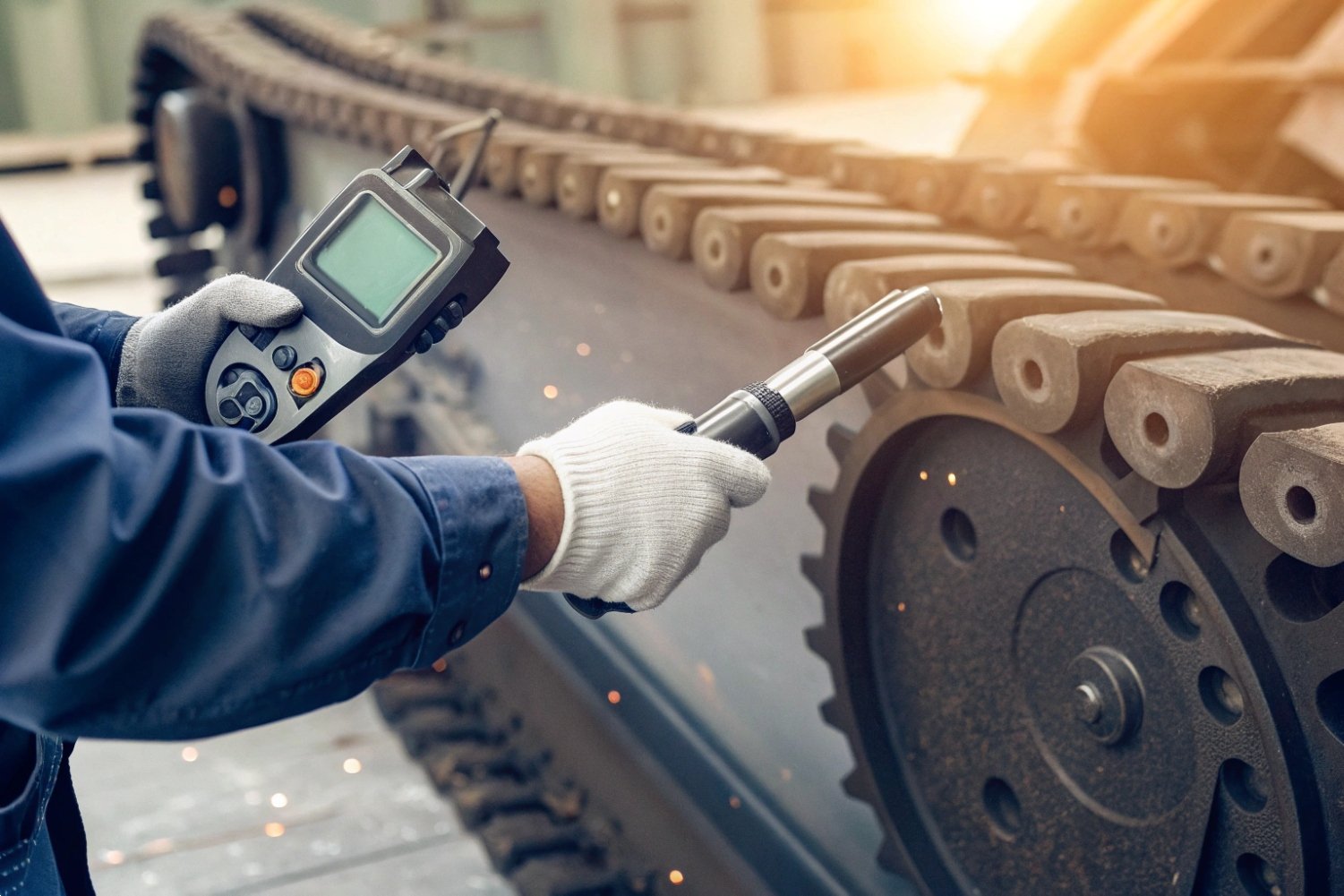
An ultrasonic wear gauge helps track undercarriage life by using sound waves to measure the thickness of metal components without taking them apart. This data allows you to predict exactly when a part will fail, helping you plan maintenance and avoid unexpected breakdowns.
Science Over Guesswork
The beauty of this tool is its accuracy. It sends a high-frequency sound wave through the metal. It measures how long it takes for the wave to bounce back. This tells me the exact thickness of the shell on a bottom roller or the rim of an idler. I no longer have to guess if a part has 20% or 40% life left. I know for sure.
Planning My Budget
As a business owner, I hate surprises. If an undercarriage fails unexpectedly, it ruins my budget. By using this gauge every month, I can create a "wear chart" 6. I can see that a part is wearing at a rate of 5% per month. This lets me order my replacements from Dingtai early. I get the parts I need before the machine actually stops working.
Comparing Components
Not all parts wear at the same rate. Sometimes, the front rollers wear faster than the back ones because of how the operator uses the machine.
Wear Analysis Table
| Component | Standard Thickness | Current Measurement | Remaining Life |
|---|---|---|---|
| Track Link | 120mm | 108mm | 40% |
| Bottom Roller | 50mm | 45% | 60% |
| Carrier Roller | 40mm | 32mm | 25% |
Non-Destructive Testing
The best part is that I don't have to clean the machine to the bone or take anything off. I just need a small clean spot for the sensor. It saves my team hours of labor compared to traditional physical measurement methods 7. It is clean, fast, and professional.
What type of heavy-duty torque wrench do I need for my bulldozer track shoe bolts?
I learned the hard way that "tight enough" isn't good enough for track shoe bolts. If those bolts are loose, the shoes fall off; if they are too tight, they snap. I now use a high-torque multiplier wrench 8 to get the specs exactly right.
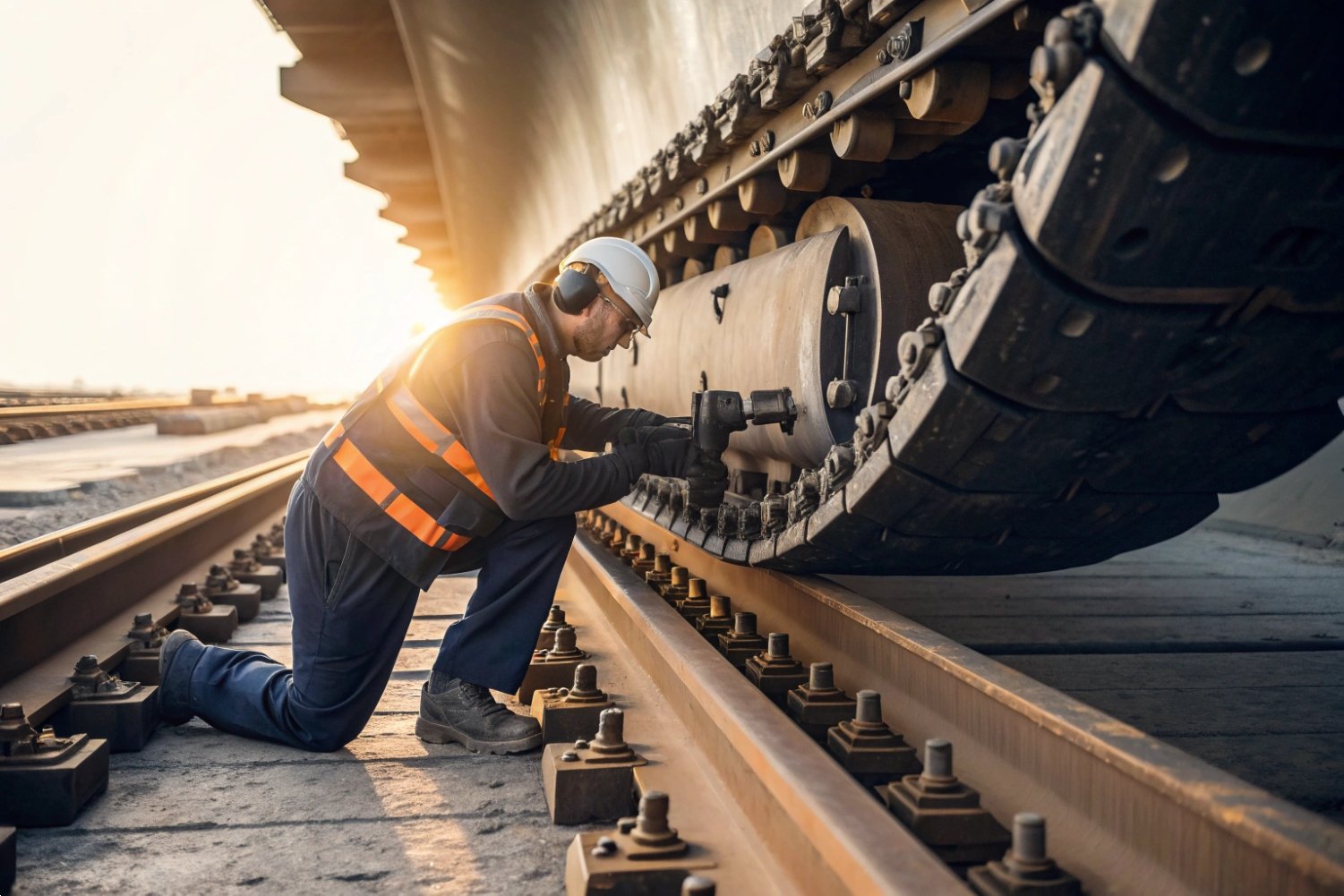
For bulldozer track shoe bolts, you need a heavy-duty torque wrench capable of reaching at least 600 to 1,000 foot-pounds (800-1350 Nm), often requiring a torque multiplier. This ensures the bolts stay secure under extreme vibration and heavy loads, preventing costly damage to the track chain.
Why Torque Matters
The undercarriage of a bulldozer faces incredible twisting forces. When a D10 bulldozer turns, the pressure on those bolts is massive. If the torque is uneven, the stress concentrates on just a few bolts. They will eventually shear off. I always tell my guys to follow the manufacturer's manual. We use the wrench to hit the exact number every time.
The Role of the Torque Multiplier
Most human beings cannot pull a wrench to 800 foot-pounds by hand. That is why we use a multiplier. It is a gear system that takes my input and multiplies it by 3 or 4 times. This makes the job easy and safe. It prevents back injuries for my technicians and ensures the bolts are actually tight.
Maintaining Bolt Tension
New track shoes actually need to be "re-torqued" after a few hours of work. The paint wears off and the metal settles. Without a reliable torque wrench 9 on the job site, we can't do this properly.
Bolt Torque Comparison
| Machine Size | Typical Bolt Size | Required Torque (Nm) | Tool Recommended |
|---|---|---|---|
| Small (10-15 Ton) | 16mm | 300 - 400 | Digital Torque Wrench |
| Medium (20-30 Ton) | 20mm | 600 - 800 | Torque Multiplier |
| Large (50+ Ton) | 24mm+ | 1200+ | Hydraulic Torque Wrench |
Protecting Your Investment
A single broken bolt can lead to a lost track shoe. A lost track shoe can damage the track link. A damaged track link can ruin a whole chain. For the price of one good wrench, I protect an undercarriage that costs tens of thousands of dollars. It is simple math.
How does a laser alignment tool improve the precision of my idler and sprocket positioning?
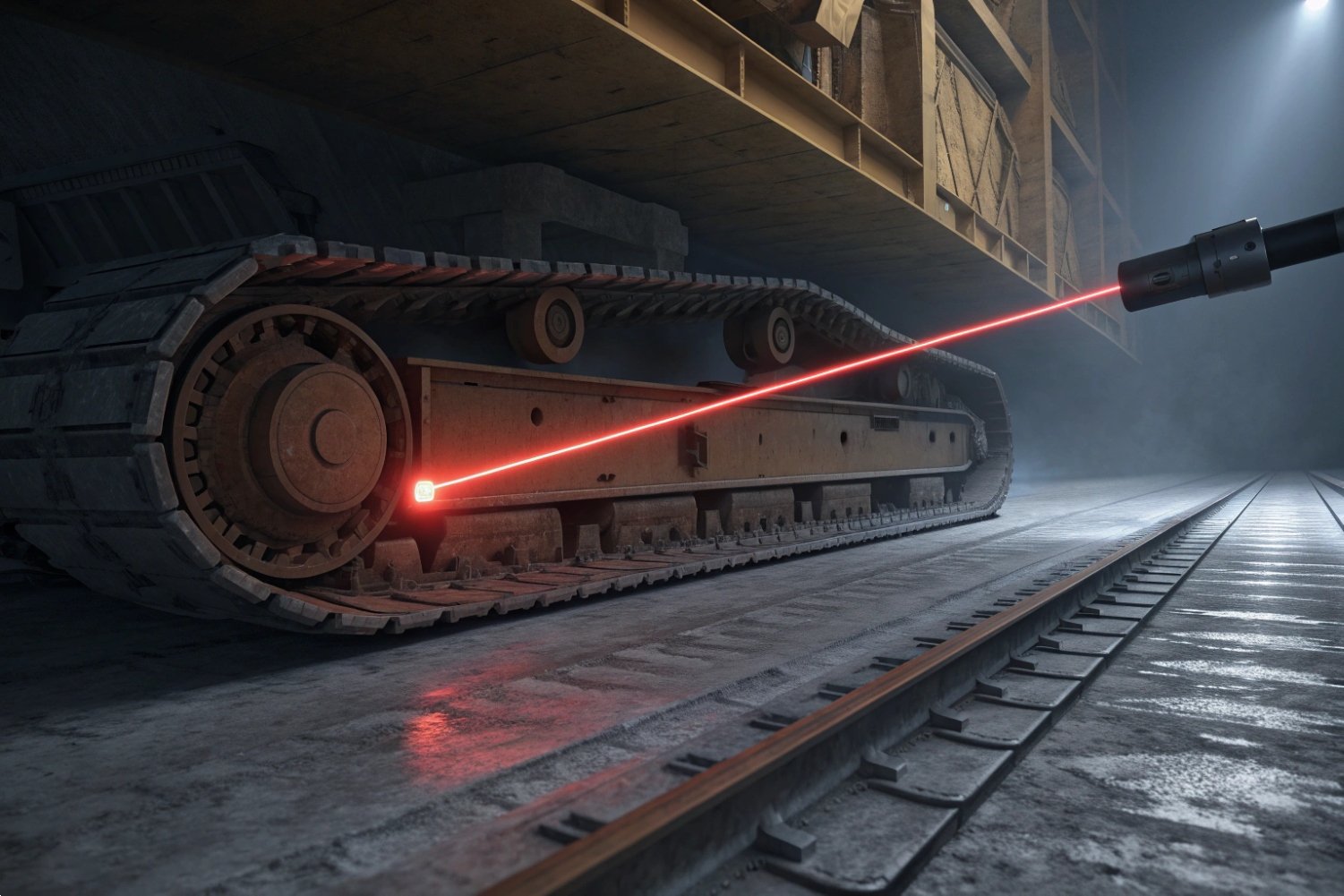
I used to use a string line to check if my tracks were straight, but it was never perfect. Now, I use a laser alignment tool 10 to make sure my sprockets, rollers, and idlers are perfectly in line, which has doubled the life of my track links.
A laser alignment tool improves precision by projecting a perfectly straight beam along the entire length of the undercarriage. This identifies even the slightest misalignment in the idlers or sprockets, preventing "side-wear" on the track links and significantly reducing friction and fuel consumption.
Preventing Uneven Wear
If your idler is just a few millimeters off-center, it pushes the track chain against the side of the rollers. I call this "the silent killer" of undercarriages. You won't notice it immediately, but your links will wear out on one side very fast. The laser shows me exactly where the misalignment is. I can then shim the idler or adjust the frame to fix it.
Saving Fuel and Power
When everything is aligned, the track moves with less resistance. This means the engine doesn't have to work as hard to turn the tracks. I noticed that after we started using laser alignment, our fuel bills dropped slightly. Over a year, that adds up to a lot of money.
Ease of Use in the Field
Modern laser tools are built for the construction site. They are rugged and waterproof. My lead mechanic, who has been with me for 15 years, was skeptical at first. Now, he won't start a track rebuild without the laser. He likes how fast it is. You just set it up at the sprocket and point it toward the idler. The red dot tells the whole story.
Alignment Check Benefits
- Reduced Vibration: The machine runs smoother, which is better for the operator.
- Longer Link Life: Stops the "snaking" motion of the chain.
- Less Heat: Misalignment creates friction, and friction creates heat. Heat destroys seals.
- Accurate Diagnostics: You can tell if a frame is bent from an old accident.
Conclusion
Investing in these 8 tools has completely changed how I manage my fleet. By using the right technology, like hydraulic presses and laser alignment, I have reduced my maintenance costs and kept my machines on the job longer.
Footnotes
1. Explore portable hydraulic track presses for efficient on-site pin and bushing repairs. ↩︎
2. Official Caterpillar website for heavy machinery specifications and manufacturer standards. ↩︎
3. Understanding the logistics and costs associated with heavy equipment hauling services. ↩︎
4. Guide to choosing the right hydraulic pressure gauges for industrial maintenance. ↩︎
5. Learn how ultrasonic gauges measure metal thickness for non-destructive wear analysis. ↩︎
6. Examples of undercarriage wear charts for tracking component life cycles. ↩︎
7. Comparison of traditional and digital tools for measuring undercarriage wear. ↩︎
8. Benefits of using torque multipliers for high-torque industrial applications. ↩︎
9. Overview of industrial torque wrenches for securing heavy-duty machinery bolts. ↩︎
10. How laser alignment tools improve the accuracy of industrial machine positioning. ↩︎