
You are in Brazil and need high-quality undercarriage parts, but international payments seem complex. You worry about sending money overseas. I understand. We offer clear, secure payment options like T/T and L/C.
Yes, you have options. As a manufacturer, I find new Brazilian clients usually start with T/T (Telegraphic Transfer) or an L/C (Letter of Credit) at sight. T/T requires a deposit, while L/C offers security through banks. We can discuss which is best for your first order.
Choosing the right payment term is crucial. It balances your cash flow with our production costs. As a new partner, you probably have specific questions about how these methods work. Let's break down the common questions I hear from new importers just like you.
What is my required deposit percentage for a T/T payment?
You need to order, but you don't know how much cash you need upfront. Paying too much deposit ties up your capital. I get it. Our standard T/T deposit is designed to be fair and just covers initial material costs.
For most new orders, I ask for a 30% deposit via T/T. This percentage is standard in our industry. It allows me to secure the raw materials, like steel, and schedule your order for production. It shows commitment from both sides.
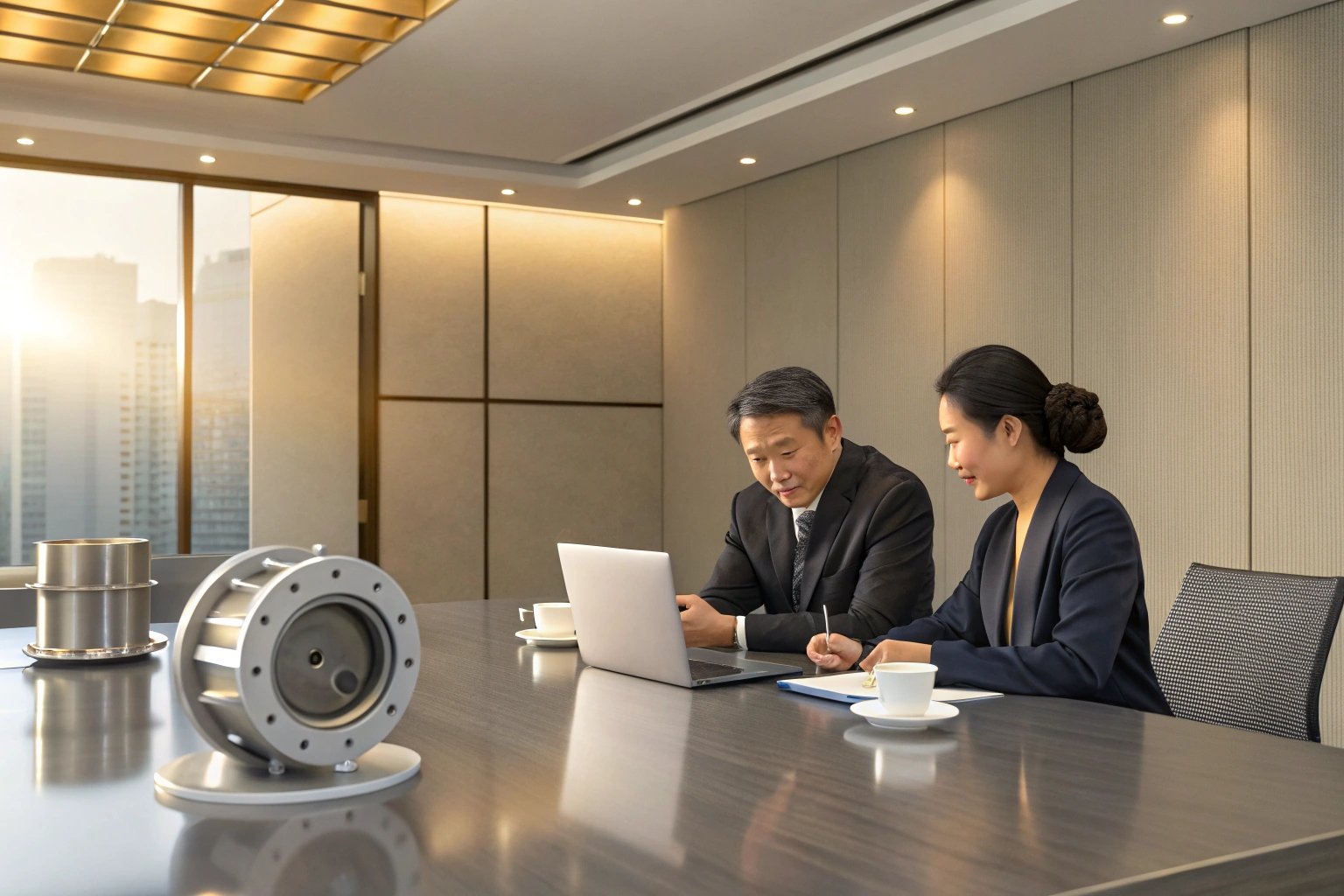
This 30% deposit is a common practice for B2B manufacturing, and it serves a critical purpose. When you place an order for track rollers 1, idlers, or track chains, I immediately have to place orders for high-grade steel 2 and other raw materials. This deposit covers those initial costs.
Why Do We Require a 30% Deposit?
A deposit acts as a formal confirmation of the order. It secures your place in our production schedule. It also creates a partnership where both sides have a financial commitment to the project. It protects us, the manufacturer, from spending capital on raw materials for an order that might be canceled. It protects you, the buyer, by locking in your price and production slot.
The process is very straightforward:
1. We finalize your order details (parts, quantity, price).
2. I send you a Proforma Invoice (PI) 3 with our company's bank details.
3. You take the PI to your bank in Brazil and wire the 30% deposit.
4. It usually takes 2-5 business days for the T/T payment to arrive.
5. As soon as I receive it, I send you a confirmation, and we begin production.
How This Deposit Varies
While 30% is the standard for our aftermarket parts 4, this can change based on the order. If you need highly customized parts, like a special OEM-specification part that we cannot sell to any other customer, the deposit might be higher, perhaps 40% or 50%. This is because our risk is higher. Conversely, for a very small trial order of standard items, we might be more flexible.
Here is a simple breakdown of typical deposit structures:
| Order Type | Typical Deposit (T/T) | Why? |
|---|---|---|
| Standard Parts Order | 30% | Industry standard. Covers raw materials. |
| Highly Customized Order | 40% - 50% | Parts are non-standard and cannot be resold. |
| Small Sample Order | 100% (or PayPal) | Covers the high cost of shipping small items. |
| Repeat/Loyal Customer | 0% - 10% | Trust is established; credit terms may apply. |
For a new customer from Brazil, starting with 30% is the clearest and most direct way to begin our partnership.
When do I pay the balance if I use T/T?
You paid the deposit. Now you wonder when the big final payment is due. You don't want to pay before you know your parts are safe. I make this step transparent. You pay the balance only when you have proof the goods are ready.
You pay the remaining 70% balance after production is finished. I will notify you and send proof, like photos or a quality report. Most clients pay this balance against a copy of the Bill of Lading (B/L) after the goods are shipped.
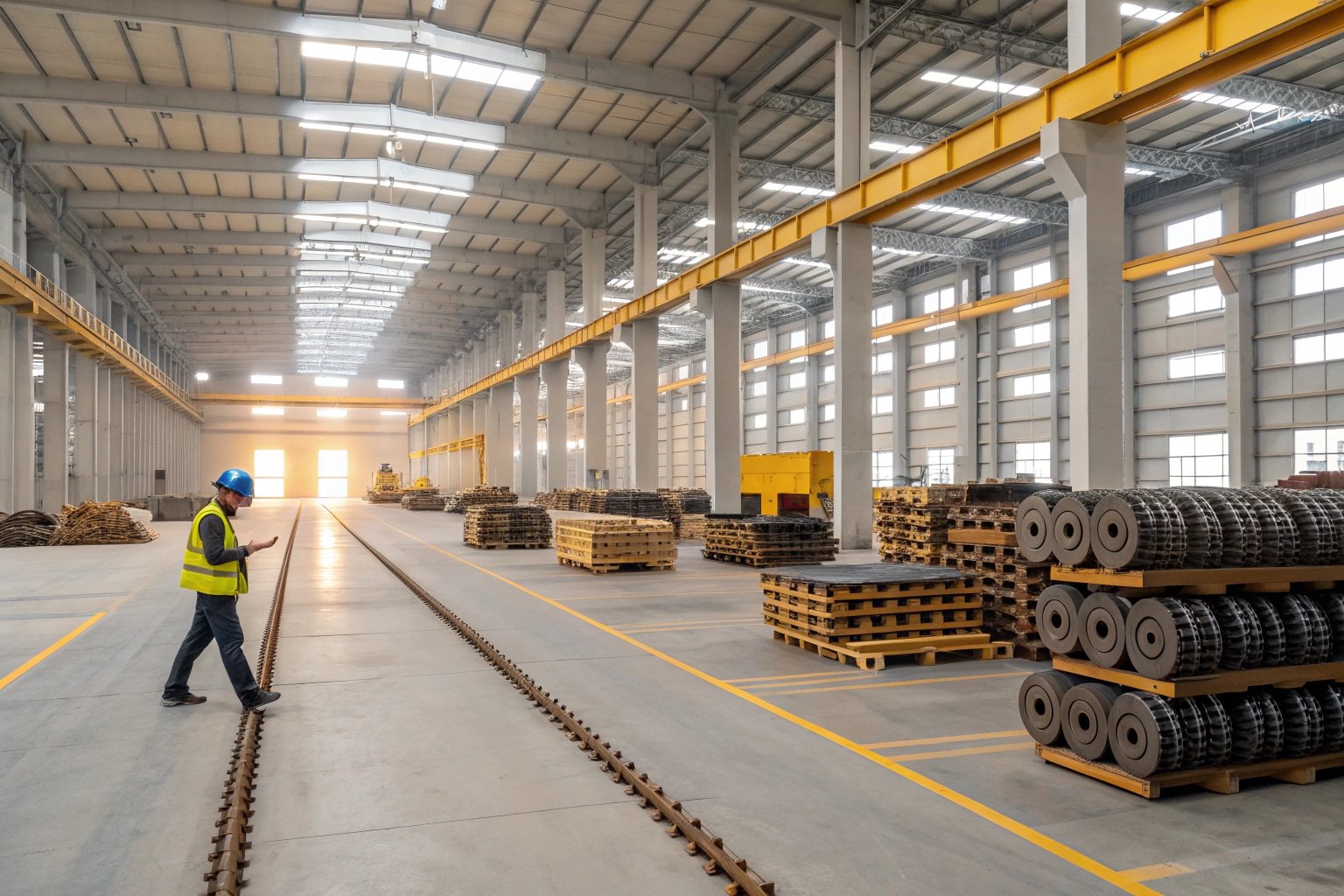
This balance payment is the most critical step for you as a buyer. You need to know that the goods you ordered are correct, high-quality, and on their way. We have two common "triggers" for this final 70% payment.
The Two Most Common Balance Payment Triggers
1. Balance Paid Before Shipping:
In this method, we finish 100% of your production. My quality control team, which is SGS and ISO9001 certified 5, inspects every part. I will then send you detailed photos of your finished track rollers, a packing list, and the final inspection report. Once you approve everything, you send the 70% balance. As soon as the payment arrives, we book the container and ship your goods from Xiamen or Quanzhou port 6 to your port in Brazil (like Santos). This method is simple but requires a high level of trust from you.
2. Balance Paid After Shipping (Against B/L Copy):
This is the method I recommend for new customers. It is much safer for you. The process is:
We finish production and inspection.
We book the container and truck your goods to the port.
The container is loaded onto the ship.
The shipping line then issues us the "Bill of Lading (B/L)" 7. This document is the title to the goods.
I will email you a copy of this B/L. This is your proof that the goods have left our factory and are on a ship heading to Brazil.
Seeing this B/L copy, you then wire the final 70% balance.
Once I receive the payment, I send you the original B/L (or a "telex release"). You must* have this original B/L to claim your container from customs in Brazil 8.
Comparing T/T Balance Payment Triggers
This second method is the most popular because it balances the risk perfectly. You don't pay the final amount until you have proof of shipment. We don't release the official documents (which control the goods) until we have received the final payment.
| Payment Trigger | Buyer's Risk | Supplier's Risk | Best For... |
|---|---|---|---|
| Balance Before Shipping | High (Paying before goods are on the ship) | Low | High-trust relationships or small orders |
| Balance Against B/L Copy | Low (Paying only after shipment is confirmed) | Low | New customers and most standard orders |
We will also provide the full set of shipping documents you need for Brazilian customs, including the Commercial Invoice, Packing List, and Certificate of Origin 9.
What are my terms for an L/C at sight, and which banks do you accept?
Your order is very large, and T/T feels too risky for you. You need a payment method where your bank protects you. I understand completely. For large orders, we accept L/C at Sight. It's a secure, bank-guaranteed process.
Yes, I accept L/C at Sight for larger orders, usually over $30,000. Your bank (the issuing bank) must be a reputable international bank. We accept L/Cs confirmed by major banks like HSBC, Standard Chartered, or Bank of China. All terms must be clear.

A Letter of Credit (L/C) is very different from a T/T payment. A T/T is a simple bank wire. An L/C is a formal promise from your bank to pay my bank, but only if I provide a perfect set of documents that match the L/C's terms exactly.
It is the most secure method for you as a buyer, especially on a large first order.
How an L/C at Sight Works (Simplified)
1. Agreement: We agree on the order (over $30,000) and sign a Proforma Invoice (PI).
2. You Apply: You go to your bank in Brazil (e.g., Itaú Unibanco, Banco do Brasil, Bradesco) and apply to "open" an Irrevocable L/C at Sight in our favor (Fujian Dingtai Engineering Machinery Co., Ltd.).
3. Bank Review: Your bank sends the L/C draft to our bank in China (like Bank of China).
4. We Review: I personally review every single word of the L/C. The required documents (B/L, Commercial Invoice, Packing List, Certificate of Origin, Inspection Certificate) must be exactly what we agreed upon. If I see any term I cannot meet, I will ask you to "amend" the L/C.
5. We Ship: Once we accept the L/C, we begin production and ship the goods before the L/C's deadline.
6. We Present Documents: I take all the perfect, required documents to my bank.
7. Payment: The banks check the documents. If they match 100%, your bank pays my bank "at sight" (usually within 5-10 business days). Your bank then gives you the documents so you can claim your goods.
Risks and Costs of L/C
While secure, L/Cs are slow, expensive, and very strict. Both your bank in Brazil and my bank in China will charge fees, often hundreds of dollars. More importantly, if there is a single typo (a "discrepancy"), the bank can refuse payment. This creates long delays. This is why I only use L/C for large orders, and I insist the issuing bank is a major, internationally recognized bank. We must be sure your bank is reliable.
| Feature | T/T (Telegraphic Transfer) | L/C (Letter of Credit) at Sight |
|---|---|---|
| Best For | All order sizes, especially < $30,000 | Large orders, > $30,000 |
| Security | Medium (Relies on trust and B/L) | Very High (Backed by banks) |
| Speed | Fast. Payment in 2-5 days. | Slow. Can take weeks to set up. |
| Cost | Low (Simple bank wire fees) | High (Issuing, advising, and handling fees) |
| Flexibility | High. Easy to manage. | Low. Very strict. A typo causes major delays. |
For most new clients, T/T (30% deposit, 70% on B/L copy) is a much faster, cheaper, and simpler way to start.
Do I have options for credit terms after my first few orders?
Paying 100% upfront (T/T) or dealing with L/Cs hurts your cash flow. You want a partner who trusts you enough to offer better terms. I believe in long-term partners. Yes, after we build a strong relationship, we can discuss credit.
Absolutely. My goal is a long-term partnership, not just one sale. After we complete a few orders (e.g., 3-5 orders) successfully with T/T, I am very open to discussing credit terms. This could be 30 days or more, depending on your volume.
This is a question I love to hear. It shows you are planning for a long-term business, and so am I.
My best clients, like David Miller in the US, don't use L/Cs or pay 100% T/T anymore. We work on "Open Account (O/A) terms" 10. This is the ultimate goal of our partnership.
The Path to Open Credit
In our industry, trust is the most valuable currency. The first 3-5 orders are our "getting to know you" phase.
- You learn about us: You confirm our product quality. You see that our track chains are durable, and our rollers are reliable. You experience our service—that we ship on time and our documents are always correct.
- I learn about you: I see your ordering patterns. I see that your T/T payments are on time and your communication is clear. We build a rhythm.
Once this trust is established, paying 100% before you even get the goods feels unnecessary. We are partners now.
What "Credit Terms" Look Like
1. Open Account (O/A) 30 Days: This is the most common credit term. We manufacture and ship your goods. You receive the container in Brazil, inspect the parts, and you have 30 days from the date of the Bill of Lading to send the full payment. This is fantastic for your cash flow. It allows you to receive, stock, and sometimes even sell the parts before you have to pay me.
2. Hybrid Terms: We might also move to a partial credit, such as a 10% deposit and 90% balance on O/A 30 days.
To offer these terms, I rely on two things: our relationship history and a business credit tool. We are backed by Sinosure, which is China's official export credit insurance agency. After a few successful orders, I can apply to Sinosure for a credit line for your company. If they approve you, I can offer you O/A terms with very little risk.
This is my goal for all our serious, long-term partners in Brazil. We will start with a secure T/T payment, prove our quality to you, and build the trust needed to support your business with open credit terms.
Conclusion
In short, we offer flexible payments. We'll start with secure T/T or L/C terms. My main goal is to build the trust needed for a long-term, open partnership.
Footnotes
1. Understand the function and engineering of track rollers in undercarriage systems. ↩︎
2. Research on sourcing and characteristics of high-grade steel for heavy machinery. ↩︎
3. Detailed guide explaining the purpose and legal significance of a Proforma Invoice. ↩︎
4. Explanation of manufacturing processes and quality considerations for aftermarket parts. ↩︎
5. Learn how SGS and ISO 9001 certifications ensure consistent product quality and testing standards. ↩︎
6. Overview of logistics and shipping capabilities of the major ports of Xiamen and Quanzhou. ↩︎
7. Comprehensive breakdown of the Bill of Lading (B/L) and its role as a title to goods. ↩︎
8. Official procedures and documentation required for importing commercial goods through Brazilian customs. ↩︎
9. Importance of the Certificate of Origin for customs clearance and trade agreements. ↩︎
10. In-depth analysis of Open Account (O/A) terms and their benefits for buyers' cash flow. ↩︎