

Your excavator sits idle. A critical part failed, and your operation is stopped. You blame the part; the supplier blames "misuse." I've seen this standoff cost partners millions 1.
To resolve this, I always start by reviewing the warranty terms. Then, I present clear evidence, like maintenance logs and photos. We must use objective data, third-party analysis, and clear communication to find the true cause, not just assign blame.
A disagreement is stressful, especially for procurement managers 2 who rely on stable supply chains. But a dispute doesn't have to end a partnership. It is how you handle the dispute that defines the relationship. Let's break down the steps to find a fair solution.
Can we agree to use an independent third-party expert to analyze the failure?
It's your word against theirs. The supplier's internal "inspection" says the part is fine. You know it is not. I see this all the time.
Yes, using a third-party expert is often the best way. As a manufacturer, I respect this approach. It removes bias. Both sides agree on an accredited lab, and everyone trusts the result. This moves us from arguing to solving the actual problem.
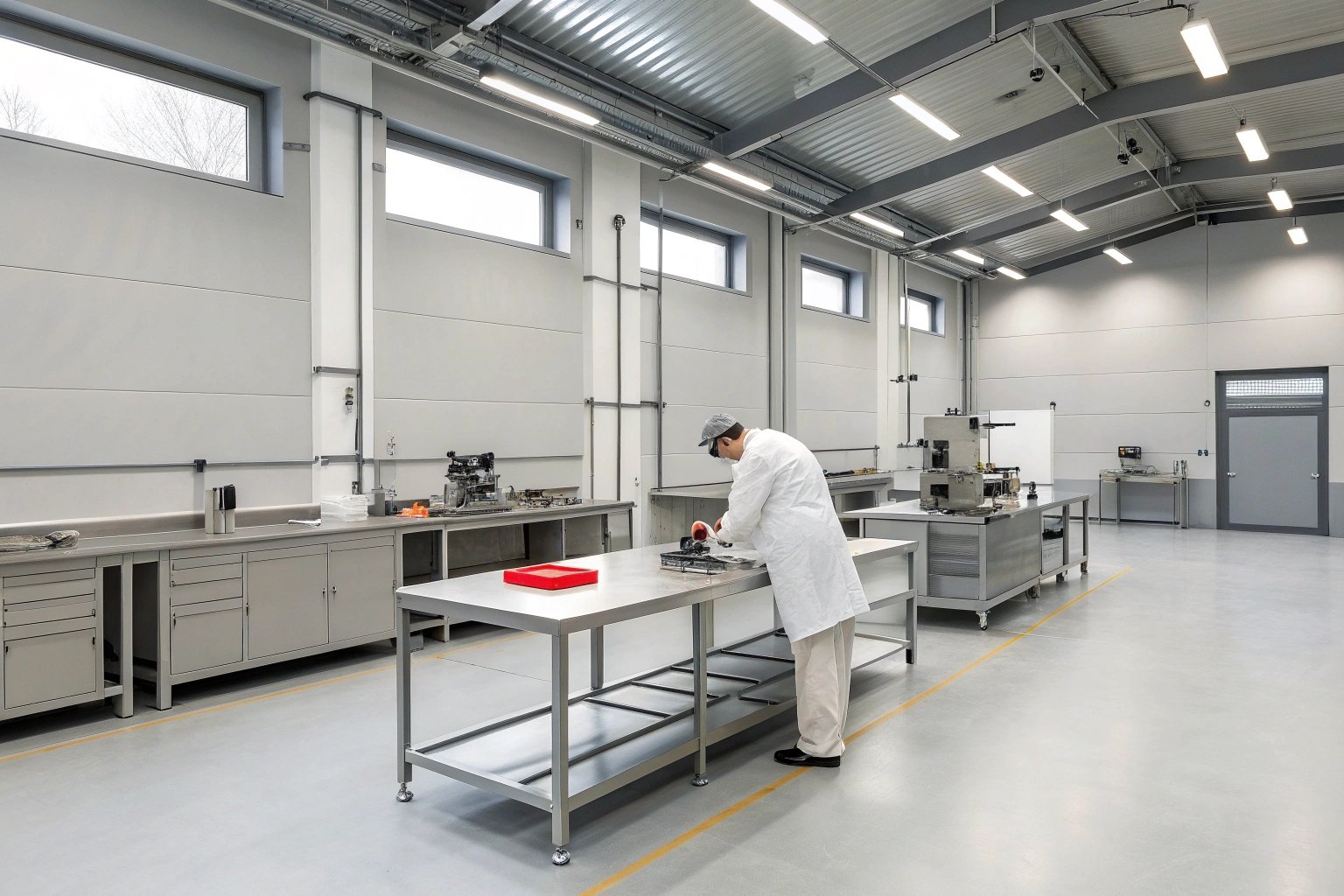
A supplier's internal analysis can be biased. Even our analysis at Dingtai, which we trust, might look biased to a customer. An independent expert 3 acts as a neutral judge. This is critical when you reach a complete stop in negotiations.
When I work with clients who understand metallurgy 4, they appreciate this transparency. A third party provides that. It shows that we, as the manufacturer, are confident in our product and have nothing to hide.
Choosing the Right Expert
You cannot just pick any laboratory. The expert must be:
- Mutually Agreed Upon: Both you and the supplier must agree on the choice. If one side picks the lab, the other side may not trust the results.
- Accredited: Look for labs with ISO/IEC 17025 accreditation 5. This means their testing methods are verified and standardized.
- Specialized: They must understand heavy machinery and metallurgy. They need experience with heat treatment and wear patterns 6 for undercarriage parts.
What Do They Analyze?
These experts do not just "look" at the part. They perform destructive and non-destructive testing. I often see them check for core parameters. These tests prove or disprove a manufacturing defect.
Here is a common testing list for a failed track roller:
| Test Type | Purpose | What it Proves (if it fails) |
|---|---|---|
| Metallurgical Analysis | Checks the steel's chemical composition. | The wrong material grade was used (e.g., lower carbon steel). |
| Hardness Testing (Rockwell/Brinell) | Measures surface hardness and core hardness. | Improper heat treatment; the part is too soft (wears fast) or too brittle (cracks). |
| Microstructure Analysis | Examines the steel's grain structure. | Confirms poor heat treatment (e.g., quenching or tempering issues). |
| Failure Analysis (Fractography) | Studies the fracture surface. | Determines if the break was from sudden impact (misuse) or fatigue (defect). |
The Cost and Process
Who pays for this? The contract often dictates this. A common agreement is that the party found to be "at fault" by the expert pays the testing fee. Sometimes, both parties agree to split the cost, just to get an answer and move on. The cost of the test is almost always cheaper than the cost of a stalled project 7 or a lawsuit.
What kind of evidence would help prove that the issue was a manufacturing defect?
Your supplier says, "We've never seen this before. It must be your operator." You know the part failed too early, but how do you prove it?
Clear evidence is your only defense. I always tell my team, "Data wins arguments." You need to provide clear photos of the failure before you remove it. You also need maintenance logs, operator reports, and purchase records. Data is the key.

A supplier (especially a good one) wants to see the evidence. We at Dingtai use failure analysis 8 to improve our own production. We cannot fix a problem if we do not know it exists.
When a professional procurement manager calls me, they do not just say "it broke." They say, "Linda, the roller on serial number XYZ failed at 1,500 hours. Here are the photos, the operating conditions, and the oil analysis." That is a professional approach. You must build a clear "evidence package."
1. Document the Failure Immediately
Before you touch, move, or repair anything, take photos and videos.
- Wide Shot: Show the entire machine and the failed part in context.
- Close-up Shot: Get detailed images of the fracture, the wear, or the leak.
- Context Shots: Show the ground conditions (e.g., high-abrasion rock, sticky mud).
- Part Numbers: Take clear photos of any serial numbers or markings on the part.
2. Gather Your Records
This is where many claims fail. You need to prove the part's history. Your usage records are vital.
- Purchase Order / Invoice: This proves you bought the part and when. Keep this basic purchasing proof.
- Installation Date: When was the part put on the machine?
- Machine Hours: How many hours were on the part when it failed?
- Maintenance Logs: Show that the machine was greased and inspected according to schedule. If you can show you did your job (maintenance), it strengthens the case that the part did not do its job.
3. Ask the Supplier for Their Data
This is a powerful step. You should ask the supplier for their quality control documents for that specific production batch.
- Ask for the Mill Test Report (MTR) 9 for the steel.
- Ask for the internal heat treatment reports.
- Ask for the final QC inspection report.
As a manufacturer who is ISO9001 certified, we have all this data. If a supplier cannot provide these, it is a major red flag. If they do provide them, you can compare them to the third-party analysis.
Evidence: Defect vs. Misuse
Here is a simple table to help you categorize your evidence. This helps you determine if you have a strong case.
| Evidence Type | Points to Manufacturing Defect | Points to Operator Error / Misuse |
|---|---|---|
| Failure Time | Failed very early (e.g., < 1000 hours). | Failed near the end of expected life. |
| Failure Type | Brittle fracture, porosity, improper hardness. | Bent part, impact damage, extreme wear. |
| Maintenance Log | Perfect, all checks done on time. | Missing entries, long gaps. |
| Other Parts | Multiple parts from the same batch failed. | Only one part failed after a known impact. |
This data makes the conversation objective. It is not about blame; it is about facts.
Should our contract outline a specific dispute resolution process for such cases?
The part is broken. Now your relationship is, too. You are both arguing over email, and lawyers are getting mentioned. This is a nightmare.
Absolutely. As a 20-year manufacturer, I insist on this. A clear contract is not for when things go right; it is for when things go wrong. It is a roadmap that guides us both back to business, protecting everyone and saving time.

I have spoken with many procurement managers. The best ones read the warranty and supply contracts 10 before they buy. They know that a good contract protects both the buyer and the seller. It prevents a small problem from becoming a big, expensive legal fight.
Your purchase order (PO) and the supplier's terms and conditions create the contract. Make sure you read the fine print before you issue the PO. Look for the "Warranty" and "Dispute Resolution" sections.
Key Clauses for Your Dispute Process
When we at Dingtai create OEM agreements, we make sure these steps are clear. Your agreement should have a "tiered" process. This stops small problems from going straight to lawyers.
- Informal Negotiation: A rule that both parties must first attempt to solve the issue with their primary contacts (e.g., you and me, the sales/procurement managers) for 14-30 days.
- Formal Escalation: If that fails, the issue is escalated to senior management (e.g., your VP and our General Manager).
- Mediation: If management cannot agree, a neutral mediator is brought in to help the parties find their own solution.
- Arbitration / Litigation: The final step. This is where a third party makes a binding decision.
Mediation vs. Arbitration
People often confuse these two. They are very different. As a partner, I prefer mediation first. It is about fixing the relationship. Arbitration is about ending the dispute, sometimes at the cost of the relationship.
| Feature | Mediation | Arbitration |
|---|---|---|
| Goal | Find a mutually agreeable solution. | Get a final, binding decision. |
| Process | Collaborative, informal discussion. | Formal, like a mini-court trial. |
| Outcome | Non-binding (unless a new contract is signed). | Binding (enforceable by law). |
| Cost | Lower. | Higher (can be very expensive). |
| Relationship | Good chance of preserving the relationship. | Often damages the relationship. |
For most undercarriage part disputes, informal negotiation and escalation should be enough. If you have the evidence we discussed earlier and a willingness to use a third-party expert, the problem can usually be solved. The contract is just the safety net.
How can I maintain a good relationship with the supplier even when we have a disagreement?
You are angry. The supplier is defensive. Every email gets colder. You need this supplier, but you also need this problem fixed. How do you proceed?
I tell my clients: separate the problem from the person. We are not enemies; we are partners with a shared problem. Stay professional, stick to the facts, and focus on a common goal: getting your machine running again.

This is the most important question. In my 20+ years at Dingtai, I can tell you that a single failed part is not what kills a business relationship. A lack of respect and poor communication does.
I have had tough calls with customers. The ones who remain partners are the ones who can be professional even when they are frustrated.
Communication Rules for Tough Talks
- Use "I" statements, not "You" statements.
- Bad: "Your part is junk and your quality control is terrible." (This is an attack).
- Good: "I am frustrated because I am seeing a failure that I did not expect, and it's stopping my project. I need your help to understand why it happened." (This is a fact + a request).
- Stick to Objective Data.
- Do not use emotional words like "always" or "never."
- Bad: "Your parts always fail, and you never help!"
- Good: "This specific part (Serial #456) failed at 1,200 hours. Our warranty agreement is for 4,000 hours. Please review the attached photos and maintenance logs." (This is professional and uses detailed records).
- Pick up the Phone.
- Email is terrible for solving emotional problems. It is easy to misread tone. Engage in direct communication. If things get tense, I always suggest a video call. It helps to see the other person's face. It reminds us both that we are people trying to solve a problem.
Focus on the Shared Goal
What is the shared goal? To get your excavator working again.
Once you establish that, you can move to negotiation.
A good negotiation is not about "winning." It is about finding a fair outcome.
- Maybe the supplier replaces the part at no cost.
- Maybe they offer a deep discount on the replacement.
- Maybe you agree to split the cost of the third-party testing.
A good supplier, like Dingtai, will see a dispute as a chance to prove their commitment to quality and service. We want to know when things go wrong, and we want to make it right. A bad supplier will hide, blame you, and disappear. This disagreement is the perfect test to see which kind of supplier you are dealing with.
Conclusion
Disputes are tough, but they are manageable. By using clear evidence, trusting third-party experts, and communicating professionally, you can solve the problem and even strengthen your partnership.
Footnotes
1. Read a detailed breakdown of how equipment downtime costs can escalate into millions. ↩︎
2. Guide to the critical role and responsibilities of procurement managers in supplier relationships. ↩︎
3. Explanation of the legal and technical functions of independent expert witnesses in failure disputes. ↩︎
4. Introduction to metallurgy and its importance in the quality of heavy machinery parts. ↩︎
5. Learn how ISO/IEC 17025 accreditation ensures the competence of testing and calibration laboratories. ↩︎
6. Technical insights into common wear patterns on undercarriage parts and what they indicate. ↩︎
7. Analysis of the financial impact and project delays caused by stalled heavy equipment. ↩︎
8. Detailed guide on industrial failure analysis techniques and their application in manufacturing improvement. ↩︎
9. Explanation of the contents and importance of a Mill Test Report (MTR) for material verification. ↩︎
10. Key clauses that should be included in supply contracts to protect buyers and outline responsibilities. ↩︎