

Are you worried about customs declaration errors 1? I see many importers struggle with this. It can lead to costly delays and fines, stopping your parts at the port.
I always tell my clients, like David Miller, that accuracy is key. You must ensure the declared value matches the "transaction value." This is the price you actually paid for the goods, plus any costs to get them to the export port.
Getting this value right seems complex, but it protects your business. Let's break down how you can ensure your declaration is accurate every time.
Should the declared value be based on the price I paid for the goods as shown on the Commercial Invoice?
Do you look at your Commercial Invoice and wonder if it's really that simple? It feels too easy, and you worry you might be missing something crucial.
Yes, absolutely. The Commercial Invoice is my starting point. I make sure it clearly lists the unit price for every single track roller and chain. This document is the primary evidence for the "transaction value," which is what customs officials use.

The primary method for customs valuation 2 in the United States and most of the world is the "transaction value" method. This is defined as the price actually paid or payable for the merchandise when sold for export to the country of importation 3.
Your Commercial Invoice is the most important document to support this value. It acts as the bill of sale from the seller (like my company, Dingtai) to the buyer (like your company).
Why a Detailed Invoice is Critical
A simple invoice with a total price is a red flag for customs. It does not provide enough detail for them to verify the value. As an importer, you should insist that your supplier provides a comprehensive invoice.
From my experience as a manufacturer, I always provide detailed invoices for my clients. This includes:
- Part Numbers: Specific OEM-compatible part numbers (e.g., for Caterpillar, Komatsu).
- Descriptions: Clear descriptions (e.g., "D8R Track Roller Assembly").
- Quantity: The number of units for each part.
- Unit Price: The price for a single unit.
- Total Price: The total for each line item.
When I prepare an invoice for a client like David Miller, I know he needs this level of detail. It prevents customs from guessing or challenging the value. A vague invoice, like "1 container of excavator parts," will almost certainly be stopped for review.
Supporting Your Commercial Invoice
The invoice alone might not be enough if you are audited. You must keep records to back it up. I always save my payment records, like bank transfer receipts 4. These documents prove the amount I declared is the amount I actually paid.
Here is a simple checklist for your invoice and supporting documents:
| Document Type | Purpose | Why It's Important |
|---|---|---|
| Commercial Invoice | States the price and terms of sale. | Primary evidence of transaction value. |
| Purchase Order (PO) | Shows your intent to buy at a specific price. | Backs up the price shown on the invoice. |
| Payment Receipt | Proves the money was transferred. | Confirms the "price actually paid." |
| Packing List | Details the contents and weight of the shipment. | Confirms the goods match the invoice. |
Always keep these records for at least five years. If US Customs (CBP) 5 ever questions a declaration from years ago, you will have the proof you need. Using the detailed invoice as your base is the first and most important step to an accurate declaration.
What costs, such as freight or insurance, need to be included or excluded from the customs value?
You've got the invoice price. But then you see charges for shipping, insurance, and handling. Do you add these? This confusion can lead to overpaying duties or, worse, under-declaring.
This depends entirely on your shipping terms, or Incoterms. I always include domestic costs, like trucking parts to the Chinese port. But I generally exclude international freight and insurance from the customs value, as I usually ship on FOB terms.
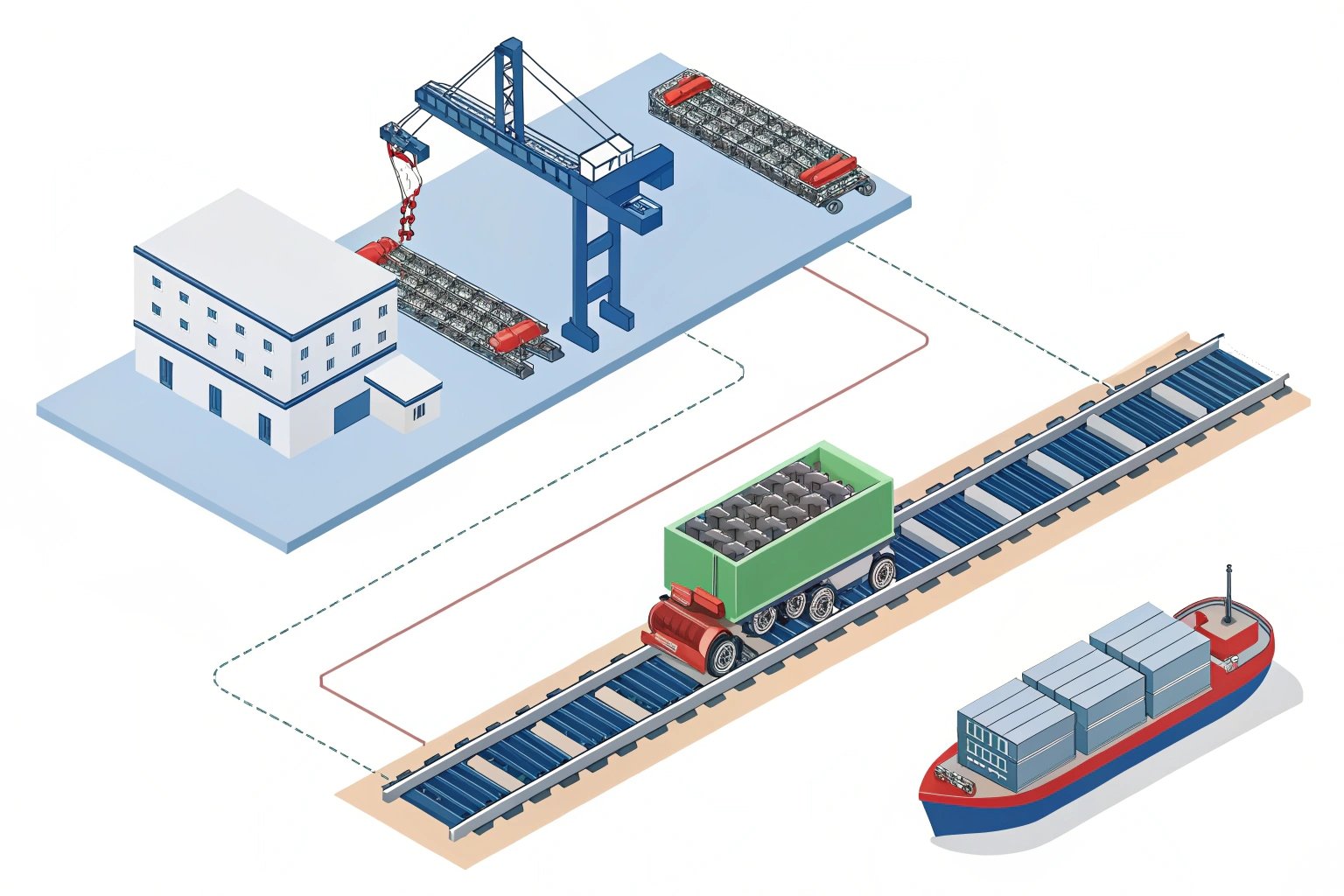
This is one of the most confusing parts of customs valuation. The simple answer is: it depends on your terms of sale (Incoterms) 6.
The "transaction value" must include all costs to get the goods to the point of export. Any costs incurred after that point are generally not included in the dutiable value 7.
Understanding Incoterms (Terms of Sale)
Incoterms define who pays for what and when risk transfers from the seller to the buyer. The two most common terms in my business are FOB and CIF.
- FOB (Free On Board): The seller (me) pays for everything to get the undercarriage parts loaded onto the ship at the port of origin (e.g., Port of Xiamen). The buyer (you) pays for the international ocean freight, insurance, and everything else from that point.
- CIF (Cost, Insurance, Freight): The seller (me) pays for everything, including international ocean freight and insurance, to get the goods to the port of destination (e.g., Port of Long Beach).
How Incoterms Affect Your Customs Value
Here is how these terms impact the value you declare to US Customs:
If you buy on FOB terms:
The price on my invoice is the FOB price. This price already includes my costs for manufacturing, packing, and transporting the goods to the Chinese port. This FOB price is your customs value. You do not add the separate international freight and insurance bills you paid.
If you buy on CIF terms:
The price on my invoice is the CIF price. This price includes international freight and insurance. For US Customs, you must deduct the cost of international freight and insurance from the CIF price. Your dutiable value is the value of the goods before those international costs were added.
I often advise my US clients to request FOB terms. It makes the customs declaration much cleaner. The invoice price directly becomes the customs value.
Here is a breakdown of common costs:
| Cost Element | Included in Customs Value? | Explanation |
|---|---|---|
| Product Price | Yes | The base price paid for the parts. |
| Domestic Freight (in China) | Yes | Cost to truck parts from my factory to the port. |
| Export Packing | Yes | Cost of crating and preparing goods for ocean transit. |
| Export Licenses/Fees | Yes | Any fees paid in the country of origin. |
| International Freight | No | The cost of the ocean voyage. |
| International Insurance | No | Insurance covering the goods while at sea. |
| US Domestic Freight | No | Cost to truck parts from the US port to your warehouse. |
When I prepare a shipment, I ensure my invoice clearly states the Incoterm (e.g., "FOB Xiamen"). This tells you and your broker exactly what is included in the price, making your declaration accurate.
What are the risks of undervaluing my shipment to try and pay less duty?
It can be tempting. You see the duty percentage and think, "What if I just lower the value a little?" You might save a few thousand dollars. But this small saving is not worth the huge potential cost.
I have seen what happens, and I strongly advise against it. I never under-declare. The risks are massive, from huge fines and penalties to getting your goods seized. For me, honesty is the only way. It protects my business and my reputation.

When you are importing heavy-duty parts like excavator track chains or sprockets, the shipments are high-value. Trying to save 5% on duties by undervaluing your goods by 20% might seem like a smart business move. It is not. It is a gamble that can destroy your business.
Customs and Border Protection (CBP) is not easily fooled. They have extensive databases of market prices for all kinds of goods.
The Consequences of Undervaluation
If CBP suspects you have undervalued your shipment, a chain of events begins, each one worse than the last.
- Shipment Delays: First, your container will be held for inspection. This is not a quick process. It can take weeks or even months. While your parts sit at the port, your customers are waiting, and you are paying demurrage fees 8 on the container.
- Increased Scrutiny: Once you are flagged, you are on their radar. Every future shipment you import will face extra inspection and document requests. Your smooth import process is gone.
- Demand for Re-payment: CBP will issue a "Notice of Action." They will demand you pay the correct duty based on their valuation, not yours.
- Severe Penalties: This is where it gets truly expensive. Penalties for undervaluation 9 are not just the cost of the duty you avoided.
Negligence: If they determine you were just careless, penalties can be 20% of the loss of duty or two times the duty, whichever is higher.
Gross Negligence: If they decide you should have known better, penalties can be 40% of the loss of duty or four times the duty.
Fraud: If they find you intentionally tried to deceive them, the penalty can be up to the full domestic value* of the entire shipment. You could lose 100% of your investment. - Seizure of Goods: In the worst cases, CBP can seize your undercarriage parts. You lose the product and the money you paid for it.
- Criminal Charges: For serious or repeat offenders, criminal charges are possible.
I always check market prices for similar parts before I quote my clients. This ensures my pricing is fair and defensible. When you declare this value, you can be confident it aligns with reality, which is your best defense. A short-term gain from undervaluation is never worth the long-term risk of fines, delays, and a ruined reputation.
Can my customs broker advise me on the proper way to declare the value?
You are not an expert in customs law, and you should not have to be. You are an expert in heavy machinery parts. So who can you trust to handle this complex paperwork?
Yes, a good customs broker is your most important partner in this process. I always tell my clients to find a broker who understands our industry. I provide all my documents, and they handle the formal declaration. They are the experts.

A customs broker is a licensed professional who acts as your agent to clear goods through customs. While you, the importer, are ultimately responsible for the accuracy of the declaration, a good broker is your first line of defense against errors.
The Role of Your Customs Broker
Your broker's job is to take the information you provide and use it to file the official customs entry. Their expertise is in:
1. Valuation: They will review your Commercial Invoice and Purchase Order to help you determine the correct customs value based on the Incoterms.
2. Classification (HS Code): They will assign the correct Harmonized Tariff Schedule (HS) code 10 to your parts. This code determines the duty rate.
3. Filing: They will file the complex entry paperwork (like CBP Form 7501) on your behalf.
4. Advising: They will keep you updated on changing customs regulations.
However, your broker can only be as good as the information you give them.
Your Responsibility: Provide Clear Documentation
This is where I, as your supplier, play a role. I know that a good broker needs good documents. I make sure my clients get everything they need for a clean declaration.
Here is the document package I provide, which you should give to your broker:
| Document | My Role (Seller) | Your Role (Importer) |
|---|---|---|
| Commercial Invoice | I create it with all details (parts, price, HS code). | You verify it matches your PO and give it to your broker. |
| Packing List | I create it, detailing contents, weights, and measures. | You give this to your broker to verify shipment details. |
| Bill of Lading (B/L) | I provide this shipping contract from the freight carrier. | Your broker uses this to track and claim the shipment. |
| Purchase Order | You created this when you ordered. | You provide this to your broker to support the invoice price. |
| Proof of Payment | You have this from your bank. | You keep this on file in case of an audit. |
I always try to understand US customs rules. This helps me prepare my documents in a way that your broker can use immediately. I save all my bank transfer records as proof of payment, and I advise my clients to do the same. This alignment between supplier, importer, and broker is the key to a smooth process.
Do not just hire the cheapest broker. Hire one who is experienced with industrial parts. Ask them questions. A good broker will be happy to advise you on valuation before the shipment ever leaves my factory.
Conclusion
Declaring the correct customs value is not a place to cut corners. It is the foundation of a stable and reliable supply chain. Be honest, be accurate, and keep detailed records.
Footnotes
1. Overview of common customs declaration mistakes and their consequences. ↩︎
2. WTO guide on the "transaction value" method for customs valuation. ↩︎
3. Explanation of import regulations and compliance requirements. ↩︎
4. Why proof of payment is essential for customs audits. ↩︎
5. Official CBP guidance on reasonable care and record-keeping. ↩︎
6. ICC guide explaining different Incoterms like FOB and CIF. ↩︎
7. How to calculate the dutiable value for imports. ↩︎
8. Learn what demurrage fees are and how to avoid them. ↩︎
9. CBP's official breakdown of penalties for negligence, gross negligence, and fraud. ↩︎
10. Search tool for finding the correct HS code for products. ↩︎