
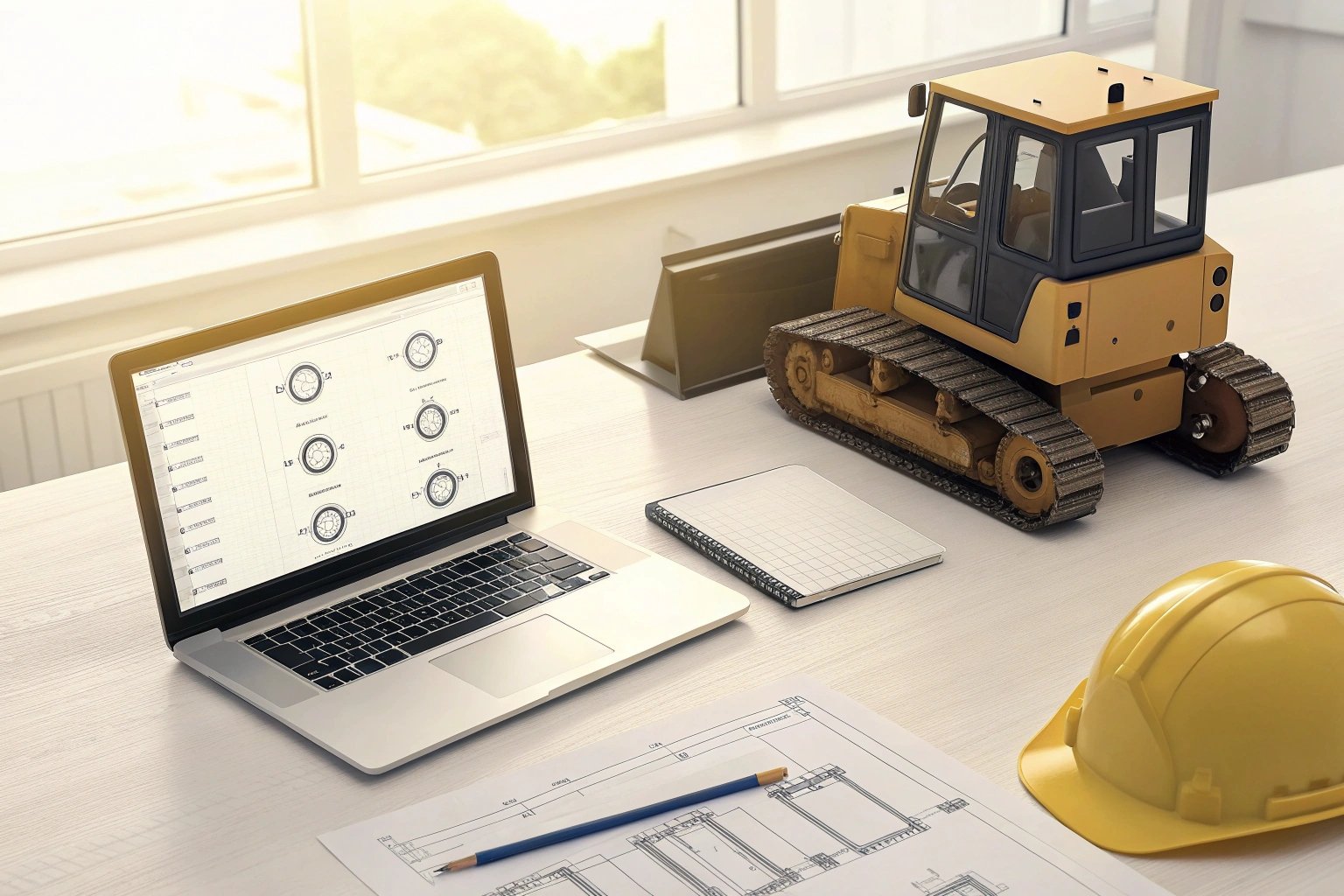
Ensuring compatibility 1 with your excavator's specific models is paramount for proper function and to avoid costly mistakes during installation. Accurate part matching protects equipment costs and uptime.
To verify compatibility, cross-reference model details with OEM guidelines and consult supplier databases. This guarantees correct fitment with your machinery.
Here's how to approach verifying undercarriage parts compatibility 2.
Should I provide the OEM part number, machine model, and serial number for every order?
Utilizing precise and comprehensive information ensures accurate part selection and avoids mismatches.
Yes, always provide your supplier with the OEM part number, the machine model, and the serial number. These details are essential for confirming part compatibility and ensuring correct orders.
Key data provision
- OEM Part Number 3: Critical for accurate identification and cross-referencing with aftermarket options 4.
- Machine Model and Serial Number: Specifics like series and version are essential to zero in on precise parts.
- Model Year/Generation 5: Helps identify necessary specifications, as newer or older parts may have variations.
Essential details for orders
| Detail | Importance | Outcome |
|---|---|---|
| OEM Number | Exact matching | Avoids mismatches |
| Machine Model | Specific targeting | Accuracy in orders |
| Serial Number | Version control | Tailored fitment |
Can I request technical drawings from the supplier to cross-reference with my own specifications?
Reviewing technical documentation 6 helps visualize fitment and design, aligning with requirements.
Yes, requesting technical drawings from suppliers is advisable. Use these diagrams to verify specifications and assure that dimensions align with your equipment's needs.

Benefits of technical drawings
- Precision Matching: Allows for accurate dimensional verification against existing parts.
- Detailed Specifications: Highlight critical aspects like bolt patterns and connection points 7.
- Preemptive Checking: Identifies discrepancies ahead of time to resolve any issues pre-purchase.
Use of technical drawings
| Element | Purpose | Benefit |
|---|---|---|
| Accurate Dimensions | Avoid fit issues | Reduces errors |
| Component Details | Identify critical features | Ensures completeness |
| Pre-Order Checks | Confirms alignment | Guarantees order correctness |
Do reliable suppliers have a comprehensive database to match their parts to OEM models?
Supplier databases are vital tools aiding in accurate part matching and verification.
Top-tier suppliers maintain extensive databases 8 linking their parts to OEM models, facilitating direct match verification and enhancing reliability and service delivery.

Database advantages
- Quick Reference: Enables prompt identification and confirmation of compatible parts.
- Detailed Listings: Catalog various models and parts, improving sourcing efficiency.
- Assured Accuracy: Provides reliability through evidence-based matching data.
Supplier database utility
| Feature | Description | Advantage |
|---|---|---|
| Comprehensive Indexes | Cover multiple brands/models | Accurate matching |
| Real-Time Access | Instant information | Swift verification |
| Up-To-Date Data | Reflects current standards | Ensures relevance |
What is their policy if a part is delivered but does not fit my machine?
Understanding return and replacement procedures 9 safeguards against operational disruptions.
Reliable suppliers should offer clear policies covering returns and exchanges if a part does not fit, protecting you from financial loss and downtime.
Policy essentials
- Clear Return Terms: Defined procedures for returns and exchanges are vital.
- Warranty Clauses 10: Ensure coverage if fits are improper due to part fault.
- Supplier Support: Confirm responsive customer service for fast resolution.
Safeguard policies
| Policy Aspect | Importance | Benefit |
|---|---|---|
| Defined Returns | Protects investments | Manages risk |
| Warranty Coverage | Offers security | Ensures reliability |
| Prompt Support | Minimizes downtime | Resolves issues swiftly |
Conclusion
Ensuring your undercarriage parts match specific models is made easier with detailed information sharing, technical verification, and robust supplier services. These steps minimize errors and maximize machine operational integrity.
Footnotes
1. A guide on the importance of parts compatibility in heavy machinery. ↩︎
2. How to check undercarriage part specifications for excavators. ↩︎
3. Learn how to find and use OEM part numbers for sourcing. ↩︎
4. Tips for cross-referencing OEM parts with aftermarket equivalents. ↩︎
5. Why the model year is critical for identifying correct part variations. ↩︎
6. Best practices for reading and interpreting technical documentation for parts. ↩︎
7. An explanation of why bolt patterns are critical for correct fitment. ↩︎
8. How suppliers use part databases to ensure order accuracy. ↩︎
9. What to look for in a supplier's return and replacement policy. ↩︎
10. Understanding standard warranty clauses for heavy equipment aftermarket parts. ↩︎