
I know the frustration of ordering a part that looks right online but fails to fit during a critical repair. Choosing the wrong track link can stop your project instantly.
To choose the right Hitachi undercarriage parts, match parts to your exact machine model and serial number, verify OEM specifications, and confirm quality and compatibility through reputable sources and documentation like material test certificates.
I have seen many buyers lose thousands of dollars because they guessed on a part number. A small mismatch in pitch or bolt alignment makes a part useless. You must be careful.
How do I match the correct track link pitch to my specific Hitachi EX or ZX series model?
I remember a client who bought links for a ZX200 that were actually for an older EX model. The pitch was slightly off, and the machine shook violently during operation.
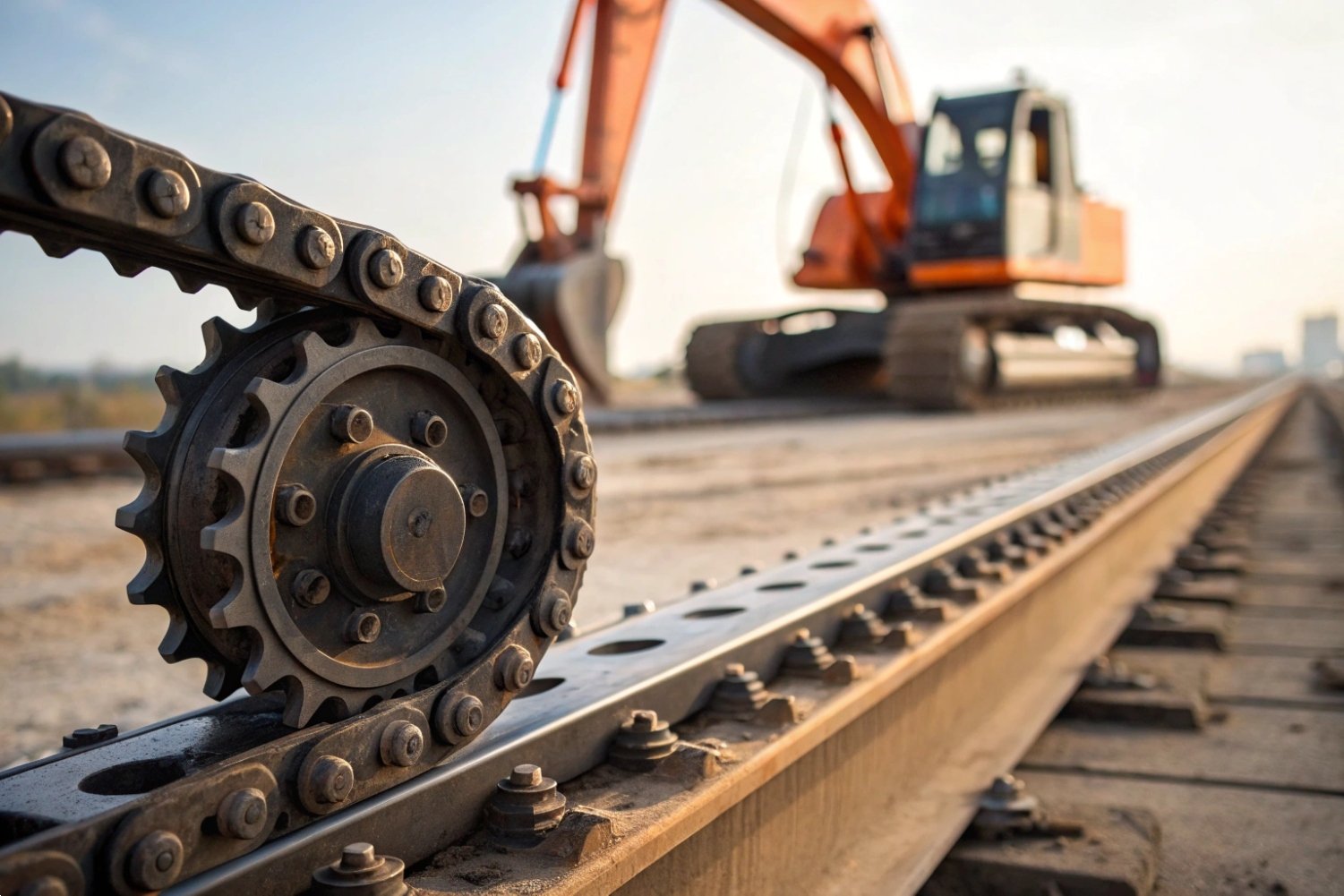
Matching the correct track link pitch requires cross-referencing your machine’s serial number with the official Hitachi parts catalog to find the exact millimeter measurement. This ensures the chain fits the sprocket teeth perfectly.
When you look at your Hitachi EX or ZX series, you cannot rely on visual checks alone. The "pitch 1" is the distance between the centers of two consecutive pins. Even a difference of 2mm can cause the "hooking" effect, where the sprocket teeth wear down the bushings at an accelerated rate.
Understanding the EX vs. ZX Differences
The EX series often uses different metallurgy and seal designs compared to the newer ZX (Zaxis) series. For example, the ZX series often features Improved Seal Groups 2 designed for higher travel speeds. If you put an EX-style dry chain on a high-speed ZX machine, the heat will destroy the pins within months.
The Importance of Lubricated Chains (SALT)
For long-haul or high-speed applications, I always recommend Sealed and Lubricated Tracks 3 (SALT). These chains have internal oil that reduces friction between the pin and bushing.
| Feature | Dry Track Chain | SALT Track Chain |
|---|---|---|
| Internal Lubrication | None | Oil-filled |
| Wear Rate | Faster internal wear | 20-30% longer life |
| Ideal Use | Low-hour, static work | High-travel, mining |
| Noise Level | Squeaky | Quiet operation |
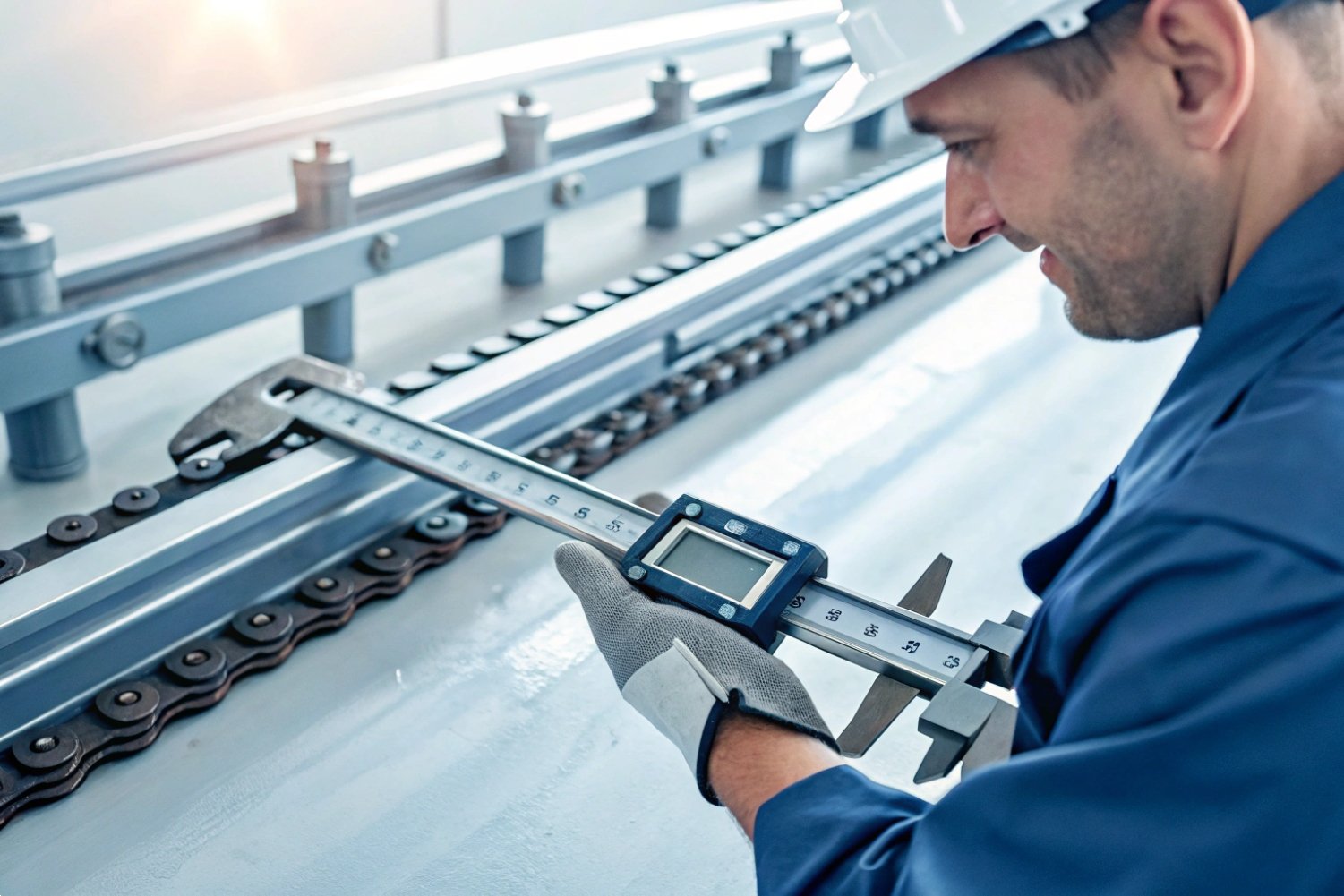
Using ultrasonic wear measurement 4 tools is the best way to check if your current links have reached their limit. If the link height has dropped by more than 2%, it is time to replace them before they snap and cause a safety hazard on your job site.
What technical specs should I verify to ensure the idlers fit my Hitachi's original mounting brackets?
I once dealt with a supplier who sent idlers that looked perfect, but the mounting blocks were 5mm too wide for the Hitachi frame. We had to grind the brackets, which was a nightmare.
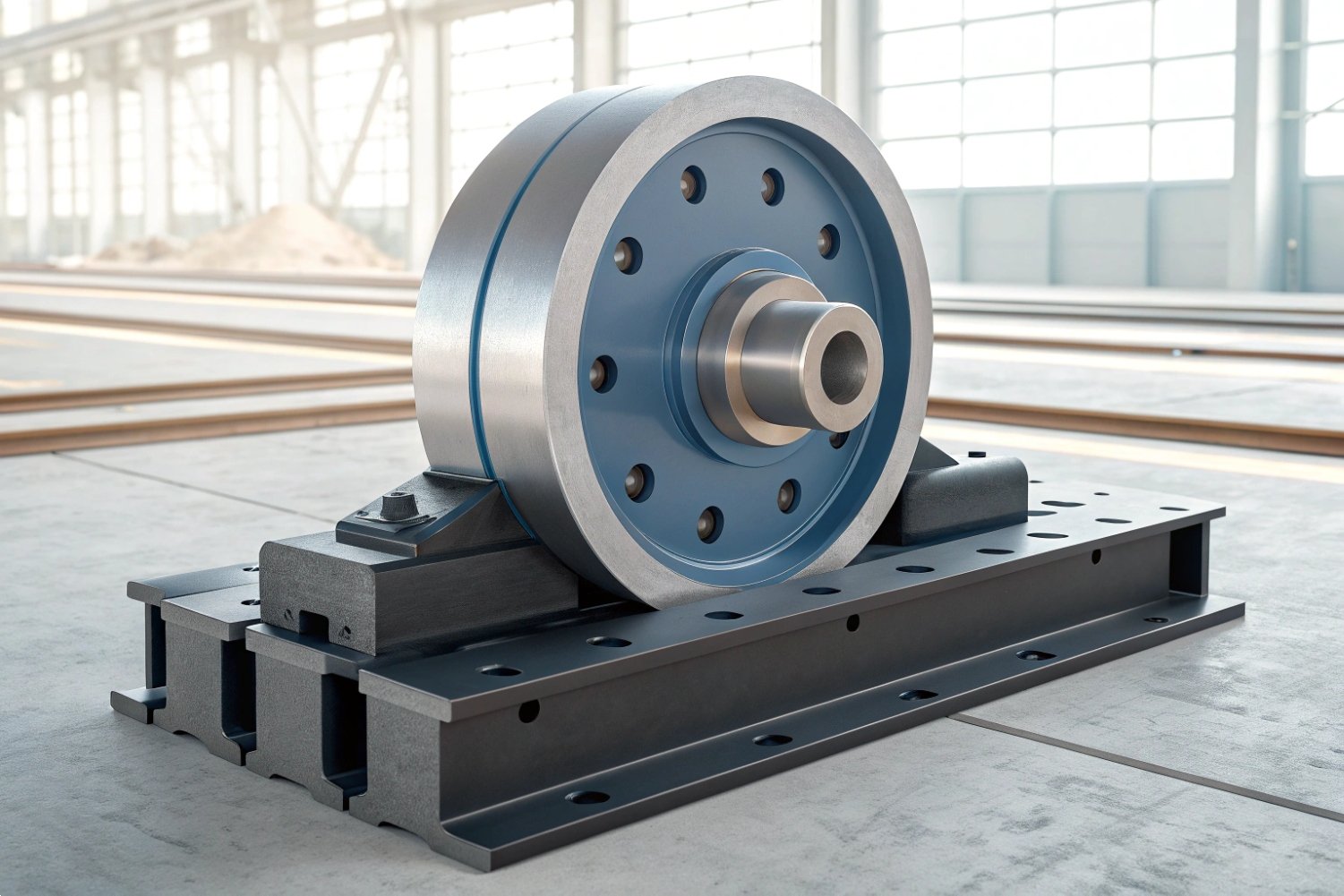
Verify the shaft diameter, the width of the mounting blocks, and the total height of the idler assembly. Check these against your machine’s shop manual to ensure a drop-in fit without modifications.
The idler is the part that maintains track tension. If the mounting brackets do not align perfectly with your Hitachi's frame, the entire track group will run crooked. This leads to "side-wearing" on your track links and rollers 5.
Key Dimensions to Request
When I talk to my technical team, I always ask for a dimensional drawing before we ship. You should do the same. Specifically, look at the "tread diameter" and the "yoke width." Hitachi machines like the ZX350 have very specific tolerances.
Material and Heat Treatment
It is not just about the size; it is about the "shell." A high-quality idler should be induction-hardened 6. This means the surface is very hard to resist wear, but the core remains tough so it doesn't crack under heavy impact.
| Specification | Why it Matters |
|---|---|
| Surface Hardness | Prevents flat spots from track contact |
| Seal Type | Prevents oil leaks in muddy conditions |
| Shaft Material | Prevents bending under high tension |
If you are working in rocky terrain, ask for idlers with reinforced side plates. I have seen standard idlers buckle when a large rock gets jammed between the track and the frame. Investing in a forged shell 7 rather than a cheap cast shell will save you from replacing the part again in six months.
How can I confirm that the seal groups in these parts are designed for Hitachi's high-pressure environments?
I have seen cheap rollers start leaking oil after only 200 hours because the seals couldn't handle the pressure. It turns a simple part into a fire hazard or a seized bearing.
Confirm the use of high-pressure Nitrile or Viton seals and ask for a 100% leak test report. Quality seals prevent oil from escaping and keep abrasives like sand and water out of the bearings.
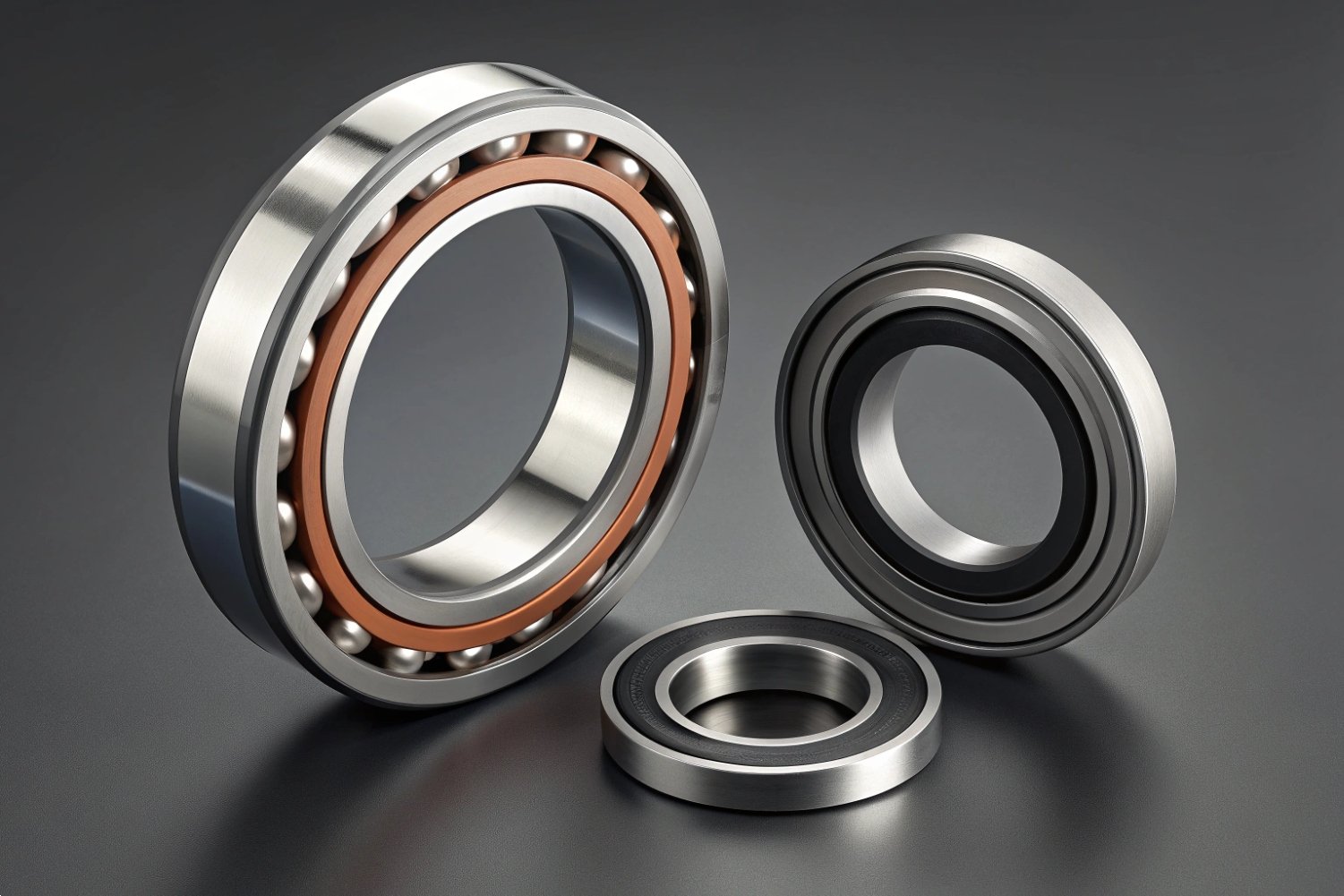
Hitachi machines are known for their powerful hydraulic systems and high work cycles. This puts immense pressure on the undercarriage seals, especially when the machine is turning under load. The "Floating Seal" 8 design is standard for Hitachi, but not all floating seals are created equal.
Technical Seal Validation
You should ask your supplier if they use "Duo-Cone" seals. These seals consist of two metal rings and two rubber O-rings. In high-pressure environments, the rubber must maintain its elasticity. If the rubber gets brittle due to heat, the seal fails.
Operating Conditions Matter
If you work in the freezing temperatures of North America or the extreme heat of the Middle East, the seal material must change.
- Nitrile: Good for standard temperatures.
- Viton: Essential for high-heat environments.
- Silicone: Better for extreme cold.
I always tell my customers to look at the "Material Test Certificate" 9 (MTC). This document proves what the seals and the steel are actually made of. If a supplier cannot provide an MTC, they are likely hiding the fact that they use low-grade recycled rubber that will fail under the weight of a Hitachi excavator.
Why is it critical for me to check the bolt hole alignment on sprocket segments for Hitachi machines?
I remember a project where the team tried to force a sprocket segment onto a Hitachi bulldozer. They stripped the threads on the hub because the bolt holes were off by just a fraction.
Checking bolt hole alignment and pitch dimensions ensures the sprocket segments bolt securely to the drive motor hub. Proper alignment prevents loose bolts, which can lead to the sprocket falling off or damaging the expensive travel motor.
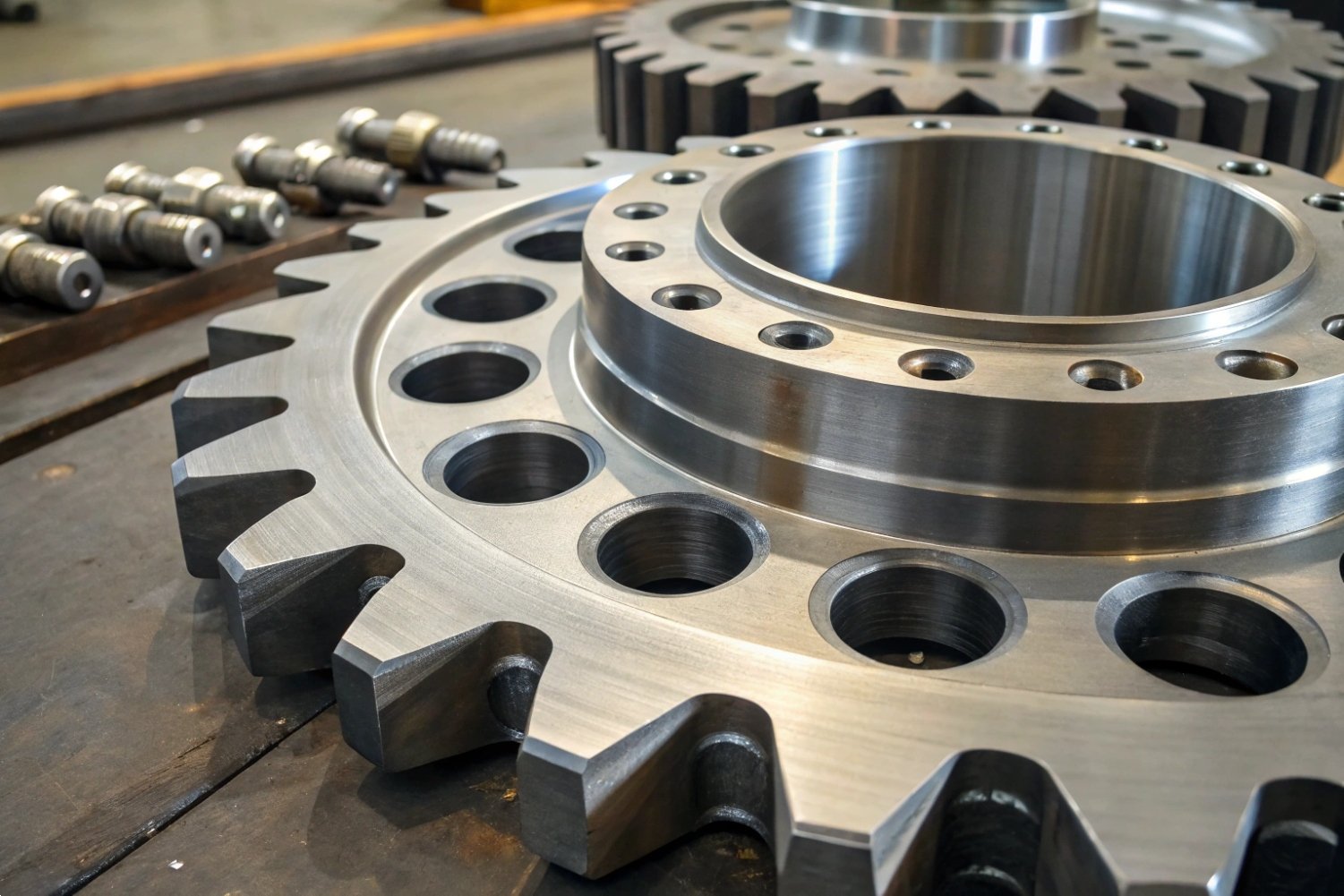
The sprocket is the heart of the drive system. For Hitachi machines, the bolt pattern is incredibly precise. If the holes are even slightly misaligned, you will struggle to get the bolts through. Even worse, if you do manage to force them in, the vibration of the machine will eventually shear the bolts 10 off.
Matching Teeth and Links
You must replace your sprockets and track chains at the same time. If you put a new chain on a worn sprocket, the "hooked" teeth of the old sprocket will stretch your new chain immediately. This is a very common mistake that doubles your maintenance costs.
Hardness Depth
A good sprocket segment should have a deep "hardened zone" on the teeth. As the tooth wears down, you want it to stay hard.
- Poor Quality: Only the very surface is hard; once that wears off, the soft metal underneath disappears fast.
- Dingtai Quality: Deep induction hardening ensures the tooth keeps its shape for thousands of hours.
| Part Type | Common Hitachi Model | Bolt Holes |
|---|---|---|
| Segment | D155 / D150 | 9-12 holes |
| Rim | ZX200 / ZX210 | 20+ holes |
Always use new bolts and nuts when replacing sprockets. Old bolts have been stretched by the torque of the machine and are much more likely to break under pressure. It is a small cost that protects a very expensive part.
Conclusion
Choosing the right Hitachi parts requires attention to serial numbers, dimensions, and material quality. Always verify specs and ask for testing data to ensure your machine stays running on the job.
Footnotes
1. ISO standards for conveyor and track chain pitch accuracy. ↩︎
2. Engineering details on industrial seals for heavy machinery performance. ↩︎
3. Professional forum discussing maintenance of sealed and lubricated track systems. ↩︎
4. Using ultrasonic technology to measure metal thickness and wear accurately. ↩︎
5. Technical specifications for high-durability undercarriage track rollers. ↩︎
6. Deep dive into the induction hardening process for steel components. ↩︎
7. Comparison of forged versus cast components for heavy-duty applications. ↩︎
8. Explaining mechanical face seals and their role in fluid retention. ↩︎
9. Global standards for steel quality and material testing verification. ↩︎
10. Industry guide to heavy equipment fasteners and high-torque bolt standards. ↩︎