

Importing heavy machinery parts can be complex. You might worry about the confusing stack of documents. Are they all necessary? Yes, and understanding them is the key to a smooth shipment.
As a manufacturer, I've seen these three documents—the Bill of Lading (B/L), the Packing List, and the Commercial Invoice—act as a team. The B/L is your legal title to the goods. The Packing List verifies the physical contents. The Invoice declares the financial value for customs.
These documents are not just suggestions. They are legal requirements. They work together to ensure the track chains you paid for are the ones you receive, and that they clear customs without costly delays. Let's look at each one.
Why is the Bill of Lading (B/L) considered the title to my goods?
Have you ever worried that your shipment might arrive at the port, but you wouldn't be able to claim it? The B/L is the single document that prevents this nightmare from happening.
In my 20 years of exporting undercarriage parts, I treat the B/L as the most important document. It is the legal proof of ownership. The shipping carrier will only release your excavator rollers and idlers to the person holding this document. It is your key.
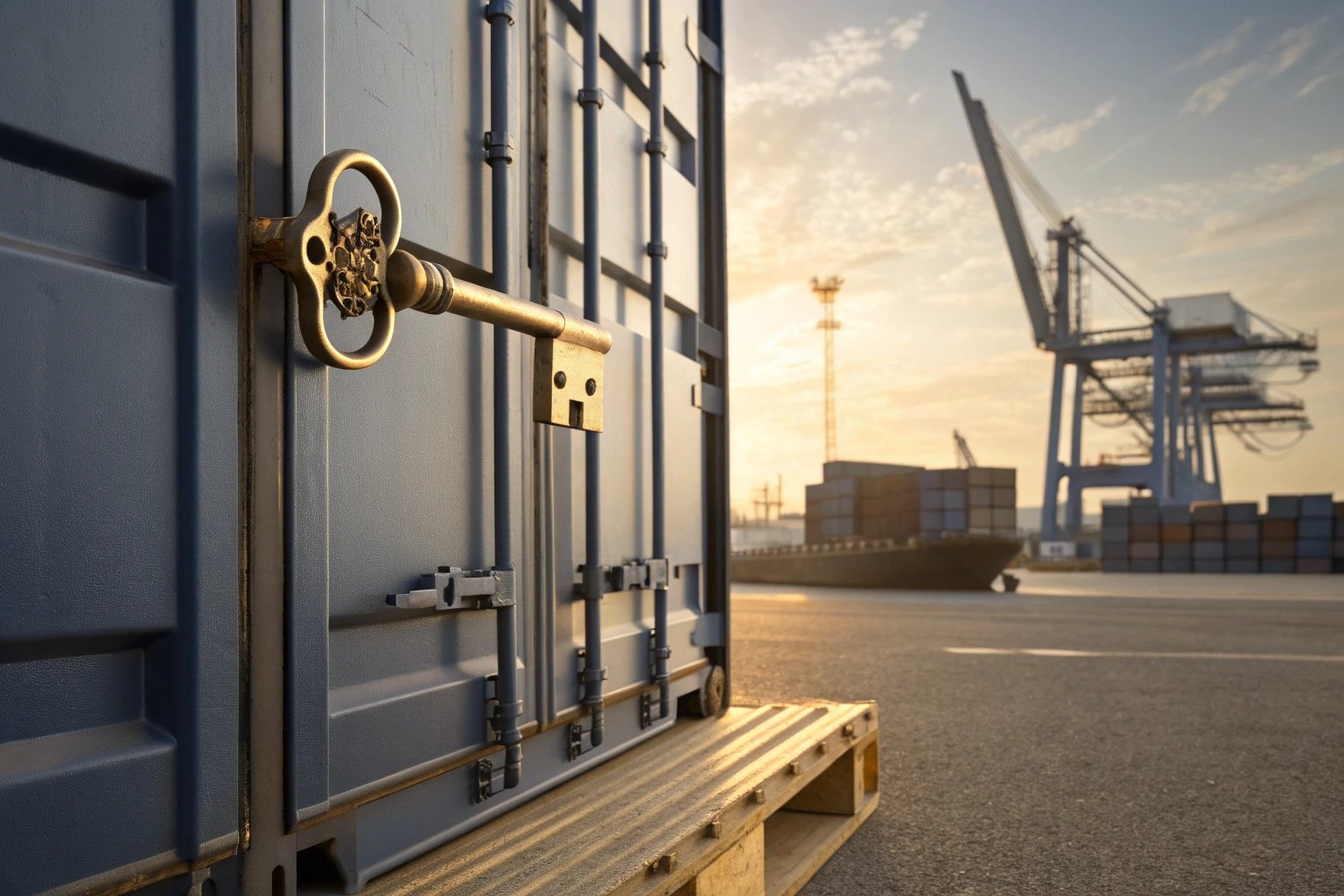
The Bill of Lading is a multi-function document, and "title" is its most powerful role. When we (Dingtai) ship a container of parts to a client like David in the US, the shipping line issues a B/L. This document is three things at once.
1. A Contract of Carriage
First, the B/L is the legal contract between the shipper (that's me, Dingtai) and the shipping carrier (like Maersk or COSCO). It details the terms of transport. It shows:
- Where the goods are coming from (Port of Xiamen, China).
- Where they are going (Port of Long Beach, USA).
- The description of the goods ("Excavator Undercarriage Parts").
- The vessel name.
This contract ensures the carrier is legally obligated to transport our goods to the agreed-upon destination.
2. A Receipt of Goods
Second, the B/L is the carrier's official receipt. When the carrier signs it, they are confirming two things:
- They have received the goods from me.
- The goods were in good condition (a "Clean" B/L).
If the B/L says "10 pallets of track rollers," the carrier is responsible for delivering 10 pallets. If the pallets were damaged when they received them, they would note this (a "Claused" B/L), which would be a major problem. This receipt function is your first line of defense.
3. A Document of Title
This is the main point. The B/L acts like the deed to a house. Whoever possesses the B/L (and is legally entitled to it) owns the goods. This is critical for international trade.
Because it represents title, the B/L is negotiable (in most cases). This means ownership can be transferred. For example:
- I ship the goods and the B/L is consigned "To Order."
- I send the B/L to my bank.
- My customer's bank (David's bank) pays my bank.
- My bank releases the B/L to David's bank.
- David's bank releases the B/L to him.
- David presents the B/L to the shipping line at his port to claim his parts.
This system protects both buyer and seller. I know I will get paid before the customer can claim the goods. The customer knows that as soon as he pays, he will receive the document that grants him ownership.
This is why you must protect the Original B/L. Losing it is like losing a signed blank check. The shipping line will not release your cargo without it.
| B/L Function | What It Means for You (The Importer) |
|---|---|
| Contract of Carriage | You are protected by the terms agreed upon for transport. |
| Receipt of Goods | You have proof the carrier received your goods in good condition. |
| Document of Title | You have the only document that proves you own the goods. |
What specific information does the Packing List provide that the other documents don't?
Imagine opening a 40-foot container with 20 identical wooden crates inside. Which ones hold the sprockets you need today? This is the problem the Packing List solves.
When I ship a container of drive sprockets and track links, the Packing List is my customer's guide. It details the exact physical contents, net weight, gross weight, and dimensions of each individual crate or pallet. The B/L and Invoice do not have this level of detail.
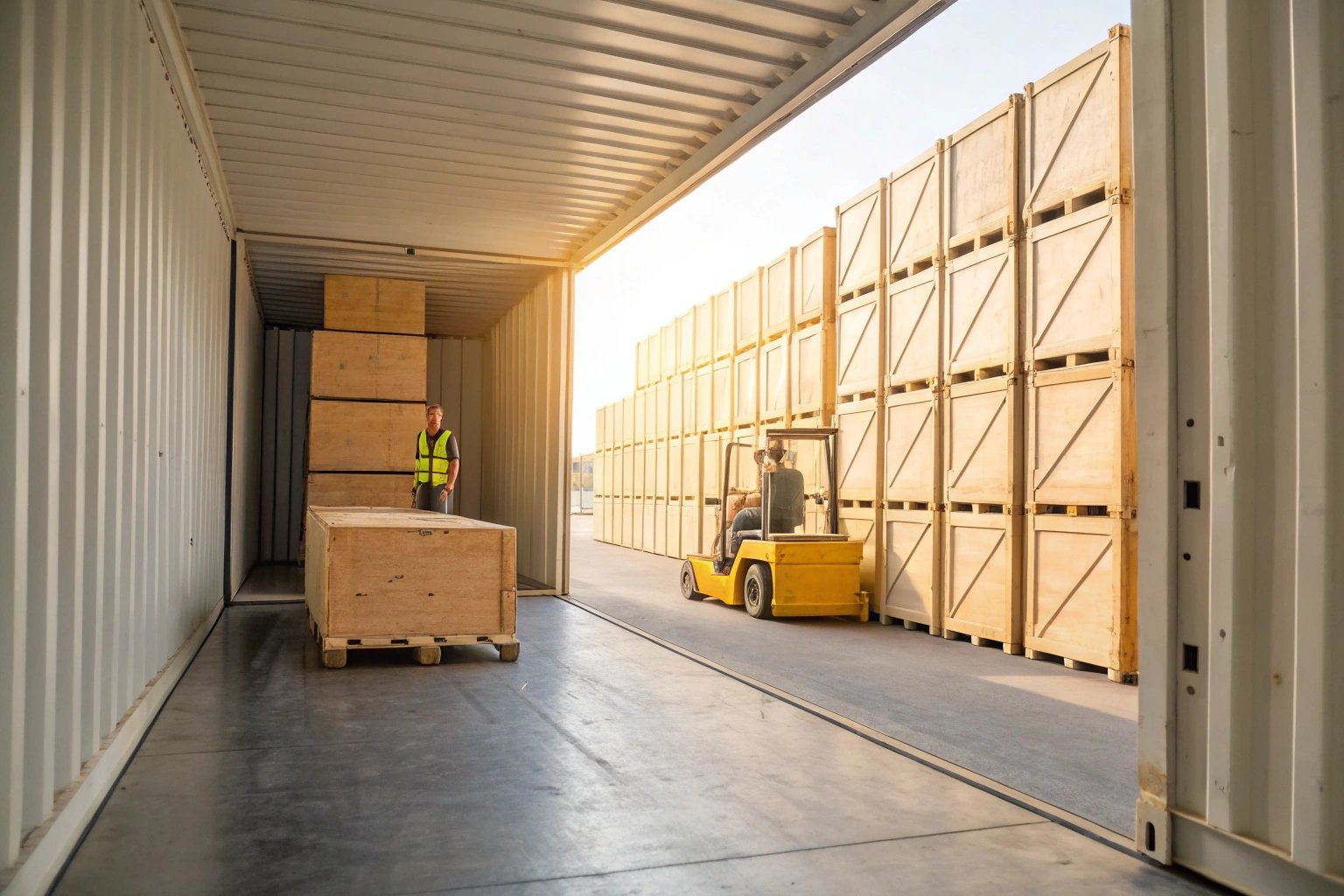
The Packing List (or "PL") is the bridge between the financial document (Invoice) and the physical cargo. Its job is to describe the physical reality of your shipment in detail. The B/L might just say "1 Container of Excavator Parts." The Invoice might say "100 pcs Track Roller, 50 pcs Idler."
But the Packing List will say:
- Crate 1: 20 pcs Track Roller (Model D6), Net 800kg, Gross 830kg, Dims 1.2x1.0x0.8m
- Crate 2: 20 pcs Track Roller (Model D6), Net 800kg, Gross 830kg, Dims 1.2x1.0x0.8m
- Crate 3: 20 pcs Track Roller (Model D6), Net 800kg, Gross 830kg, Dims 1.2x1.0x0.8m
- ...and so on.
It provides a level of detail that no other document does.
Why is this detail so critical?
There are two main reasons: Customs and your warehouse.
1. For Customs Verification
When your container arrives, customs officers have the right to inspect it. They will use the Packing List to do this. They can look at the document and say, "This list says Crate #5 contains 10 idlers. Let's open Crate #5 and check."
If the contents match the Packing List, the inspection is fast. If the contents do not match, this is a major red flag. Customs clearance 1 will stop your shipment. They may inspect the entire container, which is slow and very expensive. They may also fine you.
An accurate Packing List from your supplier (like me) is a sign of a professional operation. It gives customs officers confidence that what you declare is what you shipped.
2. For Your Own Operations
This document is just as important for your own team. When my customer David's warehouse receives a shipment, his team uses the Packing List.
- To Receive: They check the crate markings against the PL to confirm all pieces have arrived.
- To Inventory: They use the PL to enter the correct items and quantities into their stock system.
- To Fulfill Orders: If they need a specific part, the PL can help them locate it in the container without opening every single box.
It helps you plan. By seeing the weights and dimensions, you can arrange the correct forklifts and warehouse space before the truck arrives. This is based on Insight #6.
Here is a simple comparison:
| Document | Primary Purpose | Key Detail |
|---|---|---|
| Bill of Lading | Legal Title & Transport | Consignee, Ports, Vessel |
| Commercial Invoice | Value & Payment | Price per unit, Total Value |
| Packing List | Physical Verification | Weight/Dims per package, Contents per package |
Without the Packing List, you are importing blind. It’s a critical tool for logistics management 2, customs, and inventory management.
How is the Commercial Invoice used by customs to determine the value of my shipment?
If you have ever been charged the wrong amount for taxes, you know how frustrating it is. The Commercial Invoice is the single document that prevents this with your imports.
From my experience, the Commercial Invoice is all about the money. It is the official bill for your undercarriage parts. Customs officials use this one document to calculate the exact import duties and taxes you owe. It proves the 'value' of the goods.

When your parts reach the border, the customs authority needs to know one thing: "What is this shipment worth?" Their job is to protect their country's economy and collect revenue (duties). The Commercial Invoice 3 is the primary document they use to establish this value, known as the "Customs Value."
Here is how it works.
1. It Declares the Transaction Value
The CI is the sales document. It shows the price you (the buyer) agreed to pay me (the seller). This is the "transaction value." Customs generally uses this price as the basis for calculating duty.
A complete CI must include:
- My name and address (Seller/Exporter)
- Your name and address (Buyer/Importer)
- A detailed description of the goods (e.g., "Excavator Track Shoe for CAT 320")
- The quantity of each item
- The unit price (e.g., $50 per shoe)
- The total price ($5,000)
2. It Provides the Tariff Classification (HTS Code)
This is very important. Every product in the world has a Harmonized Tariff Schedule 4 code. As the manufacturer, I will list the HTS code for "Excavator Track Shoe" on the invoice.
When customs sees this code, they look up the matching import duty rate.
- HTS Code 8431.49.90 (Parts for earth-moving machinery) might have a 3% duty rate.
- Customs takes the value from the CI ($5,000).
- They apply the rate (3%).
- The duty you owe is $150.
An incorrect HTS code can lead to you overpaying (if the rate is too high) or underpaying (which can lead to fines if you are audited).
3. It Defines the Terms of Sale (Incoterms)
The CI will state the Incoterms 2020 5, such as FOB (Free On Board) or CIF (Cost, Insurance, and Freight). This tells customs which costs are included in the total value.
- FOB Xiamen: The $5,000 value is just for the goods. Customs will add the cost of freight and insurance to the value before calculating duty.
- CIF Long Beach: The $5,000 value already includes the cost of the goods, the insurance, and the ocean freight. Customs will use this all-in-one value.
An accurate invoice, with the correct value, HTS code, and Incoterm, is the key to paying the exact right amount of tax and clearing customs quickly.
| Key Invoice Element | What It Tells Customs |
|---|---|
| Total Value | "This is what the importer paid for the goods." |
| HTS Code | "This is the product category and its matching tax rate." |
| Incoterm (e.g., FOB, CIF) | "This is which part of the total value is taxable (goods, freight, etc.)." |
Do I need the original copies of all three documents to clear customs?
In our fast-moving digital world, waiting for a courier to fly a piece of paper across the ocean feels slow. But is that paper necessary?
I've been managing import/export documents for 20 years, and this is a vital question. For the B/L, you often need the original or a digital "Telex Release." For the Invoice and Packing List, high-quality digital copies are usually fine for customs, but rules vary.

The answer is different for each document. All three are required for customs clearance (Insight #4), but the form they can take (original paper vs. digital copy) is different.
1. The Bill of Lading: The "Key"
Because the B/L is the document of title, it is treated with the highest security. You have three main options:
- Original B/L (OBL): This is the traditional method. I (the exporter) send you (the importer) the full set of original document 6 paper B/L documents via courier (like DHL). You must physically surrender this original paper to the shipping line's office at your port to get your cargo.
- Pro: Maximum security.
- Con: Slow. If the courier is delayed, your cargo will sit at the port, and you will pay storage fees (demurrage).
- Telex Release / Express Release: This is the most common method now. I surrender the Original B/L to the shipping line here in China. The shipping line's office here then sends a secure digital message (a "telex" or "express release") to their office at your port. This message authorizes them to release the cargo to you (the named consignee) without an original paper B/L.
- Pro: Very fast. Saves time and courier fees.
- Con: Requires trust. I will only do this after I have received payment or am confident in my customer.
- Sea Waybill: This is a non-negotiable document. It is not a document of title. It is just a receipt and contract of carriage. The goods are automatically released to the consignee named on it. This is only used when there is extremely high trust, such as shipments between two branches of the same company.
2. The Commercial Invoice and Packing List
These documents are not titles. They are descriptive. Their purpose is to provide information to customs, not to prove ownership.
For this reason, in most countries (including the USA), customs clearance is now electronic. Your customs broker 7 will not take your paper documents to the customs house. They will file all the information digitally.
Therefore, a clear, signed digital copy (like a PDF) of the Commercial Invoice and Packing List that I email to you is almost always sufficient. Your broker will use the information from these PDFs to complete the customs entry 8.
The only common exception is if you are paying me using a documentary Letter of Credit 9 (L/C). In that case, your bank (not customs) will require the original paper copies of all three documents to release payment.
So, for a smooth clearance:
- For the B/L: Arrange for a Telex Release 10 with me to save time.
- For the CI and PL: I will email you high-quality, signed PDF copies as soon as the ship sails.
- Action: You will forward all three (the Telex Release number, the CI-PDF, and the PL-PDF) to your customs broker.
This combination gives you the speed of digital documents and the security of the B/L release process.
Conclusion
Understanding your B/L, Packing List, and Invoice is not just about paperwork. It is the key to controlling your supply chain. Get them right, and your excavator parts will arrive on time and on budget.
Footnotes
1. Learn how the customs clearance process ensures legal entry of goods. ↩︎
2. Guide to understanding how logistics management optimizes supply chain efficiency. ↩︎
3. Explanation of the commercial invoice requirements for international trade. ↩︎
4. Reference for classifying goods under the Harmonized Tariff Schedule. ↩︎
5. Summary of Incoterms 2020 rules for global procurement and delivery. ↩︎
6. Overview of handling an original document and digital alternatives in shipping. ↩︎
7. The role of a customs broker in facilitating cross-border trade. ↩︎
8. Detailed guide on filing a customs entry for imported merchandise. ↩︎
9. How a Letter of Credit provides financial security for buyers and sellers. ↩︎
10. Insight into how a Telex Release speeds up the cargo release process. ↩︎