
What is a Carrier Roller?
A carrier roller is a crucial component in tracked equipment, such as excavators and bulldozers. Typically located on top of the track, its primary function is to support the track group, ensuring the track does not sag or deviate from its intended path during operation. In essence, the carrier roller acts as an overhead support, allowing the track to maintain smooth and efficient travel.
This support is vital for the equipment’s stability and long-term operational efficiency. Both the excavator carrier roller and the bulldozer carrier roller play an indispensable role in the undercarriage system, directly contributing to the overall performance and durability of the machinery.
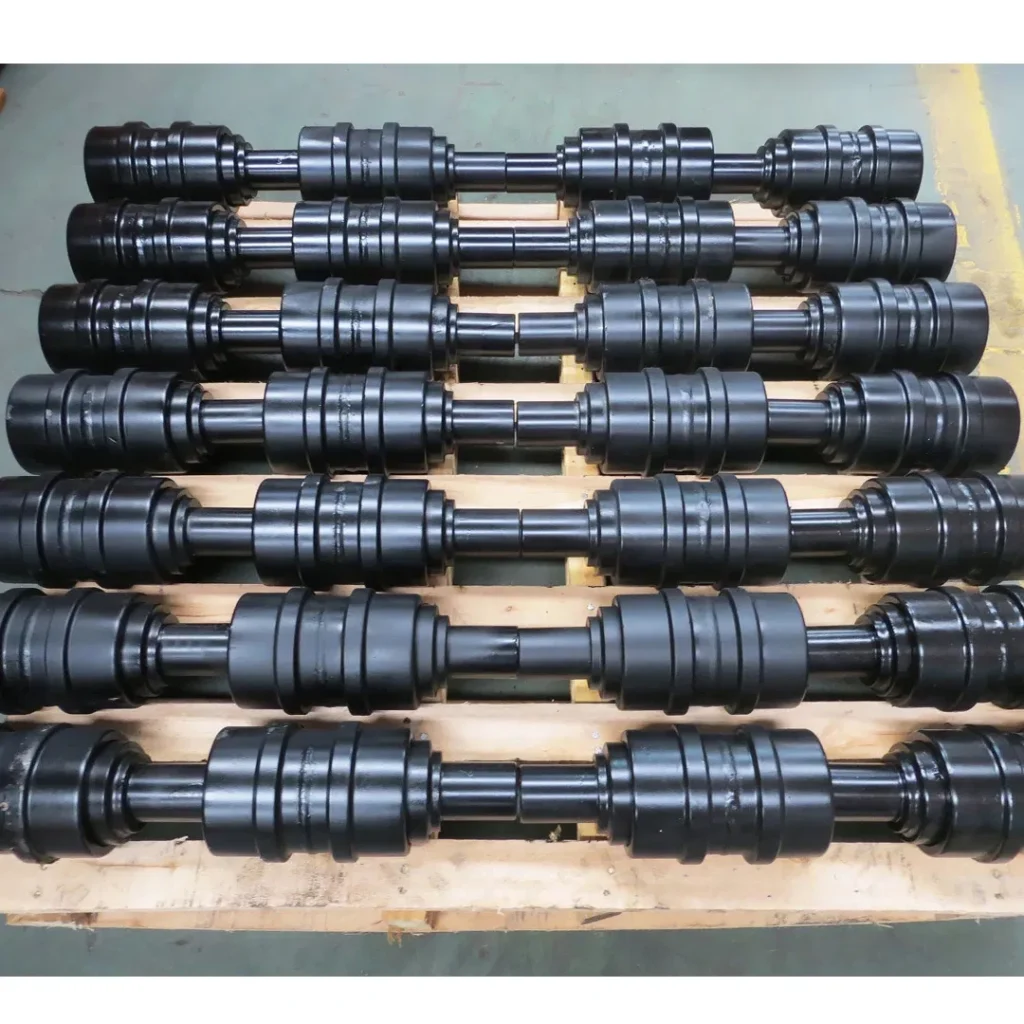
Functions of the Carrier Roller
| Function) | Description | Effect |
|---|---|---|
| Support Track | The carrier roller supports the track belt to prevent it from sagging or deviating, allowing the track to run smoother. | Ensures the track belt is stable and less prone to getting stuck, especially suitable for environments like mines or construction sites. |
| Share Load | The carrier roller helps to share the weight of the track belt, reducing the pressure on other components and minimizing wear and tear. | Improves equipment stability, extends service life, suitable for high-intensity working environments. |
| Reduce Friction and Noise | Reduces friction between the track belt and the undercarriage, lowering the noise generated during equipment operation. | Makes the working environment quieter and equipment operation more stable. |
| Maintain Track Tension | The carrier roller helps maintain the tension of the track belt, preventing it from slackening. | Extends the track belt's service life, reduces maintenance, and ensures safe equipment operation. |
How to Select the Right Carrier Roller?
| Selection Criteria | Recommended Advice |
|---|---|
| Equipment Type | Different equipment requires different specifications of rollers. Ensure you choose a model that matches the equipment to avoid issues caused by unsuitable rollers. |
| Brand and Model | There are many brands on the market; choosing reputable brands (such as Caterpillar, Komatsu) ensures quality and durability. |
| Load Capacity and Durability | If operating under heavy load or in high-intensity environments, choosing rollers with strong load capacity and wear resistance will be more durable. |
| OEM Parts or Aftermarket Parts | OEM parts offer guaranteed quality but are higher priced; aftermarket parts are cheaper but require confirmation of quality and compatibility. |
Common Brands and Models in the Market
There are many well-known brands of Carrier Rollers on the market, each with different features and applications for specific equipment types. For example:
| Brand | Applicable Equipment Type | Features | Applicable Environment or Industry |
|---|---|---|---|
| SANY | Large Excavators | Precision manufacturing, Long service life | Mines, construction, and other high-intensity settings |
| Caterpillar | Medium to Large Excavators | Heavy-duty load-bearing, Easy maintenance | Construction sites, earthwork construction |
| Hitachi | Small to Medium Excavators | Compact design, Strong wear resistance | Urban construction, landscaping |
| Komatsu | Various Excavators | High-temperature resistance, Adaptable to harsh environments | Mines and other heavy-load environments |
| Volvo | Heavy-duty Earthmoving Equipment, Excavators | Powerful dynamics, Good fuel economy | Heavy-duty earthwork, mining construction |
Different brands and models of carrier rollers offer distinct advantages across various operational environments. You can select the appropriate carrier roller based on your specific requirements, whether for excavator carrier rollers or bulldozer carrier rollers.
How to Determine If a Carrier Roller Needs Replacement?
Over time, carrier rollers may show signs of wear or damage. Here are some common indicators that suggest it might be time for a carrier roller replacement:
- The track runs unevenly, causing noticeable equipment vibration.
- The carrier roller surface shows clear cracks, excessive wear, or deformation.
- The roller emits abnormal noises, indicating potential internal component failure.
- The track group is slack, experiencing derailment, or showing excessive sag.
If you notice any of these issues, it’s time to replace the carrier roller. When replacing it, ensure you select a high-quality carrier roller that is compatible with your equipment model to ensure long-term stable operation.
Why Choose Dingtai Carrier Rollers?
Dingtai carrier rollers are well-regarded in the market due to their high quality and long-lasting durability. Dingtai uses high-strength alloy steel materials and employs a precise machining process, ensuring that every carrier roller provides stable performance in high-intensity operational environments. They are especially suited for challenging work settings, such as mining and construction, where substantial pressure resistance is required.
Moreover, Dingtai carrier rollers are not only high-performing but also cost-effective, making them suitable for users with different budgets. You can enjoy the quality assurance typically associated with OEM parts while gaining greater value in pricing. The durability and high performance of Dingtai carrier rollers are crucial for ensuring the reliable operation of your equipment.
Common Questions When Purchasing Carrier Rollers
- What is the difference between a Carrier Roller and a Track Roller?
The carrier roller (or top roller) is typically mounted on the upper section of the travel system, responsible for supporting the track group. In contrast, the track roller (or bottom roller) is mounted underneath the track and bears the weight of the equipment, ensuring smooth track motion. - Does replacing a Carrier Roller require disassembling the track?
Generally, it is not necessary to remove the track group. Only the damaged carrier roller needs to be replaced, saving both time and cost. - How do I inspect the quality of a Carrier Roller?
You can check the roller surface for issues like cracks or deformation and confirm that its dimensions meet the equipment’s requirements. When selecting a carrier roller, it is best to request a factory test report or third-party certification from the supplier to ensure quality.
Conclusion
The carrier roller plays an exceptionally critical role in the proper operation of heavy equipment like excavators and bulldozers. Selecting the right carrier roller not only enhances machine stability and operational efficiency but also extends its service life. Whether you purchase OEM parts or high-quality aftermarket carrier rollers, choosing the appropriate roller is a worthwhile investment for your machinery.
If you have any questions or would like to learn more about our products, including excavator carrier rollers, bulldozer carrier rollers, or carrier roller manufacturers, please feel free to contact our customer service team at any time. We will provide professional advice and a quote based on your specific needs.