How Can I Maintain My Cat D3B Undercarriage Parts Effectively?

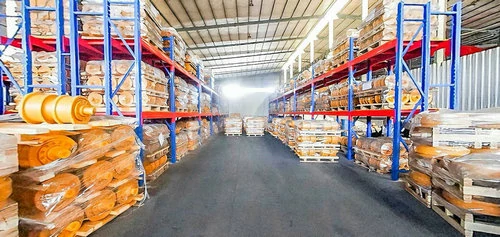
Yellow crawler excavator tracks with multiple rollers in an industrial warehouse facility

Managing a fleet of heavy machinery in the US for over 20 years has taught me one thing: the undercarriage is where your money either stays or disappears. I have seen many owners ignore their Cat D3B until a track snaps, which is a mistake I want to help you avoid.

To maintain a Cat D3B undercarriage effectively, you must follow a strict routine of daily cleaning, precise track tension adjustments, and regular lubrication. Monitoring wear on components like rollers and idlers while ensuring proper alignment will significantly reduce downtime and extend the life of your machine's parts.

Keeping your equipment running smoothly is not just about repair; it is about proactive care. If you stay with me, I will show you exactly how to handle the specific needs of an older model like the D3B to keep your costs low and your machine moving.

How do I measure the "track sag" on my Cat D3B bulldozer to ensure optimal operating tension?

When I am out in the field checking a machine, the first thing I look at is the track tension because it is the easiest thing to get wrong. If your tracks are too tight, you are just burning through your bushings and pins for no reason, and I hate seeing that waste.

Measuring track sag on a Cat D3B involves placing a straightedge over the track between the front idler and the carrier roller. You then measure the distance from the bottom of the straightedge to the top of the track grouser to ensure it meets the manufacturer's specific clearance requirements.

Close-up of a large steel excavator drive sprocket gear on a railway track

Understanding track sag is vital because the D3B model relies on a specific balance of tension to operate without excessive friction 1. When the track is too tight, it puts an enormous load on the seals and bearings of your rollers and idlers. Conversely, a track that is too loose can easily derail, especially when you are working on slopes or uneven terrain 2. This causes immediate damage to the drive sprocket and the track links themselves.

Why Sag Matters for Different Terrains

The environment where you work changes how you should set your tension. In my experience, working in the mud of the Southeast requires a different approach than the rocky soil of the West. If you are in muddy conditions, you actually want a little more sag. Mud gets packed into the sprocket teeth and the track links, which naturally tightens the chain. If you start with a tight track, the mud will make it so tight that something will eventually snap or wear out prematurely.

Steps to Measure Sag Correctly

  1. Park on Level Ground: Always ensure the machine is on a flat surface. Let it coast to a stop so the tension is distributed naturally.
  2. Use a Straightedge: Lay a long, straight bar across the top of the track. It should rest on the front idler and the first carrier roller.
  3. Measure the Gap: Use a tape measure to find the lowest point of the sag between the two supports.
  4. Check the Manual: For a D3B, the sag usually needs to be between 1.5 to 2 inches, but always verify with your specific serial number 3.

Track Tension Adjustment Guide

Condition Recommended Sag Reason
Hard/Rocky Ground Tight (within spec) Prevents shoe damage and vibration
Muddy/Soft Soil Loose (extra 0.5 inch) Allows for mud packing without over-tensioning
General Dirt Standard Spec Balances wear and performance

I always tell my customers that five minutes with a tape measure can save them five thousand dollars in parts later. It is the simplest part of the job, yet it is the one most people skip until they hear that dreaded squeal of a metal-on-metal grind.

What is the best way for me to lubricate the grease-sealed track links on an older D3B model?

Lubrication is the lifeblood of any undercarriage, and on an older model like the D3B, you have to be extra careful. I remember a client who thought any grease would do, but he ended up with clogged seals that caused his pins to seize within a month of heavy use.

The best way to lubricate grease-sealed track links on a Cat D3B is to use a high-quality, fortified grease specifically designed for heavy-duty undercarriages. You must clean the grease fittings thoroughly before application and inject the grease slowly to ensure it reaches the internal pins and bushings without blowing out the seals.

Durable polyurethane coated industrial roller wheel for heavy load material handling machinery

Lubricating older machines requires a bit of "feel." The grease-sealed tracks on a D3B are designed to keep contaminants out, but over time, those seals 4 can become brittle. If you use a high-pressure grease gun and just blast it in, you risk popping the seal. Once that seal is gone, dirt gets in, and the link is basically a ticking time bomb. You want to see the old grease being pushed out slightly, but you don't want to see the seal deform or break.

Choosing the Right Lubricant

Not all grease is created equal. For a D3B, you need something with high "tackiness" so it stays in place even under heavy loads and wet conditions. I recommend a lithium-based grease 5 with molybdenum disulfide (moly). This provides a solid layer of protection even if the liquid part of the grease gets squeezed out during high-pressure operation.

Common Lubrication Points on D3B Undercarriage

Maintenance Schedule for Lubrication

Component Frequency Action
Track Links Every 50 Hours Check for dryness or heat
Front Idlers Every 250 Hours Check oil levels/grease
Support Rollers Every 100 Hours Visual inspection for leaks
Pivot Shaft Every 250 Hours Apply fresh grease until full

When I talk to David, my typical customer, he cares about reliability. He knows that skipping a lubrication cycle might save twenty minutes today, but it will cost him two days of downtime next month. On these older D3B units, the metal is often still good, but the moving joints are what fail. If you keep them "wet" with the right grease, they can last thousands of hours longer than a dry, neglected set of tracks.

How can I clean the mud-packing areas around my D3B's carrier rollers to prevent flat spots?

If you leave mud to dry on your carrier rollers, you are basically asking for flat spots. I’ve seen rollers that looked like hexagons because the operator didn't bother to scrape out the clay at the end of the day. It’s a painful sight because it’s so easy to prevent.

To prevent flat spots on your D3B carrier rollers, you must scrape away mud and debris daily using a spade or a high-pressure washer. Pay close attention to the space between the roller and the track frame, as packed material can stop the roller from turning, causing the track to slide over it and grind down one side.

Heavy earthmoving excavator climbing a steep dirt road at an open-pit mining site

Cleaning is the most basic form of maintenance, yet it is often the most ignored. When mud packs into the undercarriage, it does more than just add weight. As it dries, it becomes as hard as concrete. This "concrete" can bridge the gap between the roller and the frame. When you start the machine the next morning, that roller is frozen. The track chain will drag across the frozen roller, and within a few hours of operation, you will have a flat spot 6. Once a roller has a flat spot, it will never spin correctly again and must be replaced.

The Problem with "Packing"

Packing happens most often in the "dead zones" of the undercarriage—the areas around the carrier rollers and the front idlers 7. In the D3B, the clearance is relatively tight. If you work in clay or wet soil, that material has nowhere to go. It builds up until it touches the rotating parts. This creates friction, which generates heat. Heat is the enemy of your seals. When seals get hot, they leak, and once the oil is out of a roller, it is only a matter of time before the bearing fails.

Effective Cleaning Tools

  1. The Scraper: A simple long-handled metal scraper is your best friend. Reach in and pull the big chunks out.
  2. Pressure Washing: If you have access to a pressure washer, use it at the end of the shift while the mud is still wet. It is ten times easier to clean wet mud than dry mud.
  3. The "Drive-Through" Method: Sometimes, driving the machine back and forth over a clean, hard surface can help dislodge some of the larger rocks trapped in the links.

Impact of Debris on Parts

Debris Type Primary Risk Prevention
Wet Clay Roller freezing / Flat spots Daily scraping
Small Rocks Link scarring / Seal damage Visual check before start
Sand Accelerated abrasive wear Frequent washing

I always tell my team that a clean machine is a happy machine. When David buys parts from us at Dingtai, I remind him that even the best quality roller 8 we produce can be destroyed by a handful of dried mud if it stops the roller from spinning. It is a simple habit that separates the professional operators from the amateurs.

Why should I monitor the front idler position on my D3B to detect excessive track stretch?

Monitoring the front idler position is like reading a health report for your entire undercarriage. I can walk up to a D3B and tell you exactly how much life is left in the tracks just by looking at how far forward that idler is sitting.

Monitoring the front idler position is essential because as the internal pins and bushings wear down, the track chain physically "stretches" or grows longer. As you adjust the tension to take up this slack, the idler moves forward on the track frame; once it reaches the end of its travel, it indicates that the track has reached its wear limit.

High-precision stainless steel industrial drive shaft with mounting flanges for powertrain systems

The term "track stretch" is a bit of a misnomer. The steel links aren't actually stretching like a rubber band. Instead, the friction inside each pin and bushing 9 joint is wearing away the metal. If you have 40 links and each one loses just 0.05 inches of metal, the whole chain becomes 2 inches longer. To keep that longer chain tight, you have to push the front idler further out. On a D3B, there is only so much room on the slide before the idler has nowhere left to go.

Using the Idler as a Wear Gauge

I recommend marking the track frame when you install a new set of tracks. This gives you a "zero point." As the months go by, you can see how far the idler has moved from that mark. If it has moved more than halfway, you should start planning your budget for a new set of chains. If it is near the very end of the frame, you are at risk of the idler actually falling out of the guides or the track jumping off 10 the sprocket.

Signs of Excessive Stretch

  • Idler Travel: The idler is pushed almost to the edge of the track frame.
  • Sprocket "Hunting": You can hear the sprocket teeth clicking or "hunting" for the right spot on the bushings because the pitch of the chain no longer matches the sprocket.
  • Visible Bushing Wear: If you look at the bushings and see they are worn thin or have "shiny" spots, the internal wear is likely even worse.

What to do When Stretch is Detected

  1. Measure the Pitch: Use a caliper to measure the distance over four or five links. Compare this to the original factory specs.
  2. Evaluate "Wet" vs "Dry": If you have grease-sealed tracks, stretch usually means the grease is gone. If they are "dry" tracks, it's just normal abrasive wear.
  3. Plan for Replacement: Do not wait for the track to break. A broken track in the middle of a job site costs three times more to fix than a planned replacement in the shop.

I have spent years helping customers like David manage these exact issues. At Dingtai, we ensure our replacement idlers and track links are built to handle the stress of these older machines. We focus on the heat treatment of the metal so that the "stretch" happens as slowly as possible, giving you more hours for every dollar you spend.

Conclusion

Maintaining your Cat D3B undercarriage comes down to consistency. By cleaning daily, checking tension, and monitoring idler travel, you can double the life of your parts and save significant money.

Footnotes

1. Learn about the mechanics of friction and its impact on heavy machinery components. ↩︎
2. Resource for heavy equipment operators discussing techniques for different terrains. ↩︎
3. Official Caterpillar portal for checking machine parts and serial number documentation. ↩︎
4. Technical guide on the role of industrial seals in protecting bearings and pins. ↩︎
5. Comprehensive information on lithium grease standards and heavy-duty lubrication. ↩︎
6. Maintenance tips for identifying common wear patterns like flat spots on rollers. ↩︎
7. Industry publication covering the evolution and maintenance of bulldozer undercarriage components. ↩︎
8. Manufacturer of premium undercarriage parts specializing in durability and heat treatment. ↩︎
9. Insight into the science of machinery lubrication for internal joints and bushings. ↩︎
10. Platform for inspecting and evaluating used construction equipment for wear and tear. ↩︎

Free Quote & Information Request

Leave your inquiry, we will provide you with quality products and services!

Excavator & Bulldozer Undercarriage Parts Expert - Quality Track Roller, Carrier Roller, Sprocket Wheel
Privacy Overview

This website uses cookies so that we can provide you with the best user experience possible. Cookie information is stored in your browser and performs functions such as recognising you when you return to our website and helping our team to understand which sections of the website you find most interesting and useful.