What Are the 5 Essential Cat Undercarriage Parts I Need to Know?

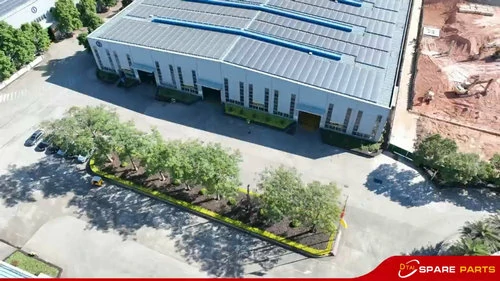
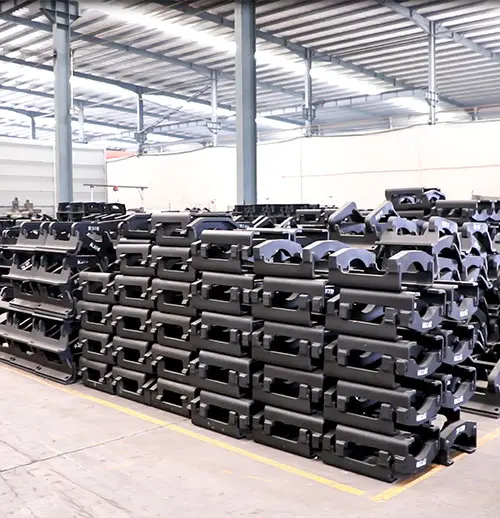
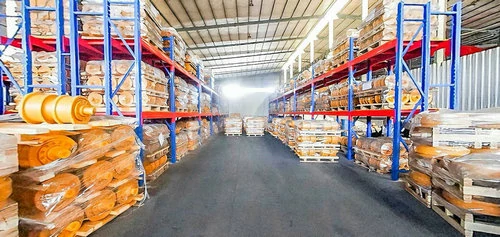
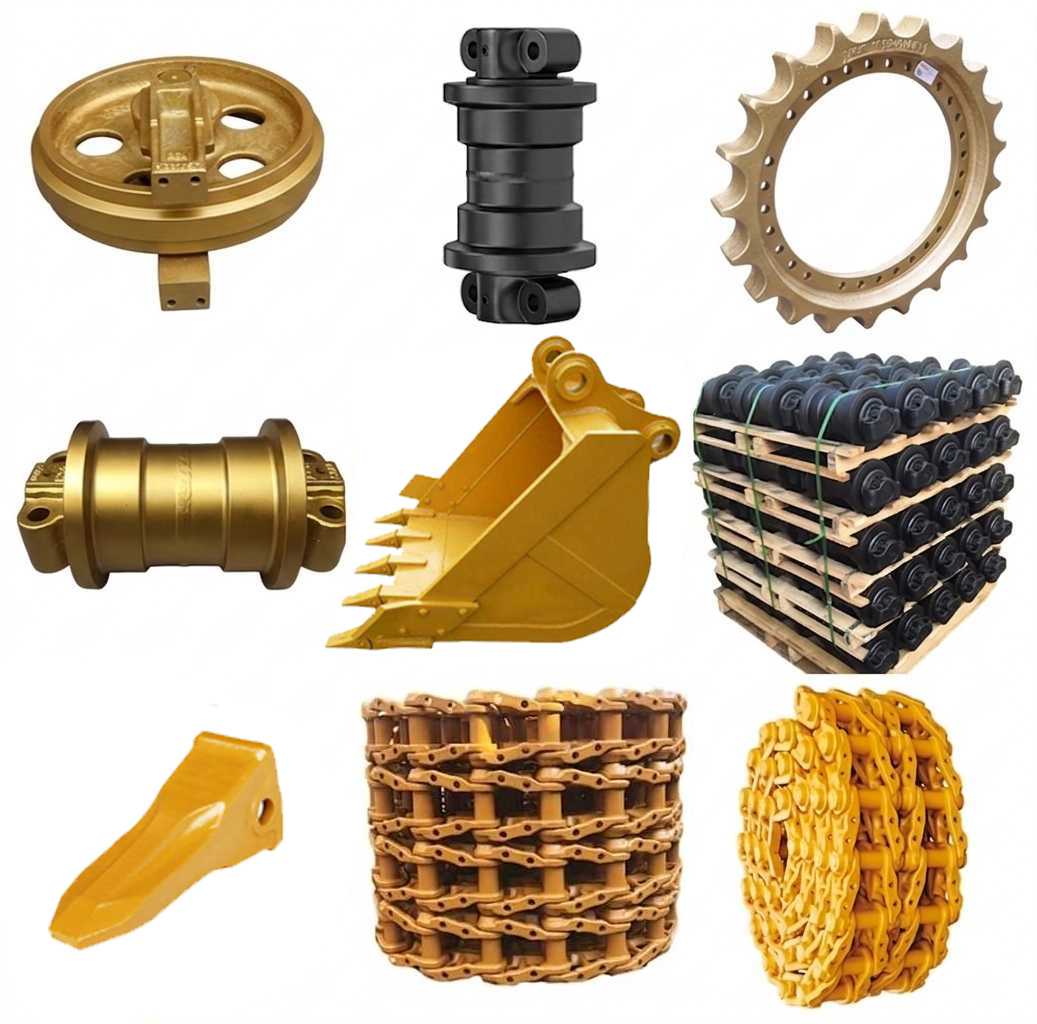
Industrial spare parts display featuring crawler tracks, steel rollers, and mounting flanges in factory

I know how frustrating it is when your heavy machine stops working because a small part failed. You lose time, money, and sleep worrying about expensive repairs and delayed projects.

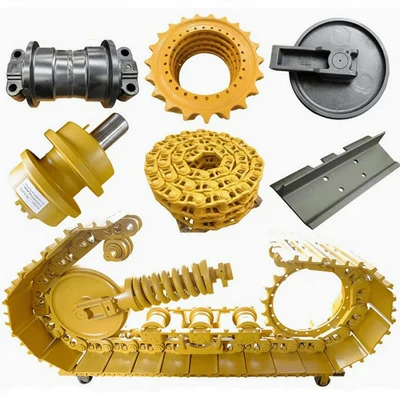
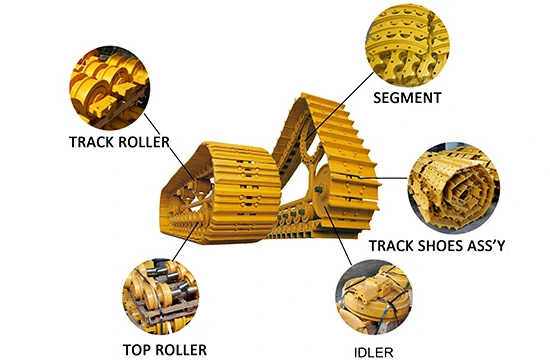
For most Cat heavy equipment, the five essential undercarriage parts to know are track shoes, rollers, idlers, sprockets, and the link/track assemblies. Understanding these helps you size wear, plan maintenance, and estimate repair costs accurately for your fleet.

Keeping your bulldozer or excavator moving requires more than just fuel; it requires a deep understanding of the components that touch the ground every day. Let me help you navigate these parts so you can make better buying decisions and keep your machines running longer.

How does the deep-induction hardening of Cat-compatible track links compare to standard aftermarket parts?

I used to think all steel parts were the same until I saw a cheap track link snap like a twig on a rocky job site. Now, I always check the heat treatment first.

Deep-induction hardening in Cat-compatible track links creates a thick, wear-resistant outer layer while keeping the inner core tough. Standard aftermarket parts often have shallow hardening, leading to faster wear, link cracking, and early failure under heavy loads.

Close-up of a heavy-duty steel crawler track assembly with blue atmospheric lighting

The Science of Surface Hardness

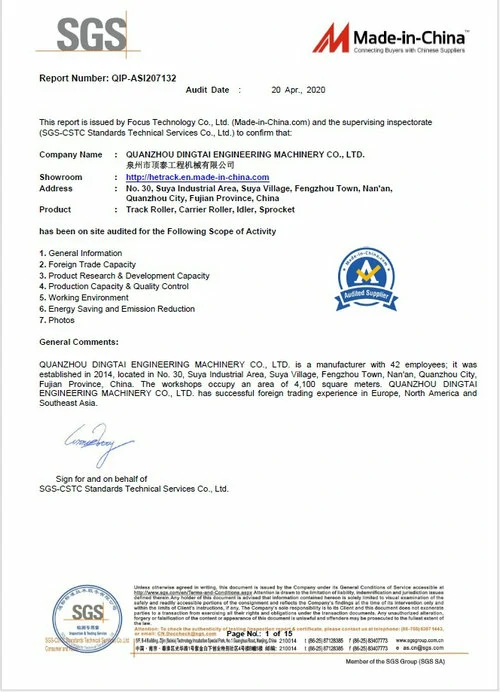
When we talk about track links, we are talking about the backbone of your machine. In our factory at Dingtai, we focus heavily on the heat treatment process. Deep-induction hardening 1 is not just a fancy term; it is a necessity for survival in the mud and rocks. Standard links might look good on the shelf, but they often lack the "case depth" needed for long-term use.

If the hardened layer is too thin, it wears away quickly. Once the soft inner metal is exposed, the link stretches and loses its shape. This leads to what we call "track pitch extension" 2, which ruins your sprockets.

Material Comparison Table

To help you understand the difference, look at how material choice and treatment impact the life of your parts:

Feature Dingtai Cat-Compatible Links Standard Aftermarket Links
Material 35MnB / 40Mn2 Recycled Carbon Steel
Hardening Depth 8mm - 12mm 2mm - 4mm
Surface Hardness HRC 52-58 HRC 40-45
Core Toughness High Impact Resistance Brittle

Why Precision Fit Matters

I have seen many customers buy links that "look" like they fit, only to find the pin holes are off by a fraction of a millimeter. This tiny error causes huge problems. It creates uneven pressure on the pins and bushings, leading to leaks and snaps. We use CNC machining 3 to ensure our links match Cat OEM specifications perfectly. This means you won't have to deal with "jamming" or "clicking" sounds when you first install them.

What makes Cat-style "SALT" (Sealed and Lubricated Track) chains different from conventional dry chains?

I remember a customer from the Middle East who switched from dry chains to SALT chains; his maintenance interval doubled overnight, and he finally stopped calling me every month with complaints.

Cat-style SALT (Sealed and Lubricated Track) chains use internal oil and specialized seals to keep metal-to-metal contact at a minimum. Unlike dry chains, SALT chains reduce internal friction, run quieter, and significantly extend the life of pins and bushings.

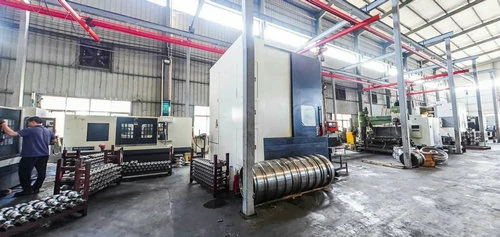
Industrial spiral spring testing equipment in a modern, brightly lit manufacturing facility

Internal Lubrication vs. Friction

In a dry chain, the pin and bushing are constantly grinding against each other. This creates heat and metal dust. Eventually, the pin wears down so much that the track becomes "long" and loose. SALT chains 4 change the game by putting a reservoir of oil inside the pin.

This oil is kept inside by high-tech seals. These seals are the most important part. If a seal fails, the oil leaks out, and the chain becomes a "dry" chain again. That is why we use high-quality synthetic rubber 5 seals that can handle extreme temperature changes without cracking.

Maintenance and Performance Comparison

Aspect SALT (Sealed & Lubricated) Conventional Dry Chain
Internal Wear Very Low (due to oil) High (metal-on-metal)
Operating Noise Quiet Loud Squeaking
Fuel Efficiency Better (less friction) Lower
Best Use Case Long-distance tracking/Dozers Low-hour Excavators

Managing Your Investment

If you are running a bulldozer that moves a lot, SALT is the only way to go. I tell my clients that while the initial cost is higher, the "cost per hour" is much lower. You won't have to "turn" the pins and bushings nearly as often. However, you must check for "wet" spots on your tracks. A wet spot means a seal has failed. Catching this early can save the entire chain assembly 6 from being destroyed.

How do I evaluate the life-cycle cost of Cat-compatible idlers versus lower-priced alternatives?

I once met a buyer who saved $200 on an idler only to spend $2,000 on a rush shipping order for a replacement when the first one cracked in two weeks.

To evaluate life-cycle cost, divide the total purchase price plus installation labor by the expected hours of service. Cat-compatible idlers with reinforced casting and high-quality seal groups offer a much lower cost-per-hour than cheap alternatives that fail prematurely.

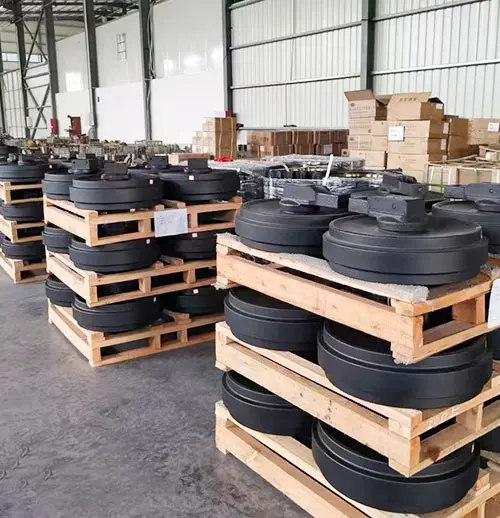
Large industrial steel pulley wheels on a wooden pallet in a workshop facility

The Hidden Cost of Downtime

When an idler fails, the machine stops. Your operator sits idle, and your project deadline slips. This is the "hidden cost" that many people forget. A cheap idler usually fails at the bearing or the weld. If the bearing seizes, it can flat-spot your track links, which costs even more to fix.

At Dingtai, we use specialized welding robots 7 to ensure every seam is perfect. We also perform a 100% leak test on the seal groups. This prevents the oil from leaking out, which is the number one cause of idler failure.

Idler Quality Checklist

When you are looking at different suppliers, use this checklist to see if the part is built for the long haul:

  • Casting Material: Is it high-strength alloy steel or cheap cast iron?
  • Seal Group: Does it use Duo-Cone seals 8 for lifetime lubrication?
  • Heat Treatment: Is the tread surface hardened to resist wear from the track links?
  • Shaft Quality: Is the internal shaft ground to a mirror finish to reduce friction?

Critical Thinking: Price vs. Value

Don't let a low price tag blind you. Ask the supplier for their material reports and warranty terms. If they won't give you a straight answer about the heat treatment depth, it is probably because the part won't last. For a professional like David Miller, a 10% higher price is worth a 50% longer life.

Why are Cat-style sprocket segments preferred over full rings for faster field replacement?

I've watched a team struggle for hours trying to remove a full-ring sprocket in the mud; it’s a nightmare I wouldn't wish on my worst enemy.

Cat-style sprocket segments are preferred because they allow for replacement without breaking the track chain. You can simply unbolt the worn segments and bolt on new ones, saving hours of labor and reducing the need for heavy shop equipment in the field.

Yellow bulldozer tracks operating on an outdoor dirt construction site at sunset

Field Service Efficiency

For large bulldozers like the D8 or D10, the "high-drive" system 9 uses segments. This is a brilliant design. Instead of taking the whole track off—which is dangerous and heavy—you can just rotate the track and change one segment at a time.

I always tell my clients to check their sprocket teeth every week. If the teeth look like "sharks' fins" (sharp at the top), they are worn out. Replacing them early protects your expensive track links. If you wait too long, the worn sprocket will "stretch" the links, and then you have to replace everything.

Segment vs. Full Ring Comparison

Feature Sprocket Segments Full Ring Sprocket
Installation Time 1 - 2 Hours 4 - 8 Hours
Track Removal? No Yes
Tool Requirements Basic Hand Tools / Impact Wrench Heavy Jack / Chain Press
Common Application Large Dozers (D6, D7, D8) Small Excavators

Ensuring a Tight Fit

One common problem I see is bolts coming loose. When you install new segments, you must use new bolts and nuts 10. Old bolts have stretched threads and will eventually fall out. We provide high-strength 12.9 grade bolts with our sprocket segments to make sure they stay exactly where they belong, even under the most extreme vibration.

Conclusion

Knowing these five parts—links, shoes, rollers, idlers, and sprockets—is the key to managing your Cat fleet successfully. Focus on quality heat treatment and proper lubrication to save money.

Footnotes

1. Technical guide on how induction hardening improves the durability of steel components. ↩︎
2. Discussion on how track pitch extension indicates internal wear in heavy equipment tracks. ↩︎
3. Overview of CNC machining and its importance in producing precision-engineered industrial parts. ↩︎
4. Expert tips on maintaining sealed and lubricated track systems for maximum service life. ↩︎
5. Information on the properties and industrial applications of synthetic rubber in sealing technology. ↩︎
6. Comprehensive guide on performing professional undercarriage inspections to identify component wear. ↩︎
7. Benefits of using robotic welding for consistent quality in heavy machinery manufacturing. ↩︎
8. Official technical specifications for Duo-Cone seals used in heavy equipment undercarriages. ↩︎
9. History and mechanical advantages of the elevated sprocket design in Caterpillar dozers. ↩︎
10. Guide to selecting high-strength industrial bolts and fasteners for heavy-duty applications. ↩︎

Free Quote & Information Request

Leave your inquiry, we will provide you with quality products and services!

Excavator & Bulldozer Undercarriage Parts Expert - Quality Track Roller, Carrier Roller, Sprocket Wheel
Privacy Overview

This website uses cookies so that we can provide you with the best user experience possible. Cookie information is stored in your browser and performs functions such as recognising you when you return to our website and helping our team to understand which sections of the website you find most interesting and useful.