What Is My Professional Guide to Replacing Cat Undercarriage Parts?

Heavy excavator tracks on a construction site at sunset with engineer in background

I know how stressful it feels when your Caterpillar machine stops working due to worn tracks, especially when you worry about whether new parts will fit perfectly or fail early.

Replacing Cat undercarriage parts is a job best guided by the machine’s manual and a qualified technician. This practical guide helps you plan and execute a safe, effective replacement by focusing on serial number matching, safety procedures, and proper torque specifications.

If you want to avoid costly downtime and ensure your bulldozer or excavator stays on the job site longer, keep reading. I will share my 20 years of manufacturing expertise to help you master the replacement process.

How do I cross-reference my Caterpillar serial number to ensure 100% fitment of track links and rollers?

I always feel a bit nervous when ordering parts because if the bolt holes do not align by even a few millimeters, my machine stays stuck in the mud.

To ensure a 100% fit, you must use your machine’s full Serial Number (S/N) to look up the specific Arrangement Number in the Caterpillar Parts Manual. This cross-referencing step confirms the exact dimensions for track links and rollers, preventing costly shipping errors and installation delays.

Industrial worker using a laptop to inspect a heavy-duty chain drive system

As a manufacturer who has served the global market for over two decades, I have seen many buyers make the mistake of ordering parts based only on the model name. For example, a Cat D6 bulldozer 1 has several different undercarriage versions depending on the year it was made. If you only say "I need a D6 track," you might receive a part that has the wrong pitch or link height. This is why I always ask my customers for their machine serial number found on the frame plate.

Why Data Accuracy Matters

When I talk to procurement managers like David, I emphasize that the undercarriage is a complex system of moving parts. If you install a track chain 2 with a slightly different pitch than your sprocket, you will hear a terrible grinding sound. Within a few days, the sprocket teeth will start to hook and wear out. This happens because the metal surfaces are not meeting at the correct angle. By using the serial number, we can find the exact "Part Number" that Caterpillar engineers assigned to your specific machine build.

Essential Parameters to Check

I recommend checking three main areas before you finalize any order. Our technical team at Dingtai always cross-references these specific measurements with our database to ensure compatibility.

Component Key Measurement Why It Matters
Track Link Pitch (e.g., 203mm) Ensures the chain fits perfectly over the sprocket teeth.
Bottom Roller Flange Width Prevents the track from sliding off or wearing unevenly.
Sprocket Number of Teeth/Bolts Ensures the power from the final drive transfers correctly.

Understanding Model Evolution

Caterpillar often updates their designs. An older machine might have a part number that is now "canceled" and replaced by a newer version. If I see a serial number from an older D8K tractor 3, I check if the modern heavy-duty versions are compatible. Using my deep technical background, I help customers find these updates so they get the most durable version of the part available today. This professional approach saves you from the headache of returning heavy metal parts across the ocean.

What is the safest procedure for me to compress the heavy-duty recoil springs on my Cat excavator?

I get a serious feeling of caution every time I stand near a recoil spring because I know the massive energy stored inside can be very dangerous if handled incorrectly.

The safest way to compress a Cat recoil spring is by using a dedicated hydraulic press and a safety cage. You must first release the grease pressure from the track adjuster and never attempt to disassemble the spring housing without professional high-pressure tools and protective barriers.

Large industrial spiral spring test rig inside a high-tech manufacturing facility

Safety is my top priority on any job site. The recoil spring is designed to protect your excavator from sudden shocks when the bucket hits a rock. This means the spring is under thousands of pounds of pressure even when the machine is parked. I have seen many DIY videos online where people use chains or small jacks, but I strongly advise against this. One slip can lead to a life-threatening accident.

Step-by-Step Pressure Release

When I prepare to remove a track frame, the first step is always to find the grease valve 4. I slowly loosen the valve to let the grease escape. You will see the idler move back and the track will sag. I always make sure my body is not directly in front of the valve because the grease comes out with high force. If the idler does not move even after the grease is out, it means the spring might be stuck or "packed" with dirt. In this case, I use the machine's own hydraulic power to gently push the idler back.

Using the Right Tools

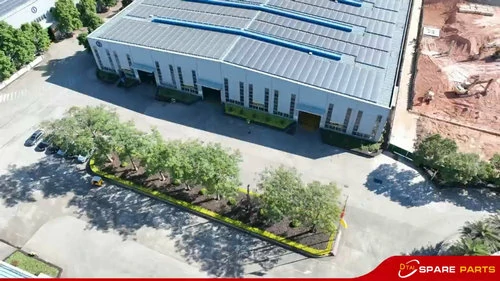
Once the assembly is off the machine, it must go to a shop with a heavy-duty press 5. At our factory in Fujian, we use 100-ton presses to assemble these units. We place the spring inside a steel cage. This way, if the metal fails, the pieces stay inside the cage.

Maintenance and Inspection Safety

Action Safety Tool Needed Risk Level
Greasing the Track Grease Gun & Safety Glasses Low
Removing Track Links Master Pin Press Medium
Spring Disassembly 100-ton Hydraulic Cage Press Extremely High

If I notice that a customer's recoil spring has deep rust or cracks, I recommend replacing the whole assembly. It is much safer to install a pre-assembled unit 6 from a manufacturer like us than to try and fix a broken spring in the field. This saves time and keeps your workers safe from the risks of high-tension metal failure.

How can I ensure that my Cat-style "SystemOne" undercarriage components are compatible with standard replacements?

I often see customers confused when they look at their SystemOne tracks because the rotating bushings look so different from the traditional parts they used for years.

SystemOne components are not piece-by-piece compatible with standard undercarriage parts due to unique link and sprocket designs. To ensure compatibility when switching, you must replace the entire system—including tracks, sprockets, and idlers—as a complete set to maintain proper alignment and performance.

Comparison of technical design drawings for heavy-duty industrial conveyor chains

Caterpillar designed SystemOne to last longer by letting the rotating bushings 7 reduce friction. However, this design uses a "box" style link that does not fit on a standard sprocket. If I try to put a standard track chain on a SystemOne sprocket, the teeth will not line up. This is a common pain point for managers who want to save money by switching to more common aftermarket parts. I always tell them that while the initial change costs more, the long-term flexibility of using standard parts is often worth it.

The Logic of Total System Replacement

When I help a customer convert from SystemOne to a standard heavy-duty undercarriage, I treat it as a full rebuild. You cannot mix and match. The reason is simple: the geometry is different. A standard track chain has a different profile. If you don't change the idlers, the track might not stay centered. My team at Dingtai provides a conversion kit 8 that includes everything needed to move back to a standard setup.

Comparing SystemOne and Standard Setups

I find it helpful to compare these two options so you can make a clear business decision based on your work environment.

Feature SystemOne (OEM) Dingtai Standard Heavy Duty
Bushing Design Rotating (Less friction) Fixed (Traditional)
Cost Very High Affordable / Cost-effective
Part Availability Dealer Only Wide Global Availability
Best Application High Abrasion / Sand General Construction / Rock

Making the Switch

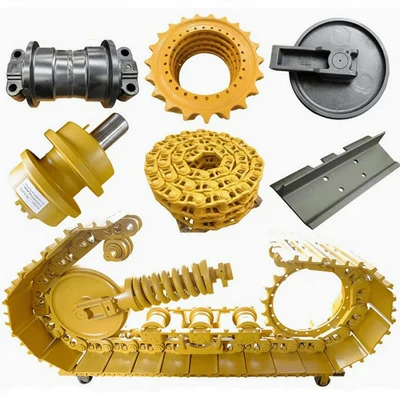
If your SystemOne tracks are 80% worn, that is the best time to think about a change. I recommend checking the condition of your bottom rollers 9. Usually, the bottom rollers can stay because they often share the same mounting dimensions. However, the sprocket segments must be changed. As a direct manufacturer, I can provide these conversion parts at a much lower price than a local dealer. This allows you to go back to a standard maintenance schedule where parts are easy to find anywhere in the world.

Why is it critical for me to check the torque-turn specifications when installing Cat track shoe bolts?

I have seen entire rows of track shoes fall off a machine because a mechanic thought "tight enough" was good enough, which caused a huge mess on the job site.

Using the "torque-turn" method is critical because it ensures the bolts reach a specific tension that prevents them from loosening under heavy vibration. For Cat machines, I first apply a base torque and then turn the bolt an additional 1/3 or 1/2 turn to reach the required clamping force.

Maintenance worker using specialized tools to secure bolts on a railway track

When you are dealing with a machine that weighs 40 tons, the vibration is intense. A simple torque wrench often isn't enough because friction in the threads can give you a false reading. I always explain to my clients that the "turn" part of the process is what actually stretches the bolt like a spring. This stretch is what keeps the track shoe tight against the link. If you miss this step, the bolts will slowly back out, and the holes in your expensive track shoes will become "oval" shaped, making them useless.

The Science of the Stretch

In our factory, we test the hardness of every bolt to make sure they can handle this torque-turn process 10. When you turn the bolt that extra 120 degrees after reaching the base torque, the metal enters a state called "plastic deformation." This means it is holding on with its maximum possible strength. I always use a permanent marker to put a line on the bolt head and the shoe. This way, I can see exactly how far I have turned it. It is a simple trick, but it prevents mistakes.

Avoid Common Installation Errors

Many people use an impact wrench and think the job is done. I strongly discourage this. An impact wrench is great for removing bolts, but it is not accurate for installing them.

  • Dirty Threads: If there is sand in the threads, your torque wrench will click too early.
  • Old Bolts: Never reuse track bolts. They are stretched during the first installation. If you stretch them again, they will likely snap.
  • Wrong Pattern: I always tighten from the center of the shoe outward to ensure a flat fit.

Standard Torque-Turn Reference

Bolt Size Base Torque (Nm) Additional Turn (Degrees)
3/4 Inch 270 Nm 120° (1/3 Turn)
7/8 Inch 400 Nm 120° (1/3 Turn)
1 Inch 600 Nm 120° (1/3 Turn)

By following these professional steps, you ensure that your undercarriage remains a solid unit. I tell my customers that spending an extra hour on proper bolt tightening can save ten hours of repair work later. It is the hallmark of a true professional.

Conclusion

Replacing Cat undercarriage parts requires patience, the right data, and strict safety habits. By following these professional steps, you protect your equipment investment and your team's safety.

Footnotes

1. Official specifications and configurations for the Caterpillar D6 medium dozer. ↩︎
2. Technical insights on track chain wear patterns and pitch measurements. ↩︎
3. Historical data and mechanical specs for the D8K crawler tractor series. ↩︎
4. Step-by-step guide to adjusting track tension via the grease valve safely. ↩︎
5. Resource for high-pressure hydraulic presses used in heavy machinery repair. ↩︎
6. Maintenance standards for ensuring durability in undercarriage assemblies. ↩︎
7. Detailed technical breakdown of the Cat SystemOne rotating bushing design. ↩︎
8. Source for aftermarket conversion kits and undercarriage replacement components. ↩︎
9. Catalog of various heavy equipment undercarriage parts and roller specifications. ↩︎
10. Engineering explanation of the torque-turn fastener tightening procedure. ↩︎

Free Quote & Information Request

Leave your inquiry, we will provide you with quality products and services!

Excavator & Bulldozer Undercarriage Parts Expert - Quality Track Roller, Carrier Roller, Sprocket Wheel
Privacy Overview

This website uses cookies so that we can provide you with the best user experience possible. Cookie information is stored in your browser and performs functions such as recognising you when you return to our website and helping our team to understand which sections of the website you find most interesting and useful.