I know how frustrating it is when your Hitachi excavator breaks down in the middle of a big job. Every hour the machine sits still, you are losing money and falling behind schedule.
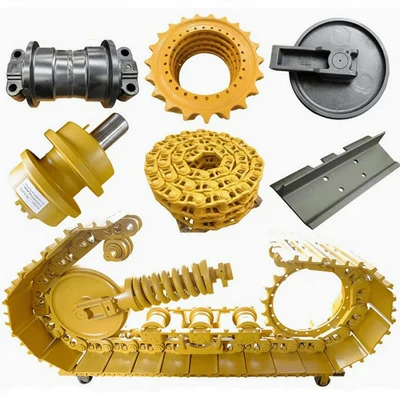
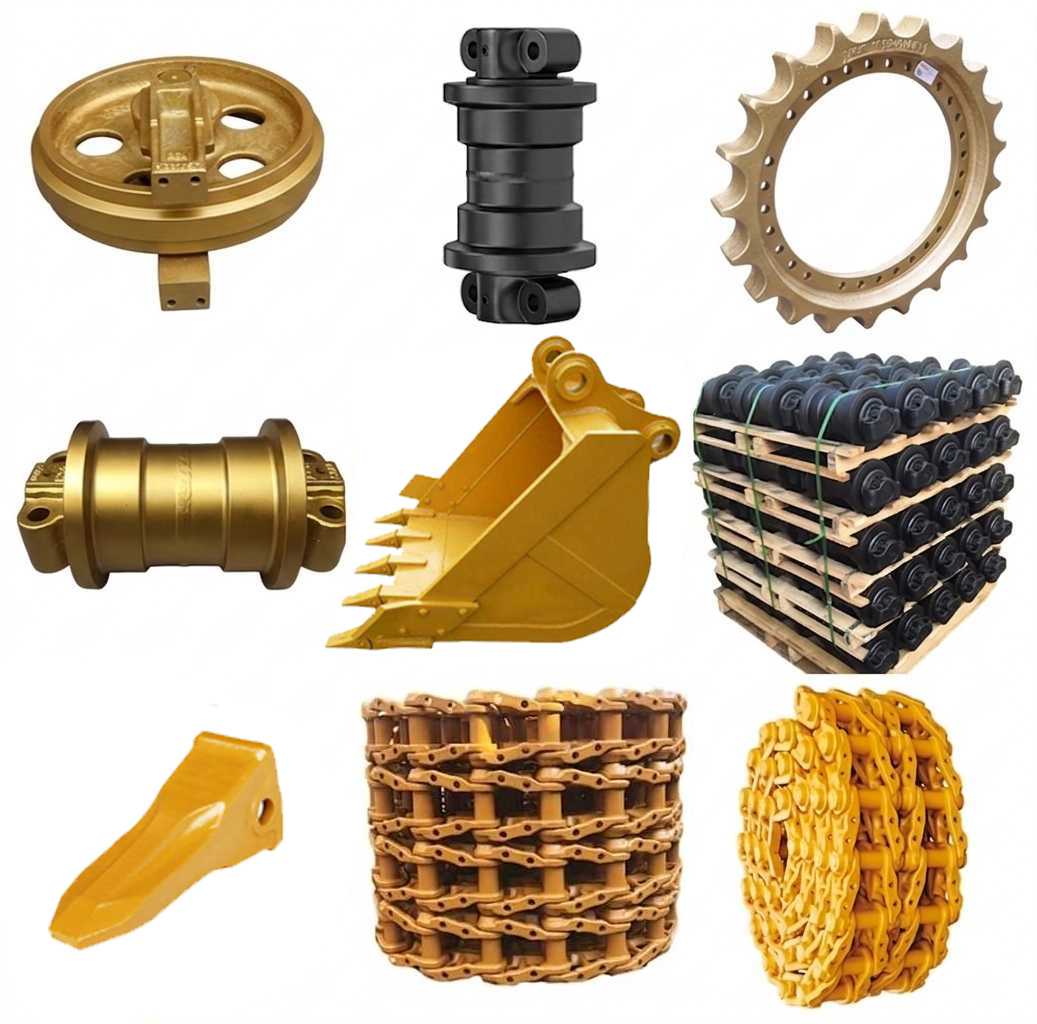
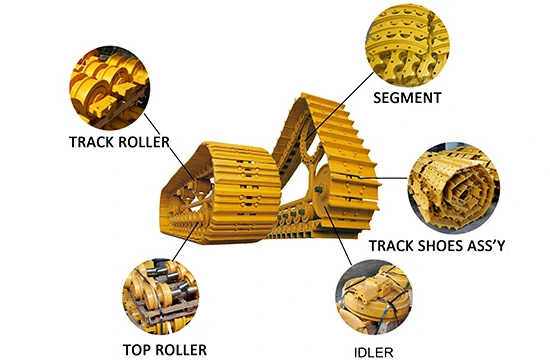
The best Hitachi undercarriage parts for durability are high-strength alloy steel components like deep-hardened boron steel track links and forged drive sprockets. These parts use specialized heat treatment and dual-cone seals to resist extreme wear and prevent oil leaks in harsh environments like mines or rocky construction sites.
Choosing the right parts is about more than just finding a match for your model. It is about understanding the materials and the engineering that keep your machine moving through mud, rock, and sand. Let me show you how to pick parts that actually last.
How does the use of deep-hardened boron steel extend the life of my Hitachi track links?
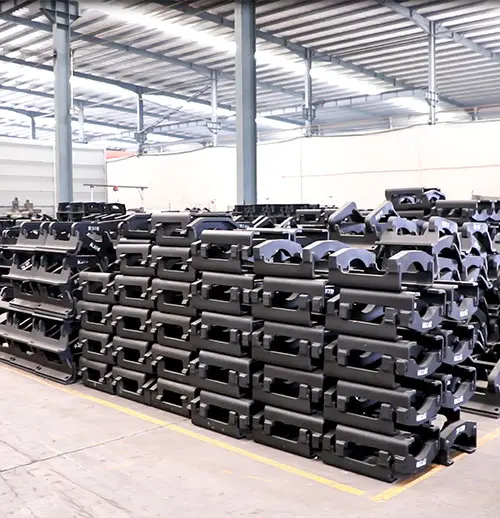
I always tell my customers that the track link is the backbone of the machine. If the link fails or wears out too fast, your whole project slows down to a crawl.
Deep-hardened boron steel extends the life of Hitachi track links by creating a thick, wear-resistant outer layer that protects the softer, tougher core. This allows the link to resist surface abrasion from rocks while remaining flexible enough to absorb heavy impacts without cracking or breaking under load.
The Science of Boron Steel in Mining
When we talk about durability, the material is everything. Boron steel 1 is a special type of alloy. When we add boron to the steel mix, it makes the metal much easier to harden during heat treatment. For Hitachi machines working in mines, this is a game changer. Standard steel often wears down quickly when it rubs against abrasive soil. Boron steel, however, can be "deep-hardened." This means the hardness goes deep into the metal, not just on the very surface.
Heat Treatment Process and Surface Hardness
In our factory, we use induction hardening 2. This process uses electricity to heat the surface of the track link very quickly. Then, we cool it down fast. This creates a surface hardness of about HRC 52 to 55. Why does this matter to you? It means when the link rolls over sharp rocks, the rocks cannot scratch or gouge the metal easily. Below is a comparison of common materials used in the industry.
| Material Type | Surface Hardness (HRC) | Hardness Depth | Best Use Case |
|---|---|---|---|
| Standard 40Mn2 | 48-52 | 5mm - 8mm | General Construction |
| Boron Steel (35MnB) | 52-56 | 10mm - 12mm | Mining and Heavy Rock |
| Cast Iron | 35-40 | Shallow | Light Duty Only |
Preventing "Internal Wear" with SALT Technology
Deep hardening is great for the outside, but what about the inside? Many of our high-end Hitachi compatible chains use SALT technology 3. We put a high-quality synthetic oil inside the pin and bushing. This oil is locked in by a special seal. This stops the "pin-to-bushing" friction that causes the track to stretch. When you combine boron steel links with SALT technology, you get a track group that lasts significantly longer than the basic dry chains found on cheaper machines.
Why Fatigue Resistance Matters
If the metal is too hard, it becomes brittle like glass. If you hit a big rock, it might snap. This is where the tempering process 4 comes in. We heat the steel again at a lower temperature to give it "toughness." A good Hitachi track link needs to be a "tough nut." It needs to be hard on the outside to stop wear, but strong on the inside to handle the weight of a 50-ton excavator. We test every batch to make sure the internal structure is perfect before it leaves the shop.
What is the expected service life of premium dual-cone seals in my Hitachi bottom rollers?
I have seen so many rollers fail because a cheap seal let a little bit of muddy water inside. Once that happens, the bearings are destroyed in just a few days of work.
Premium dual-cone seals in Hitachi bottom rollers typically provide a service life of 3,000 to 5,000 operating hours. These seals use two metal rings and two rubber "O-rings" to create a permanent, leak-proof barrier that keeps lubrication in and abrasive contaminants out, even in extreme temperatures.
How Dual-Cone Seals Work
The dual-cone seal 5 or "floating" seal is a clever piece of engineering. It consists of two identical metal seal rings that face each other. They are held together by rubber toric rings (O-rings). As the roller turns, the metal rings rub against each other. They are polished so smooth that oil cannot get out and dirt cannot get in. In our Dingtai rollers, we use high-chromium molybdenum cast iron for these rings. This material is very resistant to corrosion and heat.
The Role of the Rubber Toric Ring
The rubber part is just as important as the metal. We use Nitrile Butadiene Rubber 6 or Silicone, depending on where the machine will work. If you are working in the freezing cold of North America or the heat of the Middle East, the rubber must stay flexible. If the rubber gets hard and cracks, the pressure on the metal rings drops, and the seal leaks. Our seals are tested to handle temperatures from -40°C up to 100°C.
Comparing Seal Quality
Not all seals are the same. When you buy cheap aftermarket rollers, they often use low-grade rubber that fails after 1,000 hours. This is a huge risk. When the oil leaks out, the friction between the shaft and the bushing creates massive heat. Eventually, the roller will seize up and "flat spot." This ruins your track links too.
| Feature | Premium Dual-Cone Seal | Standard Aftermarket Seal |
|---|---|---|
| Material | High-Chrome Cast Iron | Standard Steel or Alloy |
| Rubber Type | High-Grade NBR/Silicone | Low-Cost Synthetic Rubber |
| Expected Life | 3,000 - 5,000 Hours | 1,000 - 2,000 Hours |
| Leak Resistance | Excellent (Self-polishing) | Moderate (Wears unevenly) |
Impact of Lubrication Quality
Even the best seal needs good oil. We fill our rollers with specialized gear oil 7 that stays slippery even under heavy loads. Because the seal is so good, we call these "sealed-for-life" parts. You don't need to add grease or oil. You just install them and work. For a professional like David Miller, this means less maintenance time and more "up-time" for the fleet. We ensure that 100% of our rollers pass a pressure test to check for leaks before they are painted.
How can I tell if a Hitachi-compatible idler has the internal lubrication capacity for extreme work?
I often get asked why some idlers cost twice as much as others. The answer is usually hidden inside where you cannot see it, in the lubrication and the bearings.
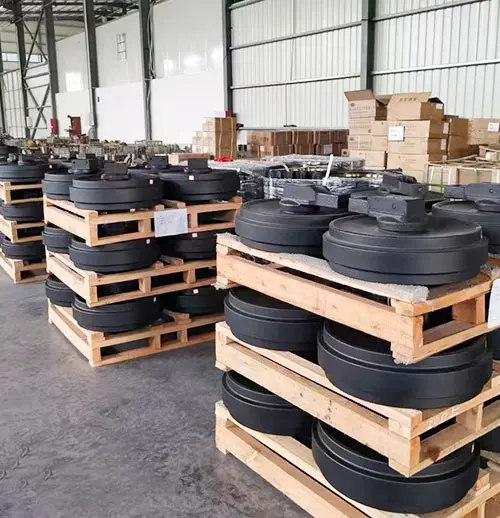
To tell if a Hitachi-compatible idler has the right lubrication capacity, check for a "friction-welded" hub and a large oil reservoir. High-capacity idlers use thick-walled shafts and bimetal bushings that allow for more oil storage, ensuring the internal components stay cool during long distance travel or high-speed operation.
The Importance of Friction Welding
The idler is basically a big wheel that guides the track. It takes a lot of stress. In the old days, idlers were made of two halves welded together by hand. Today, we use friction welding 8. This process spins the parts so fast that the heat from friction melts them together into one solid piece. This creates a perfect, airtight seal for the oil reservoir. If you see a messy, thick weld bead on an idler, it might not hold oil as well as a friction-welded one.
Bimetal Bushing and Shaft Design
Inside the idler, the wheel spins on a shaft. We use bimetal bushings 9—usually a steel shell with a bronze inner lining. The bronze has tiny grooves to hold oil. A high-capacity idler will have a thicker shaft and a larger internal cavity. This allows it to hold more oil. More oil means the heat generated from the track moving is spread out more. This prevents the idler from overheating when the machine has to "tram" (walk) a long distance across a job site.
Indicators of Quality in the Shop
When you are looking at a part, there are three things to check:
- Weight: A durable idler is heavy. We use high-strength casting steel. If it feels light, the walls are thin and it won't last.
- The Plug: Look at the oil fill plug. It should be high-quality and recessed so it doesn't get knocked off by rocks.
- Surface Finish: The "tread" of the idler (where the track chain touches) should be smooth and show signs of induction hardening.
| Component | Our Technical Standard | Why It Matters |
|---|---|---|
| Hub Body | Precision Casting (35SiMn) | High strength against impact |
| Welding Method | Automated Friction Welding | 100% Leak-proof oil cavity |
| Bushing | Steel/Bronze Bimetal | Low friction, high heat capacity |
| Hardness | HRC 50-56 | Resists wear from the chain links |
Matching the Idler to the Environment
If you are working in a swamp, you need excellent seals to keep water out. If you are in a rock quarry, you need a heavy-duty cast body that won't crack when the machine bounces over boulders. We offer different versions of idlers for Hitachi ZX series machines based on these needs. I always ask my clients what kind of ground they are working on so I can give them the part that fits their specific "pain point."
Why should I prioritize forged drive sprockets over cast versions for my Hitachi ZX series?
I have seen many operators try to save money by buying cheap cast sprockets, only to find the teeth wearing down or snapping off in just a few months.
You should prioritize forged drive sprockets because forging creates a denser, more uniform grain structure in the metal, making the teeth much stronger than cast versions. Forged sprockets for Hitachi ZX series machines provide superior resistance to "impact fracturing" and have a 20% higher fatigue life under heavy loads.
Forging vs. Casting Explained
Casting is like baking a cake; you pour liquid metal into a mold. Sometimes, tiny air bubbles get trapped inside. These are called "porosity." Forging 10 is different. It is like kneading dough. We take a solid block of steel and use a massive press to squeeze it into the shape of a sprocket. This "squeezing" breaks up any bubbles and aligns the metal fibers. This makes the steel much tougher. For a drive sprocket that has to pull the weight of the entire machine, this strength is vital.
Tooth Profile and Mud Clearance
A good sprocket is not just about strength; it is also about shape. Our Hitachi-compatible sprockets are designed with a specific tooth profile. This profile matches the track bush perfectly. If the shape is even a few millimeters off, the chain will "jump" or wear out the bushings very fast. We also design our sprockets to shed mud. If mud builds up in the sprocket teeth, it puts huge tension on the track chain. This "over-tension" is a silent killer of undercarriages.
Material Choice: 40Mn2 or 35MnB
We typically use 40Mn2 alloy steel for our sprockets, but for high-impact jobs, we move to boron steel. After forging, the sprocket goes through a strict heat treatment. We ensure the teeth are hardened to HRC 50-55, while the center stays slightly softer so the bolt holes don't crack. This balance between hardness and flexibility is what makes a "premium" part.
Why the Drive Sprocket is the "Heart" of the Track
The sprocket is what actually moves the machine. If the teeth wear down, the track starts to slip. This slipping causes "scuffing" on the bushings. It is a chain reaction of damage. By investing in a forged sprocket, you are protecting the most expensive part of your undercarriage—the track chain. For my clients like David, who run large fleets, reducing the frequency of sprocket changes is a huge way to save on labor costs and downtime.
Conclusion
Choosing the right Hitachi undercarriage parts is about matching high-quality materials with expert manufacturing. By focusing on boron steel, dual-cone seals, and forged components, you ensure your machine stays productive.
Footnotes
1. Understanding the high-strength properties and industrial applications of boron alloy steel. ↩︎
2. Technical overview of induction hardening for enhancing surface durability of steel parts. ↩︎
3. Discussion on the benefits of Sealed and Lubricated Track (SALT) systems in heavy machinery. ↩︎
4. Explanation of the tempering process to improve toughness and ductility in hardened steel. ↩︎
5. How mechanical face seals (dual-cone) protect rotating equipment from contaminants. ↩︎
6. Properties and chemical resistance of Nitrile Butadiene Rubber in industrial sealing. ↩︎
7. Guide to the importance of gear oil in protecting high-load machinery components. ↩︎
8. Detailed explanation of the friction welding process for creating high-integrity bonds. ↩︎
9. Benefits of using bimetal bushings for high-load and high-friction applications. ↩︎
10. Overview of the forging process and its advantages over casting for metal strength. ↩︎