What Are the Best Practices for My Undercarriage Tracks?

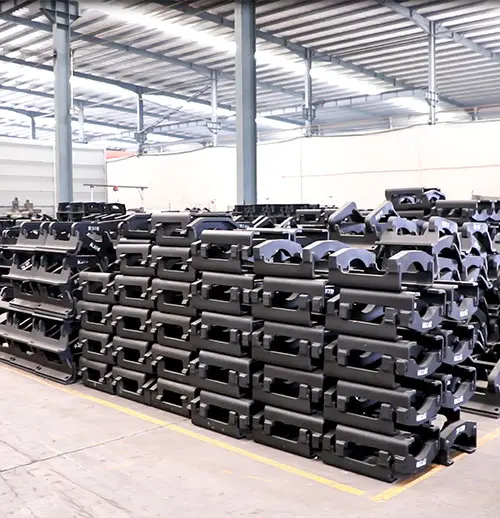
Low-angle view of technician walking past massive crawler tracks in industrial factory setting

I know the frustration of seeing a machine sit idle because a track snapped or a roller seized. These heavy steel parts are the foundation of your business, and ignoring them leads to massive, avoidable repair bills.

To maximize undercarriage life and minimize downtime, follow a structured set of best practices including daily cleaning, maintaining precise track tension for specific terrains, and conducting proactive inspections to identify wear patterns before they cause catastrophic component failure.

Running a fleet is a constant battle against friction and mud. If you want to keep your equipment moving without breaking the bank, you need to treat your undercarriage with the same respect as your engine. Let's look at how to protect your investment.

How do I implement a proactive inspection schedule to identify wear patterns early?

I have spent years helping customers like David Miller realize that a simple walk-around can save ten thousand dollars in parts. Most people wait for a loud bang to check their tracks, but the best operators look for the quiet signs of trouble every single morning.

A proactive inspection involves a daily visual check for oil leaks, loose bolts, and uneven wear on rollers and sprockets, combined with professional ultrasonic measurements every 500 hours to track component thickness and life expectancy.

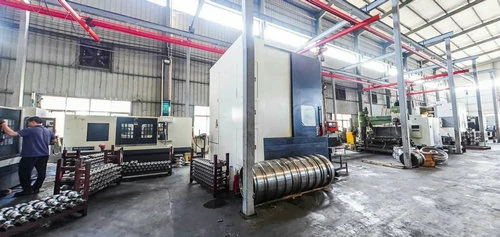
Worker using manual measurement tape to check precision of industrial steel railway track

When you start a proactive program, you are essentially becoming a detective for your own machinery. I always tell my team that the metal tells a story. If you see shiny spots where there shouldn't be friction, or if one roller looks cleaner than the others, something is wrong. Usually, a clean roller means it stopped turning and the track is just sliding over it. This flat-spots the roller quickly.

You should create a simple checklist for your operators. They don't need to be engineers. They just need to look at the drive sprockets 1. Are the teeth sharp like shark fins? If so, the pitch of your chain is likely stretched, and the sprocket is eating away at the bushings. This is a classic wear pattern 2 that tells you it is time for a replacement before the chain actually breaks.

We also use tables to track these wear patterns. By recording the height of the grouser bars or the diameter of the rollers, we can predict exactly when a machine will need to come into the shop. This prevents "panic buying" of parts and allows you to order from a reliable manufacturer like Dingtai in advance.

Standard Inspection Checklist for Operators

Component What to Look For Action if Found
Track Bolts Shiny heads or red dust (rust) Tighten to torque specs immediately
Rollers Oil leaking from the seals Replace roller before bearing seizes
Sprockets Sharp, pointed teeth Replace sprocket and check chain pitch
Track Shoes Cracked or bent plates Replace to prevent stress on links

Another critical part of the inspection is looking at the "rock guards" 3. If these are bent, they can rub against the side of the links. This creates heat and thins out the metal. I often see machines in South America working in heavy mud where the guards get packed with debris. If that mud dries, it acts like sandpaper. A quick look every morning to clear out the biggest chunks of debris will extend the life of your seals by hundreds of hours.

What are the best storage practices for my spare track chains to prevent rust and corrosion?

I often see expensive spare parts sitting in the corner of a yard, slowly being destroyed by the weather before they even touch a machine. It breaks my heart to see a high-quality track chain covered in deep pits of rust because it was left in the rain.

Best storage practices for spare track chains include keeping them off the ground on pallets, covering them with waterproof tarps, and applying a heavy coat of industrial rust inhibitor or grease to all machined surfaces and pin joints.

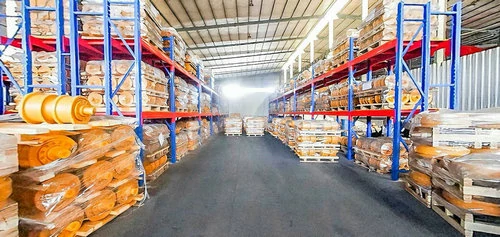
Large warehouse storage facility with stacked industrial track components on wooden pallets

Rust is the silent killer of track chains. When a chain sits in a humid environment, moisture gets into the tiny gaps between the pin and the bushing. This causes "internal rust" which can seize the joint. When you finally install that chain, it won't wrap around the sprocket smoothly. It will "jump" and cause vibration that destroys your final drive 4.

I recommend a "first-in, first-out" inventory system 5. If you have multiple sets of chains for your Caterpillar or Komatsu machines, make sure you are using the oldest stock first. Even in a warehouse, the protective oil from the factory can dry out over a couple of years. If you are near the ocean or in a tropical climate, this happens even faster.

Storage Environment Comparison

Storage Method Risk Level Recommended Duration
Outdoor / Uncovered High (Corrosion/Seizing) Less than 30 days
Outdoor / Covered Medium (Condensation) 1 - 6 months
Indoor / Climate Controlled Low (Minimal Aging) Up to 2 years

If you must store them outside, don't just throw a tarp over them. The tarp can actually trap moisture underneath, creating a greenhouse effect for rust. You want air to be able to circulate. Use heavy wooden blocks to keep the metal off the dirt. Dirt holds moisture and acidity that will eat through the factory paint in weeks.

For my clients who buy in bulk for long-term projects, I suggest a quick inspection of the inventory every three months. Just walk by and spray a bit of industrial rust inhibitor 6 on any spots where the paint has chipped. It takes five minutes but saves thousands of dollars in "dead stock" that can't be used because the links are frozen solid.

How can I use telematics data to monitor my equipment’s undercarriage health remotely?

We live in a digital age, and even heavy steel tracks can be monitored from an office thousands of miles away. I remember the first time I showed a fleet manager how he could tell his tracks were wearing out just by looking at his phone. He was amazed.

Telematics data monitors undercarriage health by tracking total travel distance, percentage of time spent in high-speed reverse, and engine load, allowing managers to predict wear based on actual usage rather than just calendar days.

Civil engineer using digital tablet with data graphs at mountain excavation site with excavator

The most important metric telematics provides is "traveling in reverse" 7. Most people don't realize that reverse travel causes significantly more wear on the pins and bushings than forward travel. This is because of the way the track links engage the sprocket teeth. If the data shows an operator is backing up at high speeds for long distances, I know those tracks will fail 30% faster than average.

By using this data, you can intervene. You can call the operator and tell them to turn the machine around instead of backing up the whole way across the job site. This kind of remote coaching is only possible because the machine is "talking" to the cloud. You aren't just guessing; you have hard numbers on how much work the undercarriage has actually done.

Key Telematics Metrics for Track Wear

Metric Why it Matters Goal for Longevity
Reverse Travel % Causes 3x more bushing wear Keep under 20% of total travel
High-Speed Travel Increases heat and impact Limit to necessary relocation only
Fuel Burn / Load Indicates track tension issues High fuel burn can mean "tight" tracks

Another great use of telematics is monitoring "idle time" 8. If a machine is idling but the tracks are moving, the sensors can pick up the vibration and load. If the computer sees high load but low ground speed, it might mean the tracks are packed with mud and the engine is fighting the friction. This is a signal to the maintenance team to send someone out with a pressure washer.

In the long run, this data helps you build a "wear profile" 9 for different job sites. You might find that job site A, which is sandy, wears out tracks twice as fast as job site B, which is clay. This allows you to adjust your maintenance budget and your parts ordering from Dingtai with incredible accuracy. You stop being reactive and start being strategic.

Why is matching the correct undercarriage components to my specific soil conditions essential for ROI?

I once saw a contractor put wide "swamp pads" on a machine that was working in a rocky quarry. Within two weeks, almost every single track shoe was bent or cracked. He thought "bigger is better," but he was wrong. He wasted a lot of money because he didn't match the part to the ground.

Matching undercarriage components to soil conditions is essential because it balances the need for flotation against the risk of structural damage, ensuring that parts wear evenly and the machine operates at maximum fuel efficiency without premature breakage.

Split screen showing rocky excavation site vs. smooth dirt road with heavy tire treads

Think of your track shoes like shoes for a person. You wouldn't wear high heels to a hike in the mountains, and you wouldn't wear snowshoes to run on a track. If you are working on hard rock, you want the narrowest shoe possible. Why? Because a narrow shoe has less "leverage." When a narrow shoe hits a rock, the force goes straight up into the roller. When a wide shoe hits a rock on one edge, it acts like a giant lever and tries to twist the track link. This is how you end up with "snaked" chains.

Conversely, if you are in the soft mud of a river delta, you need those wide shoes to keep the machine from sinking. If the machine sinks, the belly pan drags on the ground. This creates massive resistance, makes the engine work harder, and burns more fuel. In that case, the wider shoe actually saves you money on fuel and prevents the undercarriage 10 from being buried in abrasive grit.

We often help customers design custom solutions. For example, if you work in a mix of conditions, we might suggest a "double grouser" shoe. These provide a good balance of traction and durability. They don't dig as deep as a single grouser, which protects the ground surface, but they are much stronger than a flat shoe.

Choosing the right material is also key. At Dingtai, we focus on specific heat-treatment processes for different environments. For high-impact rocky soil, you need a part that is "tough" so it doesn't crack. For sandy soil, you need a part that is "hard" on the surface so it doesn't rub away like an eraser. Getting this balance right is the difference between a part lasting 2,000 hours or 4,000 hours.

Conclusion

Managing an undercarriage is about consistency. If you clean your tracks, check your tension daily, and match your parts to your ground conditions, you will see a massive jump in your ROI. It is not about one big fix; it is about the small habits that keep the steel moving.

Footnotes

1. Expert maintenance tips for drive sprockets and other undercarriage parts. ↩︎
2. Guide to identifying common undercarriage wear patterns in heavy equipment. ↩︎
3. Detailed maintenance guide for protecting undercarriage components like rock guards. ↩︎
4. Prevention strategies for protecting the final drive through track maintenance. ↩︎
5. Understanding the First-In, First-Out (FIFO) method for parts inventory management. ↩︎
6. Scientific definition and application methods for industrial rust inhibitors. ↩︎
7. Industry advice on how operating in reverse impacts undercarriage lifespan. ↩︎
8. Comprehensive guide to how telematics improves fleet management efficiency. ↩︎
9. Practical tips for monitoring wear and extending excavator undercarriage life. ↩︎
10. Technical overview of vehicle undercarriage structures and their functions. ↩︎

Free Quote & Information Request

Leave your inquiry, we will provide you with quality products and services!

Excavator & Bulldozer Undercarriage Parts Expert - Quality Track Roller, Carrier Roller, Sprocket Wheel
Privacy Overview

This website uses cookies so that we can provide you with the best user experience possible. Cookie information is stored in your browser and performs functions such as recognising you when you return to our website and helping our team to understand which sections of the website you find most interesting and useful.