Quick Comparison of the Top 5 Excavator Undercarriage Suppliers
- Berco – Best for OEM-grade durability and mining applications
- ITM – Best for global aftermarket availability
- ITR (USCO) – Best balance of price and European quality
- VemaTrack – Best for rental fleets and fast delivery
- Dingtai – Best value direct manufacturer for distributors and contractors
Finding the right supplier for heavy machinery parts feels like a gamble when your project deadlines are tight and equipment downtime costs thousands of dollars every single day. I know the stress of worrying if a new batch of rollers will actually last or if the supplier will disappear when a warranty claim pops up.
The top five excavator undercarriage parts suppliers you should consider are Berco, ITM, ITR (USCO), VemaTrack, and Dingtai. These companies lead the global market by offering a mix of premium OEM-grade durability, extensive aftermarket availability, and direct manufacturing expertise that ensures high-quality heat treatment and reliable fitment.
Choosing between these giants depends on your specific budget and machine needs. While some focus on high-end mining applications, others provide the best value for general construction. Let's look at how these options stack up so you can keep your fleet moving without breaking the bank.
How do I compare the material grades used by leading Chinese manufacturers versus Italian brands?
I often get asked if Chinese steel can really compete with the legendary reputation of Italian undercarriage parts. In my 20 years of experience, I have seen that the gap has closed significantly, provided you are looking at top-tier manufacturers who invest in high-grade manganese and boron steel.
Leading Chinese manufacturers use material grades like 40Mn2 or 50Mn for rollers, which closely match the 42CrMo or 15B25 grades used by Italian brands. Both regions utilize deep induction hardening and sophisticated heat treatment to achieve a Rockwell hardness of 50-56 HRC, ensuring similar wear resistance and longevity.
Understanding the Steel Chemistry
When we talk about material grades, we are really talking about chemistry. Italian brands like Berco 1 have spent decades perfecting their alloys. They often use specialized boron steel 2 for track links. Boron is a game-changer because it allows the steel to be hardened deeply without becoming brittle. If a part is too hard on the surface but soft inside, it will wear out fast. If it is too hard all the way through, it might snap under impact.
Top Chinese factories, especially those in the Fujian region, now use identical testing equipment. We look at the carbon, manganese, and chromium levels very closely. For example, 40Mn2 3 is a high-strength steel that provides excellent toughness. When we heat treat this material, we create a "hardened layer" that goes deep into the metal. This is what keeps the sprocket teeth or the roller shells from flattening out after a few hundred hours of work in the mud.
Heat Treatment: The Secret Sauce
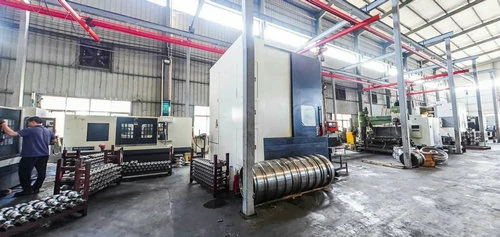
Material is only half the battle. The real magic happens in the furnace. Italian manufacturers are masters of induction hardening 4. However, the best Chinese direct manufacturers now use automated heat treatment lines that remove human error. This ensures every single link in a 40-ton excavator track chain has the exact same hardness.
| Component | Italian Standard Material | Top Chinese Material (Dingtai) | Surface Hardness (HRC) |
|---|---|---|---|
| Track Link | 35MnB / 15B25 | 35MnB / 40Mn2 | 52 - 58 |
| Roller Shell | 40Mn2 / 42CrMo | 40Mn2 / 50Mn | 50 - 56 |
| Idler Rim | 35SiMn | 35Mn / 40Mn | 50 - 55 |
Why the Source Matters
The main difference isn't the country; it is the factory level. A "cheap" trading company might source parts made from recycled scrap steel. A professional manufacturer uses "virgin" steel from large mills. This means there are no hidden air bubbles or impurities in the metal. When you buy from a reputable source, the price-to-quality ratio becomes much clearer. You get 90% or 95% of the performance of an Italian part at a significantly lower cost because the raw material supply chain in China is so efficient.
What are the advantages of sourcing from a direct manufacturer like Dingtai compared to a trading company?
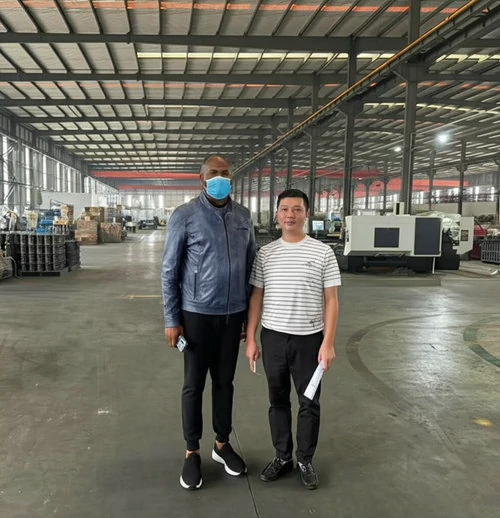
I have seen many buyers get frustrated when they ask a technical question about heat treatment depth and the salesperson just sends a generic PDF back. That is the classic sign of a middleman who has never actually stepped foot on a factory floor or seen a CNC machine in action.
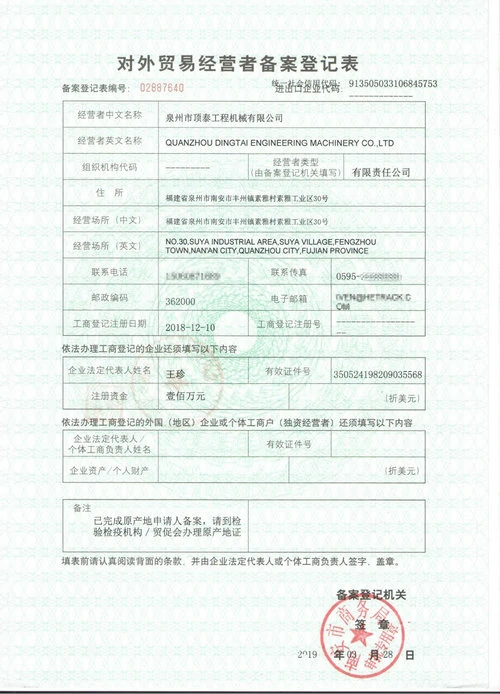
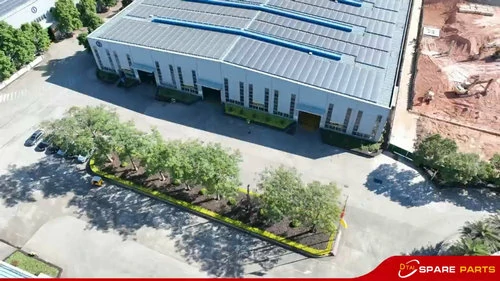
Sourcing from a direct manufacturer like Dingtai gives you total control over quality, faster technical support, and significantly lower costs by removing middleman markups. Manufacturers provide direct access to engineers, 100% quality inspection reports, and the ability to customize parts for specific high-impact or abrasive working environments.
Speed and Accuracy of Communication
When you work with a trading company, they are the "telephone" between you and the factory. If you need a specific modification for a Caterpillar 320D 5 track group, the trader has to call the factory, wait for an answer, and then translate it back to you. This wastes time. As a direct manufacturer, we have the technical data on hand. If you have a problem in the field, our engineers can look at the CAD drawings immediately. We speak the language of "clearance," "tolerance," and "tensile strength," not just "price" and "delivery."
Transparency in the Production Process
A trader cannot tell you exactly when your rollers will be finished. They are at the mercy of the factory's schedule. We, on the other hand, provide a transparent production timeline. You can see the stages of forging 6, machining, heat treatment, and assembly. This is vital for large distributors who need to manage their inventory levels in the US or Europe.
Cost Savings and Customization
Trading companies usually add 10% to 20% to the price just for their service. By cutting them out, you save that money or can reinvest it into higher-quality shipping or better material grades. Furthermore, we offer OEM and ODM services 7. If your customers work in very rocky terrain, we can increase the hardness of the track shoes or add extra reinforcement to the idlers. A trading company simply sells what is on the shelf; they cannot innovate for you.
Quality Control Standards
| Feature | Direct Manufacturer (Dingtai) | Typical Trading Company |
|---|---|---|
| Material Testing | In-house lab (Spectrograph) | Relies on factory claims |
| Heat Treatment | Full control over depth & HRC | No control or oversight |
| Customization | Available (Blueprints/Samples) | Very limited or none |
| Warranty | Direct and fast resolution | Slow, depends on 3rd party |
| Factory Visit | Always welcome | Often hidden or restricted |
How can I evaluate the price-to-quality ratio of different global undercarriage brands?
I know that the cheapest price often ends up being the most expensive choice in the long run. If a track chain breaks in the middle of a job site, the cost of the crane to lift the machine and the lost labor far outweighs any initial savings on the part itself.
To evaluate the price-to-quality ratio, calculate the "cost per hour" by dividing the purchase price plus installation cost by the expected service life (hours). Premium brands like Berco offer a low hourly cost for 24/7 mining, while high-end manufacturers like Dingtai offer the best value for construction fleets by providing 85-90% of OEM life at 50-60% of the price.
The "Cost Per Hour" Metric
Stop looking at the invoice price as the final number. Imagine you buy a set of track rollers for $100 each, and they last 2,000 hours. Your cost is $0.05 per hour. Now, imagine you buy a premium set for $150, but they last 4,000 hours. Your cost drops to $0.0375 per hour. The "more expensive" part actually saved you a lot of money. My job is to help customers find that "sweet spot" where the durability meets the budget.
Analyzing the Wear Life
Different brands focus on different things. Brands like ITR (USCO) 8 and VemaTrack are excellent because they have huge warehouses globally. You pay a bit more for that convenience. Direct manufacturers in China focus on production efficiency. If you can plan your orders in advance and buy in bulk, the price-to-quality ratio shifts heavily in your favor. You are getting a product that is often made on the same machines as "big brand" parts but without the brand name markup.
Brand Tier Comparison
| Brand Category | Typical Price Level | Estimated Service Life (Heavy Duty) | Best For |
|---|---|---|---|
| Tier 1: OEM (Berco/CAT) | 100% (High) | 5,000 - 7,000 Hours | Mining / 24/7 Operations |
| Tier 2: Premium Aftermarket (ITR/ITM) | 70% - 85% | 4,000 - 5,500 Hours | Large Rental Fleets |
| Tier 3: Direct Manufacturer (Dingtai) | 50% - 65% | 3,500 - 5,000 Hours | Distributors / Construction |
| Tier 4: Low-End Trading Co. | 30% - 40% | 1,000 - 2,000 Hours | Short-term / Low-impact |
What criteria should I use to rank suppliers based on their technical support and warranty response times?
I have heard so many horror stories about suppliers who stop answering emails the moment a payment is made. In the world of heavy machinery, a warranty is only as good as the person standing behind it. When a sprocket cracks, you need a solution, not an excuse.
Rank suppliers based on three key criteria: technical literacy of the sales team, the presence of a formal ISO-certified quality management system, and a written warranty policy that includes labor or shipping compensation. Top suppliers provide 100% inspection data and respond to technical claims within 24 to 48 hours with a clear resolution plan.
Technical Literacy is the First Filter
When you talk to a supplier, ask them about the specific heat treatment process for their Sealed and Lubricated Track 9 (SALT) chains. If they cannot explain how the oil seal works or what type of synthetic oil they use, they cannot support you when things go wrong. A good supplier should be a partner who understands the engineering. At Dingtai, we make sure our team knows the difference between a D6H and a D6R undercarriage because those details matter for fitment and wear.
The Paper Trail of Quality
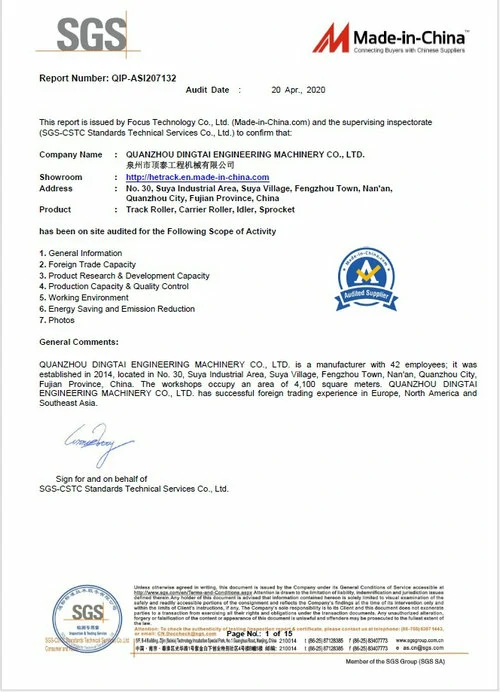
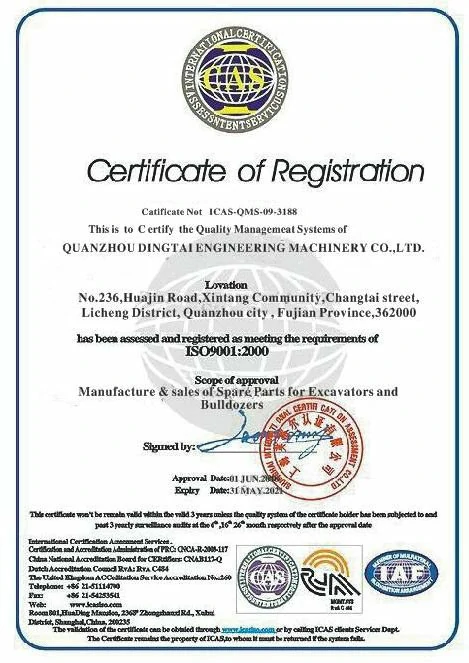
Check for ISO 9001 10 and SGS certifications. These aren't just wall decorations; they mean the factory has a system to track every batch of steel. If a roller fails, we can look at the serial number and tell you which day it was forged, who inspected it, and what the furnace temperature was. This level of detail is what allows us to offer a real warranty. If a supplier cannot provide a material test report (MTR) upon request, they are not a professional manufacturer.
Evaluating Warranty Response
Ask potential suppliers for a copy of their warranty claim form. If it is 20 pages long and impossible to fill out, they are trying to avoid paying. A good supplier makes the process simple: send photos of the failure, the machine hours, and the serial number. We look for the "Root Cause." Did the part fail because of a manufacturing defect or because the machine was working in an environment it wasn't designed for? Even if it wasn't our fault, a top-tier partner will help you find a solution or offer a discount on the replacement to keep the relationship strong.
Conclusion
Choosing the right undercarriage supplier is about balancing material quality, manufacturing directness, and reliable support. By focusing on these five top brands and verifying their technical capabilities, you can ensure your machinery stays productive and profitable.
Footnotes
1. Official site of Berco, a leading manufacturer of undercarriage components. ↩︎
2. Technical properties of boron steel grades used in high-wear applications. ↩︎
3. Material specifications and chemical composition of 40Mn2 high-strength steel. ↩︎
4. Explanation of how induction hardening increases surface durability in machinery parts. ↩︎
5. Product specifications for standard heavy-duty excavator models like the Caterpillar 320D. ↩︎
6. Overview of the industrial forging process used for manufacturing metal components. ↩︎
7. Definitions and benefits of Original Equipment and Design Manufacturing models. ↩︎
8. Website for ITR (USCO), a global leader in undercarriage and repair parts. ↩︎
9. Technical discussion on the maintenance and benefits of SALT track chains. ↩︎
10. Information on ISO 9001 standards for consistent quality management systems. ↩︎