Can you provide a “Certificate of Origin” that helps me reduce import tariffs on undercarriage parts in Brazil (Mercosur)?

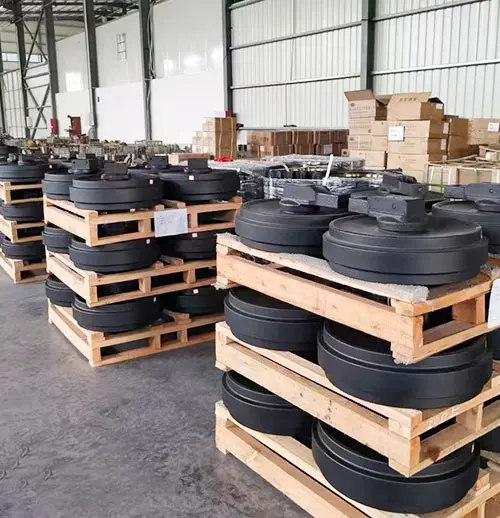
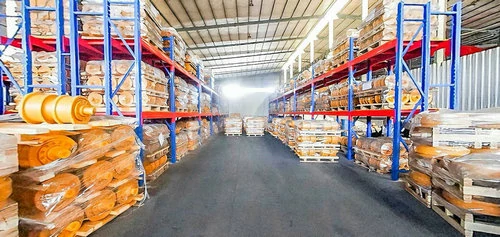
Heavy duty industrial crawler track and gear on a wooden pallet at shipping port

I know the high cost of import duties can hurt your profit when sourcing parts from China. You want to save money. This duty cost is a big problem for your business.

Yes, a Certificate of Origin (CO) is a very important document for importing our Chinese-made undercarriage parts into Brazil. It proves where the parts came from. This proof is needed for customs clearance and for you to apply for any possible duty reductions, such as those through the Ex-Tariff regime, which can lower your costs.

You have many questions about this certificate. I understand that. Dealing with Brazilian customs and Mercosur rules is complex. Let's look closely at how we can work together to get this document right and help you save money.

Are You Familiar with the Specific Trade Agreements Between China and Mercosur?

I worry when I hear about complex trade rules. Understanding the law is the first step to saving money. This knowledge is key to helping you import parts smoothly.

Yes, I am familiar with the trade landscape, and the main point is that China currently does not have a Free Trade Agreement (FTA) with Mercosur. This means our Chinese-made undercarriage parts do not get automatic duty-free access or 'preferential tariffs' like zero duties. However, we use a non-preferential Certificate of Origin (CO) to confirm the goods' origin, which is crucial for Brazilian customs clearance and eligibility for specific national tariff reduction programs like Ex-Tariff.

Thoughtful businessman in suit looking out window near laptop with world map data

Dive deeper paragraph:
You are asking a very smart question, David. Many suppliers will just say "yes" without knowing the full answer. I want to be honest and clear with you. We confirm that China and the Mercosur bloc 1 (Brazil, Argentina, Paraguay, Uruguay) do not have a direct Free Trade Agreement 2. This is important to understand. Because there is no FTA, we cannot issue a Preferential Certificate of Origin, such as a Form A or Form B that grants immediate tariff reductions to 0% or a very low rate. Your competitors who import from countries with an FTA might get this benefit. We must work differently.

The Role of Non-Preferential CO

Since there is no FTA, Brazilian customs applies the standard Common External Tariff (TEC) 3 to our products. For our undercarriage parts (HS/NCM 8431), this TEC is typically high, around 14% to 18%. But, you still need a Certificate of Origin. We provide a Non-Preferential Certificate of Origin, issued by the China Council for the Promotion of International Trade (CCPIT) 4. This document does not reduce the duty rate directly. Instead, it serves as the necessary, official proof of the parts' origin. Brazilian customs needs this proof. It shows that the goods are not smuggled. It ensures they apply the correct, standard TEC rate, not a higher penalty rate. This correct documentation is the base for avoiding costly clearance issues and later applying for any specific duty reduction programs that the Brazilian government offers to all countries. We must follow this rule exactly. We check the rules often to make sure we are up to date.

Brazil's Tariff Flexibility

Brazil has its own programs to offer tariff reductions even without an FTA. The most relevant program is the Ex-Tariff Regime 5. This temporary reduction applies to certain capital goods and IT goods when no similar product is made in Brazil. We will discuss this more later. But the key point here is this: our CO is the first step. It is the mandatory ID card for the parts. It confirms the Chinese origin, which then lets your customs broker try for the Ex-Tariff benefit. Our technical team is ready to help you with the product details needed for this application 6. We give you all the material and quality data you need.

Agreement Type Benefit for Undercarriage Parts Required Certificate Duty Rate (TEC)
China-Mercosur FTA None (No Agreement) N/A High (Approx. 14%-18%)
Brazilian Ex-Tariff Program Temporary duty reduction (0%-2%) Non-Preferential CO (CCPIT) Very Low (If Approved)
Intra-Mercosur Trade Duty-Free Access Preferential CO (Self-Declaration) 0%

What Is the Process for Me to Request This Certificate with My Order?

You want a clear, step-by-step process. Efficiency is key to your business. I want to make requesting this document simple and fast for you.

The process is very straightforward. You must tell us you need the Certificate of Origin (CO) when you confirm your order. After the parts are finished and paid for, we will send you a draft CO for your final check. You must confirm that the importer's name, address, NCM codes, and value match your Brazilian customs plan exactly. Once you approve the draft, we submit it to the CCPIT for official stamping and then mail the original paper document to you or your broker.

Close up of technician using digital tablet for precision engineering measurements and blueprints

Dive deeper paragraph:
I understand that you, David, value a direct and efficient communication style. We designed our CO process to match your need for efficiency. We do not want this paperwork to be a source of delay. We make it part of our standard production and shipping timeline.

Our 5-Step CO Request Process

  1. Request at Order Confirmation: When you send us your Purchase Order (PO) 7 for the track links or rollers, simply write, "CO (CCPIT) required for Brazil import." This tells our sales team to include it in the planning from the start. We will add the small handling fee to your Proforma Invoice (PI).
  2. Information Check: Before the vessel leaves, we need three key pieces of data from you: the full legal name and address of the Brazilian consignee, the confirmed NCM code 8 for each product, and confirmation of the final invoice value. This information must be perfect. If the data is wrong, the CO is useless.
  3. Draft Approval: We prepare a draft of the CO using the invoice and packing list. We send this electronic draft to you. We ask you to check every name, number, and code. You must reply with "Draft Approved." This step prevents most errors.
  4. Official Issuance: Once you approve the draft, our team submits the application to the CCPIT online system. The CCPIT then prints and officially stamps the paper certificate. This typically takes 4 to 6 working days.
  5. Document Delivery: We immediately take the original, stamped CO, package it with the original Bill of Lading 9, and mail the complete set of original documents to your office or your customs broker using fast courier service (like DHL). We make sure these papers arrive before the ship. This prevents any expensive port delays.

We handle almost all the work. Your main job is to give us the correct information and approve the draft quickly. This partnership is why we are successful.

Is There Any Extra Cost for Issuing This Certificate?

You are running a business with tight margins. Every extra fee matters. I want to be completely transparent about all costs associated with this process.

Yes, there is a small extra cost for issuing the Certificate of Origin. This is not a profit center for Dingtai. It is a necessary administrative fee charged by the third-party official body, the CCPIT, for verifying and stamping the document. We charge a standard, minimal flat rate per shipment to cover the CCPIT’s fee, our internal staff's handling time, and the cost of the express courier used to rush the original document set to you or your broker.

3D isometric icons representing time management award recognition and logistics delivery services

Dive deeper paragraph:
This is a very fair question, David. I know you need clear costs. I want to assure you that the fee we charge for the Certificate of Origin 10 is just to cover our costs. It is not an item where we look to make a profit. We see this as a service to ensure your shipment clears customs quickly.

Breaking Down the CO Fee

The total small fee you pay covers three things:

  1. CCPIT Official Fee: The China Council for the Promotion of International Trade charges a set fee for every CO application they review and stamp. This fee is non-negotiable and goes directly to the official body.
  2. Administrative Handling: Our specialized staff spends time compiling your invoice, packing list, and NCM codes. They fill out the application online, manage the draft approval process with you, and coordinate with the CCPIT. This internal labor is part of the small flat charge. We ensure this work is done perfectly to avoid errors.
  3. Express Courier Cost: The Brazilian customs system requires the original paper CO for customs clearance. We do not send it by slow mail. We must use a reliable, fast service like DHL or FedEx. The cost of this express delivery is included in the fee. This speed is vital to ensure the papers beat the ship and prevent demurrage charges.

We add this flat fee right onto your Proforma Invoice. We make it very visible. We do not hide it inside the product price. We believe in clear pricing. We want you to trust that you are getting a high-quality part and honest service. The cost is minor compared to the major delay or penalty you would face without the correct, officially stamped document. We ensure you get this key document with maximum speed and accuracy.

Component of CO Fee Party Receiving Payment Why It Is Charged Typical Cost Impact
Official Certification Fee CCPIT (Official Body) Document verification and stamping Low, fixed fee per document
Dingtai Internal Handling Dingtai (Our Staff Time) Application preparation and draft approval Minimal flat service fee
Original Document Courier DHL/FedEx (Carrier) Necessary for rapid delivery of original paper to Brazil Included in the flat fee for speed

How Much Can I Potentially Save on Import Duties with This Document?

You want to know the return on investment. Will the Certificate of Origin save you real money? That is the most important commercial question. I want to give you a clear and achievable goal.

The Certificate of Origin (CO) is your gateway to savings, not the saving itself. Its primary value is allowing your Brazilian broker to apply for the Ex-Tariff regime. This program can reduce the import duty on specific undercarriage components from the standard Common External Tariff (TEC) rate (typically 14% to 18%) down to a temporary rate of 0% to 2%. This means the potential saving on duty alone could be as high as 12% to 18% of the part's value, depending on the specific NCM code and approval.

Aerial view of open pit mine with heavy machinery and rising growth arrow

Dive deeper paragraph:
This is where the real money is, David. As an experienced procurement director, you know that saving on duty is a huge win. Let us be very clear again: the CO itself does not grant the reduction. It is mandatory proof of origin. The reduction comes from the Brazilian Ex-Tariff Regime.

The Ex-Tariff Opportunity

The Brazilian government uses the Ex-Tariff program to temporarily lower import duties on capital goods, spare parts, and IT goods. They do this when there is no similar product made locally in Brazil. The duty reduction is significant, bringing the rate down to 0% or 2%. Imagine saving 14% on a large order of track chains and drive sprockets. That is a massive boost to your profitability.

Our Support for Your Application

To get this massive saving, your Brazilian customs broker must file an application to the Brazilian government's SECEX (Secretariat of Foreign Trade). This application must show two things: First, the official Certificate of Origin from Dingtai. This proves the part is from China. Second, strong technical evidence. You must prove that our part is specialized and not locally available. This is where Dingtai shines. We can provide you with:

  • Detailed Material Certifications: Showing the specific steel grades we use 11.
  • Precision Heat Treatment Data: Proving the superior hardening processes that extend the parts' life.
  • Dimensional Accuracy Reports: Confirming the parts meet or exceed OEM specifications 12 like Caterpillar or Komatsu.

This technical data supports your claim that our undercarriage parts are superior and qualify as a necessary foreign input. By providing the perfect CO and excellent technical support, we maximize your chance of getting the Ex-Tariff approval. The potential saving is real and very large. We are your partner in achieving this cost advantage. This partnership goes beyond just selling steel. It is about total supply chain efficiency.

Conclusion

The Certificate of Origin is the necessary start for reducing your high Brazilian import costs. It lets you chase the large Ex-Tariff savings. We provide the CO perfectly, quickly, and affordably. Would you like me to send you our Certificate of Origin checklist for your next order?

Footnotes

1. Official website of the Mercosur bloc, detailing member countries and current trade agreements. ↩︎
2. World Trade Organization (WTO) guide explaining the basics and function of Free Trade Agreements (FTAs). ↩︎
3. Brazilian government page providing information on the country's Common External Tariff (TEC) system. ↩︎
4. Official site for the China Council for the Promotion of International Trade (CCPIT), the CO issuing body. ↩︎
5. Brazilian government's official information on the Ex-Tariff Regime for import duty reduction. ↩︎
6. Resource with details on the technical and application requirements for the Brazilian Ex-Tariff program. ↩︎
7. Explanation of what a Purchase Order (PO) is and its role in an international transaction. ↩︎
8. Brazilian resource explaining the NCM code (Mercosur Common Nomenclature) used for product classification. ↩︎
9. Definition and explanation of a Bill of Lading (B/L) in the context of international shipping. ↩︎
10. US Customs and Border Protection guide explaining the general use and importance of a Certificate of Origin. ↩︎
11. Guide to different steel grades, showing the technical details required for specialized parts. ↩︎
12. ISO standards documentation relevant to confirming dimensional accuracy and quality control. ↩︎

Free Quote & Information Request

Leave your inquiry, we will provide you with quality products and services!

Excavator & Bulldozer Undercarriage Parts Expert - Quality Track Roller, Carrier Roller, Sprocket Wheel
Privacy Overview

This website uses cookies so that we can provide you with the best user experience possible. Cookie information is stored in your browser and performs functions such as recognising you when you return to our website and helping our team to understand which sections of the website you find most interesting and useful.