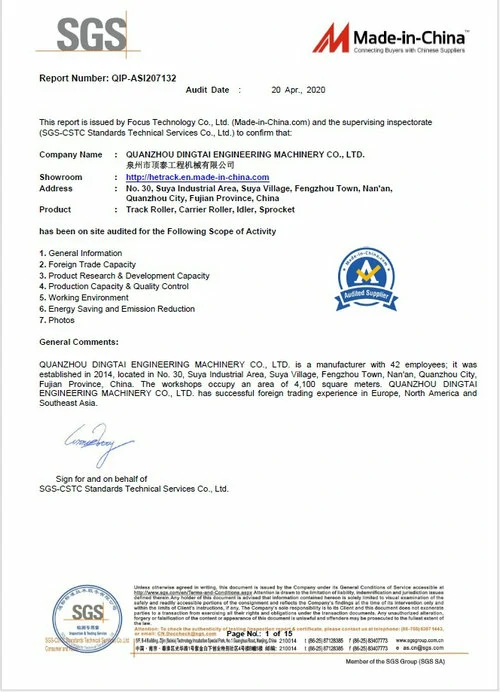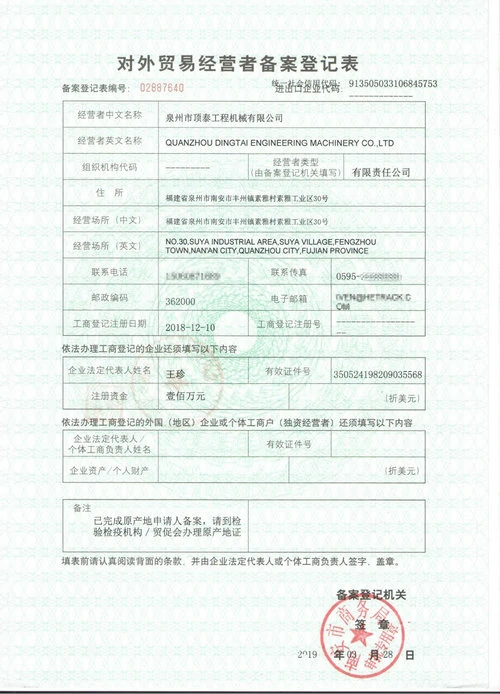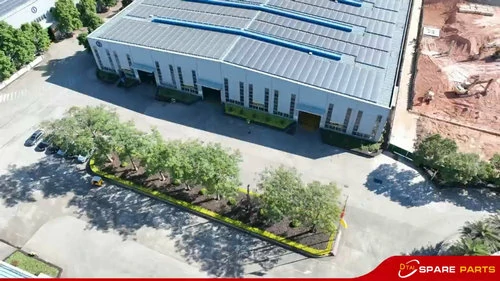
I know how frustrating it is when a key part fails and you face massive downtime. This situation not only stops your machines but also harms your business reputation. I want to remove that worry for you.
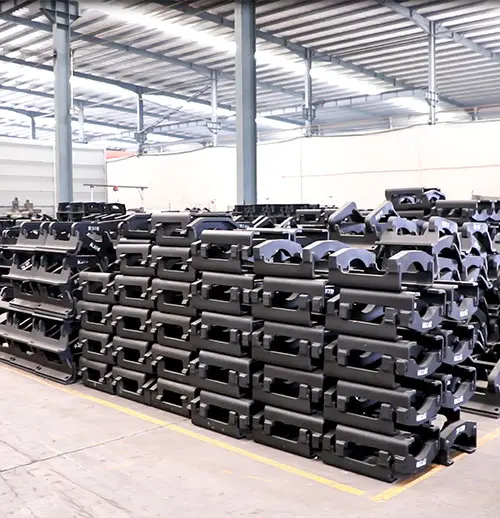
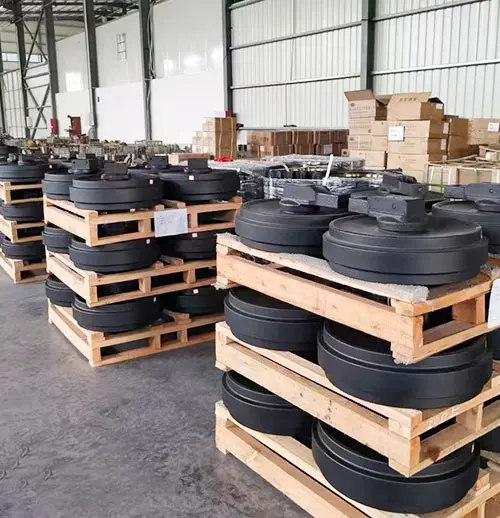
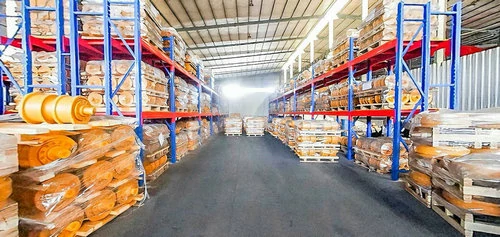
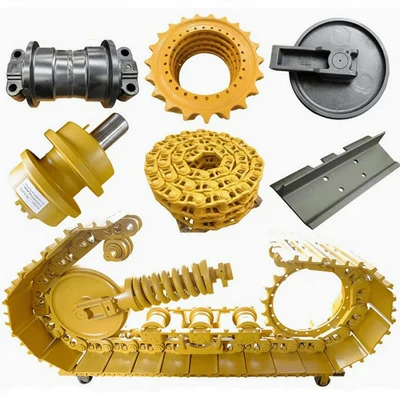
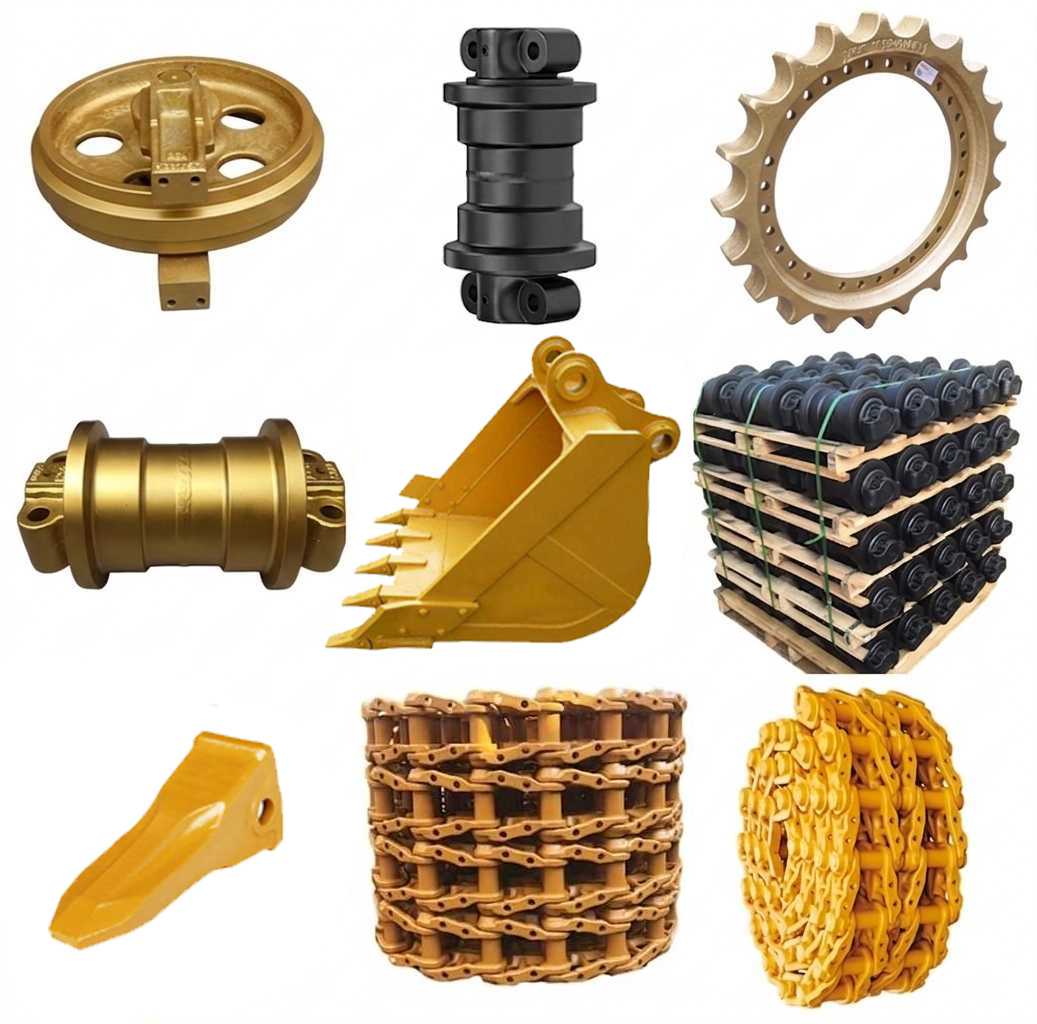
Our warranty policy clearly covers defects in materials and workmanship for our bulldozer undercarriage parts, including track chains and rollers, under normal use conditions. We typically offer a standard 12-month or 2,000-hour coverage, whichever comes first, ensuring we stand behind the quality and reliability of every part that leaves our factory in China.
Finding a reliable supplier is more than just about price. It is about trust. You need to know that if a problem happens, your supplier will fix it fast and with no arguments. Let me explain exactly how our warranty works so you can be confident in choosing Dingtai.
How Many Months or Service Hours Does Your Warranty Cover?
I remember a time when I had to deal with a supplier's very vague warranty. It caused huge issues for my customer. That is why I make sure our policy is always very clear.
Our standard warranty for all new bulldozer undercarriage parts, like track chains, sprockets, and rollers, typically lasts for 12 months or 2,000 operating hours, whichever milestone you hit first. This timeframe gives you a solid guarantee that our components will perform as expected during their critical early service life, covering you against any manufacturing or material flaws.
Our policy covers the parts against defects in the materials and the way we make them. It does not cover normal wear and tear that happens over time. This is a crucial difference.
What Does the Warranty Start Date Depend On?
The warranty period starts from the date we ship the parts to you. This is the date on our Bill of Lading (B/L) or Air Waybill (AWB) 1. We do not wait until you install the part. It starts when the part leaves our factory.
I know some customers buy parts and store them for a few months before use. If you do this, the clock on the warranty still starts on the shipping date. This is common practice in the B2B manufacturing industry 2. We track our production and shipping dates very carefully.
Understanding Pro-Rata Coverage
You should also understand the term "pro-rata" 3. Many warranties for wear parts use this. It means that if a part fails halfway through its expected life, you do not always get a full credit for a new part.
- Example: If a roller should last 4,000 hours but fails at 3,000 hours due to a material defect, you might get a credit for the remaining 1,000 hours of its life.
This method makes sure the warranty only covers the unused part of the service life that was lost because of a defect. We discuss pro-rata terms with you if the part is close to its normal wear limit. This keeps things fair for both of us.
| Component Type | Standard Warranty Coverage | Coverage Start Date | Typical Proration Policy |
|---|---|---|---|
| Track Chain | 12 Months or 2,000 Hours | Date of Shipment (B/L) | Prorated based on link wear/stretch. |
| Track Roller | 12 Months or 2,000 Hours | Date of Shipment (B/L) | Prorated based on shell wear depth. |
| Sprocket Segment | 12 Months or 2,000 Hours | Date of Shipment (B/L) | Covers manufacturing defects only. |
How Different Parts Might Have Different Terms?
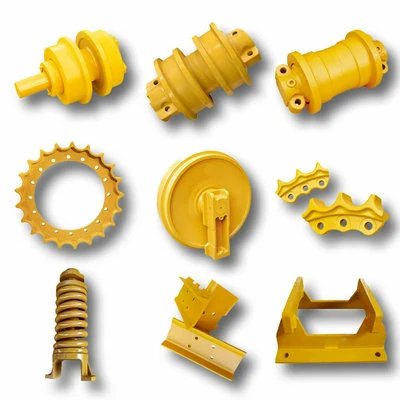
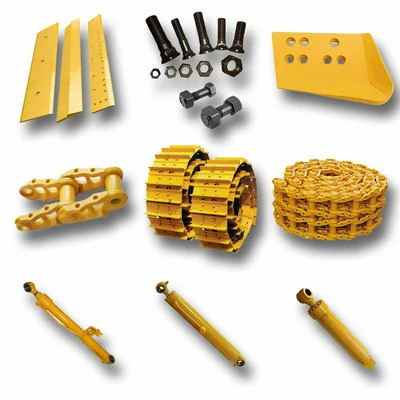
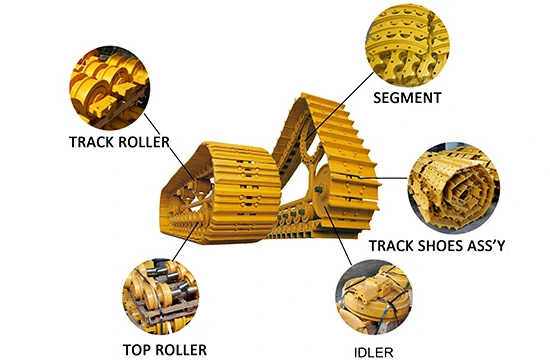
Most of our undercarriage parts share the same 12-month/2,000-hour term. These parts include:
- Track Links (Chains)
- Track Rollers (Single and Double Flange)
- Carrier Rollers
- Sprockets and Segments
- Idlers
- Recoil Springs and Cylinders
However, for some extreme-duty or special application parts 4, we might offer an extended warranty. This is something we work out in your contract. If you need a different term for a specific project, we can talk about a customized solution 5. We can extend the coverage if your working conditions are less severe than average. Or we might adjust it for highly abrasive environments 6, like some mining sites in South America.
What Specific Information or Photos Do I Need to Provide to Start a Warranty Claim?
My goal is to make the claims process as easy as possible for you. You are already facing machine downtime, and you do not need paperwork stress on top of that. We need clear, simple proof to process your claim quickly.
To start a warranty claim with us, you must promptly notify us and provide clear evidence, including the part number and serial number, the original purchase invoice, and high-resolution photographs showing the defect clearly. We also require brief but complete documentation of the machine's operating hours and maintenance records leading up to the failure, confirming the part was used under normal conditions.
When you see a part failure you think is a warranty issue, here is the exact information we need right away. This set of data allows our technical team to make a fast and fair decision 7.
The Essential Documentation for Every Claim
We have learned that good information at the start saves weeks of back and forth. You must provide these four core items:
- Proof of Purchase: A copy of the original invoice or purchase order 8 from Dingtai to you. This confirms the part is ours and is still under warranty.
- Part Identification: Clear photos of the failed part showing the Dingtai part number and any serial numbers or batch codes stamped on the component. This is how we trace the exact production batch.
- Visual Evidence of Failure: A set of 5–10 high-quality photos and, if possible, a short video. The photos must show the failure in detail. They must also show the part installed on the machine, giving us context.
| Photo/Evidence Type | What It Must Show | Why We Need It |
|---|---|---|
| Close-up of Failure | The crack, break, or defect area clearly. | To confirm the failure mode (e.g., casting flaw, fracture). |
| Part Number | Clear view of the stamped part number/batch code. | To confirm our part and trace the production batch. |
| Full Assembly | The part installed on the machine/undercarriage. | To check for installation errors or extreme wear on nearby parts. |
| Machine Context | A photo of the full machine and the hour meter reading. | To verify the operating hours at the time of failure. |
Why Machine Operating Records Are Important
We need to know the part was used correctly. This is why we ask for a copy of the machine's hour meter reading 9. We also ask for any records you have showing regular maintenance.
- Tensioning: For track chains, was the track tension checked and adjusted regularly? Too tight a track can break a new link quickly. This would be considered misuse, not a material defect.
- Lubrication: For sealed parts like rollers and idlers, we check for signs of a seal failure caused by external damage versus a seal failure from a manufacturing defect.
If the records show the machine was run for 3,000 hours in 10 months and the warranty is 2,000 hours, the claim will not be valid. We use your data to prove the failure happened within the terms of our agreement.
How Long Will It Take for Me to Receive a Replacement Part Once My Claim Is Approved?
When a machine is down, every hour costs you money. I fully understand that you need the replacement part yesterday. My team's focus is on speed once we confirm the claim.
Once all required documentation is submitted and our technical team approves your warranty claim, we commit to shipping the replacement part from our factory within 7 to 10 working days, though we often ship faster for common stock items. The total time until you receive the part then depends on the shipping method and destination, which we discuss and agree upon immediately after the claim is approved.
The claim process has three distinct phases. Each phase is managed by a dedicated team to reduce waiting time. Our goal is to move from Phase 1 to Phase 3 as fast as possible.
Phase 1: Claim Submission and Technical Review (1-3 Working Days)
This is the fastest part, but it depends on the quality of the information you send us.
- Submission: You email Linda at sale@chinadingtai.com with all the necessary documents and photos.
- Initial Check: Our sales and technical teams look at the photos and data.
- Decision: We tell you if the claim is approved, denied, or if we need more information. If we need to see the broken part, we will arrange for it to be shipped back to our China factory for inspection. This part adds more time to the process.
Most claims for clear manufacturing defects are approved in 1 to 3 days.
Phase 2: Replacement Part Preparation (7-10 Working Days)
As soon as the claim is approved, we treat the replacement part as a top-priority order.
- If the part is a standard, in-stock item, we usually have it ready to ship in 1-2 days.
- If the part is a special or non-stock item, we pull it from the production line or fast-track a new batch. This is why we set the window at 7-10 days.
Phase 3: Shipping and Delivery (Varies by Location)
The time it takes to get to you depends on your location (e.g., David in the US) and the shipping method.
- Air Freight (Fastest): 3–7 days to a major international hub. This is expensive but best for minimizing downtime.
- Sea Freight (Standard): 30–45 days to North America or Europe. This is the normal method for large, heavy parts.
We will not delay the shipping. We will get your replacement part on the fastest ship or plane possible once it is ready.
Does the Warranty Cover the Cost of Shipping for the Replacement Part?
Shipping heavy undercarriage parts across the world is a major cost. This is a fair question, and I want to give you a very clear answer.
Yes, if we fully approve your warranty claim and confirm the failure is due to a defect in our material or workmanship, Dingtai will cover the cost of shipping the replacement part to your specified destination. However, the warranty does not cover any associated labor costs for the removal of the failed part or the installation of the new part.
This part of the policy is standard across many B2B manufacturing contracts 10. We take responsibility for the failed product and getting a working replacement to you. You take responsibility for the on-site work.
Freight Cost for the Replacement
When we approve your claim, we will choose the most efficient shipping method to get the new part to you fast. We bear the full cost of the freight and the export duties from China. This is a key part of our promise to you.
| Cost Item | Who Pays if Claim Approved? | Note |
|---|---|---|
| New Replacement Part | Dingtai (100% covered) | We manufacture and supply the new item. |
| Shipping/Freight Cost | Dingtai (100% covered) | From our factory to your receiving port/warehouse. |
| Import Duties/Taxes | You (Buyer) | These are specific to your country's laws. |
| Labor/Installation Cost | You (Buyer) | Labor and machine downtime are not included. |
Why We Do Not Cover Labor Costs
Many distributors like you (David) have their own service centers or network of mechanics. The costs and rates for labor vary a lot worldwide. It is impossible for us to track and verify those costs accurately.
For example, a mechanic in the US might charge \$75 per hour, while a contractor in another market might charge \$30 per hour. If we included labor, we would have to increase our prices on all parts to cover the huge range of potential labor costs. This would make our prices less competitive for everyone.
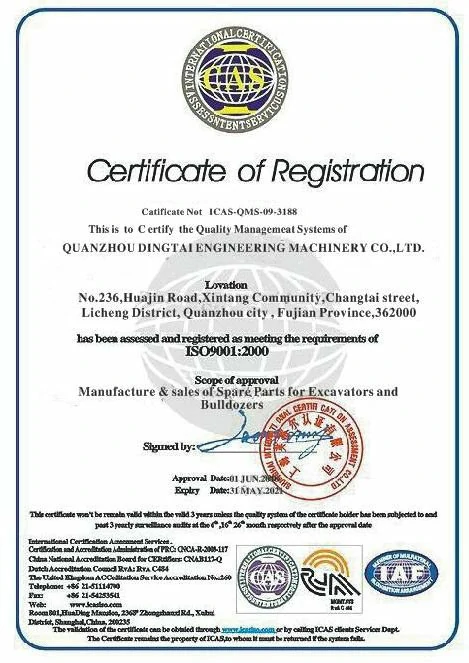
Our focus is simple: We guarantee the part. You guarantee the installation and maintenance. By separating the two, we keep our prices sharp and our product quality high. We offer great quality parts that meet ISO9001 standards 11 at a competitive price. This gives you the best value for your inventory.
Conclusion
I hope this gives you the clarity you need on our warranty. We stand by our 20+ years of manufacturing expertise. Our 12-month/2,000-hour warranty clearly shows that. We commit to fixing any defect fast, and we will cover the shipping cost to get the new part to you.
Footnotes
1. Understand the key shipping documents (B/L and AWB) that define the start of your warranty period. ↩︎
2. Insights into standard warranty practices common across the B2B heavy machinery manufacturing industry. ↩︎
3. Detailed explanation of how "pro-rata" works in warranty claims for components with an expected service life. ↩︎
4. Discover the characteristics and warranty considerations for parts designed for special, extreme-duty applications. ↩︎
5. Information on how manufacturing companies create customized warranty solutions tailored to unique project needs. ↩︎
6. Learn about the challenges and specific part adjustments required when operating in highly abrasive mining environments. ↩︎
7. Overview of the typical claim review process followed by a manufacturer's technical team to ensure a fair decision. ↩︎
8. Importance of keeping the original purchase invoice to validate ownership and warranty period for a claim. ↩︎
9. Why machine hour meter readings are essential maintenance records for verifying warranty claims on heavy equipment. ↩︎
10. Analysis of the standard division of cost responsibilities within B2B manufacturing and supply contracts. ↩︎
11. Find out how adherence to ISO9001 quality standards impacts the reliability and warranty of manufactured goods. ↩︎