What is Your Required T/T Deposit Percentage, and When is the Balance Payment Due for My Undercarriage Parts Order?

Abstract 3D bulldozer model on a global network map representing international heavy equipment logistics.

I know the feeling of making a big international purchase. You want to make sure your money is safe and the deal is clear, but all these payment terms can be confusing. I have been there many times!

For our undercarriage parts orders, the standard T/T deposit is 30% of the total order value, which must be paid before we start manufacturing. The remaining 70% balance is then due before the order ships from our factory. This standard structure protects both your investment and our production cost, ensuring a smooth B2B transaction for all heavy equipment components.

When you are buying essential parts like track chains and rollers for bulldozers and excavators, clear payment terms are just as important as the quality of the steel. As a global buyer, you need to know exactly when to pay and how your money secures the order. We need to look closely at the details of the down payment and final settlement.

Is the Deposit Percentage Negotiable for Long-Term Partners?

When I place a large order, I always think about how much cash I need to put down upfront. Does that 30% deposit rule always apply, or can we talk about it if we plan to work together for many years?

The standard T/T deposit of 30% is our starting point, but yes, the percentage is often negotiable for long-term partners like you. Once we build a strong business relationship and you become a high-volume, repeat customer, we become more flexible with the initial down payment to help your cash flow.

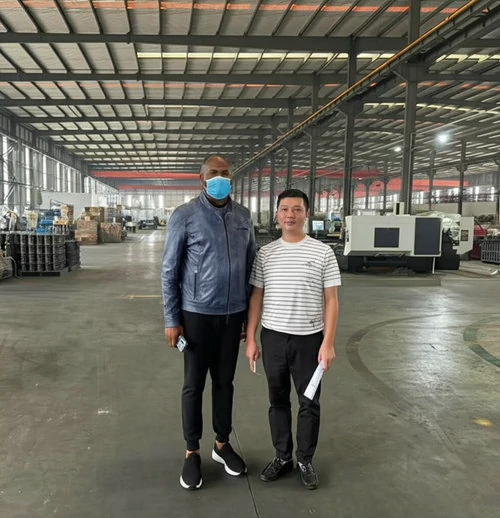
Businessmen shaking hands in a large manufacturing warehouse with heavy machinery components in background.

What is the Standard T/T Deposit Percentage?

First, let me explain the common practice. Most Chinese manufacturers, including Dingtai, ask for an initial deposit when you confirm the order. This is done to cover our raw material costs and to start the production process. The deposit amount shows us you are serious about the order.

  • The industry standard is 30% T/T deposit 1.
  • This amount is calculated from the total value of your Proforma Invoice (PI) or Sales Contract.
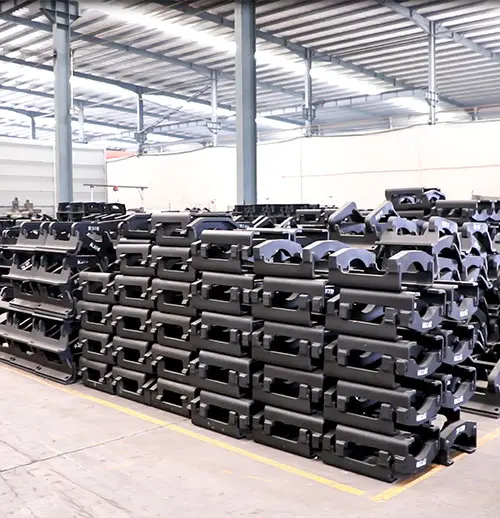
  • We use this money right away to buy the specialized steel and other raw materials needed for your track links, rollers, and sprockets.

Why is 30% The Common Amount?

The 30% figure is a good balance. It reduces our risk of a canceled order after we have invested in materials and labor. For David Miller, a procurement director, you should know that this initial payment secures your place in our production schedule. It acts as a commitment from both sides.

  • For Dingtai: It covers the material cost. If we start forging and heat-treating parts, we need to know we will get paid.
  • For You: It makes us commit to the quality and delivery time you asked for.

If you have a very small, one-time order, sometimes we might ask for a 100% upfront payment. This is simply because the time and cost of processing two separate payments for a small amount are not worth it.

How Can Long-Term Partners Negotiate a Lower Deposit?

I love working with partners who value long-term stability. Our goal is to build a strategic relationship. For partners like you, David, who place large, regular orders, we can discuss lowering the deposit.

  • Order History: If you have completed several large orders with us successfully, showing you are a reliable buyer 2, we can consider terms like 20% T/T deposit or even 15% T/T deposit.
  • Order Size: For extremely large-volume contracts, the higher total value gives us more security, making a smaller percentage deposit acceptable.
  • Product Type: If the parts you order are standard items that we always keep in production, we can be more flexible. For highly customized parts 3 that are unique to your needs, the risk is higher for us, so the standard 30% or even a higher deposit might be necessary.
Partner Status Typical Deposit Percentage Condition
First-Time Buyer 30% T/T Standard practice for new orders.
Established Partner 20% T/T Requires proven history of successful, large orders.
Highly Customized Order 40% - 50% T/T Required due to high cost and low chance of resale.

Negotiation is a two-way street. We want to support your growth by helping your cash flow, but we must also protect our manufacturing process. Open and clear communication about your order volume and forecast helps us a lot.

What if I Need to Change the Order After Paying the Deposit?

This happens in business. You might realize you need more track rollers or fewer sprocket segments. If you pay the deposit and then change the order, we handle it fairly.

  • Increase in Order: If the new total is higher, the deposit you paid will be credited. You will simply pay the higher balance later.
  • Decrease in Order: If the new total is lower, we look at how far along production is. If production has not started, we can often adjust the deposit amount. If production is already complete or mostly done, the initial deposit might be non-refundable, as we have already produced goods based on your commitment. This is a point that must be clear in our Sales Contract 4.
  • Cancellation: For a full cancellation, the deposit is usually kept by us. This covers the lost time and material costs. This is why we are careful to confirm all details before you pay the deposit.

Is the Balance Payment Due Before Shipping or Against the B/L Copy?

Once the parts are made, polished, and have passed your quality inspection, I need to know the exact trigger for the final 70% payment. Do I pay before the containers leave your factory door, or when I have proof of shipment?

The remaining 70% balance payment is due before the order ships, often after our 100% quality inspection is complete. For many customers, we accept the payment against the Bill of Lading (B/L) copy. Paying against the B/L copy 5 is a very common and trusted method in international trade, giving you proof the goods are on their way before the final payment is released.

Smart logistics concept featuring a container ship at sea controlled by a mobile smartphone app.

What Does "Due Before Shipping" Mean?

"Due before shipping" means we, Dingtai, must receive the final payment before we hand the goods over to the shipping company. This is the simplest way to ensure payment.

  • Our Process:
    1. We finish manufacturing your track chains, idlers, or segments.
    2. Our QC team performs the final 100% quality inspection, checking all heat treatment and dimensions.
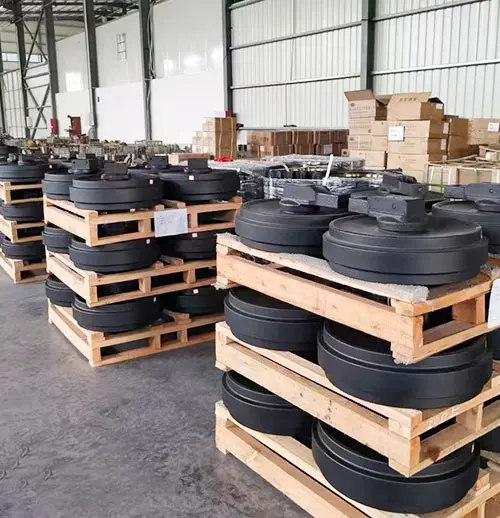
    3. We send you the full inspection report and photos or videos of the packed goods.
    4. We send you the final invoice.
    5. You pay the 70% balance.
    6. We book the shipment and load the container.

The B/L Copy Method: A Trusted Compromise

David, I understand your concern. You want proof the goods are loaded and sailing. The B/L copy is a key shipping document. It is a contract between us and the carrier and acts as a title for the goods.

  • Payment Against B/L Copy: This term means we will arrange for the shipment first. The carrier will give us the Bill of Lading. We will then email you a copy (a non-negotiable copy). Once you see this B/L copy, which proves the goods are loaded onto the ship, you will make the final 70% payment.
  • The Original B/L: After you pay, we will mail you the original, signed Bill of Lading by courier (like FedEx or DHL). You will need this original paper B/L to pick up the container at the destination port. This method protects both of us very well. It is a clear and reliable system that has been used for decades 6.
Payment Due Time When It Happens Buyer’s Security Supplier’s Security
Before Shipment After QC, but before goods leave factory. Less security; relies completely on supplier trust. High security; supplier has payment before giving up goods.
Against B/L Copy After goods are loaded on ship and B/L is issued. High security; buyer sees proof of shipping before paying. Good security; supplier still holds original B/L until payment is made.

What is the Time Limit for Paying the Balance?

Once we send you the B/L copy, we usually ask for the balance payment within 3 to 5 business days. Shipping companies sometimes give a small window for the B/L release. If payment is delayed, it can cause problems at the port and may even lead to extra storage fees 7. Prompt payment is essential for smooth logistics. We track orders closely and let you know the exact due date.

Can I Pay the Balance After I Receive and Inspect the Goods?

For new customers, absolutely no. For you to pay after receiving the goods (known as Net 30 or Net 60 terms) is very risky for any manufacturer in a B2B setting. We are sending very expensive, heavy parts across the ocean. We need to be paid before we lose control of the goods.

  • Risk: If we allow payment after receipt, and there is a sudden market change or financial issue on your side, we may lose the payment entirely.
  • Trust Building: Only after many years, perhaps ten or more, of flawless trade history and very large volumes, might a supplier consider a small concession on Net terms. For now, the Against B/L Copy method is the most favorable and secure term we can offer you as a high-volume, quality-focused partner. This is a common situation for all suppliers in China.

Do You Accept Any Other Payment Methods, Like Letter of Credit (L/C)?

My purchasing preference is always for payment methods that add an extra layer of security. We have talked about T/T, but what about other, perhaps more formal, methods? Do you accept a Letter of Credit (L/C)?

Yes, we can accept a Letter of Credit (L/C) as a payment method, especially for very large orders that exceed a certain value. We also accept Western Union for small sample orders. However, Telegraphic Transfer (T/T) remains the fastest and most common method used by most of our global clients.

Futuristic automated warehouse with glowing digital structures and heavy-duty robotic crawler equipment.

Letter of Credit (L/C): Security for Big Orders

I know that L/C is a favorite tool for many large companies like yours. An L/C is basically a promise from your bank to pay us, as long as we meet all the shipment conditions stated in the L/C document. This is one of the safest methods in international trade.

  • When We Use L/C: We mostly use L/C for orders with a value over $100,000 USD or for new international customers who are buying from us for the first time. The cost of setting up an L/C is often high, so it only makes financial sense for bigger orders.
  • The Types We Accept: We strongly prefer an Irrevocable L/C at Sight 8. "Irrevocable" means you cannot change it without our agreement. "At Sight" means our bank gets paid immediately after we present the correct shipping documents.
  • The Drawbacks: L/C requires a lot of paperwork and time for both banks to check the documents. T/T is much faster and cheaper. This process can add days to the overall delivery timeline, which is something you must consider for your stock levels.

What About Other Methods?

While T/T and L/C are the two giants of B2B payment, we sometimes use other methods for specific needs.

  • Western Union or MoneyGram: We only use these for very small payments, such as sending a sample of a single track shoe or an initial inspection fee. These methods are not safe or legal for large commercial transactions. We would never ask you to pay a deposit this way.
  • O/A (Open Account): This means we ship the goods and you pay us in 30, 60, or 90 days. This is the highest risk for us. We would only consider this for a very small number of multinational OEM clients 9 with perfect credit history, massive buying volume, and a long history of cooperation. It is almost never used for aftermarket distributors.

Comparing Payment Methods

Choosing the right payment method is a risk-management decision 10. For David Miller, a procurement director, you should always choose the method that gives you the best balance of security and speed.

Payment Method Cost and Speed Buyer’s Risk Supplier’s Risk
T/T (Telegraphic Transfer) Low cost, very fast (1-3 days). Medium risk; high risk if paying 100% upfront. Medium risk; high risk if accepting full payment after shipping.
L/C (Letter of Credit) High cost, slow (more paperwork). Low risk; bank guarantees payment. Low risk; bank guarantees payment if documents are correct.
Western Union Low cost, instant. Very High risk. Very High risk.

For our typical distributor partners, T/T (30% deposit, 70% against B/L copy) is the clear winner. It is fast, affordable, and provides a good level of security for both parties. It helps us keep our prices competitive because we are not paying high bank fees.

What If I Receive the Goods and Find a Quality Issue?

This is a real-world concern. You are buying high-quality parts, but mistakes can happen. You cannot pay the balance after inspection, but we do have a strong after-sales warranty policy.

  • We provide a clear quality guarantee. If you receive the goods and find a major issue that was not visible in the shipping photos and is confirmed to be our production fault, we will follow our warranty policy.
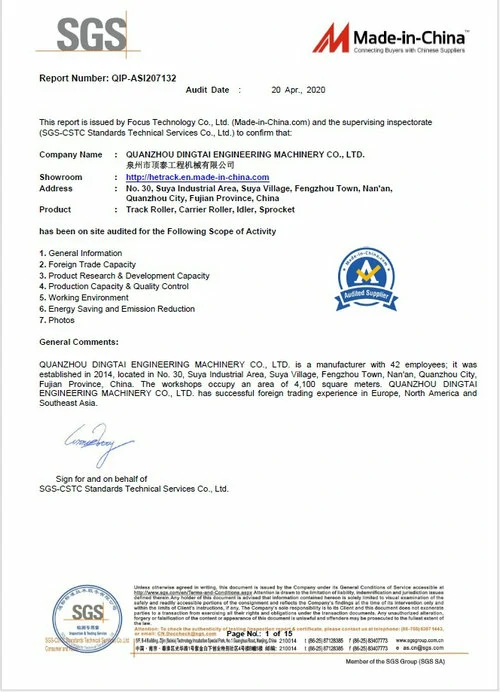
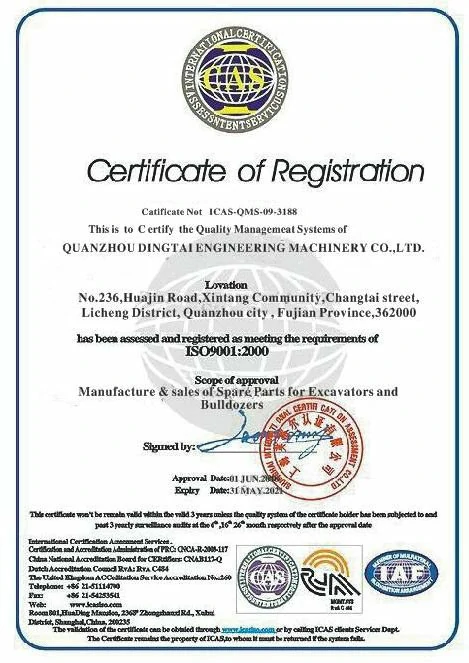
  • This does not mean you can hold the 70% balance. You must pay the balance to get the goods. The compensation for the fault will be handled separately. This might be a replacement part, a credit on your next order, or a cash refund, depending on the severity of the problem. Our commitment to ISO9001 11 and 100% inspection means this rarely happens, but we have a process for it.

Can I Pay the Balance After I Receive and Inspect the Goods?

If I am buying large quantities of parts, I want to be 100% sure the quality is right before I pay the last dollar. Is there any way I can check the final shipment when it arrives and then pay the remaining balance?

In short, no, you cannot pay the balance after you receive and inspect the goods, as this is too high a risk for a B2B manufacturer dealing with international shipping. We must receive the remaining 70% balance payment before the shipping company releases the goods from our control, but we provide many security checks before that happens.

Worker using digital calipers to measure high-precision metal steel rolls in an industrial factory.

Why is Payment After Receipt Not Possible?

The main reason is simple: control and risk. When we ship a container of undercarriage parts, those parts are thousands of dollars worth of finished steel that we cannot easily get back. The payment terms in international trade are designed to protect the seller from losing both the goods and the payment.

  • Loss of Control: Once the container is at the destination port, it is within your reach. If a customer refuses to pay for any reason, the legal process to reclaim the goods in another country is slow and very expensive.
  • High Value: Heavy machinery parts, like a full set of track chains and rollers for a large bulldozer, are high-value items. The risk of non-payment is too great for us to accept terms like Net 30 or Net 60 12 for new or regular distribution partners.
  • Industry Standard: This requirement is standard for almost all reputable manufacturers in the heavy equipment parts industry globally. Terms that allow payment after receipt are usually reserved only for massive, long-established OEM accounts (like Caterpillar or Komatsu themselves) who have perfect credit and years of history.

What Checks Do We Offer Before Final Payment?

I know your pain point is product quality and stability. You need assurance. Because you cannot inspect the parts physically before paying the balance, we use a very strong quality control process to protect your investment.

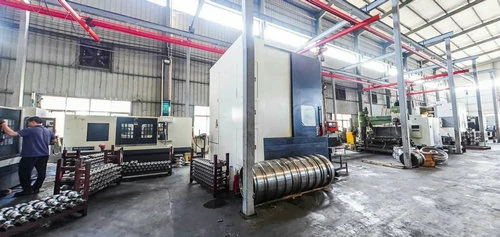
  • Stage 1: In-Process Quality Checks (During Production): Our engineers check the material composition and the heat treatment process 13 while the parts are being made. We record all the hardness and depth data for the links and rollers.
  • Stage 2: Final 100% Inspection (Before Packaging): Every part is checked after it is finished. We check dimensions, paint, and overall finish.
  • Stage 3: Pre-Shipment Documentation: This is your key security step. Before we ask for the balance, we send you the full set of proof documents.

Key Pre-Shipment Documents

Document Type Purpose for the Buyer Buyer’s Security Level
Full QC Inspection Report Proves the parts meet the required hardness and specifications. High
Photos/Video of Finished Goods Shows the final product and packaging condition before loading. High
Copy of Bill of Lading (B/L) Proves the goods are loaded onto the ship and shipping has started. Highest

You pay against the B/L copy, not against the physical goods. This means you have proof the parts are on their way before you release the money.

Dealing with Quality Issues After Delivery

If you pay the balance, receive the container, and then find a quality issue that our QC missed, the problem does not mean you lose your money. As a high-quality manufacturer (ISO9001 certified), we have a formal warranty process.

  • Document the Problem: You need to take clear pictures or videos of the fault and send us a detailed report.
  • Our Investigation: Our technical team reviews the issue. We check the batch production records and material reports to find the cause.
  • The Solution: If the fault is ours, we offer a solution based on our warranty policy 14. This usually means we send replacement parts for free on your next order, or we give you a credit for the damaged items. We handle the resolution quickly and transparently because your long-term trust is more valuable than a single shipment. This is how we support large distributors.

Conclusion

The standard payment terms for Dingtai’s undercarriage parts are 30% T/T deposit before production and 70% T/T balance against the B/L copy before shipping. We are happy to review the deposit percentage for our established, long-term partners, and we can also use an L/C for very large orders.

Would you like me to send you a draft Proforma Invoice (PI) with these standard payment terms applied to your next order for track chains and rollers?

Footnotes

1. Explanation of common payment methods used in China's international trade. ↩︎
2. Guide to assessing and verifying a supplier's reliability and track record. ↩︎
3. Understanding the complexities and risks of manufacturing customized industrial parts. ↩︎
4. Key clauses and essential components of international sales contracts for B2B. ↩︎
5. Detailed explanation of the Bill of Lading (B/L) and its role in shipping and payment. ↩︎
6. Historical context and evolution of the Bill of Lading as a maritime legal instrument. ↩︎
7. Analysis of common port and terminal charges like demurrage and detention. ↩︎
8. Definition and security benefits of using an Irrevocable Letter of Credit at Sight. ↩︎
9. Advanced procurement strategies used when dealing with multinational Original Equipment Manufacturers (OEMs). ↩︎
10. Techniques for mitigating risk across the global supply chain and procurement process. ↩︎
11. Official information about the ISO 9001 standard for quality management systems. ↩︎
12. Breakdown of Net 30 and Net 60 payment terms in commercial business transactions. ↩︎
13. Guide to the importance of the heat treatment process in steel industrial parts. ↩︎
14. Examples of standard global warranty terms for manufactured goods and machinery parts. ↩︎

Free Quote & Information Request

Leave your inquiry, we will provide you with quality products and services!

Excavator & Bulldozer Undercarriage Parts Expert - Quality Track Roller, Carrier Roller, Sprocket Wheel
Privacy Overview

This website uses cookies so that we can provide you with the best user experience possible. Cookie information is stored in your browser and performs functions such as recognising you when you return to our website and helping our team to understand which sections of the website you find most interesting and useful.