Are you worried about hidden fees for shipping your heavy equipment parts? I know the feeling. I want you to get the best parts without any surprise costs.
Yes, the cost of standard export fumigated wooden pallets is typically included in the final unit price for undercarriage parts quoted under common Incoterms 1 like FOB, CFR, and CIF. I am a direct manufacturer, and for standard bulk orders of track rollers or sprockets, we simply treat the ISPM 15 compliant packing as a necessary part of the delivery cost, not an extra charge.
You want a stable supply chain 2 and clear pricing. That is what my team and I offer. Let us look deeper into how international shipping rules and our pricing work together. You can be sure you are getting a complete and transparent deal from my company, Dingtai.
Are all your wooden packing materials ISPM 15 compliant?
I remember dealing with a shipment delay years ago because of a packing issue. It was frustrating. Have you ever faced that problem?
Yes, absolutely. All wooden packing materials we use for international shipments are strictly ISPM 15 compliant. This includes all our standard fumigated wooden pallets. This is a must for global shipping. We ensure all our wood packaging is heat-treated and properly marked with the required stamp. This process prevents customs issues and keeps your supply chain smooth.
When we ship heavy undercarriage parts, we must follow strict rules. ISPM 15 3 is a global standard. It means the wood packaging material must be treated. The treatment stops plant pests from moving around the world. We follow this rule for every international order we ship. I am a manufacturer, and compliance is part of my quality control. I cannot risk your shipment being stopped at customs in the United States or anywhere else. I have seen how fast customs can stop a delivery. My client, David Miller, requires the best. He knows that non-compliant packing can cause huge delays and extra costs. He does not want that, and neither do I.
Why ISPM 15 Matters for Undercarriage Parts
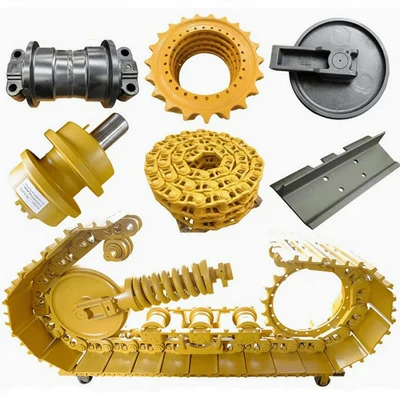
The parts we make, like track chains and idlers, are very heavy. They need strong pallets. We use wooden pallets because they are tough enough. Because we use wood, we must comply with ISPM 15. The standard requires the wood to be heated to $56^{\circ}C$ for at least 30 minutes. This treatment kills any pests 4. After the treatment, the pallet gets a special stamp. This stamp is an international passport for the wood. It shows customs that the pallet is safe.
| Compliance Aspect | Requirement for Dingtai | Reason for Compliance |
|---|---|---|
| Treatment | Heat Treatment (HT) | Kills wood-borne pests and prevents global spread. |
| Marking | ISPM 15 Stamp (IPPC logo, Country Code, Producer Code, HT) | Required by customs worldwide for smooth entry. |
| Documentation | Fumigation Certificate | Proof of treatment, needed for import records. |
If a pallet is not compliant, customs can do three things 5. They can send the whole shipment back. They can destroy the packaging. Or they can charge you to fumigate it at the port. Any of these options cost a lot of money and time. My goal is to prevent these problems for you. My team and I are here to give David Miller a stable supply. We do not want anything to slow down his business. We ensure the packaging is as good as the parts inside. We make sure the strength is consistent. This avoids any in-transit damage. This commitment to detail is part of the 20 years of experience we bring to every order. We know that David's success depends on reliable delivery.
What Happens if We Do Not Comply?
Compliance is not just a suggestion; it is the law in many countries, including the United States. If the customs agent finds a pest or sees no stamp, they will act. They do not care how good the track rollers are. They only care about the wooden pallet. A delay in customs means David's company cannot get the parts. This stops their sales and causes customer complaints. David's biggest pain point is unstable quality and late delivery. We must manage every small detail, including the wood we use. We do not just make parts; we deliver them the right way. That is part of our complete service promise. We execute 100% quality inspection 6, and that includes the packaging. If the packaging fails, the delivery fails. We treat the ISPM 15 compliance as a critical step in our quality control process, just like checking the steel's heat treatment. This ensures the supply chain is solid from my factory in Fujian, China, to David's warehouse in the USA.
Will I receive the fumigation certificate with my shipping documents?
You need proof that the pallets are safe. My job is to give you what you need for easy import. You should not have to chase documents.
Yes, absolutely. We always include the official fumigation certificate 7 (or Heat Treatment Certificate) with the rest of your shipping documents. This includes the commercial invoice, packing list, and Bill of Lading. This document proves the wood packaging is ISPM 15 compliant and is essential for customs clearance.
The fumigation certificate is a key part of your import file. Without it, you might face delays. It is a document issued by the heat treatment company or my factory's quality team. It confirms the treatment process. It must clearly show the pallet details and the heat treatment information. The document is vital for David Miller. As a large distributor, David needs a clear paper trail for every product. This document is part of that trail. It shows that my company, Dingtai, takes quality and compliance seriously. I know David needs proof that his imports meet all standards. A missing certificate can stop a $50,000 order. I cannot let that happen. That is why we check the documents three times before shipping. This step is as important as the final quality check on the steel components.
The Paperwork for Clearance
When your shipment arrives at a port like Los Angeles, the customs officials review all documents. They want to see the certificate. This certificate must match the ISPM 15 stamp on the pallet. The certificate is a simple, formal paper. It confirms the date of treatment. It confirms the temperature used. It confirms the ID of the company that did the treatment. This is not extra work for us. It is a standard procedure. We make sure a copy is sent to you by email first. Then the original copies are put in the shipping pouch. Everything is clear and transparent. Our commitment is to deliver high-quality parts and the perfect documentation to go with them. A delay because of paperwork is unacceptable.
| Document Type | Purpose | Included in Shipment? |
|---|---|---|
| Commercial Invoice | Declares goods value and seller/buyer info. | Yes |
| Packing List | Details contents and weight of each package. | Yes |
| Bill of Lading (B/L) | Proof of contract to transport goods. | Yes |
| Fumigation Certificate | Proof of ISPM 15 wood treatment compliance. | Yes, always |
When you are ordering heavy parts, you need a partner. You need a partner who knows the shipping rules. My team and I have over 20 years of experience. We do this daily. We know what documents David needs for his business. We prepare everything so he does not have to worry. We prevent his pain points. A fast, easy customs process 8 is a big part of that. We handle global logistics every day, exporting to North America, Europe, and South America. We know the specific document requirements for each market.
Our Assurance of Quality Documentation
We do not just give you the certificate. We check that the information on the certificate is correct. It must match the product and the shipment date. We check that the stamp on the pallet is clear. We do not want any mistakes. A typo on a document can cause a big problem. Our technical team works with the logistics team. They ensure all the technical details are right. This attention to detail is why customers like David choose us. They trust our process. They trust that my company, Dingtai, will handle everything correctly. We aim to be a long-term strategic partner. Getting the paperwork right is step one. David requires deep technical background and quick support. Providing perfect documents is part of that professional support. It shows we know the global supply chain, not just the manufacturing floor.
Are there any other packing charges that are not included in the part price?
Hidden charges are the worst, right? I hate them, and I know you do too. My pricing policy is always simple and clear.
For a standard order of undercarriage parts using FOB, CFR, or CIF Incoterms, there are no other packing charges besides the unit price you see. The unit price covers everything needed for safe, compliant export, including the ISPM 15 pallets, anti-rust wrap, and steel banding. Only if you request special packaging 9 will we add a surcharge.
When David Miller gets a quote from my sales team, that price is the final price for the part delivered to the port (FOB). That price covers the part. It covers the labor to put it on the pallet. It covers the anti-corrosion oil and wrapping. It covers the steel straps that hold the heavy parts down. And it covers the cost of the ISPM 15 pallet itself. We do not separate these costs. They are all "embedded" in the product's selling price. Why do we do this? It makes the quote simpler. It avoids confusion. It prevents surprise charges. David expects a direct and efficient communication style. A complicated price list is not efficient. A clear, single price is better for a strategic partner relationship. We believe in price stability and transparency 10. This is how we build long-term trust.
Standard Versus Custom Packaging
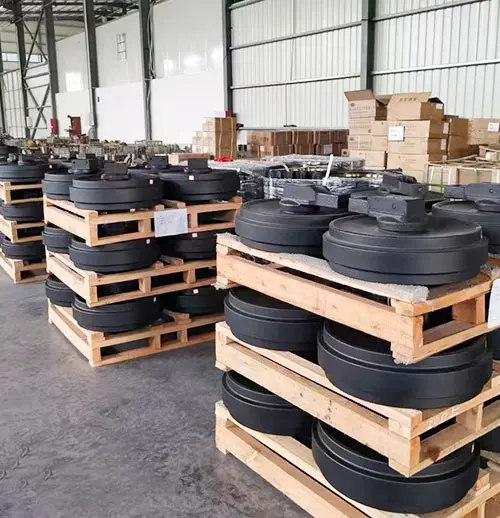
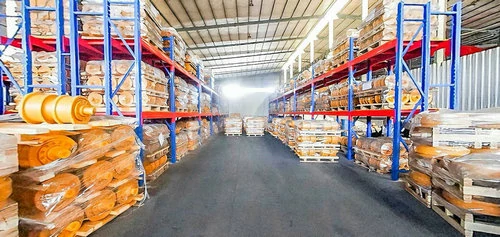
The standard packaging is very strong. We use heavy-duty fumigated pallets. We use thick plastic wrap to keep out moisture. We use strong steel bands to secure the heavy parts. This is enough for 99% of orders. The parts are heavy-duty, so the packaging must be too. We ensure the packaging can handle the stress of ocean freight and trans-shipment. This protection is a standard part of our quality service. It is not an extra.
| Packing Component | Cost Included in Unit Price? | Purpose |
|---|---|---|
| ISPM 15 Pallet | Yes (Standard) | Foundation for safe transport and customs compliance. |
| Anti-Corrosion Wrap | Yes (Standard) | Protects steel parts from rust during ocean travel. |
| Steel Banding | Yes (Standard) | Secures heavy parts like track chains and rollers to the pallet. |
| Custom Crates/Racks | No (Surcharge applies) | For special protection or non-standard items, a separate quote is needed. |
But sometimes, a customer has a special need. Maybe they need a custom-built metal rack for very delicate items. Or maybe they need extra protection for a long, rough inland journey. If you ask for this "non-standard" packaging, we must add a surcharge. This is because the material and labor cost for custom crates are much higher than a standard pallet. We will always tell you this cost upfront. We will put the surcharge on the Proforma Invoice as a separate line item. This keeps our pricing transparent. We will never surprise you with a hidden fee. David's pain point is unreliable suppliers. Hiding fees is a sign of an unreliable supplier. We are a reliable manufacturer.
The EXW Exception
There is one important exception. If we quote you an EXW (Ex Works) price, the cost may change. EXW means you, the buyer, take responsibility for the goods at my factory door. In this case, the EXW price is the bare minimum price of the part. It might not include the cost of the pallet. If you buy EXW, we will usually charge a small, separate fee for the pallet and basic packing. This is because you are arranging everything from that point. You must always confirm the packaging details with your sales rep. My goal is simple: to make sure David knows the total cost before he places the order. We do not want him to have any more pain points about confusing pricing. We provide clear material reports and pricing. This clarity is part of our professional approach.
What is your standard pallet size and weight?
When you manage a large warehouse like David's company, size matters. You need to know if the pallets will fit your forklifts and racks.
Our standard wooden pallet size is designed to handle the extreme weight of undercarriage components and to fit standard shipping containers. While sizes can slightly vary based on the specific part, our most common dimensions are $1100 \times 1100 \times 110$ mm (length $\times$ width $\times$ height). The weight of the pallet itself is around 30 kg, but the total weight of a loaded pallet can easily exceed 2,000 kg.
The size and weight of a pallet are not random. They are based on two important facts. First, we must fit the pallets efficiently inside a standard 20-foot or 40-foot shipping container 11. Containers have a maximum width and height. Our $1100 \times 1100$ mm size is a good fit. It lets us load the container without wasting space. Wasting space means you pay more for shipping, and I do not want that. Second, our parts are very heavy. A single pallet of excavator track rollers can weigh two tons. We must use a strong pallet. A weak pallet will break. If it breaks, the parts can move. This is dangerous and can damage the parts. The high weight means we must also use strong steel bands, not plastic ones. We build our pallets to be safe for heavy parts.
Pallet Size and Container Loading
The goal is to maximize the container space without violating weight limits. A 20-foot container has a limit of about 28,000 kg. We must manage the part weight and the pallet weight. We use a software program to plan the container loading. This is called a "stuffing plan." It is part of our professional service. The plan tells us how many pallets fit. It tells us the total weight. It ensures the weight is spread evenly. This prevents problems on the ship. We optimize every load to reduce your freight cost. This is an added value we offer to our B2B customers.
| Pallet Dimension | Metric (mm) | Imperial (inches) | Standard Use |
|---|---|---|---|
| Length | 1100 | $\approx 43.3$ | Fits standard container width/depth. |
| Width | 1100 | $\approx 43.3$ | Fits standard container width/depth. |
| Height (pallet only) | 110 | $\approx 4.3$ | Standard for easy forklift access. |
Knowing the size is important for David. David is a procurement director. He needs to know that the pallets will work with his warehouse equipment. An $1100 \times 1100$ mm pallet is common. Most forklifts and pallet jacks can handle this size. This detail is important for his operational efficiency 12. He expects technical details. My team provides these details right away. We use the best packing methods for our heavy steel parts. We ensure the pallet is sturdy and the parts are secured for the long trip. The technical specifications of our packaging are documented just like the specifications of our steel components.
Handling the Heavy Load
The average total weight of a loaded pallet is a critical number. It affects everything. It affects the type of forklift David needs. It affects the cost of inland transport. We always tell David the exact weight in the packing list. We provide this information for every shipment. This honesty builds trust. Trust is key to a long-term strategic partnership. My company, Dingtai, is here to offer stable, high-quality supply. This includes the smallest detail, like the strength of the pallet. We design the pallet to be a secure base for the heavy load. The sheer weight of components like drive sprockets or massive track chains demands this level of engineering in the packaging. This detail minimizes any risk of damage during the loading and unloading process at the port.
Conclusion
I have shown you that the cost of standard ISPM 15 pallets 13 is included in your FOB price. We ensure full compliance and provide all certificates with your documents. We use clear, strong $1100 \times 1100$ mm pallets for your heavy parts.
Footnotes
1. Understand how Incoterms define responsibility for packing and shipping costs. ↩︎
2. Guide to understanding and managing an effective supply chain. ↩︎
3. Official summary of the International Standard for Phytosanitary Measures No. 15. ↩︎
4. Details on the heat treatment process required to prevent the spread of plant pests. ↩︎
5. US Customs and Border Protection policy on non-compliant wood packaging material. ↩︎
6. Explanation of quality inspection processes in manufacturing and supply chain. ↩︎
7. Overview of what a fumigation certificate is and its importance for customs. ↩︎
8. Importance of a smooth customs process for international trade and logistics. ↩︎
9. Insights into the types and uses of specialty packaging for sensitive shipments. ↩︎
10. Benefits of price transparency in business relationships and trust-building. ↩︎
11. Technical specifications and dimensions for standard shipping containers. ↩︎
12. Strategic role of operational efficiency in achieving business goals. ↩︎
13. In-depth guide to ISPM 15 wood packaging regulations and compliance. ↩︎