Have you ever wondered if aftermarket parts can truly replace OEM parts? They say it's all about precision and fit, but can we trust these guarantees?
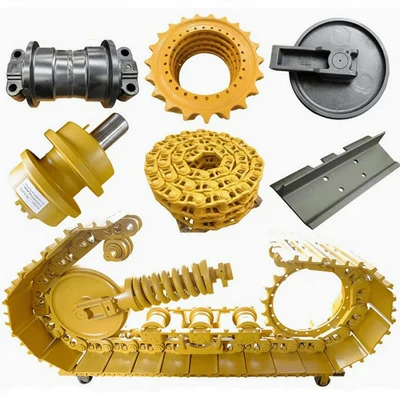
When considering compatibility, it's crucial to understand that bulldozer undercarriage parts from trusted suppliers are engineered to strict OEM specifications 1. This ensures they fit and function like genuine parts, maintaining performance and safety standards.
It's common for equipment owners to feel uncertain about switching from OEM to aftermarket components 2. Yet, compatibility assurances from suppliers aim to provide confidence and clarity.
What Is Your Process for Guaranteeing Fitment with OEM Models?
Precision in engineering is a claim many manufacturers make. But how do I, as an equipment owner, know it's true? Can we trust the words, or do we need more?
To guarantee fitment, we employ a multi-step process, including precision engineering, CAD verification 3, and cross-referencing with OEM part numbers. Our robust systems ensure each part aligns perfectly with the original equipment.
Fitment Process Steps | Description
| Step | Description |
|---|---|
| Cross-Referencing | Matching parts to OEM numbers for precise identification |
| CAD Verification | Using digital models to ensure each component matches OEM geometry |
| Engineering Checks | Conducting dimensional analysis to verify physical compatibility |
When it comes to securing fitment, engineering precision is the baseline. Manufacturers often claim compatibility with a strategic approach involving CAD models and cross-referencing. This ensures every single piece aligns with its OEM counterpart. Step one involves detailed comparisons. I ask for a cross-reference of part numbers alongside engineering drawings. These can give a visual on key features such as bolt patterns and dimensions 4. Extensions of this are digital files like CAD models or fitment diagrams, which provide a more in-depth matching.
More than just numbers, the physical checks come to play next. We look at bolt spacings or overall lengths using calipers and micrometers, ensuring not even the smallest dimension deviates by more than 0.01 inches. Such vigil checks protect against misalignments and any unwanted wear. Further assurance comes from the reverse engineering steps. I sometimes opt for samples of the OEM to undergo 3D scanning 5. Not only does this give a precise clone, but it also undergoes material analysis 6. Dive into these processes, and you will find a comprehensive structure built on trust and precision.
Do You Use Reverse Engineering from Original Parts to Ensure Compatibility?
Many can promise a match with original parts. Yet, how many truly dissect and replicate the originals for perfect compatibility?
Yes, we do. Utilizing reverse engineering from original parts, we create precise replicas that ensure seamless compatibility. This approach involves 3D scanning and material analysis, reinforcing our commitment to quality.
Reverse Engineering Tools | Function
| Tool | Function |
|---|---|
| 3D Scanning | Captures precise dimensions and shapes of parts |
| Material Analysis | Assesses material composition and properties |
| R&D Reports | Validates findings and supports prototype testing |
Diving into the role of reverse engineering, it's about reimagining the original perfection. Manufacturers frequently practice it to create what are exact replicas in the aftermarket world. Famous for its ability to dissect OEM parts, reverse engineering allows an understanding down to every individual molecule present. Tools like 3D scanning serve pivotal roles in this endeavor, and careful replica creation 7 is the outcome. Each piece mimics the original with utmost accuracy, not just in structure but material too.
To deeper explore this, many firms embrace R&D reports 8 alongside these efforts. A double assurance, these reports often tell of prototype testing. A forward-thinking strategy, it shows a commitment beyond simple rhetoric, ensuring each part not only talks but walks. This process isn't just analysis; it's a structural pipeline rooted in efficiency and accuracy. Reverse engineering isn't just a tool; it's the bridge connecting OEM authenticity to dependable aftermarket alternatives.
What Is Your Policy if I Order a Part and It Does Not Fit My Machine?
Ordering parts for critical machinery can be daunting. Will they fit? Can they handle the job? What if they don't fit as promised?
In such instances, we offer a no-hassle return policy 9 for parts that do not fit. Our commitment ensures that customers can return or exchange parts without incurring extra costs, maintaining trust and reliability.
Returns Policy Terms | Detail
| Aspect | Policy |
|---|---|
| Return Process | Easy returns with customer service support |
| Cost Responsibility | Supplier covers shipping costs for non-compatible parts |
| Warranty Terms | Assures replacement or refund within the warranty period |
Let's consider the policy aspect concerning non-fitting parts. Being an end-user, encountering a mismatch with high-cost machinery components can cause stress. Manufacturers, well aware of this, often provide set policies as a safeguard. Many reputable firms offer returns or exchanges, devoid of extra shipping costs. Ordinarily, these firms bear the expense, advocating for peace of mind and promoting confidence through accountability.
A practical measure, some firms institute a systematic approach with refund or replacement avenues. User-friendly, customers are advised beforehand concerning installation instructions and visual guides, reducing the chance of a fitting error. Not merely about aligning with an error; these policies uphold a principle. They reinforce a manufacturer's dedication to customer satisfaction, solidifying a relationship of trust through transparent, fair customer service strategies.
Can You Provide Machine-Specific Compatibility Lists for My Reference?
Browsing through catalogs can be tedious. Wouldn't it be simpler to have one list referencing exact models and parts?
We provide machine-specific compatibility lists 10 to ensure accurate ordering and installation. These lists reference exact part numbers and model details, offering an easy-to-use guide for parts selection.
Here, a detailed compatibility list is invaluable. Many manufacturers compile comprehensive lists referencing part numbers specific to models. These lists are essentially centralized databases. They allow easy selection by providing direct correspondences between the machine model and the appropriate part numbers. It's practicality at its greatest.
When using such lists, you ensure precision in ordering. Cumbersome navigation across catalogs is minimized. Look at this as bridging the gap between what fits perfectly and what is assumed to fit. Apart from simple lists, some firms go further with additional guidance. They sometimes offer installation guides or visual diagrams to reinforce understanding. This effort reassures customers, helping them navigate seamlessly through the complex world of parts compatibility.
Conclusion
Choosing the right bulldozer undercarriage parts involves comprehensive checks for OEM compatibility, precise reverse engineering, and customer-friendly policies. Equipped with detailed compatibility lists, you can ensure optimum performance and reliability.
Footnotes
1. Understand the importance of strict adherence to OEM specifications for heavy machinery parts. ↩︎
2. Discussion on the pros and cons of utilizing aftermarket components instead of OEM. ↩︎
3. Learn how Computer-Aided Design (CAD) verification ensures precise part geometry match. ↩︎
4. Reference guide for common bolt patterns and dimensions crucial for equipment fitment. ↩︎
5. Explanation of how 3D scanning technology creates precise digital models for reverse engineering. ↩︎
6. Details on laboratory material analysis for confirming component composition and properties. ↩︎
7. Insights into the process and quality control methods used for accurate replica creation in manufacturing. ↩︎
8. Explore the crucial role of Research & Development reports in validating product quality and testing. ↩︎
9. Tips for understanding and navigating consumer-friendly return policies for large purchases. ↩︎
10. How manufacturers use detailed compatibility lists to streamline the parts selection process for specific machines. ↩︎