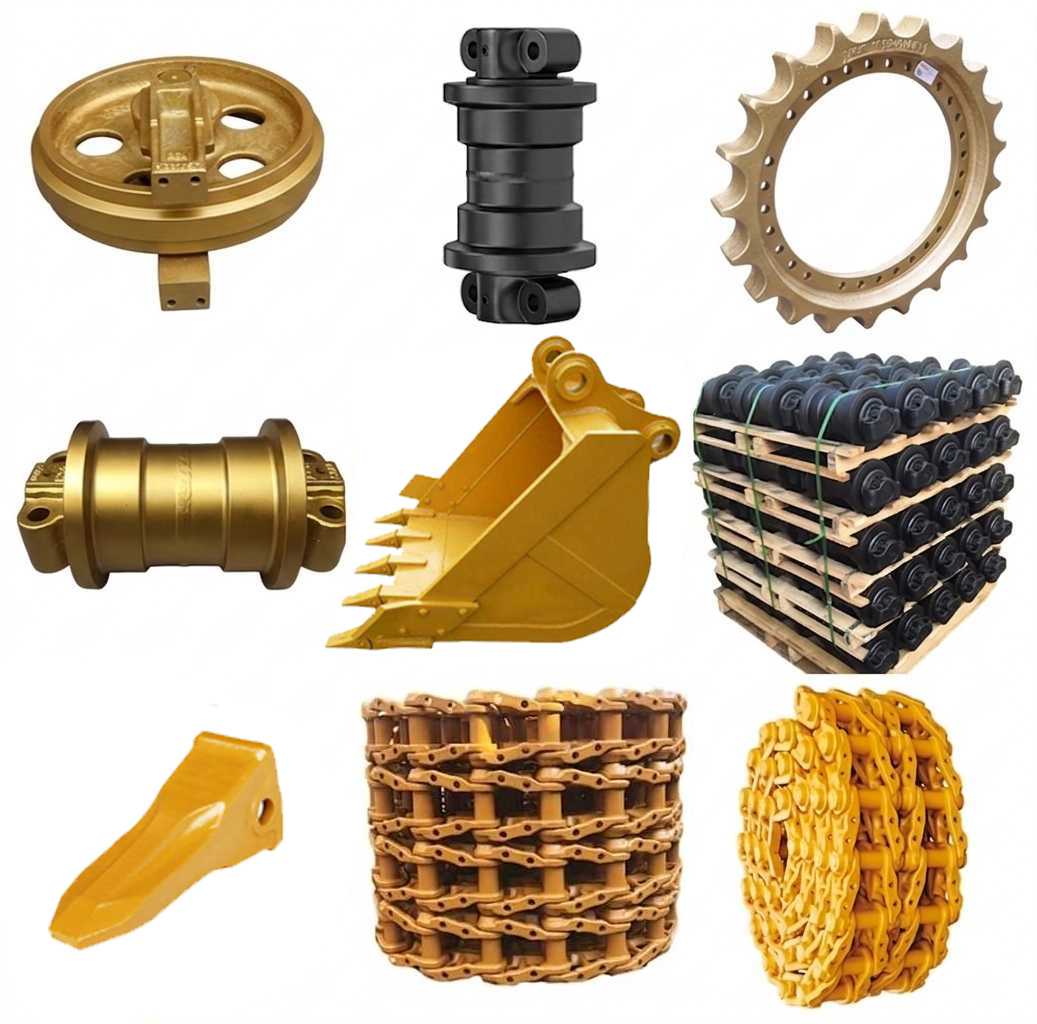
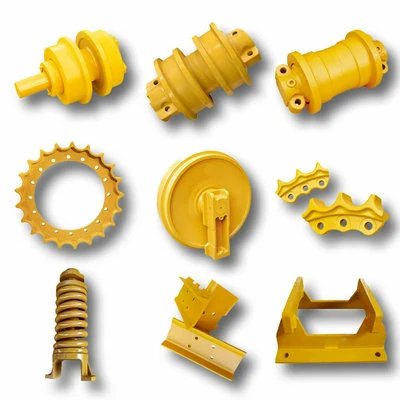
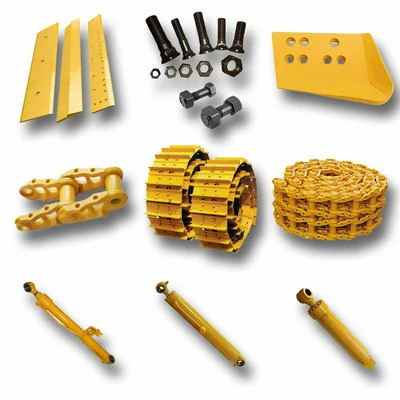
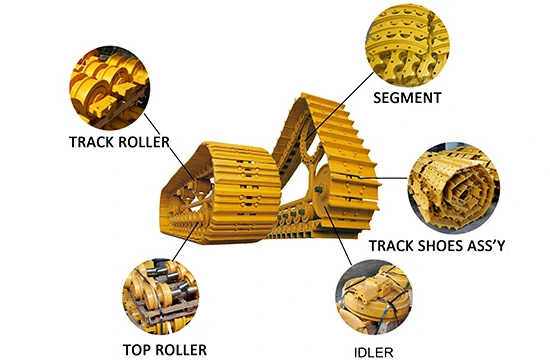
Have you ever wondered if you can streamline your bulldozer maintenance by purchasing essential track bolts and nuts from the same supplier who provides the undercarriage parts? I'm looking for efficient solutions to this very question.
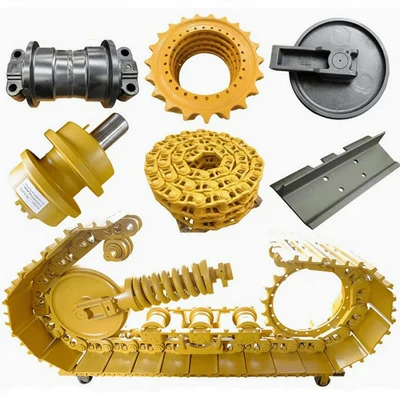
Yes, high‑tensile track bolts and nuts can absolutely be supplied together with your bulldozer undercarriage parts. Many suppliers can include these critical components, ensuring they match your equipment specifications while providing the necessary strength and durability.
Knowing if these essential components can be bundled with undercarriage parts simplifies your procurement process 1 and ensures your bulldozer is assembled with reliability. Read on to discover more about ordering compatibility and benefits.
What is the grade (e.g., 12.9) of the bolts and nuts you supply?
Have you ever been concerned about whether your bulldozer's bolts and nuts meet the specific grade requirements? This is crucial for your machine's performance 2, which I often assess when choosing parts.
For bulldozers, it is possible to supply track shoe/track pad bolts and nuts in grades such as 10.9 or 12.9, crafted from heat‑treated alloy steel. These grades ensure high strength and endurance under demanding conditions.
Understanding grades is essential 3 for meeting the specific strength needs of different applications. Let's dive deeper into how these grades impact performance and what they mean for your bulldozer.
Diving deeper into bolt grades
The grade of a bolt defines its tensile strength 4, which is a measure of the force it can withstand before breaking. For bulldozer applications, this is critical as the equipment operates under heavy loads. Grades like 10.9 and 12.9 indicate high tensile strength, making them suitable for heavy-duty use 5.
- Grade 10.9: Consists of medium-carbon steel, quenched and tempered. Yield strength around 940 MPa.
- Grade 12.9: Made from alloy steel, often quenched and tempered, with a yield strength near 1080 MPa.
| Specification | Grade 10.9 | Grade 12.9 |
|---|---|---|
| Material | Medium-carbon | Alloy steel |
| Heat Treatment | Quenched/tempered | Quenched/tempered |
| Yield Strength | Approx. 940 MPa | Approx. 1080 MPa |
This table outlines typical specifications for each grade. Choosing the right grade ensures the bolts can handle the stress and shear forces in bulldozer undercarriages 6. Always verify compatibility with your equipment model.
Are your bolts and nuts manufactured in-house or sourced from another supplier?
Can knowing the origin of your bolts and nuts determine their reliability? It's a question I contemplate to ensure product quality 7 and streamlined sourcing.
Many OEM manufacturers supply high-tensile track bolts and nuts for bulldozer undercarriages, which may be produced in-house or sourced from specialized suppliers. Understanding these sourcing strategies can aid in selecting products that meet high-quality standards.
The origin of parts is vital for assessing durability 8. Here's a closer look at where your components might be sourced and the impact on procurement and quality assurance.
Insights into sourcing strategies
Bulldozer bolts and nuts can be either manufactured in-house or sourced externally. Both methods have their benefits:
- In-house manufacturing offers control over quality, consistency, and innovation. Internal production aligns directly with design specifications.
- External sourcing allows access to specialized suppliers. These suppliers might offer unique technologies for enhanced durability.
| Production Type | Advantages | Considerations |
|---|---|---|
| In-house | Quality control and innovation | Higher overhead costs |
| External sourcing | Specialized technology access | Dependency on third-parties |
Each method has its challenges. In-house manufacturing might require significant investment 9, whereas external sourcing can introduce dependency on supplier reliability.
Can I order the bolts and nuts as a complete set with my track chains?
Do you believe ordering bolts and nuts together with track chains can optimize your bulldozer's assembly process? It's a strategy I consider to reduce procurement complexity.
If you send the machine models and which positions you want bolts for, a combined quotation can be prepared so you receive a complete bulldozer undercarriage kit including the high‑tensile bolts and nuts. This approach allows for streamlined ordering and assembly.
Ordering complete sets simplifies installation 10 and ensures compatibility. Let's explore the benefits and procedural considerations for bundling these parts.
Exploring bundled procurement
Ordering a complete set can be highly advantageous, reducing logistics and ensuring compatibility. Here are key points:
- Compatibility assurance: Bundling ensures all components integrate smoothly, reducing assembly errors.
- Cost efficiency: Potential discounts might be available when purchasing complete sets, leading to savings.
- Simplified logistics: Coordinating delivery of all parts together simplifies inventory management and reduces administrative workload.
| Benefit | Description |
|---|---|
| Compatibility | Matching parts enhance seamless integration |
| Cost savings | Potential for discounts |
| Logistic simplicity | Streamlined delivery and inventory control |
Consider these benefits when planning your bulldozer maintenance strategy. Bundling components reduces complications and might provide greater overall value.
Do you provide technical data sheets for your hardware?
Can technical data sheets influence your decision to buy bolts and nuts for bulldozers? I often rely on these documents for detailed product specifications.
Technical data sheets are usually available for review and comparison. Many suppliers provide these documents to ensure buyers can verify product specifications like material and dimensions. This offers transparency and reliability in your purchasing process.
Technical data sheets ensure that you have the necessary information to make an informed decision. Let's delve into their importance.
Importance of data sheets in procurement
Technical data sheets deliver essential specifications, offering buyers detailed insights into the components they're purchasing. They typically include:
- Material specifications: Type of steel used, metallurgical properties.
- Dimensions: Exact measurements fitting machine models.
- Mechanical properties: Tensile strength, hardness, and durability stats.
| Data Sheet Component | Details |
|---|---|
| Material | Describes composition and characteristics |
| Dimensions | Breaks down specific sizing |
| Properties | Lists strength and durability metrics |
These sheets offer transparency in procurement, ensuring the hardware meets operational standards and aligns with your machinery requirements.
Conclusion
Bundling high-tensile bolts and nuts with undercarriage parts can streamline procurement and assembly. Ensure compatibility and quality through detailed specifications and sourcing strategies.
Footnotes
1. Understand the steps and best practices in the procurement process for industrial parts. ↩︎
2. Review the SAE International standards (J429) that define the mechanical and material requirements for bolts. ↩︎
3. Access a detailed chart that explains the different metric strength grades for bolts and fasteners. ↩︎
4. Learn about the concept of tensile strength and its importance in material science and fastener applications. ↩︎
5. Explore Caterpillar’s range of heavy-duty track-type tractors (bulldozers) for operational context. ↩︎
6. See the official Komatsu website for information on their track-type tractors and undercarriage systems. ↩︎
7. Get an overview of ISO 9001, the international standard for quality management systems. ↩︎
8. Read a guide on material wear resistance and how to evaluate the durability of industrial components. ↩︎
9. Insights from the Harvard Business Review on managing risk in global supply chains and strategic sourcing. ↩︎
10. Technical article explaining the critical process of fastener installation, torque, and proper preload. ↩︎