A part failed. You worry the warranty claim 1 will be a nightmare, especially from overseas. As a manufacturer, I want to help. Here is the exact evidence you need.
Yes, I've seen claims get stuck. To start a warranty claim with a Chinese supplier like me, you need three key things: 1) Clear photos and videos of the defect, 2) The part's serial or batch number, and 3) A simple, clear description of the failure.
Providing the right proof from the start is the difference between a replacement part shipping next week or a claim getting denied. I've handled hundreds of these cases. Let’s break down exactly what my team (and other good suppliers) looks for.
Do I need to show the part's serial number or batch code in the photos?
You've found the cracked part, but it's dirty. You wonder if just a photo of the crack is enough. I can tell you from experience: it is not.
Absolutely, yes. I tell my customers that this is the most important step. Photos of serial numbers, batch codes, or our brand logo are non-negotiable. This is how we trace the part back to its production batch and confirm it is ours.
When my team receives a claim, the very first thing we do is traceability. We are not trying to avoid the claim; we are trying to own it. We need to confirm two things:
1. Is this part actually our part?
2. When did we make it, and what materials did we use?
A serial or batch number 2, a heat-treatment batch code, or even our "Dingtai" logo cast into the part answers these questions instantly. Without it, the claim stops. My customer, David, knows this. He once had a claim denied by another supplier because his team forgot to photograph the batch code. He lost money. Now, he trains his team to find the number first.
What Makes a "Good" Photo?
I often get blurry photos taken in a dark workshop. This just causes delays. My sales team then has to email the customer and ask for better ones. The customer gets frustrated, and my team wastes a day.
To prevent this, I advise my customers to follow a simple "3-Photo Rule":
- Photo 1: The Context. Take a photo from a few feet away. Show the part on the machine. We want to see the track roller still on the bulldozer, or the sprocket still on the excavator. This shows us the working environment.
- Photo 2: The Damage. This is your close-up. Get as close as you can to the crack, the leak, or the broken piece. Put a ruler, a pen, or a coin next to it for scale. Make sure it is in focus and well-lit.
- Photo 3: The Identity. This is the serial number. You may need to wipe away grease and mud. Use a flashlight. This photo proves the part is ours and tells us its manufacturing history 3.
What About Videos?
Videos are powerful. A customer once sent me a video of a leaking track adjuster 4. I could hear the hydraulic fluid hissing. The claim was approved in one hour.
We do not need a 10-minute movie. A 30-second video from your phone is perfect.
- For moving parts (like rollers): Show the machine moving slowly to reveal a wobble or a seize.
- For leaks (like seals/adjusters): Show the fluid actively leaking.
- For fitment issues 5: Show how the part does not align with the machine.
A good video answers questions before we even have to ask them.
Here is a simple checklist for your visual evidence.
| Evidence Type | Purpose | What to Include |
|---|---|---|
| Photo (Context) | Show the part in its working environment. | The part still installed on the machine (e.Example: bulldozer, excavator). |
| Photo (Damage) | Clearly show the failure. | Close-up of the crack, break, or wear. Use a coin for scale. |
| Photo (Identity) | Prove ownership and trace production. | Clear, readable shot of the serial number, batch code, or logo. |
| Video (Optional) | Show a failure in action. | 30-60 seconds. Show the part moving, leaking, or fitting incorrectly. |
Is a written report from my technical team required for the claim?
Your mechanic knows what happened, but writing a formal report sounds like a costly headache. You worry about paying for a third-party expert. I understand. For 95% of claims, I do not need this.
No, a formal third-party report is rarely needed. What I do need is a simple, written description from your team. A few clear sentences in an email are often enough. Just state the facts: what failed, when, and how.
My customers are busy. They do not have time to write essays, and I do not have time to read them. We need efficiency.
A "written report" does not mean a scientific paper. It just means you need to describe the failure in writing. This helps us categorize the problem. Is it a material defect 6? A heat treatment issue? Or did it fail because of a bad installation?
What to Include in Your Failure Description
Think of it as answering a few simple questions:
1. What: Which part failed? (e.g., "Left-side front idler, Part No. 123-456").
2. When: When did you discover the failure? (e.g., "June 10th, during routine morning inspection").
3. Where: Where on the part is the damage? (e.g., "A 3-inch crack on the outer rim").
4. How: How did it happen? (e.g., "Operator reported hearing a loud 'snap' while turning on soft ground. No impact was reported.").
Other Key Information
Along with this simple description, two other pieces of paper are essential:
- Proof of Purchase: This is your original invoice or purchase order (PO) 7 from me. This connects the part number to a specific order and price.
- Machine Details: What machine was this on? Include the model (e.g., "Cat D9") and, if possible, the machine's total operating hours. This gives us context. A part failing at 500 hours is very different from one failing at 5,000 hours.
Here is a comparison of a good description versus a bad one.
| Claim Element | ❌ Bad Description (Causes Delays) | ✅ Good Description (Fast Approval) |
|---|---|---|
| Part ID | "The roller is broken." | "Track roller, Part No. 456-789, from PO #2024-105." |
| Failure | "It stopped working." | "The roller seized and is no longer turning. The outer shell has a flat spot." |
| Context | "It broke last week." | "Discovered on June 10th. Machine is a Komatsu PC200, 8,200 total hours. Part was installed 4 months ago." |
| Conditions | "The ground is hard." | "Machine was operating in a sandy, abrasive quarry environment." |
As you can see, the "Good" example gives my technical team everything they need to make a fast decision. We want to solve your problem, not create more paperwork for you.
How quickly will I get a response after I submit my evidence?
You finally send the claim email with all the photos. Now the waiting begins. This silence is frustrating. As a supplier, I know that a fast response is just as important as the quality of the part itself.
I built my reputation on this. You should expect an acknowledgment from my team within 24 hours. If you provide all the clear evidence we discussed—photos, serial numbers, and a description—I aim to give you a final decision within 2 to 3 business days.
For an international B2B customer, time is money. A machine that is not working costs thousands of dollars every day. A slow warranty process is a business killer.
This is why we structure our claim process for speed and clarity.
The 3-Step Claim Timeline
When you work with us at Dingtai, here is what happens:
-
Step 1: Acknowledgement (Within 24 Hours)
You will send your email tosale@chinadingtai.comwith the evidence.
My sales team will immediately review it. They will confirm we received it.
If any key evidence is missing (like the serial number photo), they will ask for it immediately. This way, we do not waste a week.
We accept all claim information in English. You do not need to translate anything into Chinese. -
Step 2: Technical Review (24-48 Hours)
Your claim package (photos, PO, description) is sent to my 20-person technical and quality control (QC) team 8.
They analyze the failure. They check the production records using your serial number. They look for signs of improper installation, material defects, or extreme application.
* This is the most important step. Our engineers are experts. They can often diagnose the problem from good photos alone. -
Step 3: The Solution (Within 72 Hours)
My sales team will contact you with a clear "Yes" or "No."
If "Yes," we will immediately discuss the solution: Are we sending a free replacement part on the next container? Are we issuing a credit for your next order? We do whatever makes sense for you.
If "No," we will provide a detailed, technical reason. We will show* you why. Perhaps the photos show the part was installed incorrectly, or the wear is normal for the machine's hours. We believe in transparency.
This entire process should take 3 business days, not 3 weeks. The only thing that slows it down is incomplete evidence.
What to Expect from a Good Supplier
| Response Stage | ❌ Bad Supplier (Causes Frustration) | ✅ Good Supplier (Builds Trust) |
|---|---|---|
| Initial Contact | No reply for 3-5 days. | Acknowledges receipt in < 24 hours. |
| Missing Info | Waits a week, then sends a vague email. | Asks for specific missing photos right away. |
| Decision | Takes weeks, or just stops replying. | Provides a clear decision in 2-3 business days. |
| Communication | Vague excuses ("We are checking"). | Clear, technical-based feedback (in English). |
Do I need to send the defective part back to China for analysis?
The supplier finally agrees the part is bad. But then they ask you to ship it back. The cost of shipping a heavy steel roller from the US to China is huge. You feel like it's a trick.
In over 99% of my warranty cases, no. I do not ask you to send heavy undercarriage parts back. The cost is too high for everyone. Your clear photos and videos are our "digital return." This is why that evidence is so important.
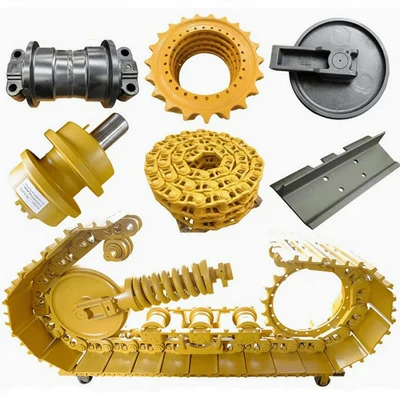
Let's be practical. I manufacture heavy-duty parts 9. A single track chain assembly can weigh thousands of pounds. I am a B2B partner, not an e-commerce shop. I understand global logistics. Asking a customer in America or Europe to pay $1,000 in freight to return a $300 part is bad business.
Your photos and your technician's report are our eyes in your workshop. We trust our experienced customers to be our partners in quality control. When a long-term customer tells me a part failed, I listen. The photos and serial numbers just verify the details so my engineers can find the root cause.
The 1% Exception: The "Critical Failure"
There is one rare exception.
Let's say a customer reports a brand-new type of failure. Something my 20+ engineers have never seen before. Or, let's say an entire batch of 100 rollers all start failing in the same strange way.
This is no longer a simple warranty claim. This is a "critical failure alert."
In this situation, my R&D (Research and Development) team might ask for the part back. Why? Because they need to put it in our laboratory. They will cut the part open. They will test the steel hardness 10. They will analyze the metal composition. They do this to find the root cause and make sure it never happens again.
Who Pays for the Return?
In this rare 1% case, we do.
If my technical team requests a part be returned for laboratory analysis, Dingtai will cover the cost of the freight. You should not have to pay for our quality control.
This is a key question you should ask any new supplier before you sign a contract: "Under what conditions do you require parts to be returned, and who pays for the shipping?"
For me, the answer is simple: I almost never require it. And if I do, it's on my account.
Conclusion
A warranty claim shouldn't be a fight. With clear photos, a serial number, and a simple description, it becomes a simple process. We are your partner, not your opponent.
Footnotes
1. Explains the official definition and process of filing a warranty claim for a product. ↩︎
2. Details the difference between serial numbers and batch numbers for product traceability. ↩︎
3. Learn how batch production records create a product's manufacturing history for quality control. ↩︎
4. A video demonstration of how to identify and repair a leaking track adjuster. ↩︎
5. See examples of common part fitment issues reported by heavy equipment operators. ↩︎
6. A legal and technical definition of what constitutes a manufacturing or material defect. ↩︎
7. Defines what a purchase order (PO) is and its role in B2B transactions. ↩︎
8. Understand the fundamental principles and role of a quality control (QC) team. ↩︎
9. See examples of heavy-duty undercarriage parts from a major manufacturer. ↩︎
10. An explanation of the different methods used for testing the hardness of steel. ↩︎