Importing undercarriage parts from China: What is my sample charging policy?

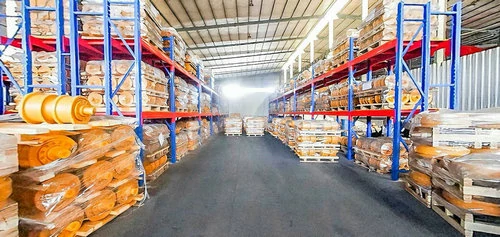
  Warehouse worker inspecting large wheel within industrial setting.

You need to test an undercarriage part before buying 1,000 units. But you are worried about high sample fees and complex policies. I understand. Let's clarify how sample policies really work.

As a manufacturer, I see sample policies are not one single rule. It depends on negotiation. In my 20 years, the most common policies I use are charging for the sample (with freight collect) or offering free samples if you commit to a bulk order later.

The policy you get often depends on the type of sample, the shipping cost, and your relationship with the supplier. Understanding the details before you ask is key. Let’s break down the common questions I hear from buyers like you.


Do I get free samples if I provide my company's courier account (like DHL/FedEx)?

You have a DHL or FedEx account 1 ready. You assume this means the supplier will just ship the sample for free. This is a common starting point, but it only solves half the problem.

Providing your courier account (freight collect) is excellent, and many suppliers, including my team at Dingtai, accept this. However, this only covers the shipping cost. It does not automatically mean the product sample itself is free. You still need to confirm if we are charging for the part.

Illustration of cargo transport with forklift and airplane suggesting logistics concept.

When you ask for a sample, there are two separate costs to think about:
1.  The Sample Cost: The price for the physical product.
2.  The Freight Cost: The price for shipping (e.g., DHL, FedEx).

Providing your courier account is the best way to handle the freight cost 2. It is fast, you control the service level, and you pay your own rates. We (the supplier) don't have to guess your shipping budget or add any markup.

But this does not make the product free. I know many buyers hope for a "free sample + freight collect" deal. For very small, cheap items, this is possible. But undercarriage parts are different.

Why We Must Charge for Heavy Samples

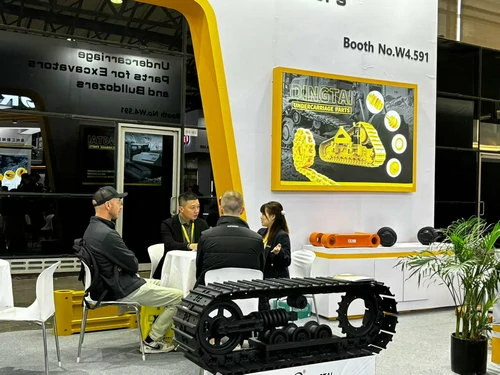
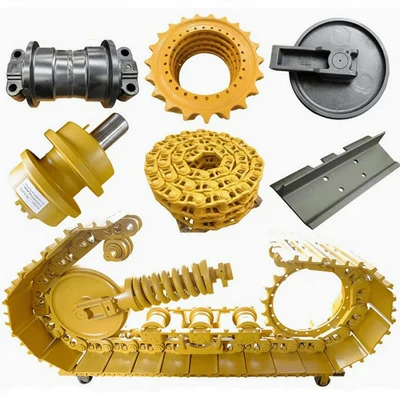
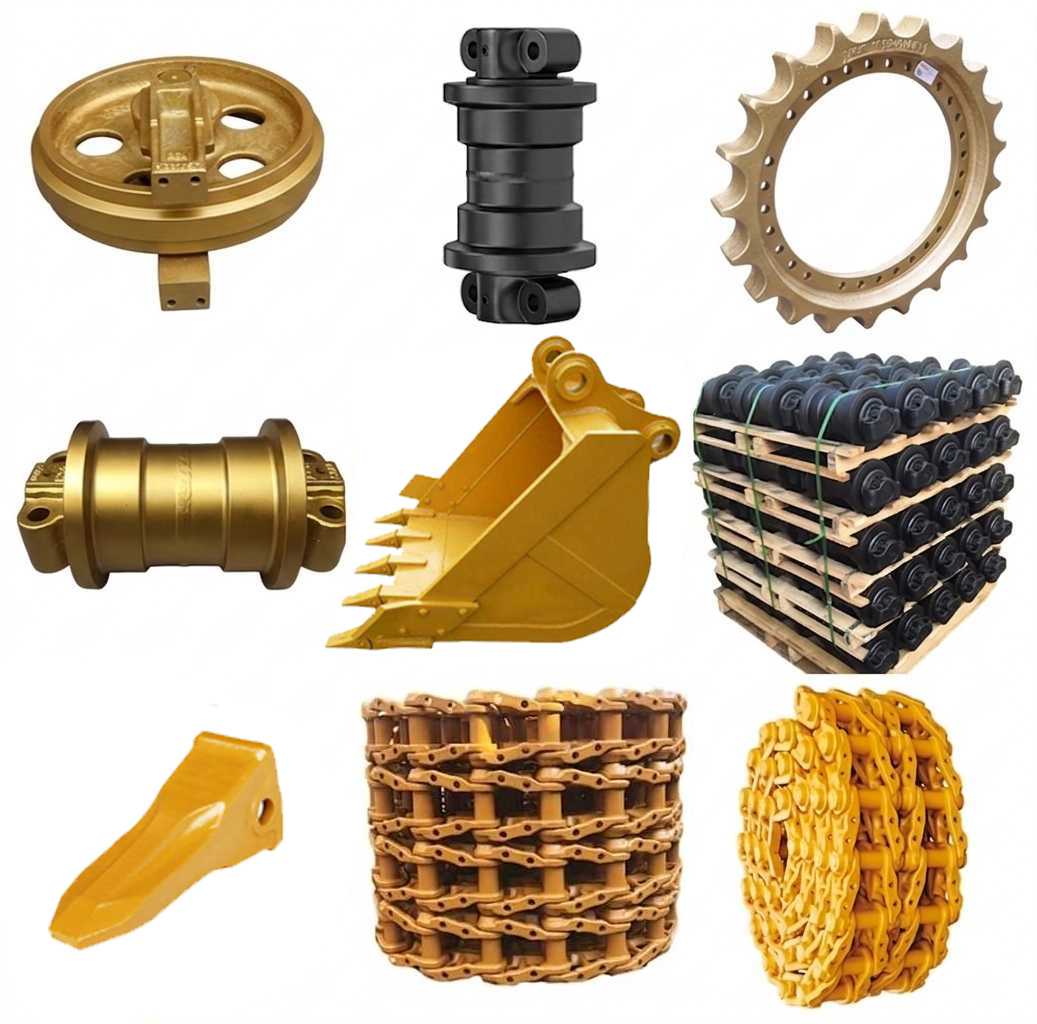
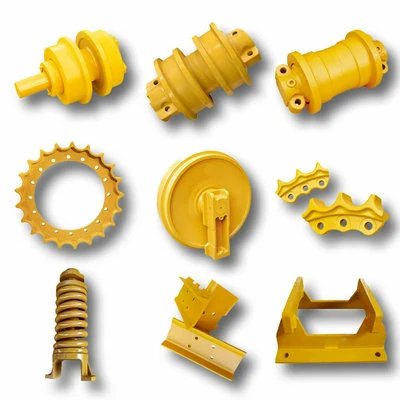
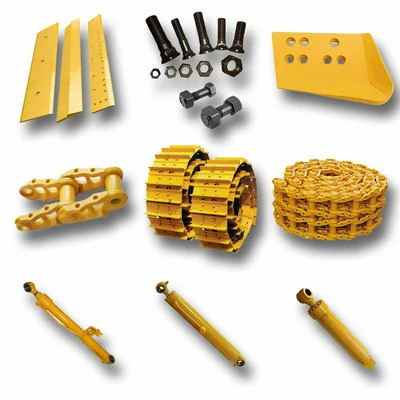
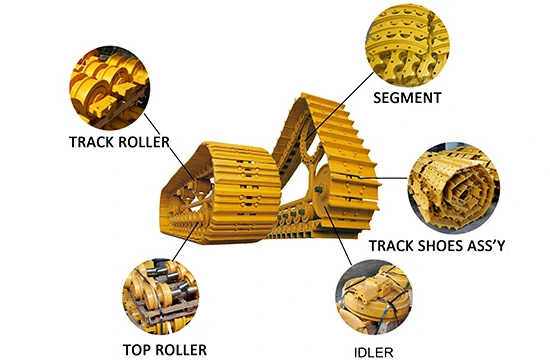
As a specialist in parts for excavators and bulldozers 3, I can tell you our products are heavy. A single track roller 4 is made of solid, forged steel (like 40Mn2). It has real value in material and precision machining.

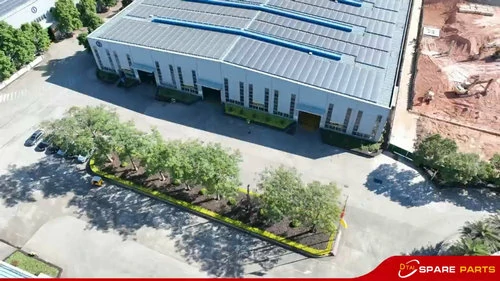
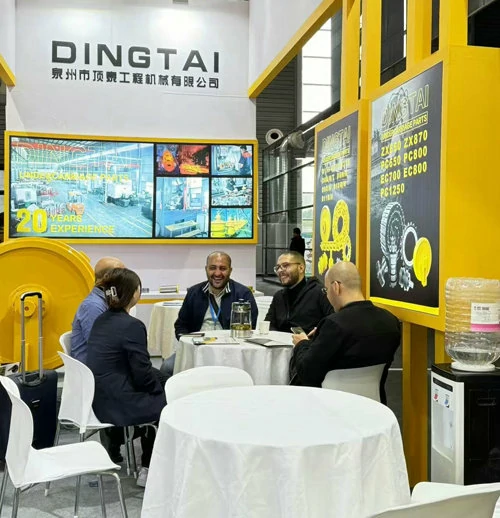
My factory, Dingtai, gets many sample requests. If we gave away heavy steel parts for free to everyone, our costs would be too high. We must charge for the sample to cover our basic material and production cost.

Think of paying for the sample as a "good faith" deposit. It shows us that you are a serious buyer 5, not just collecting free parts. This helps us focus our best service on professional procurement managers, like our typical clients.

The Best Solution: The Sample Cost Credit

Here is the policy I use for most new clients. It is the fairest solution.
1.  You pay for the sample product.
2.  You pay for the shipping (using your courier account or by paying us).
3.  We write in the contract: "This sample cost will be 100% deducted from your first bulk order 6."

This way, the sample is free for you in the long run. It protects my factory from non-serious requests but rewards you, our future partner, for placing a real order.

Customs and Declared Value

One last, important point. Even if I give you the sample for $0, we must declare a value for your country's customs 7. You are always responsible for paying any import duties or taxes. Providing your courier account does not change this. We will need your Tax ID or EORI number 8 to prepare the shipping documents correctly.


Is the sample cost based on your FOB price or a special sample price?

You need to budget for the sample. But you see a high "sample price," sometimes 2-3 times the bulk FOB price. I understand your frustration; let me explain why this happens.

From my experience, a "special sample price" is very common. This sample price is almost always higher than the bulk FOB (Free On Board) price 9. This is not to make a profit. It covers the extra labor of pulling one item, special packaging, and administrative costs.

Forklift operator organizing palettes in spacious warehouse setting.

I know it is frustrating to see a high price for one sample. A professional purchasing director sees that a track roller is $80 at FOB price but $150 for a sample. This feels dishonest.

But the reason is logistics, not profit.

The Logic Behind a "Sample Price"

Our factory is designed for mass production 10. Our FOB (Free On Board) price is based on efficiency.

  • We buy steel in 50-ton batches.
  • We set up our forging lines and CNC machines to run 1,000 pieces at a time.
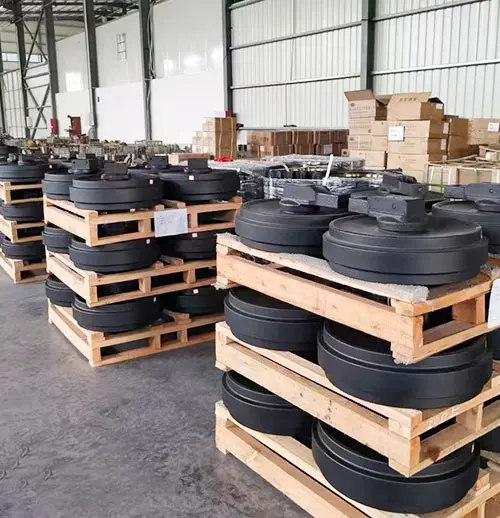
  • We pack 50 rollers onto one large, heat-treated wooden pallet.

An order for one sample breaks this entire workflow.

What is Included in a Sample Price?

When you ask for one sample, my team must:
1.  Stop Production: Or, more likely, send a warehouse manager to find one specific part from a large batch.
2.  Inspect: Pull that single part to our quality control lab for final checks.
3.  Package: We cannot ship a single 30kg roller in a cardboard box. We must build a small, strong wooden box just for that one item.
4.  Documentation: My sales team has to prepare a full set of customs documents (Commercial Invoice, Packing List) for a single $150 item.
5.  Coordination: We then have to schedule a special pickup with DHL or FedEx.

This extra labor can take several hours. The "sample price" simply covers this extra work. We are not trying to make a profit on samples; we are trying to not lose money on them.

Table: Sample Cost vs. Bulk Cost Example

Here is a clear breakdown of the costs. The most important part is the "Cost Credited" row.

Item Sample Order (1 pc) Bulk Order (500 pcs)
Product Cost $150 (Special Sample Price) $80 (FOB Price)
Handling/Admin Included in price Included in price
Shipping Paid by Buyer (e.g., $120 via DHL) Paid by Buyer (e.g., $20/pc via LCL/FCL)
Cost Credited? Yes (The $150 is deducted from the first bulk order) N/A
Total Upfront Cost $270 $40,000 + Sea Freight

As you can see, the sample is only expensive if you do not place a bulk order. For all my serious, long-term partners, the samples are effectively free.


If I need a custom-designed part, do I have to pay for the sample mold?

You need a unique part (OEM) for your specific machine. You are not sure if the supplier will pay for the expensive tooling (molds/tooling). For custom work, the costs are very different.

Yes, absolutely. For any custom (OEM) undercarriage part, you (the buyer) must pay for the new tooling or mold. My factory, Dingtai, provides this service, but we cannot absorb the high cost of creating a unique mold just for one customer's sample.

Two factory workers examining large machinery during manufacturing process.

This is a very important topic for OEM clients or large distributors. There is a big difference between a "standard" sample and a "custom" sample.

Standard vs. Custom

  • Standard Sample: This is a part for a standard machine (e.g., a Caterpillar D9). We (Dingtai) already have the molds. We have made thousands of these. You only pay the "sample price" we discussed.
  • Custom Sample: This is a part you designed (OEM). You send us technical drawings. We have never made it before. We must create new tooling (molds or dies) to produce it.

What is "Tooling Cost"?

For forging heavy steel parts, the tooling is a set of large, heavy, and very precise steel dies. These must be designed by engineers and cut from special tool steel.

This tooling 11 is expensive. It can cost anywhere from $2,000 to $20,000, depending on the size and complexity of the part.

This is a one-time, non-recurring (NRE) cost. You (the buyer) must pay this fee 100% upfront before we can even make the first sample. This tooling belongs to you. We will only use it to produce your parts.

Can the Tooling Cost be Credited Back?

This is negotiable, but it is less common than a sample credit.
Because the tooling cost is so high, a supplier cannot credit it back after one order.
For a very good, long-term partner, we might offer a partial credit over time. For example:
"Pay the $10,000 tooling fee now. For the first 20,000 pieces you order, we will give you a $0.50 credit per piece."
This rewards high-volume commitment.

After you pay for the mold, you still have to pay a "sample price" for the first few pieces. This is because we have to set up the entire forging press and CNC line just to make your 3-5 test samples, which is very inefficient.

Table: Standard vs. Custom/OEM Sample Costs

Cost Factor Standard Sample (In-Stock) Custom/OEM Sample (New Design)
Tooling / Mold Fee $0 (Supplier already owns) $2,000 - $20,000 (Paid by Buyer)
Sample Unit Price $150 (Special sample price) $300 (Higher setup cost)
Cost Credit? Yes, 100% of sample price ($150) on bulk order. Negotiable. Partial credit on tooling fee for large, long-term volume.
Lead Time 3-5 days to ship 45-60 days (to design and make the mold first)

How do I finalize the payment for my sample purchase?

You have agreed on the sample costs and freight. Now you need to send the money to China safely. The process is simple, but it's important to use the right method for speed and safety.

For small sample payments, I find most buyers prefer PayPal or a simple T/T 12 (Telegraphic Transfer / bank wire). My company, Dingtai, will send you a formal Proforma Invoice (PI) that lists all the costs (sample + freight) clearly. You must pay this 100% upfront before we ship.

Professional analyzing spreadsheets on computer in modern office workspace.

I know many buyers worry about transparency, especially when sending money overseas. A professional supplier will never just ask for money in an email with no documents. This is a big red flag.

The Professional Payment Process

Here is the standard, secure process my team follows for every sample order:
1.  Agreement: We agree in writing (email) on all costs: sample price, tooling fee (if any), and freight cost (or "freight collect").
2.  Proforma Invoice (PI): My sales team issues a formal PDF document. This PI is your bill. It will clearly show:
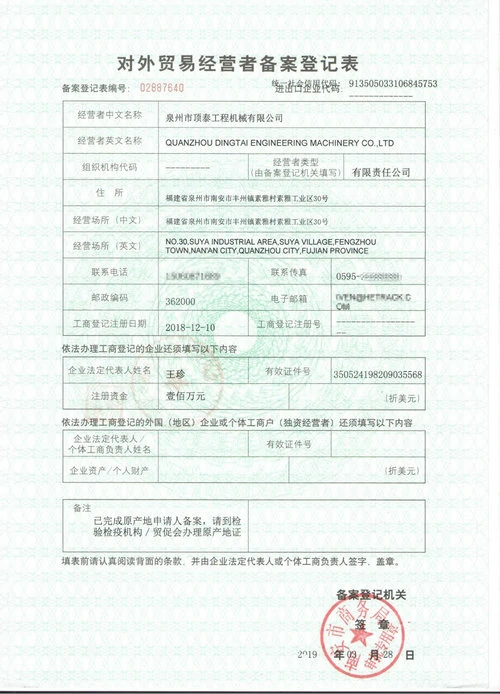
    Our full company name (Fujian Nanan Dingtai Construction Machinery Co., Ltd.), address, and phone number.
   
Our official company bank account details (for T/T wire) or PayPal account.
    Your company's name and address.
   
An itemized list of all charges (e.g., 1x Track Roller, $150).
    * The total amount due.
3.  Payment: You send the payment 100% upfront. We cannot ship samples on credit terms 13 (e.g., NET 30).
4.  Confirmation: We confirm when we receive the payment.
5.  Shipment: We ship the sample via the agreed method (e.g., DHL) and send you the tracking number immediately.

Table: Common Payment Methods for Samples

Payment Method Best For... Speed Typical Fee (Paid by Buyer)
T/T (Wire Transfer) All amounts. The most professional. 2-5 days $20 - $50 (Your bank's flat fee)
PayPal Small amounts (< $1,000) Instant 3-5% (Often added to the PI)
Alibaba Trade Assurance Any amount (good buyer protection) 3-5 days ~2-3% (Credit card fee)
Western Union Not recommended (unprofessional) Fast Varies

Alternatives to Physical Samples

Sometimes, a sample is too big or heavy. Shipping a 500kg track chain assembly by air is not practical. Here are two alternatives I suggest to my clients:

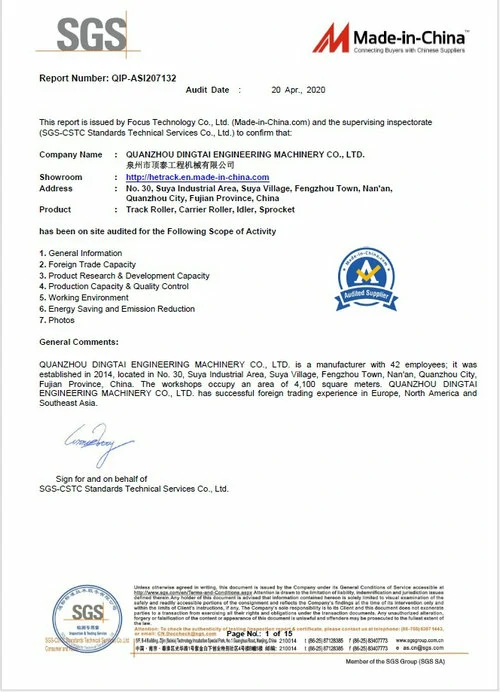
1.  Third-Party Inspection: Hire an inspector from a company like SGS 14 (which we are certified by) to visit my factory. For $200-$300, they can measure the part, test the steel hardness, and send you a full report with photos. This is cheaper than $1,000 in air freight.
2.  Consolidate Shipment: If you have a freight forwarder 15 in China, we can send the heavy sample to their warehouse. They can add it to your next LCL (Less than Container Load) sea shipment. This is much cheaper, but it is also much slower.

Conclusion

Clear communication is essential. Always get a formal Proforma Invoice and discuss sample cost credits before you pay. This builds a strong, trusting, long-term partnership from day one.


Footnotes  

1. Information on setting up a business shipping account with a major international courier. ↩︎  
2. Definition and explanation of what freight costs encompass in business transactions. ↩︎  
3. Overview of excavators, which use many undercarriage parts discussed here. ↩︎  
4. Detailed explanation of what a track roller is and its function in an undercarriage assembly. ↩︎  
5. Article on identifying genuine, long-term buyers from non-serious inquiries. ↩︎  
6. Guide to the processes and benefits of placing a bulk order for inventory management. ↩︎  
7. Resource from U.S. Customs and Border Protection on importing and duties. ↩︎  
8. Explanation of the EORI number, which is required for EU customs documentation. ↩︎  
9. Explanation of Free On Board (FOB) and how it defines buyer/seller responsibility. ↩︎  
10. Overview of mass production, which is the basis for achieving low bulk FOB prices. ↩︎  
11. Technical explanation of tooling and dies used in manufacturing processes. ↩︎  
12. Comparison of PayPal and T/T for making international business payments. ↩︎  
13. Definition of common credit terms used in B2B transactions. ↩︎  
14. Information on SGS, a leading company for third-party inspection and certification services. ↩︎  
15. Detailed description of what a freight forwarder is and the services they provide. ↩︎

Free Quote & Information Request

Leave your inquiry, we will provide you with quality products and services!

Excavator & Bulldozer Undercarriage Parts Expert - Quality Track Roller, Carrier Roller, Sprocket Wheel
Privacy Overview

This website uses cookies so that we can provide you with the best user experience possible. Cookie information is stored in your browser and performs functions such as recognising you when you return to our website and helping our team to understand which sections of the website you find most interesting and useful.