Importing undercarriage parts from China: How long is my warranty period? (By operating hours or months from delivery?)

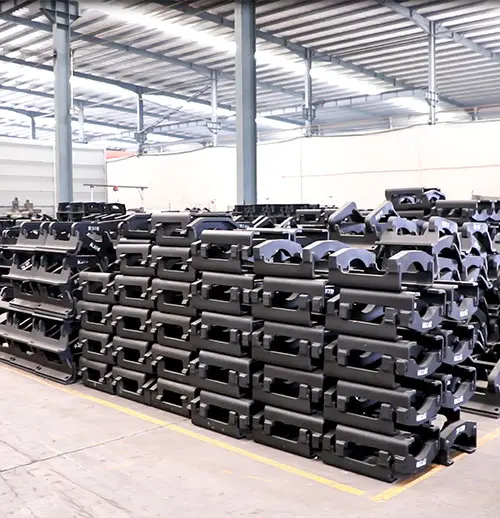
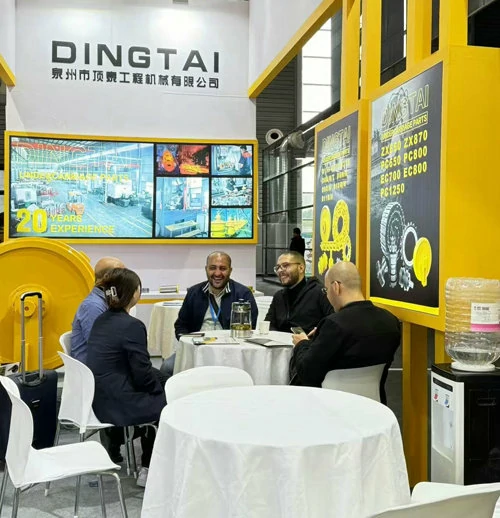
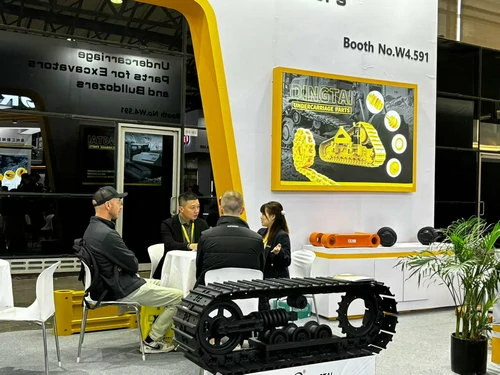
  Large sprocket and conveyor track displayed in a modern industrial setting.

Are you importing undercarriage parts? You see warranties listed in "months" or "hours." This confusion is risky. It can lead to costly, uncovered failures. Let's clarify this now.

In my 20+ years at Dingtai, I can tell you there is no single standard. Most reputable suppliers, including us, offer a "whichever comes first" warranty. This is typically 12 months or 2,000 operating hours. This hybrid model provides the clearest protection for you.

This "months vs. hours" issue is just the first question. To truly protect your investment, you also need to know when the clock starts, what is not covered, and how to file a claim. Let's dive deeper into the details that matter.


Does my warranty start from the shipping date or the arrival date?

You receive your parts and log the "12-month warranty." But if the clock started 45 days ago at the shipping port, you've already lost 1.5 months of coverage.

As a manufacturer, our standard practice is to start the warranty from the Bill of Lading (B/L) date. This is the most common method in B2B international trade. It's a fixed, verifiable date. Some suppliers might say "arrival date," but this can be very ambiguous.

Shipping port inspection with clipboard and docked cargo vessel.

This is one of the most critical, and often overlooked, details in any import warranty. For an experienced purchasing director, this detail directly impacts your landed cost and risk.

Why the Bill of Lading (B/L) Date 1 is the Industry Standard

Most experienced manufacturers, including Dingtai, peg the warranty start to the B/L date. The reason is simple: verifiability and control. The B/L date is a formal, legal document. It is the moment the goods are transferred to the carrier and leave our factory's control. It is a single, indisputable date for both parties.

If a supplier uses the "arrival date," which arrival? The port? Your warehouse? What if customs holds the container for two weeks? This creates a floating, unverifiable start date that causes disputes.

What about the "installation date"? This is even harder for a manufacturer to track. You might hold parts in inventory for six months before selling them to an end-user. We cannot be responsible for that inventory time. The B/L date is the cleanest, most professional standard.

The Transit Time 2 Factor You Must Calculate

I know what you are thinking. "Linda, if it takes 40 days for the container to reach my port in the US, I'm losing 40 days of my 12-month warranty."

You are 100% correct. This is a crucial part of your total cost calculation. You must factor in this "lost" warranty time. A 12-month warranty starting from the B/L date is effectively a 10.5 or 11-month warranty from arrival.

This is why you must partner with a supplier who has a streamlined and reliable production-to-port process. Delays in shipping do not just delay your inventory; they actively shorten your warranty protection.

Here is a simple comparison of how these terms affect a 12-Month / 2,000-Hour warranty.

Table 1: Warranty Start Date Comparison

Warranty Start Term How It's Defined Pros for Buyer Cons for Buyer (The Risk)
Bill of Lading (B/L) Date Date on the shipping document. Clear, fixed, verifiable. Transit time (30-60 days) is deducted from your total warranty period.
Arrival Date Date goods arrive at the destination port or warehouse. Warranty starts only when you have the goods. Vague. Which "arrival"? Prone to disputes over customs or freight delays.
Installation Date Date the part is installed on the machine. Full warranty period from the moment of use. Rare in B2B. Unverifiable for the manufacturer. Not practical for distributors.

Do different parts like track rollers and idlers have different warranty terms?

You buy a full undercarriage set. You assume the 12-month warranty covers everything equally. But high-wear items 3 like track shoes may have different, shorter terms than a solid idler.

Yes, they often do. At Dingtai, our core steel parts (rollers, idlers, sprockets, track links) all share the same strong warranty. However, "GET" parts like bucket teeth or rubber tracks will almost always have a different, often shorter, warranty focused only on manufacturing defects.

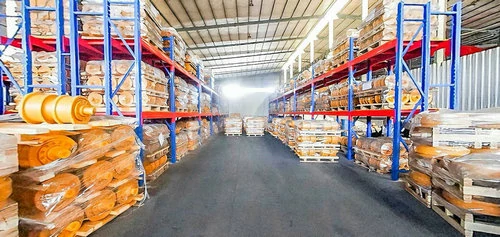
Warehouse manager inspecting high-stacked inventory racks in a large facility.

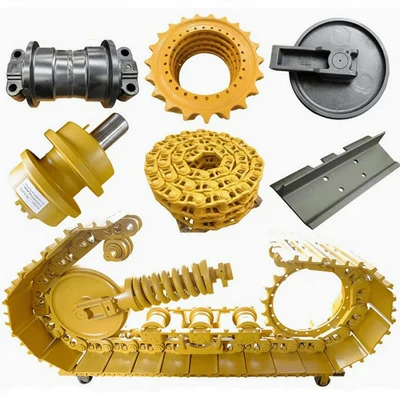
A complete undercarriage system 4 is complex. It has massive cast-steel components (idlers), precision-forged moving parts (rollers, links), and high-abrasion ground-engaging tools (GET). It is not practical to cover all these with one single policy. An experienced supplier will have clear, separate terms.

Category 1: Core Undercarriage (Rollers, Idlers, Sprockets, Links)

These are the "heavy metal" parts. They are designed for long life. The warranty for these parts (e.g., our 12-month / 2,000-hour policy) covers manufacturing defects 5. This means issues like:

  • A roller shell cracking prematurely.
  • A seal failing, causing an oil leak (not due to impact).
  • A sprocket tooth breaking off under normal load.

These parts should not fail quickly. The warranty protects you from a rare defect in materials (like bad steel) or heat treatment.

Category 2: Ground Engaging Tools (GET) & Hardware

This category includes bucket teeth, cutting edges, and track shoes. These parts are designed to be worn down. Their entire job is to scrape against rock and abrasive soil.

The warranty for GET 6 is almost always limited to "manufacturing defects upon arrival." This means:

  • The part does not fit (bad casting).
  • The part has a visible crack before use.

No supplier will warranty a bucket tooth against "wearing out too fast." Wear life is 100% dependent on the application. For example, digging in sand versus digging in a granite quarry will result in completely different wear lives.

Category 3: Rubber Tracks

Rubber tracks are a special case. They are covered against "manufacturing defects," usually for 12 months. This means the internal steel cables snapping or the rubber de-laminating. It does not cover normal wear (the tread wearing down) or cuts from sharp objects.

Table 2: Typical Warranty Variation by Part

Part Category Typical Warranty Basis What It Covers (Examples) What It Excludes (Examples)
Core Steel (Rollers, Idlers, Links) Hybrid (e.g., 12mo / 2000hr) Manufacturing Defects (Cracks, Seal Failure) Normal Wear, Impact Damage, Misuse
GET (Bucket Teeth, Track Shoes) Limited (e.g., 6mo or "On Fitment") Defects in Casting, Incorrect Fit Normal Abrasive Wear, Breakage from Impact
Rubber Tracks Time-Based (e.g., 12mo / 1000hr) Manufacturing Defects (De-lamination, Cable Snap) Normal Tread Wear, Cuts, Tears

What kind of damage or failure is not covered by my warranty?

A roller on your machine fails at just 500 hours. You file a claim, angry about the defect. The supplier denies it, blaming "improper tension" or "severe application."

This is the most common area for disputes. As a rule, warranties only cover defects in our materials or workmanship. We cannot cover failures caused by external factors. This includes improper installation, poor maintenance, over-tensioning, accident-related impact, or using the machine in severe-duty applications.

Construction workers operating a bulldozer on a rocky slope under dramatic skies.

As an experienced purchasing director 7, you know that a part's life is a partnership. The manufacturer is responsible for quality, and the operator is responsible for maintenance. A warranty protects you from failures on our end. It cannot be an insurance policy against everything that can happen on a job site.

Let's be very specific. When I, as a manufacturer, review a warranty claim, these are the common, non-covered failures we look for.

1. Installation and Maintenance Errors 8

This is the number one reason for early failure.

  • Over-Tensioning: If the track chain is too tight, it creates massive, constant load on the entire system. It will destroy idlers, sprockets, and roller bearings in a fraction of their normal life. This is not a defect; it is an operational error.
  • Improper Installation: For example, seal groups on a roller being contaminated with dirt during assembly. This will cause the roller to fail, but the root cause was the installation, not the roller itself.
  • Poor Maintenance: Not cleaning out the undercarriage. If mud, rock, and debris pack the undercarriage, it accelerates wear and can cause components to seize.

2. Application and Operational Errors

This group relates to how the machine is used.

  • Severe-Duty vs. Standard-Duty: If you buy a standard-duty roller (designed for digging soil) and use it in a granite quarry (severe-duty), the part will fail. The warranty is void because the part was misapplied. You must match the part to the job.
  • Impact Damage: This is obvious. If a large rock strikes and cracks an idler, or a machine drives off a ledge, that is accident damage. It is not a manufacturing defect.
  • Improper Operation: For example, excessive, high-speed operation in reverse. This puts unnatural stress on the sprocket and bushings, causing premature wear that is not covered.

3. Normal Wear and Tear

This must be clear: A warranty does not cover normal wear. 9 Parts are supposed to wear out. The warranty ensures they reach their reasonable wear life. If a track link wears down after 1,500 hours in sandy soil, that is normal. If it cracks in half at 500 hours, that is a potential warranty claim.

How do I file a claim if a part fails within the warranty period?

A part fails. You know it's a defect. You send an email. The supplier replies with a 10-page form, or worse, doesn't reply at all. Your machine is down.

As someone who processes claims, I can tell you: documentation is everything. At Dingtai, we have a simple process. You send us clear photos of the failure, the part's serial number, and the machine's hour meter reading. This information allows us to approve claims quickly.

Construction site with excavator at sunset monitored by engineer.

A difficult claim process 10 is a major red flag. It suggests the supplier either does not stand by their product or is simply disorganized. A professional manufacturer wants to resolve legitimate claims quickly. It builds trust and loyalty.

We have spent years refining our process to make it as painless as possible for our B2B partners. You are busy managing your own inventory and customers.

Step 1: Stop and Document (Before Removal)

As soon as a failure is reported, before the part is removed (if possible), get photos.
1.  Photo of the Machine: Show the entire machine and its working conditions.
2.  Photo of the Hour Meter: This is non-negotiable. We must compare this to the warranty term (e.g., 2,000 hours).
3.  Photos of the Failure: Get close-up shots of the cracked roller, the leaking seal, or the broken link.
4.  Photo of the Part Number/Serial: We need to see our part number or serial stamp on the component to verify it is ours.

Step 2: Provide the Context

Along with the photos, we need a simple report. This can be an email.

  • Original Invoice Number: So we can check the B/L date and confirm it's in the 12-month window.
  • Machine Model: e.g., Cat D9.
  • Description of the Failure: "Roller shell cracked after 620 hours of use in sandy soil."
  • Installation Date (if known): Documenting this always helps your case.

Step 3: Resolution

Once we receive this information, our technical team (we have 20 engineers) will review it.

  • If Approved: We will issue a credit to your account or ship a replacement part in your next container.
  • If Denied: We will provide a detailed technical explanation. For example, "The photos show clear impact marks from a rock, which is not a manufacturing defect." This is not a vague rejection; it is a technical analysis.

Table 3: Warranty Claim Checklist

Required Item Why We Need It Example
Photos of Failure To see how it failed (crack, leak, wear). Close-up of a cracked idler yoke.
Photo of Hour Meter To verify the "Operating Hours" limit. "11,530 hours"
Photo of Part Number To verify it is our part and from the correct batch. "DT-R-PC200"
Original Invoice / B/L To verify the "Calendar Months" limit. "Invoice #20240315"
Machine Model / App To check for misapplication (e.g., standard part in severe duty). "Komatsu PC200, digging topsoil"

Conclusion

A clear warranty is not a bonus; it is essential. Understanding hours, start dates, and exclusions protects your business. Choose partners who provide this clarity from the start.


Footnotes  

1. Explanation of a Bill of Lading (B/L) as a vital shipping document in international trade. ↩︎  
2. Definition of transit time and its role in calculating the total lead time for goods arriving by sea freight. ↩︎  
3. List of components in an excavator undercarriage that are subjected to the highest rates of wear and abrasion. ↩︎  
4. Wikipedia entry detailing the components and function of a tracked vehicle's undercarriage system. ↩︎  
5. Legal definition of a manufacturing defect and how it differs from a design or warning defect. ↩︎  
6. An overview of Ground Engaging Tools (GET) and why they are crucial wear parts on heavy machinery. ↩︎  
7. Insights into the core skills and responsibilities required for a professional purchasing director in procurement. ↩︎  
8. Tips and practices to help avoid heavy equipment failure through proactive and correct maintenance protocols. ↩︎  
9. Legal and commercial interpretation of "normal wear and tear" in contracts and warranty agreements. ↩︎  
10. Step-by-step guide on establishing an efficient and fair warranty claims management process for business. ↩︎

Free Quote & Information Request

Leave your inquiry, we will provide you with quality products and services!

Excavator & Bulldozer Undercarriage Parts Expert - Quality Track Roller, Carrier Roller, Sprocket Wheel
Privacy Overview

This website uses cookies so that we can provide you with the best user experience possible. Cookie information is stored in your browser and performs functions such as recognising you when you return to our website and helping our team to understand which sections of the website you find most interesting and useful.