What essential clauses must my purchase contract for undercarriage parts for excavators include?

  Technician in cleanroom operating precision manufacturing machine in laboratory

Signing a weak contract for undercarriage parts? It’s a huge risk. I’ve seen buyers lose thousands. A strong contract is your best protection. Let’s build one.

Your excavator parts contract must have several key clauses. You need detailed specifications, clear quality standards, strict delivery terms with penalties, and solid warranty coverage. Also include payment terms, inspection rules, and a way to resolve disputes. These items protect your investment.

A contract is more than paper; it's your safety net, especially in global trade 1. The details really matter. We can break down the most critical parts one by one. This will help you avoid common mistakes I see buyers make every day.


Should the contract have a detailed product specification sheet attached?

Ever received a part that almost fits? It’s useless. This mismatch stops your entire operation. An attachment, called an 'Appendix' or 'Specification Sheet 2', prevents this disaster.

Yes, absolutely. A detailed specification sheet is not optional; it is essential. This attachment should list exact part numbers, compatible machine models like 'Komatsu PC200', materials, and key dimensions. It is the core of the agreement.

Construction safety checklist on clipboard with hard hat at site

A vague contract is a supplier's best friend and a buyer's worst nightmare. I once worked with a new buyer, let's call him David, who was purchasing parts for his rental fleet. He signed a contract that just said "Track links for CAT 320." The factory sent him links that were technically for a 320, but an older model. The pitch was wrong. They were completely useless to him. His machines were down for weeks, and he lost a major rental contract.

This is why the specification sheet, often called "Appendix A" or "Technical Annex," is the most important part of the purchase order. It must be legally attached to and referenced in the main contract.

What Is a Specification Sheet?

A specification sheet is a technical document. It lists all the precise details of the products you are buying. It removes all ambiguity. If you and the supplier both sign it, the supplier is legally required to deliver exactly what is on that paper. It is not a sales brochure. It is a binding commitment.

Key Information to Include

Your sheet must be detailed. Do not leave room for guessing. I always insist my customers confirm these points with me so we are both protected.

  • Part Number: Include both the OEM part number 4 (e.g., "Caterpillar 123-456") and the supplier's part number (e.g., "Dingtai DT-789").
  • Machine Compatibility: List the exact machine brands and models. For example: "Komatsu PC200-8" or "Hitachi ZX330-3."
  • Material Specifications: This is critical. Don't just say "steel." Be specific: "Track Shoe: 25MnB High-Manganese Steel 5." "Pin: 40Cr Steel."
  • Key Dimensions: For parts like track chains, you must list the "link pitch 3." For pins, list the diameter. This prevents the exact problem my buyer David faced.
  • Hardness & Treatment: Specify the required heat treatment 6. For example: "Track link induction hardened to HRC 50-55."

The Legal Power of the Spec Sheet

By making this an attachment, it gains legal power. You should add a clause in the main contract that says: "All products must strictly conform to the technical details listed in Appendix A. Any deviation constitutes a material breach of this contract 7."

This also allows you to add a remedy. I recommend this: "In case of non-conformity with Appendix A, the Seller must provide replacement parts and cover all associated freight costs (including return and re-shipment) at no cost to the Buyer." This clause ensures the supplier takes your technical needs seriously.

Table 1: Example Specification Sheet Entry

Parameter Specification Buyer's Note
Product Name Track Link Assembly (Sealed and Greased) Must be fully assembled
Part Number Dingtai DT-200TL / Komatsu 20Y-32-00016 Must match OEM or be approved equivalent
Machine Model Komatsu PC200-7, PC200-8 List all compatible models
Material 40MnB (Steel Alloy) Request material composition report
Link Pitch 190mm Critical measurement. Must be exact.
Hardness HRC 48-52 (Induction Hardened) Must provide heat treatment certificate

How should I define the quality standards, inspection criteria, and warranty terms?

A part that fails early costs double. You pay for the part and the downtime. Vague quality promises from a salesperson are worthless. You need clear, measurable standards in writing.

You must define quality using international standards like ISO 9001 8 and specific technical metrics, like 'HRC50+ hardness for track shoes.' The contract must also detail your right to inspect, the acceptance period, and a specific warranty duration.

Executive boardroom with skyline view, notepad and pens on wooden table

When I started in this business over 20 years ago, I saw many contracts that just said "high quality." This means nothing. It is a marketing term, not a legal one. If a part fails, the supplier can just say, "We think this is high quality." You have no way to argue.

A professional buyer, like my long-term clients, knows that quality must be defined. It must be a number. It must be something you can measure. This is the only way to hold a supplier accountable.

H3: Defining Quality Standards

Do not accept vague terms. Your contract must have a "Quality" section with specific, measurable requirements.

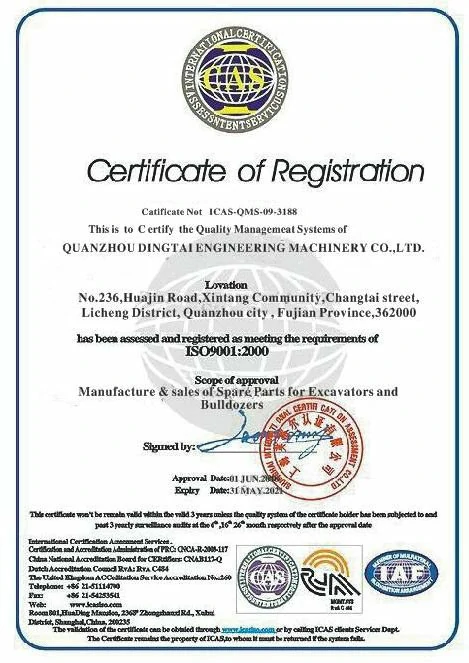
  • Certifications: At a minimum, require the supplier to operate under an ISO 9001 certified quality management system. This shows they have repeatable processes.
  • Technical Benchmarks: This is where you use the data from your specification sheet. Reference it directly.
  • Examples of Measurable Standards:
        "All track rollers must have a surface hardness of HRC 52-58."
       
    "All track shoe material must be 25MnB steel with a hardness of HRC 48-52."
        * "All welds must be 100% free of cracks or porosity."

H3: Inspection and Acceptance Criteria

You must have the right to check the goods. Do not pay the final balance until after you have inspected the parts.

  • Inspection Period: The contract must give you a set amount of time. I find 7-10 business days after the goods arrive at your warehouse is fair.
  • What to Check: Your contract should state you will inspect for:
        1.  Quantity: Does the packing list match what you received?
        2.  Appearance: Are there any visible cracks, deformations, or shipping damage?
        3.  Specifications: Do the part numbers and key dimensions match your specification sheet?
  • Rejection Process: How do you report a problem? The contract must say: "Buyer must notify Seller in writing (email with photos) of any non-conformity within the 10-day inspection period. If no notice is sent, the goods are deemed accepted."
  • Third-Party Testing: For large orders, add this: "Buyer reserves the right to send random samples to an independent laboratory for testing. If parts fail to meet the standards in Appendix A, Seller shall bear the full cost of the testing and the replacement of the non-conforming goods."

H3: Crafting a Strong Warranty Clause

The warranty is your protection after acceptance.

  • Specific Duration: Do not accept a "lifetime" warranty. It is a gimmick. Be specific. A typical standard is:
        Track Rollers, Idlers, Sprockets: 2000 working hours or 12 months, whichever comes first.
       
    Track Chains / Shoes: 1500 working hours or 6-12 months.
  • What It Covers: The clause must state it covers "defects in materials and workmanship."
  • What It Excludes: It is fair to exclude "normal wear and tear, improper installation, operator error, or damage from accidents."
  • The Remedy: This is the most important part. What happens if a part fails? "If a part fails during the warranty period due to a manufacturing defect, Seller shall provide a new replacement part. Seller shall also bear the sea freight cost for the replacement part to the Buyer's designated port."

Table 2: Quality & Warranty Clause Checklist

Clause Section Key Point to Include Example Wording
Quality Standard Measurable Metrics "All parts must meet ISO 9001 standards. Track roller hardness must be HRC 52-58."
Inspection Timeframe "Buyer has 10 business days after delivery for visual and quantity inspection."
Acceptance Rejection Process "Notice of non-conformity must be sent in writing with photo evidence."
Warranty Period Specific Duration "2000 hours or 12 months from Bill of Lading date, whichever comes first."
Warranty Scope Coverage "Covers manufacturing defects only. Excludes improper installation."
Warranty Remedy Supplier's Duty "Supplier shall provide free replacement part (CIF Buyer's Port) within 30 days."

What clauses should I include for late delivery penalties?

Your supplier is late. Again. Your machines are idle, and your customers are angry. Without a penalty clause, you have no leverage. You just have to wait.

You must include a 'Liquidated Damages' clause for late delivery. This clause should specify a daily or weekly penalty, usually a percentage of the late goods' value, capped at a maximum. This is not a punishment, but fair compensation.

Illustrated construction site with excavators, cranes, and workers wearing safety gear

As a manufacturer, I understand that production sometimes has delays. But as a business partner, I also understand that my delivery date is a promise. For a buyer like David, who runs a distribution business, a delay from me causes a chain reaction of failures for his customers.

A delivery date in a contract without a penalty is not a deadline. It is a suggestion. A penalty clause, often called "Liquidated Damages," is the only way to make the date meaningful. It shows that the supplier takes your schedule seriously.

H3: Why It Is Called "Liquidated Damages"

This term is important. It is not legally a "penalty." A penalty is designed to punish. Liquidated damages are designed to compensate the buyer for their probable losses (like downtime, lost sales) without having to prove the exact amount in court. This makes it much easier to enforce.

H3: How to Structure the Clause

This clause must be very clear and simple.

1.  Define the Delivery Date: Be specific. "The Seller must ship the goods on or before [November 30, 2025]." Or "The delivery date shall be 45 days after the Seller's receipt of the advance payment."
2.  Define the Penalty: This is the core. "In the event of a delay in shipment caused by the Seller, the Seller shall pay liquidated damages to the Buyer."
3.  Set the Rate: The rate should be a percentage of the delayed goods' value, not the whole contract. A common rate is 0.5% (zero point five percent) per day of delay.
4.  Set the Cap: A fair contract has a maximum cap. This protects the supplier from a penalty that is larger than the contract itself. A common cap is 10% of the total contract value.

Here is a full example:

"If the Seller fails to ship the goods by the agreed delivery date, the Seller shall pay the Buyer liquidated damages at a rate of 0.5% of the value of the delayed goods for each day of delay. The total liquidated damages shall not exceed 10% of the total contract value. This amount may be deducted by the Buyer from any payments due to the Seller."

H3: The Right to Cancel

What if the delay is too long? The penalty clause should also give you an "escape."

Add this sentence:

"If the delay exceeds 15 (fifteen) calendar days, the Buyer shall have the right to terminate this contract and demand a full refund of any advance payment made."

This is your ultimate protection. It prevents you from being stuck waiting forever.

H3: The "Force Majeure" Exception

A good supplier will ask for a "Force Majeure" or "Act of God" clause. This is fair. This clause excuses the supplier from delays caused by events outside their control.

  • What it includes: Major earthquakes, floods, wars, government-mandated pandemic lockdowns.
  • What it should NOT include: "Raw material price increases," "shortage of labor," or "factory equipment breakdown." These are normal business risks that the supplier must manage, not you.

The clause must require the supplier to give you immediate written notice (e.g., within 3 days) with proof of the event.


Is it important to specify the governing law and dispute resolution method?

No one likes to think about problems. But what if there's a serious disagreement? You are in the US, your supplier is in China. Who fixes it?

Yes, this is one of the most critical clauses in an international contract. It defines which country's laws apply and how you will solve a dispute. Ignoring this is extremely risky and can make your contract unenforceable.

Executives negotiating cross-border deal, Chinese flag and scales on table

When you are buying domestically, this is simple. But in global trade, this is a major risk. If you have a serious problem—for example, the supplier refuses to honor the warranty on a $100,000 order—what do you do?

If your contract is silent, you are in a legal nightmare. Can you sue them in your home country? Yes, but the judgment is likely worthless. A US court's order cannot be easily enforced in China. Can you sue them in their country? Yes, but it is extremely slow, expensive, and you will be operating in a foreign legal system.

This clause saves you from that chaos. It provides a clear, pre-agreed path to solve the problem.

H3: Governing Law: Whose Rules Apply?

This clause states which country's laws will be used to interpret the contract.

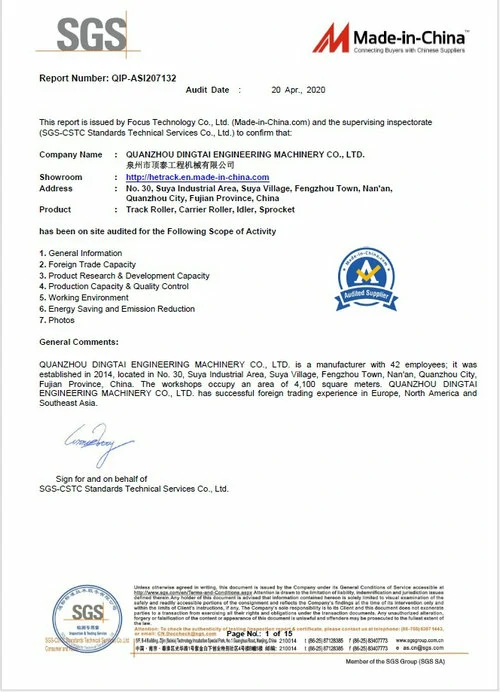
  • Supplier's Country (e.g., China): This is most common when buying from China. As a reputable supplier, we (Dingtai) are comfortable with this because we know the law and are confident in our products.
  • Buyer's Country (e.g., USA): This is often difficult for a supplier to accept, as they are unfamiliar with your laws.
  • Neutral Third Country (e.g., Singapore, Switzerland): This is a good compromise, but can be complex.
  • CISG: A better option is often to choose the UN Convention on Contracts for the International Sale of Goods (CISG) 9. Both the US and China have signed this treaty. It is a balanced set of rules designed specifically for international trade.

H3: Dispute Resolution: Court vs. Arbitration

This is even more important than Governing Law. This defines how you will argue. You have two main choices:

1.  Litigation (Court): This is a bad idea. As mentioned, suing in court internationally is slow, public, and judgments are very hard to enforce.
2.  Arbitration: This is the correct choice for international trade.

Arbitration is a private trial. Both sides agree on an expert (an arbitrator) or a panel to hear the case and make a final, binding decision.

Why is it better? Because of the New York Convention 10. This is a global treaty (signed by the US, China, and 160+ other countries) that says all member countries must enforce the arbitration award.

This means a binding arbitration award from China is easily enforced in US courts, and an award from the US is enforceable in Chinese courts. It has real power.

H3: How to Write the Clause

Your clause must be very specific. Do not be vague.

"This contract shall be governed by the UN Convention on Contracts for the International Sale of Goods (CISG). Any dispute arising from this contract shall be submitted to the China International Economic and Trade Arbitration Commission (CIETAC) in [Shanghai/Beijing] for arbitration, which shall be conducted in accordance with its rules. The arbitration award shall be final and binding on both parties."

Other good, neutral arbitration bodies include the Singapore International Arbitration Centre (SIAC) or the Hong Kong International Arbitration Centre (HKIAC).

Table 3: Dispute Resolution Comparison

Method Speed Cost Enforceability (Int'l) Privacy
Litigation (Court) Very Slow (Years) Very High Very Poor Public
Arbitration (e.g., CIETAC/SIAC) Fast (Months) High (but < Court) Excellent (NY Convention) Private
Mediation Very Fast (Days) Low Low (Not binding) Private

Conclusion

A detailed contract is not about mistrust. It is about clarity. These clauses create a clear, professional relationship. This protects you and ensures you get the parts you paid for.


Footnotes  

1. Overview of international commerce laws and practices in global trade. ↩︎  
2. Guide to creating a detailed technical specification sheet for manufacturing. ↩︎  
3. Explanation of track link pitch and its importance for undercarriage compatibility. ↩︎  
4. What an Original Equipment Manufacturer (OEM) part number signifies. ↩︎  
5. Properties and applications of High-Manganese Steel in heavy machinery. ↩︎  
6. Common heat treatment processes used to harden steel components. ↩︎  
7. Legal definition and consequences of a material breach of contract. ↩︎  
8. What the ISO 9001 certification means for quality management systems. ↩︎  
9. Details on the CISG, a uniform treaty for international sales contracts. ↩︎  
10. How the New York Convention ensures enforcement of arbitration awards. ↩︎

Free Quote & Information Request

Leave your inquiry, we will provide you with quality products and services!

Excavator & Bulldozer Undercarriage Parts Expert - Quality Track Roller, Carrier Roller, Sprocket Wheel
Privacy Overview

This website uses cookies so that we can provide you with the best user experience possible. Cookie information is stored in your browser and performs functions such as recognising you when you return to our website and helping our team to understand which sections of the website you find most interesting and useful.