Tired of sudden price hikes and stock-outs for undercarriage parts? A long-term contract seems smart. But what is the real cost of that stability?
As a manufacturer, I see clients use long-term contracts to lock in prices and secure supply. The main benefit is stability. The primary risk is losing flexibility if the market changes or the supplier fails to perform as promised.
Locking in a deal for excavator parts feels secure, but it is a major commitment. Let's break down exactly what you gain, what you risk, and how to protect your business.
Can a long-term contract help me secure more stable pricing and supply?
Budgeting for parts is impossible when prices jump every quarter. You need reliable costs and delivery schedules. How does a contract solve this?
Yes, this is the main reason I recommend them. A contract defines your price for 12 or 24 months. It also reserves your production capacity. This protects you from raw material spikes and supply chain delays.
These two points—price and supply—are the core benefits of any long-term agreement.
Securing Your Budget Against Market Volatility
The market for parts like track chains, rollers, and sprockets is tied to raw materials. Steel is the biggest factor. When steel prices are volatile 1, my costs change. A supplier who is not a manufacturer has even less control. They are just passing along increases from the factory.
A long-term contract stops this. You agree on a fixed price for a set period, usually one year.
This helps you in two ways:
1. Predictable Budgeting: You know exactly what your parts will cost for the next 12 months. You can budget your operational expenses or set your own resale prices without fear.
2. Protection from Shocks: If there is a sudden raw material spikes 2 or a new shipping crisis, your price is locked. Your competitors who buy on the spot market will face massive cost increases, but your budget is safe.
As a manufacturer, I can offer this because your commitment allows me to buy my raw materials in advance, locking in my cost. It is a shared stability.
The risk, of course, is the market moving the other way. If steel prices crash, you might be "stuck" paying a higher price than the spot market. You are essentially trading the chance of a lower price for protection against a higher price.
Guaranteeing Supply Chain Priority
Price is only half the problem. A cheap part that you cannot get is useless. Supply chain disruptions 3 can stop your projects or leave your customers (if you are a distributor) angry.
A long-term contract is a formal reservation of production capacity.
When global demand spikes, factories like mine get hundreds of orders. Who gets parts first?
1. Contract Customers: I have a legal obligation to fulfill these orders first.
2. Spot Market Customers: They get whatever capacity is left over.
This means a contract protects you from downtime. It ensures that even when the market is tight, your parts are being made and shipped. This is critical for businesses that rely on equipment uptime.
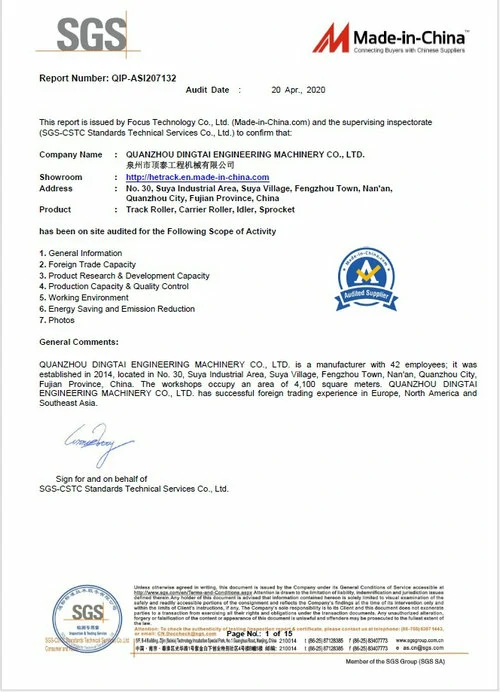
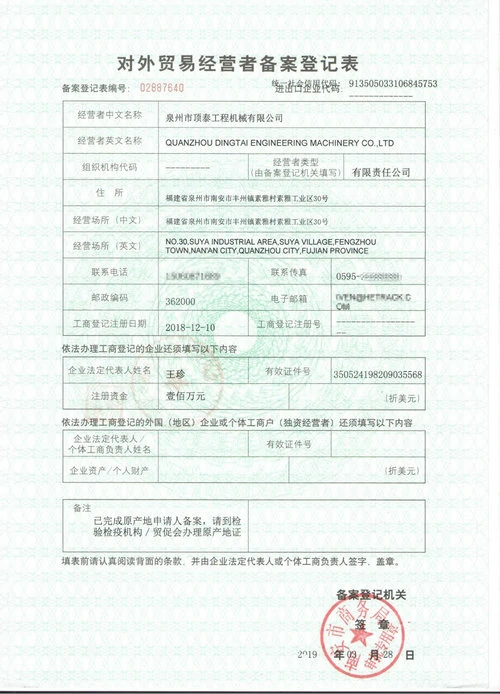
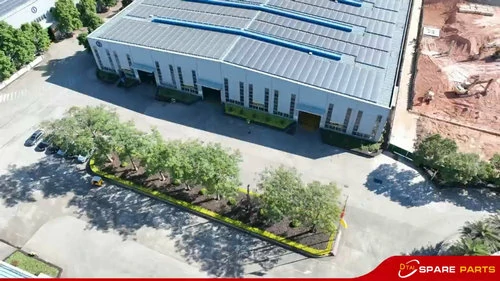
This security only works if your supplier is a stable, reliable manufacturer (like us at Dingtai) and not just a middleman. A trading company cannot guarantee production capacity they do not own.
Here is a simple comparison:
Table 1: Price & Supply Comparison
| Feature | Spot Market Buying | Long-Term Contract |
|---|---|---|
| Pricing | Volatile; changes weekly/monthly. | Fixed for the contract term (e.g., 1 year). |
| Budgeting | Difficult; unpredictable costs. | Easy; predictable forecasting. |
| Supply | First-come, first-served. Risk of stock-outs. | Guaranteed priority production/delivery. |
| Risk | High risk of sudden price spikes. | Risk of overpaying if market prices fall. |
What are the risks if the supplier's quality or performance declines over time?
You signed a contract based on a great sample. But six months later, the track rollers are failing early. You are locked in, and your reputation is suffering.
This is a huge risk. I have seen buyers get trapped. Complacency sets in, and the supplier may cut corners on materials or heat treatment. Without clear quality terms, you have little power to stop it.
This is, in my experience, the biggest fear for technical purchasing managers like David. You are not just buying a part; you are buying that supplier's consistency.
The "Quality Fade" Problem
This is a real issue in our industry. A supplier sends a perfect first batch to win the contract. These parts meet all the technical specifications for steel hardness 4 and dimensions.
But on the fifth, or tenth, or twentieth batch, things change.
- They might use a slightly cheaper grade of steel.
- They might shorten the heat treatment 5 time by a few minutes to save energy.
- Their quality control (QC) process becomes rushed.
These small changes are invisible. But they result in a part that fails at 800 hours instead of 1,500 hours.
If you are a distributor, your customers will blame you. Your brand and reputation are damaged. If you are an end-user, your equipment downtime and maintenance costs 6 skyrocket. This is a common pain point.
Performance Decline: Deliveries and Service
The risk is not just in the product. It is in the service.
- Deliveries: The first few shipments are perfectly on time. Then, shipment 4 is a week late. Shipment 6 is three weeks late. The supplier blames port congestion or national holidays 7. But the real reason is often poor planning. They may have taken on too many new customers and are failing to manage their capacity.
- Communication: When you won the contract, their sales and technical teams answered you in hours. Now, when you have a problem, it takes days to get a reply.
Supplier Failure
This is the worst-case scenario. The supplier has production problems, financial trouble, or even goes bankrupt. Your contract is now worthless. Your supply chain is completely broken. You are left scrambling to find a new supplier, probably paying high spot-market prices.
This is why vetting the supplier before signing is so important. You must look for:
- Experience: How long have they been in business? (We at Dingtai have over 20 years).
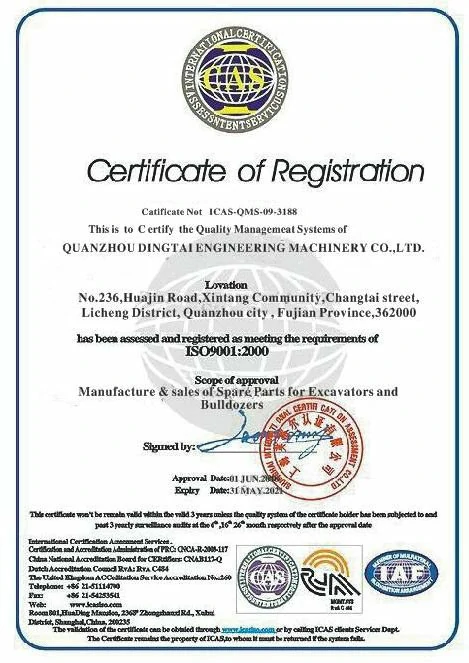
- Certifications: Do they have ISO9001 8? This proves they have a documented, repeatable quality management system.
- In-House Control: Are they a true manufacturer who controls the entire process, from forging to heat treatment to assembly? Or do they outsource critical steps?
A good supplier with a strong reputation has too much to lose by cutting corners.
How can I build flexibility into the agreement, such as clauses for price reviews or performance evaluations?
A rigid contract is a trap. The market changes, your needs change. How do you sign a deal that protects you but does not chain you?
I always advise my long-term partners on this. You must include specific clauses. We build in performance KPIs, bi-annual price reviews, and clear exit clauses. A good contract is a living document, not a rigid cage.
You should never sign a long, rigid contract. A smart contract protects both sides. Here are the key clauses you must include.
H3: Price Review Clauses
A fixed price for 3 years is dangerous for everyone. If steel prices double, the supplier might go bankrupt trying to honor it. If steel prices crash, the buyer will be angry and feel trapped.
The solution is a Price Review Clause.
- Method 1 (Index-Based): Link the part price to a public commodity index 9 (like a specific steel index). The price automatically adjusts up or down based on that index. This is very fair, but complex.
- Method 2 (Periodic Review): This is more common. The price is fixed for 12 months. After 12 months, you agree to review it based on current market conditions. This gives you a full year of stability, but a chance to renegotiate if the market has dramatically changed.
H3: Performance Evaluations (KPIs)
Do not use vague terms like "good quality." Define it. The contract must have clear Key Performance Indicators (KPIs) 10. This transforms your expectations from a "hope" into a "requirement."
A good supplier will not be afraid of this. We welcome it, as it shows we are confident in our process.
Here is a sample table of what this looks like.
Table 2: Sample Contract KPIs
| Metric | Target | Consequence if Missed (Example) |
|---|---|---|
| On-Time Delivery | 98% of orders ship on or before agreed date. | Supplier pays for expedited air freight. |
| Quality Acceptance Rate | 99.5% of parts pass initial inspection. | Supplier pays for return shipping + replacement. |
| Field Defect Rate | < 0.5% failure within 12-month warranty. | Full warranty replacement + formal root cause analysis. |
| Support Response Time | Technical/Support query answered < 24 hours. | Formal review if missed 3+ times in a quarter. |
H3: Volume Flexibility
What happens if your business slows down? Or if it booms? A rigid contract that forces you to buy 1,000 units is a risk.
Build in a Volume Range Clause. Instead of "Buyer agrees to purchase 1,000 units per quarter," use:
"Buyer agrees to purchase a minimum of 800 units and a maximum of 1,200 units per quarter, with a firm order placed 60 days in advance."
This gives you a 20% flexibility window to adapt to your own market needs, while still giving the supplier a clear range to plan production.
H3: Exit and Termination Clauses
This is your escape hatch. What if the supplier fails to meet the KPIs?
- Cure Period: The contract should state that if a supplier fails a KPI (e.g., quality rate drops), they have a "cure period" (like 30 or 60 days) to fix the problem.
- Termination for Cause: If they fail to fix the problem within that period, you have the right to terminate the contract for cause. This lets you walk away without penalty.
Without these clauses, a contract is not a partnership; it is a prison.
What level of commitment is required from my side in a long-term contract?
You want security, but you are afraid of being locked in. What does the supplier really expect from you in this kind of partnership?
Your main commitment is volume. I base my raw material orders and production schedule on your forecast. I need you to commit to a minimum purchase volume. This mutual commitment is what makes the partnership work.
This is a critical point. A contract is a two-way street. The supplier gives you stable pricing and priority. In return, the buyer must provide commitment.
H3: The Minimum Purchase Volume
This is the most important commitment you make. You are not just forecasting sales; you are committing to a purchase.
This is the "skin in the game" that allows me, the manufacturer, to take on the risk of buying raw materials and dedicating production time just for you.
The risk for you is clear: if your sales drop unexpectedly, you are still obligated to buy the parts you committed to. This can lead to overstocking and cash flow problems. This is why the Volume Range Clause we discussed earlier is so important. It helps you manage this risk.
H3: The Information Commitment (Forecasting)
To be a true partner, you must commit to sharing information. I need your rolling forecast.
- What do you think you will need in 6 months?
- What about 9 months?
This forecast is not a firm order. But it is essential for my long-range planning. It allows me to order raw materials that have a 4-month lead time. If you do not provide good forecasts, I cannot guarantee your supply, even with a contract.
H3: The Customization Commitment
If you ask us (Dingtai) to develop a custom part for you—a special sprocket or a unique track roller for a specific application—the commitment level increases.
- Our Investment: We will invest time, R&D resources, and money to create new tooling and molds just for you.
- Your Commitment: In return, we need a firm commitment that you will purchase a certain volume of that custom part. We cannot afford to build a $10,000 mold that is never used.
This is the highest level of partnership. It moves beyond a simple buyer-supplier relationship and becomes a collaborative development process.
Table 3: Mutual Commitments in a Long-Term Contract
| Party | Key Commitment | Why it Matters (The "Give" and "Get") |
|---|---|---|
| Buyer (You) | Minimum Purchase Volume | GIVE: A bankable order. GET: Locked-in price and priority. |
| Buyer (You) | Timely Forecasts | GIVE: Market intelligence. GET: Better supply chain preparation. |
| Buyer (You) | Prompt Payment | GIVE: Reliable cash flow. GET: A healthy, stable supplier. |
| Supplier (Us) | Fixed Pricing | GIVE: Budget stability. GET: The buyer's volume commitment. |
| Supplier (Us) | Guaranteed Capacity | GIVE: Supply security. GET: The buyer's volume commitment. |
| Supplier (Us) | Quality Standards (KPIs) | GIVE: Product reliability. GET: The buyer's long-term trust. |
This mutual commitment is what creates true dependency. This is a risk, but it is also the source of the greatest benefits. It forces you to choose your partners very, very carefully.
Conclusion
A long-term contract is a powerful tool for stability. It balances the benefit of secure pricing and supply against the risk of inflexibility. Success depends entirely on the contract's terms and the partner you choose.
Footnotes
1. View live steel price indexes and market volatility reports. ↩︎
2. Analysis of recent trends in industrial raw material prices. ↩︎
3. Strategies for managing and mitigating supply chain disruptions. ↩︎
4. A guide to understanding steel hardness testing and specifications. ↩︎
5. Learn about the importance of heat treatment for steel durability. ↩︎
6. How to calculate the true cost of equipment downtime. ↩︎
7. Read reports on global shipping port congestion and delays. ↩︎
8. Learn what the ISO 9001 quality management certification means. ↩︎
9. See examples of public commodity indexes for industrial materials. ↩︎
10. A guide to setting effective supplier Key Performance Indicators (KPIs). ↩︎