Buying excavator parts from China seems complex. You worry that [cultural misunderstandings](https://www.google.com/search?q=cultural misunderstandings) 1 could ruin a good deal. As someone who bridges this gap every day, I can tell you that understanding the culture is key.
Yes, significant cultural differences exist when buying excavator parts from China. These include the high value placed on "guanxi" (relationships), an indirect communication style to "save face," a focus on long-term partnerships, and distinct negotiation tactics.
These differences are not just interesting facts. They directly impact your final price, the quality of your parts, and the reliability of your supplier. I have worked in this industry for over 20 years, helping partners like David Miller from the US navigate this.
Let me break down what you really need to know, from my perspective as a Chinese manufacturer.
How important is relationship-building ("guanxi") when doing business in China?
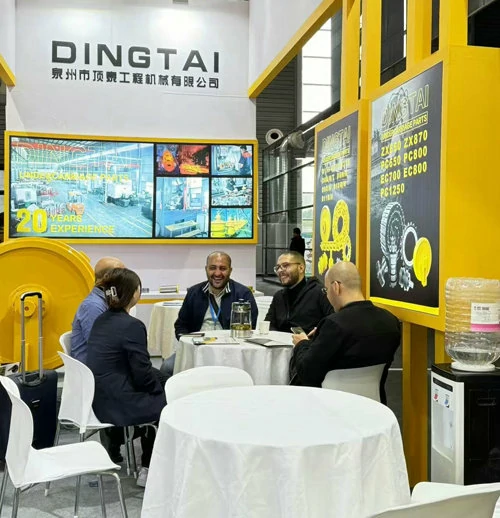
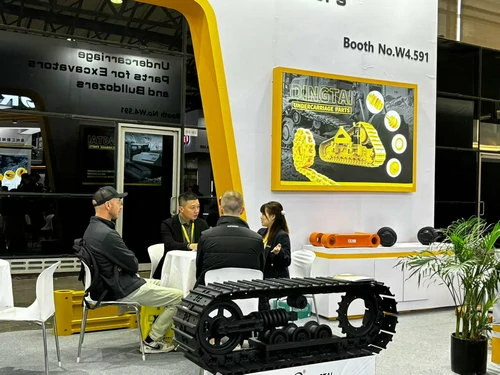
You just want to buy [track rollers](https://www.google.com/search?q=track rollers) 2, but the supplier wants to talk about your family and your market. It can feel slow and unnecessary. I've learned that for my customers, building this "guanxi" is their most valuable asset.
Relationship-building, or "guanxi," is extremely important in Chinese business. It is the foundation of trust, often valued more than the clauses in a contract. A strong guanxi can lead to better pricing, more reliable service, and priority support.
In my experience, "guanxi" is more than just networking. It is a deep, [long-term bond](https://www.google.com/search?q=long-term bond) 3 of mutual trust and obligation. In the West, you might build trust after a few successful deals. In China, we prefer to build trust before the deal.
This is why, in my initial talks with a new potential partner, I don't just focus on the order details. I follow a principle I teach my team: talk about quality requirements and future cooperation. I ask about their business, their customers, and their challenges. This shows I am serious about a long-term partnership, not just a [one-time sale](https://www.google.com/search?q=one-time sale) 4. This is how I build trust.
When a customer like David has a problem, his strong relationship with us means he doesn't just send a complaint. He calls me directly. This relates to another key point: when problems happen, we "solve the problem first and talk responsibility later." My partners with good guanxi call me to fix the issue, not to assign blame. We work together. This is the Chinese way, and it protects my customer's business.
For a purchasing director like David, this is critical. His old suppliers might have sales reps who don't understand the product. But because we have built good guanxi, he has a direct line to me and my [technical team](https://www.google.com/search?q=technical team) 5. He gets answers fast.
Guanxi vs. Western Networking
| Feature | Western Networking | Chinese Guanxi |
|---|---|---|
| Primary Goal | Transactional; gain contacts or info for a specific goal. | Relational; build a long-term, trusted bond. |
| Timeframe | Short-term; can be built quickly. | Long-term; built slowly over many interactions. |
| Basis | Mutual professional interest. | Mutual trust, loyalty, and personal obligation. |
| In Business | "The contract is everything." | "The relationship is everything." |
Building this relationship from the first email sets the stage for everything else.
What is the typical negotiation style I can expect?
Perhaps you've tried your usual [hard-ball negotiation tactics](https://www.google.com/search?q=hard-ball negotiation tactics) 6, and they are failing. You are not getting a better price, and the supplier seems offended. I had to learn to explain this to my Western partners: we have a different way to negotiate.
The Chinese negotiation style is often indirect and focused on long-term, mutual benefits rather than a short-term win. Expect multiple rounds of discussion, a focus on the total relationship, and a strong desire to avoid direct confrontation.
The most important concept to understand here is "saving face" (Mianzi). This means not causing embarrassment to yourself or others. If you aggressively tell a supplier their price is "too high" or their quality is "bad," they will [lose face](https://www.google.com/search?q=lose face) 7. This can damage the relationship and make them resistant to helping you.
I always advise my customers against this. Instead of saying, "Your price is 20% too high," I suggest a different approach. It is much better to say, "I am very committed to a long-term partnership. For this partnership to work, my budget requires a price closer to X. Can we work together to find a solution?"
This approach shows respect and a long-term view. I am much more willing to give a better price to a long-term partner than to someone who pressures me for a one-time discount. This also avoids a major risk: if a supplier feels squeezed too hard, they might be tempted to [cut corners on quality](https://www.google.com/search?q=cut corners on quality) 8. I never do this at Dingtai, but it is a risk in the market.
This respect for "face" is also why [clear specifications](https://www.google.com/search?q=clear specifications) 9 are part of the negotiation. A client like David, who has a strong technical background, knows this. He sends detailed requirements:
- Material: e.g., 40MnB
- Hardness: e.g., HRC 52-58
- Case Depth: e.g., 8-12mm
When a buyer provides this level of detail, it shows respect for our manufacturing process. It avoids ambiguity. A common problem is when a buyer has a vague spec. The factory might default to a lower "industry standard" to meet the price. This leads to a mismatch in expectations. By being clear, you protect yourself and show you are a professional. This makes the negotiation much smoother.
Negotiation Style Comparison
| Tactic | Typical Western Style | Typical Chinese Style |
|---|---|---|
| Goal | Win the deal; get the best price now. | Build a relationship; create long-term value. |
| Communication | Direct, explicit, "Yes" or "No." | Indirect, high-context, "Maybe" or "We will study it." |
| Price | Often the first and main focus. | Discussed after trust and scope are established. |
| Conflict | Confrontational; "bottom line" is stated. | Harmonious; avoids direct "No," seeks compromise. |
| Result | A signed contract. | A mutual understanding and a long-term bond. |
Are there any specific customs related to meetings, meals, or gift-giving?
You are invited to a big dinner with the factory owner, and you are not sure what to do. You worry you might accidentally offend your host. It's a common feeling, so let me share my experience with [business hospitality](https://www.google.com/search?q=business hospitality) 10.
Yes, specific customs are very important. Meetings follow a hierarchy, with the most senior person leading. Business meals are a key part of relationship-building, not just social events. Gift-giving is common but should be modest and culturally appropriate.
For many of my partners, these social parts of the business are the most confusing. But they are where the deepest "guanxi" is built. When I host a client like David, the factory tour is for business, but the dinner is for our partnership.
H3: Business Meetings
First, punctuality is a sign of respect. Always be on time. When you enter the room, greet the most senior person from the Chinese side first. There is a clear hierarchy.
Exchanging business cards is a formal ritual.
1. Have your card ready, preferably with one side translated into Chinese.
2. Present your card with two hands.
3. Receive their card with two hands.
4. Do not just put it in your pocket. Take a moment to read it. This shows you respect their position.
H3: The Business Banquet
This is the most important part of building "guanxi."
- The Host: Your supplier (the host) will order all the food and will absolutely pay the bill. Do not try to fight for it. This would make them lose face. You can reciprocate by hosting a meal later.
- Toasting: There will be many toasts. This is a sign of respect and welcome. The host will toast you, and you should toast them. If someone toasts you, it is polite to stand and raise your glass. "Ganbei" means "dry glass," but you are not always required to drink the whole glass, especially if it's strong alcohol.
- Eating: Try a little of everything. This shows you are open and respectful of their culture.
H3: Gift-Giving
Giving a gift is a common gesture of goodwill.
- What to give: A good gift is something from your home country or city. A bottle of wine, a high-quality pen, or a craft item is perfect.
- What to avoid: Do not give clocks, sharp items (like knives), or anything in sets of four (which sounds like "death"). White or black wrapping paper is also for funerals. Red is the best color.
- How to give: Present and receive gifts with two hands. Your host will likely refuse the gift politely two or three times. This is custom. You should insist politely, and they will then accept.
How can I show respect and build a strong, long-term partnership?
You have followed the rules, but the relationship still feels stuck at a transactional level. You are still just an order number. I've found that true respect goes beyond just being polite or giving a gift.
Show respect by being patient, demonstrating your long-term commitment, and communicating clearly and politely. Acknowledge their expertise, provide timely feedback, and handle all disagreements diplomatically to "save face" for both parties.
This is where everything comes together. Building a real partnership, like the ones I have with my best clients, is about showing respect in your actions.
H3: Patience and a Long-Term View
I tell my team that one big order from a new client is good. But a loyal partner like David, who orders consistently for 10 years, is the foundation of our business. We build that loyalty by showing we are also in it for the long haul. When you negotiate, as I mentioned, focus on the "long-term cooperation" price. This shows you are a partner, not a one-time buyer.
H3: Communication (Respect and Clarity)
This is perhaps the most important way to show respect.
1. Use Polite Titles: It seems small, but it matters. When a client calls me "Manager Lin" (if that was my title) or "Ms. Linda" instead of just "Linda" in an email, it shows they understand and respect our business culture. In turn, my team addresses our clients as "Mr. David."
2. Be Clear (Technical Respect): As a manufacturer, nothing is more respectful than a clear technical drawing. A buyer who provides vague specs creates problems for us. A client like David, who sends detailed drawings and material data, gets our immediate respect. It shows he is a professional and respects our work.
3. Give Timely Feedback: This is a huge sign of respect. When my team at Dingtai sends samples or production videos, silence is very worrying. A simple reply like, "Thank you, the samples look correct, please proceed," is perfect. Or, "Please check this one detail on the roller." This feedback shows you are engaged and value our time. It helps us serve you better.
Key Do's and Don'ts for Building Partnerships
| Do... | Don't... |
|---|---|
| Do invest time in small talk and relationship-building. | Don't rush straight to business in every conversation. |
| Do provide clear, detailed technical specifications. | Don't assume the supplier knows what you want. |
| Do give timely and constructive feedback on samples. | Don't go silent. "No feedback" is confusing. |
| Do handle problems calmly and focus on solutions. | Don't use accusatory language or assign blame publicly. |
| Do show a clear long-term purchasing plan. | Don't focus only on getting the lowest price for one order. |
| Do use polite titles (Mr., Ms., Manager). | Don't be overly casual or familiar too quickly. |
The ultimate test of a partnership is handling problems. When a partner has an issue, they don't send an angry email. They call me and say, "Linda, we have a challenge. How can our two companies fix this?" And then, we fix it together. That is a real, strong partnership.
Conclusion
Buying undercarriage parts in China is truly about building relationships, not just completing transactions. Understand these cultural keys, and you will build strong, reliable partnerships that last. My team at Dingtai is built on this very principle.
Footnotes
1. Guide on avoiding common cross-cultural business misunderstandings. ↩︎
2. Technical specifications and types of excavator track rollers. ↩︎
3. How to build long-term bonds in international trade. ↩︎
4. Strategies for moving from one-time sales to partnerships. ↩︎
5. Importance of access to a supplier's technical team. ↩︎
6. Alternatives to hard-ball negotiation tactics in Asia. ↩︎
7. Understanding the concept of "losing face" in business. ↩︎
8. The risks of suppliers cutting corners on quality. ↩︎
9. How to write clear specifications for manufacturers. ↩︎
10. Guide to Chinese business hospitality and etiquette. ↩︎