How can I judge the English skills of a sales team for undercarriage parts for excavators?

  Engineer reviewing CAD blueprints for excavator and drivetrain gears

I've seen buyers get frustrated by language barriers 1. They order a part, but poor communication means the wrong item arrives. As a supplier, I know clear English is essential for preventing these costly mistakes.

To judge the English skills of an undercarriage parts sales team, you must evaluate both their technical accuracy and their communication fluency. This involves checking their terminology in emails, listening to their comprehension on calls, and reviewing their written documents for clarity.

But you don't need to be a language expert to do this. You can start assessing their skills from the very first interaction. Let's break down exactly what I look for.


Can I gauge their proficiency during our initial email exchanges and video calls?

You send a detailed email asking for a quote. The reply is confusing or misses key points. This wastes your time. I believe the first contact reveals almost everything you need to know.

Yes, initial emails and video calls are the best tools to gauge proficiency. In emails, look for clear grammar, professional tone, and the correct use of technical terms. In video calls, listen for their ability to understand your questions and provide fluent, logical answers without hesitation.

Manager video conferencing with warehouse engineer about operations

My customers, especially experienced purchasing directors 2 from the US or Europe, are experts. They don't have time to "translate" a salesperson's confusing email. When I train my own team, I stress that the first email is a test.

What to Look for in Emails

The first reply is critical. I'm not looking for perfect, academic English. I'm looking for clarity.

  • Responsiveness: Did they answer all your questions? Or just the easy ones? If I ask for specs, price, and lead time, I expect three clear answers.
  • Precision: This is very important. If a buyer asks for the "bulk order delivery time," a good salesperson replies with that exact phrase or a clear answer like, "The lead time for a bulk order 3 is 30 days." A poor one might just say "shipping is fast." This is a vague and unhelpful reply.
  • Grammar and Typos: A few small mistakes are fine. We are not all native speakers. But if the email is full of errors, it shows a lack of care. It also makes me worry that their technical documents or shipping papers will have similar errors.

I often tell my team: "Imagine the buyer is reading this. They are busy. Make it simple. Make it clear. Check your work before you send."

What to Listen for in Video Calls

Video calls test a different skill: real-time comprehension 4.

My American and European customers often have specific accents or speak quickly. Can the salesperson keep up?

Here is a simple test I recommend:

1.  Ask a specific technical question. Use a part number or model. For example, "I need track shoes for a Komatsu PC200."
2.  Listen to the reply. Do they pause for a long time? Do they ask you to "repeat again" many times? A short pause to think is normal. A long, confused silence is a red flag.
3.  Do they confirm? A great salesperson will repeat the key information back to you. "Okay, track shoes for a Komatsu PC200. Got it. How many units do you need?" This shows they understood you correctly.

If they just say "yes, yes" to everything, I get nervous. This often means they did not understand but are afraid to say so. I would much rather someone say, "Could you please spell that model number?" than just guess.

Here is a simple checklist I use.

Email & Call Checklist Criteria Red Flag (Bad English) Green Flag (Good English)
Email Clarity Vague answers; many grammar errors. Answers every question directly.
Email Terms Uses general words ("metal part"). Uses precise terms ("track roller," "idler").
Call Comprehension Asks to repeat every sentence. Understands accents and technical terms.
Call Fluency Long, confused pauses; very slow. Speaks smoothly, even if simply.

How important is it that their technical team can understand my detailed engineering questions?

You have a custom job. You need to discuss material hardness and heat treatment 5. If the salesperson cannot translate this, your project is dead. I have seen this happen.

It is extremely important. The technical team's understanding is the difference between receiving the correct custom part and a failed project. If they cannot understand precise engineering terms, they cannot manufacture your component to the correct material specifications or tolerances.

Virtual training with industrial safety engineer in factory meeting room

This is the core of my business. We are a factory. We make OEM parts 6. If our engineers misunderstand a technical specification, the entire production run can be wrong. This is where I see the biggest gap between good and bad suppliers.

A salesperson is a bridge. They must carry information from the buyer to our engineers. If that bridge is weak, the information falls.

The Danger of "Lost in Translation"

I remember a case years ago, before I had strict language checks. A customer asked for a part with specific "load-bearing parameters." The salesperson did not understand this technical phrase. They just passed along the standard part drawing to the factory. The customer received a part that failed under their specific, heavy-duty application.

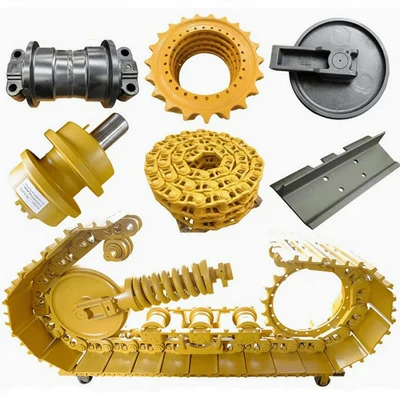
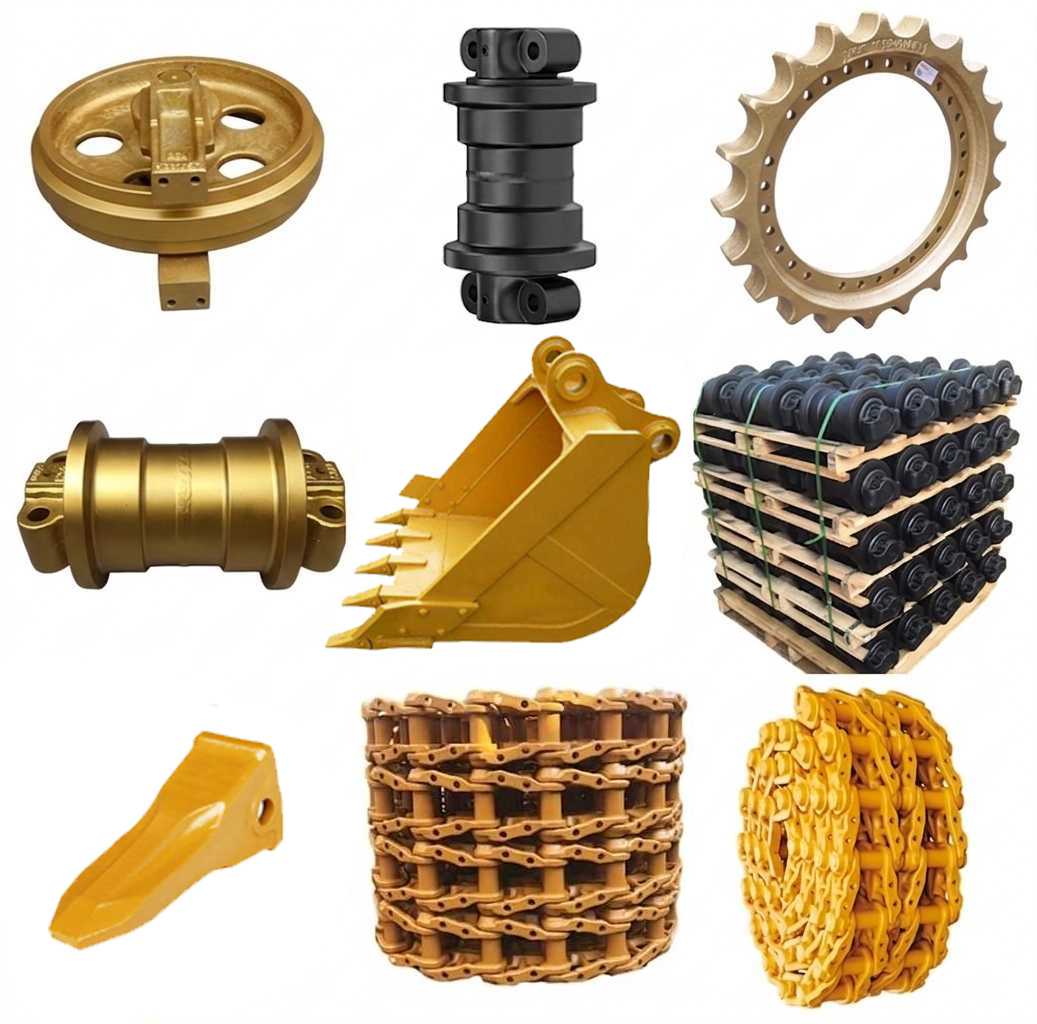
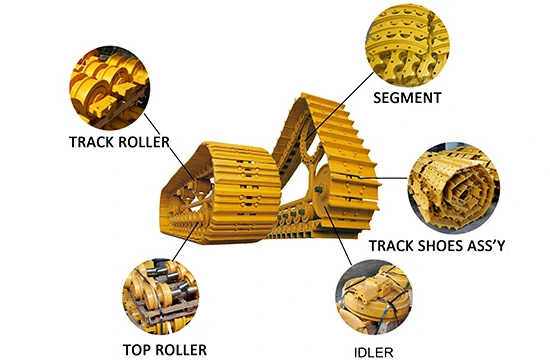
This is why I have a golden rule: A salesperson must know the difference between a "carrier roller" (支重轮) and an "idler" (引导轮). They sound similar. They are both wheels. But they have completely different functions and specifications.

If a buyer asks, "What are the load-bearing parameters of your carrier roller?" the salesperson must be able to:
1.  Understand the question instantly.
2.  Ask our engineer the correct question.
3.  Translate the engineer's technical answer back to the buyer clearly.

If they confuse "carrier roller" with "idler," the data they give you is wrong and useless.

Check Their Documents

How can you test this before you buy? Ask for their technical documents.

I always provide my serious buyers with quality reports 7, material specifications, and heat treatment data. I make sure my team translates these perfectly.

When you get a report from a new supplier, look at the English.

  • Are the terms correct? Look for key phrases like "load-bearing capacity" or "material standard."
  • Is it clear? Or is it a bad computer translation?
  • Are the units and numbers clear and correct?

If the technical documents are messy and full of bad English, how can you trust their manufacturing process? It shows a lack of attention to detail. This is a major red flag for any technical buyer.

Technical Terminology: Pass or Fail? Technical Question Bad Salesperson's Answer Good Salesperson's Answer
"What is the heat treatment process?" "Yes, it is very strong." "Our process is quenching and tempering, reaching a surface hardness of HRC 52-58."
"Can I see the material standard?" "It is good metal." "Yes, we use 40MnB steel. I will send the material composition report."
"I need this for a Komatsu PC200." "Okay, I will check." (and never confirms) "For the PC200. Understood. Is that the standard model or the LC model?"

What are the risks if their English is not clear enough to discuss complex issues?

The parts arrive late. You ask why. The supplier gives you a vague, confusing answer. Now you cannot plan your inventory. This is a real risk I work hard to avoid for my clients.

The risks are significant. Poor English leads to incorrect orders, shipping delays, and huge problems with after-sales support. If they cannot clearly explain a production delay or understand a warranty claim, your business will lose time and money.

Logistics manager reviewing documents at container port under stormy skies

This is where a small language problem becomes a big business disaster. Many buyers focus on the "sales" part. I focus on the "problem" part. What happens when something goes wrong?

In my 20+ years in this business, I know that problems will happen. A shipment gets stuck at port. A raw material is delayed. A global event shuts down shipping.

This is where logical problem-solving in English becomes critical.

When Problems Happen

Imagine your order is late. You email the supplier.

  • A bad supplier (with poor English) might say: "Sorry, have problem. Wait." This tells you nothing. You get angry. You cannot plan.
  • A good supplier (with clear English) will say: "There is a 3-day logistics delay 8 at the port. The ship is waiting. We expect it to leave on Friday. Here is the new ETA. We have also made a production adjustment for your next order to ship early."

Do you see the difference? The good supplier uses precise terms ("logistics delay," "production adjustment"). They explain the problem, the reason, and the solution. I can trust them. I can plan my business.

If a salesperson cannot explain a simple delay logically, how can they handle a complex warranty claim 9?

The Cost of Negotiation

This also applies to negotiations. Experienced buyers are professionals. They want to discuss terms quickly and fairly.

I have seen negotiations fail because of language.

  • A buyer asks for a "purchase discount" for a large volume.
  • The salesperson does not understand "discount" vs. "rebate."
  • The buyer asks about "payment terms," like Net 30 10.
  • The salesperson only knows "pay now."

If you constantly have to "repeat again," the negotiation stalls. It feels unprofessional. It wastes time. A good salesperson can discuss money and terms just as clearly as they discuss product specs. They do not have to be a perfect speaker, but they must be a clear communicator. This builds trust, which is the foundation of B2B.


Should I be concerned if I am always communicating through a single salesperson?

Your salesperson is great. But then they go on vacation, or they quit. Suddenly, nobody at the company knows who you are. This is a huge risk, and I structure my team to prevent it.

Yes, this can be a significant concern. While a single point of contact is efficient, it creates a risk. If that person leaves or is unavailable, your orders and technical history can be lost. A professional supplier should have a support team or manager who also knows your account.

Executive office desk with documents, telephone, and chair in modern industrial workspace

This is a very smart question. It is about supplier stability, not just language. My best customers know this pain. They have been burned before.

A single salesperson can be great. They know your history. They understand your needs. It is efficient.

But what happens when that single person is the only one at the company who speaks good English?

The "Single Point of Failure"

This is a term from engineering, and it applies perfectly here. If your entire relationship depends on one person, you have a "single point of failure."

I have heard stories from customers who had a great salesperson. Then that person quit. The new salesperson spoke poor English and had no idea about their past orders. The buyer had to start from zero. They had to re-explain all their technical needs and quality standards.

This is a major pain point. It costs the buyer time and money. It also shows the supplier company is not well-managed.

How a Good Supplier Handles This

At my company, we learned this lesson. We provide a dedicated salesperson, of course. But we also ensure there is a system.

1.  A Support Team: My salespeople have assistants or technical support staff. These people are often CC'd on important emails. They also speak English. If the main salesperson is sick, the support person can step in.
2.  A Shared System (CRM): All your technical details, past orders, and special requirements are in our company system. Any salesperson or manager can access it.
3.  Introduce the Manager: I often introduce my sales manager to my key accounts. The manager's English is also very good. This gives the customer a second person to contact in an emergency.

So, how can you test this?

  • Ask: "Who is your manager?" or "Who is your backup if you are on vacation?"
  • Observe: Are other people ever CC'd on your emails?
  • Request: "Can you please CC your technical lead on our next email? I have a complex question."

A good supplier will be happy to do this. A weak supplier (who is hiding their lack of English depth) will make excuses.

Supplier Communication Structure Feature High-Risk Supplier Low-Risk Supplier (My Model)
Contact Only one salesperson speaks English. Salesperson, technical support, and manager speak English.
Knowledge All info is in the salesperson's head. All info is in a central company system.
Absence If the salesperson is sick, all communication stops. A backup contact or manager can reply.
Risk High risk of losing all history if salesperson quits. Low risk; the relationship is with the company.

Conclusion

In my experience, judging a sales team's English is simple. It is not about perfect grammar. It is about clarity, technical accuracy, and reliability. These are the clues that show you have found a true partner.


Footnotes

1. Strategies for overcoming language barriers in international business. ↩︎
2. Key responsibilities and expectations of purchasing directors. ↩︎
3. Understanding the logistics and terms of bulk order fulfillment. ↩︎
4. The importance of real-time comprehension in client video calls. ↩︎
5. A technical explanation of heat treatment processes for steel parts. ↩︎
6. Learn the definition and standards for Original Equipment Manufacturer (OEM) parts. ↩︎
7. How companies use quality reports to ensure product standards. ↩︎
8. Common causes of logistics delays in global supply chains. ↩︎
9. Best practices for managing and processing B2B warranty claims. ↩︎
10. Definition of Net 30 payment terms in B2B transactions. ↩︎

Free Quote & Information Request

Leave your inquiry, we will provide you with quality products and services!

Excavator & Bulldozer Undercarriage Parts Expert - Quality Track Roller, Carrier Roller, Sprocket Wheel
Privacy Overview

This website uses cookies so that we can provide you with the best user experience possible. Cookie information is stored in your browser and performs functions such as recognising you when you return to our website and helping our team to understand which sections of the website you find most interesting and useful.