When dealing with suppliers of undercarriage parts for excavators, what is the most effective communication method?

  Laptop video meeting in manufacturing facility, gears and tablet on engineering desk

Your excavator is down. You need undercarriage parts, but your supplier is silent or sends the wrong thing. I know this frustration. It costs you time and money.

In my 20 years at Dingtai, I’ve found the best method isn't one tool, but a clear system. It combines formal email for records, instant messaging for speed, and video calls for complex technical problems. This mix builds trust and ensures accuracy.

Getting this mix right is the difference between a smooth supply chain and a constant headache. As a purchasing director, you know this. Let's break down which tool to use and when.


Is email the best method for formal communication like purchase orders and contracts?

You send a purchase order (PO) and hope for the best. But later, there is a dispute about the specifications or price. This confusion can stop your entire operation.

Yes, for formal documents, I always tell my clients that email is essential. It creates a permanent, searchable record for purchase orders, technical specifications, contracts, and warranty claims. This written trail protects both you, the buyer, and us, the manufacturer.

Operations manager analyzing financial spreadsheet on desktop computer

Email is the foundation of a professional B2B relationship. This is what our long-term partners, like a purchasing director at a large US distributor, appreciate most. They need a "paper trail" for their records and to ensure accountability.

But just using email is not enough. The way you use it matters more.

What Makes a "Good" Formal Email?

A bad email is vague. A good email is specific. When a client emails me, "I need parts for a CAT 320," my technical team cannot help. We must email back and ask more questions. This wastes time.

A good, formal email for a PO or inquiry should always include:

  • Exact Machine Model: For example, Caterpillar 320D or Komatsu PC200-8.
  • Part Numbers: The OEM part number is best.
  • Quantity: Be specific. "100 pieces," not "a few boxes."
  • Technical Drawings: If you have them, especially for custom or OEM work, attach them.
  • Machine Serial Number: This can help us double-check the exact part version.

Confirm All Details in Writing

This is where many problems start. A price is discussed on the phone, but the email is not clear. I always train my sales team to confirm everything in the email. This avoids all future arguments.

Your PO email and our Order Confirmation email should be a perfect match. They should both clearly state the agreed-upon details.

Table 1: Example PO Confirmation Details

Category Details to Confirm in Email Why It's Important
Product Part Name (e.g., Track Roller), Model (CAT 320D), OEM Part No. This prevents us from sending the wrong part.
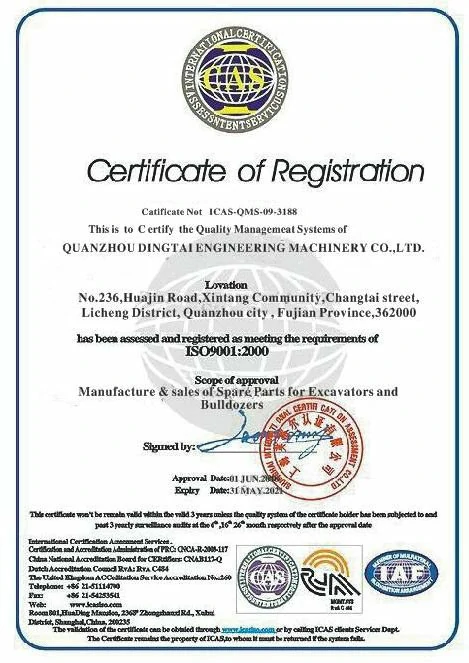
Quality Material (e.g., 40Mn2 steel), Hardness (HRC 50-55), Warranty (e.g., 2000 hours) This aligns our quality expectations. As an ISO9001-certified 2 3 factory, we provide reports to confirm this.
Price Unit Price ($XX.XX), Total Price ($XXXX.XX) This locks in the price.
Terms Incoterms (e.g., FOB Xiamen), Payment (e.g., 30% T/T deposit, 70% balance) This prevents disputes about shipping costs or payment timing.

The Limit of Email

Email is perfect for records, but it is slow. You send an email from the US on your Monday afternoon. It arrives in China on our Tuesday morning. We reply on our Tuesday afternoon. You get it on your Tuesday morning. This 24-hour lag is normal.

For an urgent "machine down" situation, waiting 24 hours for an answer is not acceptable. This is why email is only part of the solution. It is the base, not the whole building.


How can WeChat be used for quick, informal questions and progress updates?

You wonder, "Did my order ship?" or "Did you receive the drawing?" Sending an email feels too slow. You need a fast, simple answer right now.

I use messaging apps like WeChat 4 5 (or WhatsApp) every day. They are perfect for quick, informal checks. I send my clients production photos, shipping container loading videos, or answer simple questions like "What is the status?" in seconds.

Gloved technician using mobile maintenance app on factory floor

In China, WeChat is the most common tool. For my clients in North America or Europe, we often use WhatsApp 6 7. The tool does not matter. The principle is the same: real-time, informal communication.

This instant connection helps build trust. You are not just dealing with a faceless company; you are talking to me, Linda.

Best Uses for Instant Messaging

I find these apps work best for:

  • Quick Status Updates: A client can message me, "Linda, any update on PO 90045?" I can walk to the production line, take a photo of his track rollers being heat-treated, and send it. This builds amazing trust. He sees his parts. He doesn't have to wait 24 hours for a formal email reply.
  • Simple Questions: "What is the CBM (cubic meter) of this shipment?" or "Can you confirm you received my deposit?"
  • Sharing Media: Sending a short video of a part, a photo of a shipping label, or a screenshot of a tracking number is instant. This is much faster than email.

The Dangers of Instant Messaging

While it's fast, it is a very bad place for formal agreements. This is where big mistakes happen.

  • It Is Not a Record: Messages get lost. A price we agreed on in a WeChat chat is very hard to find six months later during an audit.
  • It Can Be Confusing: A long, complex technical discussion in a chat is messy. It's easy to miss details or for information to get buried.

My rule is simple: Chat for speed, email for record.

If we agree on something important in WeChat (like a change in quantity), I always tell my client, "Great. I will send a formal email to you to confirm this right now." This combines the speed of chat with the safety of email.

Table 2: When to Use Email vs. WeChat/WhatsApp

Communication Type Use Email? Use WeChat/WhatsApp? Why?
Sending a Purchase Order Yes (Must) No Needs a formal record and detailed specs.
Asking for a price list Yes Maybe Email is better to track the official quote.
"Did my order ship?" Yes (Slow) Yes (Fast) A quick, informal status check.
"Here is a photo of production." Yes Yes (Better) Instant, visual, and builds trust.
Discussing a warranty claim Yes (Must) Yes (for photos) The formal claim must be in email for records.
"Can we change Qty on PO 90045?" Yes (Must) Yes (to start) Start on chat, but must confirm in email.

When is it appropriate to schedule a phone or video call, considering the time difference?

You have a complex technical problem. A part isn't fitting, or you are getting a strange wear pattern. Emailing back and forth is slow and frustrating.

I schedule a video call when an issue is urgent or complex. When a client has a technical question or a quality concern, a 15-minute video call where he can show me the part is worth 50 emails.

Virtual meeting with construction engineer, blueprint interface background

This is how we solve a major pain point for buyers. Many buyers complain that supplier sales teams do not understand technology. When a client has a technical problem, I don't try to answer it alone. I schedule a video call and I bring my engineer. The client can talk directly to the technical expert.

The Power of "Seeing" the Problem

A picture is worth a thousand words. A video call is worth a million.

A client once emailed me, "Your idler is wrong." This is too vague. I scheduled a video call. He walked out to his workshop with his phone. He showed me our idler next to his machine's mounting bracket. My engineer, who was on the call with me, saw the issue in 30 seconds. The client was trying to install a part for a 320D onto a 320C. They are different.

Without the video call, this would have taken days of angry emails and photos. We solved it in 10 minutes.

Use video calls for:

  • Technical Support: Discussing wear patterns, installation problems, or material specs.
  • Urgent Issues: A shipment is stuck, a part failed prematurely, or there is a payment problem.
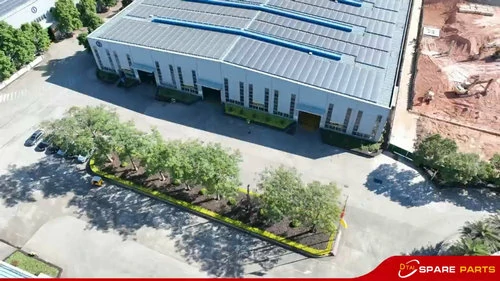
  • Building Trust: Especially for a new client. A face-to-face video call helps build a real relationship. They see me, Linda, and my office. They know we are a real, professional factory (Dingtai 8 9) with 20+ years of experience.

How to Manage Time Differences

This is the biggest challenge. I am in Fujian, China. My client may be in the USA. That's a 12 or 13-hour time difference.

  • Be Flexible: A good supplier must be flexible. We must find a time that works. Often, this is my evening (8:00 PM China time) and his morning (8:00 AM US time).
  • Schedule in Advance: Don't just "call." Send an email or WeChat message: "Can we have a 15-minute video call tomorrow at 8:00 AM your time (8:00 PM my time) to discuss PO 90045?"
  • Prepare an Agenda: A call without a plan is a waste of time. Make a short list of 1-3 things to solve.

Table 3: Communication Channel Effectiveness

Task Email WeChat/IM Video Call
Speed Slow (24h lag) Instant Fast (Scheduled)
Record Keeping Excellent Poor Poor (unless recorded)
Solving Complex Issues Poor Poor Excellent
Building Relationships Low Medium High
Best For... POs, Contracts, Specs Quick updates, Photos Technical problems, Urgent issues

How can I ensure all important communications are documented in writing?

You had a phone call and agreed on a price. Six months later, the supplier sends an invoice for a different amount. You have no proof. This is a buyer's nightmare.

This is my most important rule. After any phone call or video chat where we make a decision, I immediately send an email. This email summarizes "what we discussed and what we agreed on." This email becomes the official record.

Industrial executive on phone working at laptop by gear window

This simple habit ties everything together. It combines the speed of chat and video calls with the safety of email. It is the core of effective, professional communication.

This directly addresses the pain points of inconsistent quality and poor after-sales service. Good records solve these problems.

The "Email of Record" Strategy

This is the system. It's a simple, two-step process.

Step 1: Discuss. Use the fastest tool for the job. Have a video call with me and my engineer to solve a technical problem. Use WeChat to agree on a faster shipping method.

Step 2: Document. The moment the call ends, one person (I usually do it to show good service) sends an email.

Subject: Summary of our call on Nov 5 - PO 90045 Shipping

Body: "Hi David,

Great talking to you. As we just discussed on our video call:

1.  You need the 120 track rollers urgently.
2.  We agreed to upgrade your shipment from sea freight to air freight.
3.  The extra air freight cost is $1,200, which you approved.

Please reply 'Confirmed' to this email. Once I receive your confirmation, I will instruct my shipping team to proceed."

Now, you have a permanent record. There is no confusion. There is no argument six months later. This prevents so many problems.

Why This Matters for Quality

Good documentation starts before you even place the order. This is how you avoid "inconsistent quality" from a supplier.

When you start sourcing from us at Dingtai, we do an early technical review 10 11.
1.  You send us your inquiry (PO, drawings).
2.  We review it and may schedule a video call with our engineers to confirm all details.
3.  We confirm the material (e.g., 40Mn2 steel), the heat treatment process, and the hardness (e.g., HRC 50-55).
4.  We put all these technical details in writing in our official Quotation and Order Confirmation email.

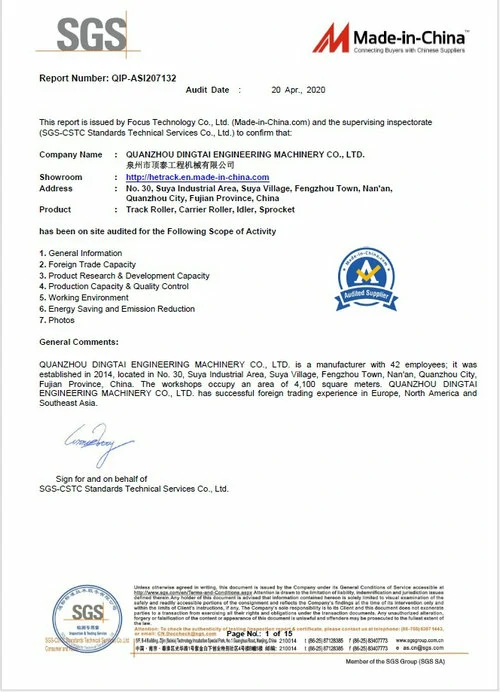
When you receive the parts, they come with our 100% quality inspection report. This report (which is ISO9001 2 12 and SGS 13 14 certified) matches the specs we agreed to in the email.

This is accountability. This is how you build a reliable, long-term supply chain.

Conclusion

The best communication is not one tool. It is a system. Use email for records, chat for speed, and video for complex problems. This clarity builds the strongest supplier partnerships.


Footnotes

1. Learn how ISO 9001 ensures consistent quality standards. ↩︎ 12  
2. Guide to using WeChat for effective business communication. ↩︎ 15  
3. Explore WhatsApp features for business communication. ↩︎ 16  
4. Discover more about Dingtai's expertise in undercarriage parts. ↩︎ 17  
5. Understanding early technical reviews in procurement. ↩︎ 18  
6. Role of SGS certification in quality assurance. ↩︎ 19  
7. How instant messaging interfaces enhance supplier responsiveness. ↩︎ 20  
8. Importance of video conferencing in solving technical issues. ↩︎ 21  
9. Benefits of maintaining detailed communication records for accountability. ↩︎ 22  
10. Key strategies to ensure effective supplier communication. ↩︎ 23

Free Quote & Information Request

Leave your inquiry, we will provide you with quality products and services!

Excavator & Bulldozer Undercarriage Parts Expert - Quality Track Roller, Carrier Roller, Sprocket Wheel
Privacy Overview

This website uses cookies so that we can provide you with the best user experience possible. Cookie information is stored in your browser and performs functions such as recognising you when you return to our website and helping our team to understand which sections of the website you find most interesting and useful.