Your excavator is down. You've sent a complaint email about a failed part, but the supplier is silent. As a manufacturer, I know this delay costs you real money and hard-earned trust.
In my 20 years of experience, a good manufacturing partner (like my team at Dingtai) will respond within 24 hours. However, the industry average varies wildly. Simple issues might be fast, but complex claims, especially with smaller suppliers or traders, can take 3-5 days just for an initial reply.
That first reply is just the start. The real test of a supplier is what happens next. How do they handle the problem? You need to know what questions to ask before you have a problem.
Can I ask them about their standard procedure for logging and resolving customer issues?
You found a supplier, but you are not sure how they handle problems. What if your track roller fails on a critical job? As a buyer, I always ask about the process first.
Yes, you absolutely must ask. I tell my clients, like David, to ask this early. A professional supplier will welcome this question. They should be able to clearly explain their Standard Operating Procedure (SOP) for logging, tracking, and resolving every single issue.
You should not just ask "Do you have a procedure?" That is a simple yes/no question. You need to ask specific, open-ended questions. A good supplier, especially a manufacturer, is not afraid of details. They are prepared for these questions.
What to Ask About Their Complaint Procedure
Here are the exact questions I recommend you ask during the vetting process:
1. Logging: "When I have a problem, what is the exact channel to report it? Is it a web portal, a specific email address, or do I call my sales rep?"
2. Tracking: "Once I report the issue, how is it tracked? Will I receive a ticket number or a case number?"
3. Acknowledgement: "What is your standard time to acknowledge that you have received my complaint?"
4. Triage: "Who reviews the complaint first? Is it a salesperson or a technical engineer?"
5. Resolution: "What are the standard steps for resolution? Do you require photos? Do you need the part shipped back? What is the timeline for a technical analysis?"
Red Flags vs. Green Flags in Their Answer
The quality of their answer tells you everything. As an experienced purchasing director, you know the difference between a confident answer and a weak one.
| Response Type | Red Flag 🚩 (Weak Supplier) | Green Flag ✅ (Strong Partner) |
|---|---|---|
| Who to Contact | "Oh, just email your sales rep. He'll handle it." | "You will email our dedicated after-sales team at [email]. This creates a ticket." |
| Process | "We will look into it and get back to you." | "You will get a ticket number in 1 hour. A technical expert will reply within 24 hours." |
| Attitude | "We rarely get complaints, our quality is perfect." | "We have a formal process. Here is the document that outlines all the steps." |
A vague answer is a major red flag. If they say, "just email sales," be careful. That sales rep might be busy, on vacation, or no longer with the company. A sales rep's job is to sell, not to manage complex technical claims.
A "green flag" answer shows structure. It shows they have a system.
Why a Standard Procedure Matters (ISO9001)
In the B2B world, we are not buying a single item. We are building a supply chain. You, as a distributor, have your own customers to answer to. If your supplier is disorganized, it makes you look disorganized.
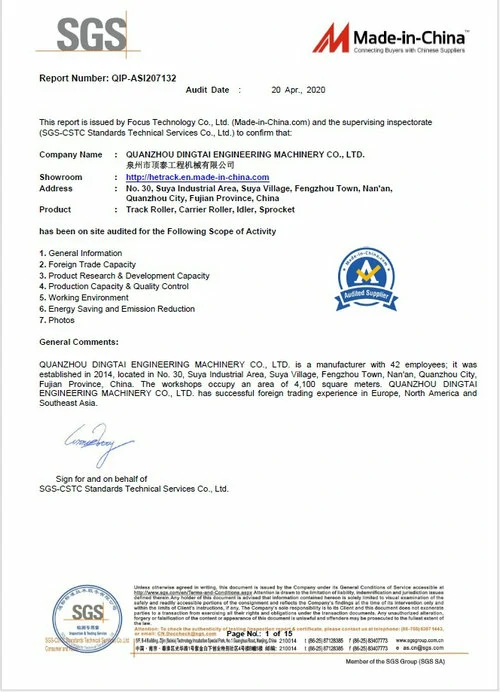
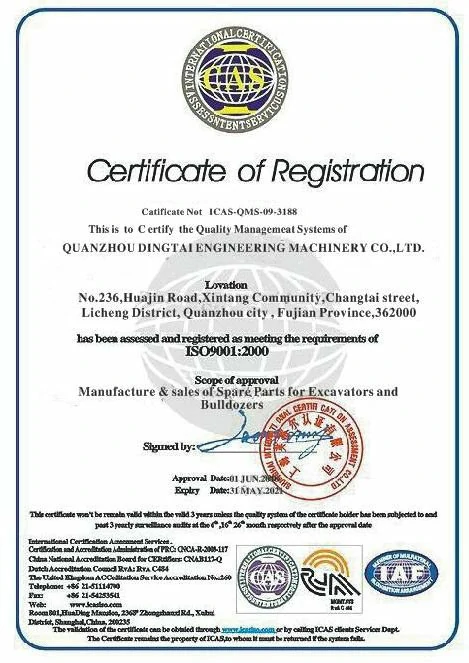
A clear procedure ensures consistency. This is a key part of ISO9001 certification 1, which we (Dingtai) hold. The ISO9001 framework requires a formal process for handling "non-conforming products," which includes customer complaints. It mandates root cause analysis 2. This isn't just paperwork. It means the supplier must prove they investigated why the part failed, not just send a new one. This prevents the same problem from happening again.
When I talk to a buyer, I explain that our system logs the complaint, triggers a technical review, and generates a "Corrective Action Report" (CAR) 3. This CAR is shared with production. This is the difference between a simple trader and a true manufacturing partner.
Do they have a dedicated person or department for after-sales service?
Your salesperson was great when you placed the order. But now you have a warranty claim. I've seen it happen: the salesperson is gone, and nobody in the company knows your order history or your technical needs.
This is a critical question. In my experience, the best suppliers, especially manufacturers like us, have a dedicated team. It might be called "After-Sales Support," "Quality Assurance (QA)," or "Technical Service." This separation from sales is key for unbiased and efficient problem-solving.
When a problem is handled by the same salesperson who made the sale, their main goal might be to protect their commission or relationship. This can create a conflict of interest. A dedicated after-sales team has only one goal: to solve the problem according to company policy.
The Role of Sales vs. The Role of After-Sales
A salesperson's main job is to understand your business needs and close a deal. An after-sales technician's main job is to analyze failures and solve technical problems. These are very different skills. When I (Linda) talk to buyers like David, I explain that our sales team works with our technical team.
Here is a simple breakdown:
| Role | Sales Team | After-Sales Team (Technical) |
|---|---|---|
| Primary Goal | Build relationship, make the sale. | Analyze the problem, find the root cause, resolve the claim. |
| Expertise | Product features, pricing, logistics. | Metallurgy, wear patterns, failure analysis, engineering. |
| Key Question | "What do you need to buy?" | "Why did this part fail?" |
What a Dedicated Team Does
A dedicated department does more than just answer complaint emails. They are the quality hub for the entire factory.
- Technical Analysis: They have engineers (we have over 20) who understand metallurgy, heat treatment, and wear patterns 4. They can look at a photo of a broken track link and ask the right questions about the work conditions.
- Data Logging: They track all complaints. This data is vital. If they see 10 complaints about the same part from different customers, they alert the factory. This drives continuous improvement 5.
- Process Management: They manage the return, repair, or replacement. They work with logistics to ship the new part. They work with finance to issue credit if needed.
- Clear Communication: They provide regular updates. You are not left wondering what is happening.
The International Factor
For an international buyer like David, this is even more important. A salesperson might not understand the complexities of international warranty shipping. A dedicated after-sales team works with the logistics department. They know how to prepare customs documents 6 for a "warranty replacement" to avoid extra duties. They understand time zones 7. Our team at Dingtai, for example, makes sure to have schedule overlap with European and North American business hours. A salesperson is focused on the next sale. An after-sales team is focused on your current problem. This focus is what solves problems quickly.
How can I gauge their commitment to customer satisfaction before I place a large order?
Every sales brochure says "Customer First." Every supplier says they have great service. But I know from 20 years in this business, talk is cheap. You only find out the truth after you pay them thousands and a part fails.
I always tell potential partners: test us. Ask for our warranty policy in writing. Ask us for technical data, like material reports or heat treatment data. A supplier who hides this information is not committed to your satisfaction. Their transparency is their commitment.
Before you place a large PO, you need to run a few tests. Their response to these tests will tell you everything you need to know about their future service.
Ask for the Warranty Policy (And Read It)
This is the most basic test. Do not accept "we have a warranty." Ask for the actual document. Then, read the fine print.
- What is the warranty period 8? (e.g., 2000 hours / 12 months)
- What exactly does it cover? (Manufacturing defects? Normal wear?)
- What does it not cover? (Improper installation? Operation in extreme conditions?)
- What is the claim process? (This links back to our first point).
- What is the remedy? (Replacement part? Credit? Refund?)
A supplier who is proud of their quality (like Dingtai) will have this document ready to send in 5 minutes. A supplier who is not will make excuses or send you a vague, one-paragraph email.
Test Their Technical Knowledge
This is a great test for a technical buyer like David. Ask a hard question.
- Weak Question: "Is your track roller good?" (Answer is always "Yes")
- Strong Question: "What material do you use for your track roller body? What is the heat treatment depth and hardness (HRC) 9?"
A salesperson might not know the answer. That is okay. But their response is the test.
- Bad Response: "It's very high quality. Don't worry."
- Good Response: "That is an excellent technical question. I will get our chief engineer to send you the technical data sheet 10 for that part number right now."
This shows they have technical staff and are willing to share data.
Look for Certifications and Quality Control
Certifications like ISO9001 are a starting point. They prove a system is in place. But go deeper. Ask about their actual quality control (QC) steps.
| QC Level | What It Is | What It Means |
|---|---|---|
| Spot Check | Check 1 part for every 100 made. | Low commitment. High risk of a bad part slipping through. |
| Batch Check | Check materials at the start of a production run. | Better, but doesn't check every final part. |
| 100% Inspection | Every single part is checked before packing. | High commitment. We (Dingtai) do this. It is expensive, but it is customer satisfaction. |
We are proud of our 100% inspection. Ask your supplier if they do this or just random "spot checks." The answer reveals their true commitment to quality.
Use a "Trial Order"
Another powerful way to gauge commitment is the "trial order." Before you place a 500-piece order, place a 10-piece order. Pay close attention. Was the technical data correct? Was the packaging robust? Did it arrive on time?
Most importantly, see how they treat you. Do they give you the same attention as a large-volume buyer? I make it a policy at Dingtai to treat a 10-piece trial order with the same seriousness as a 10-container order. This shows respect. It shows we are confident that our quality will bring you back. If a supplier is lazy or slow with your small order, they will be a disaster with your large one.
Are there any customer testimonials or reviews that mention their after-sales support?
It's easy to find testimonials about "Great price!" or "Fast shipping." But as a professional buyer, I look for different stories. I want to know what happened when the order was wrong.
This is smart. I always check this too. Specific reviews about problem-solving are more valuable than 100 reviews about "fast shipping." Look for phrases like "had an issue," "warranty claim," or "technical support," and see how the supplier responded.
A supplier's true character is not shown when things go right. It is shown when things go wrong. Your goal is to find evidence of their character before you are in a crisis.
Where to Look for B2B Reviews
B2B reviews are different from consumer reviews. You won't find them on Amazon.
- Supplier's Website: This is a start, but they are all positive. Look for case studies. A good case study will not just be praise. It will describe a specific problem (e.g., "Client needed custom parts for highly abrasive conditions") and the solution.
- Alibaba/Global Sources: If they have a store, look at their profile. They often have ratings and sometimes comments, but these are often tied to the shipping experience, not long-term quality.
- Industry Forums: This is where you find the real, unfiltered opinions. Search forums for heavy equipment operators or mechanics. They will name names.
- Ask for References: This is the most powerful tool. Ask the supplier, "Can I speak to one of your current customers in the US (or my region)?" A confident supplier will say yes.
How to "Read" a Testimonial
Don't just read the words. Read between the words. A weak testimonial is generic.
- Weak Testimonial: "Great supplier. Good products. - John D." (This tells you nothing.)
- Strong Testimonial: "We had a critical failure on a D9 dozer. We contacted [Supplier Name] at 5 PM. Their technical team was on a call with us by 8 AM the next day. They helped us identify the problem (it was actually our installation error) but still helped us find a solution and got a new part shipped in 48 hours. They saved our project."
The strong testimonial gives details. It mentions a problem and the supplier's response. This is gold. This is what I (Linda) strive to get from my partners.
What to Ask the Reference
When you call that reference, don't just ask "Are they good?" Ask specific questions, just like you asked the supplier.
- "Have you ever had a warranty claim or technical issue with them?"
- "If yes, how was it handled? How long did the initial response take?"
- "How long did the final resolution take?"
- "Who was your point of contact? A salesperson or a technical expert?"
- "Was the final resolution fair?"
Be very wary of a supplier who has no references or only perfect, generic reviews. This is a red flag. In 20+ years of manufacturing, I can tell you: problems happen. Steel has hidden flaws. Shipping containers get dropped. The best manufacturer in the world will have a problem eventually. The difference is how they handle it. A supplier with no bad stories is either new, lying, or hiding them.
Conclusion
Don't wait for a breakdown to learn about your supplier's service. Ask these hard questions now. A good partner, like Dingtai, will have all the right answers.
Footnotes
1. Details on the ISO 9001 standard for quality management systems. ↩︎
2. A guide to understanding the root cause analysis process in quality control. ↩︎
3. Explanation of what a Corrective Action Report (CAR) includes. ↩︎
4. Learn about material science and failure analysis in industrial components. ↩︎
5. Principles of the continuous improvement (CI) model in business operations. ↩︎
6. Guide to essential customs documents required for international shipping. ↩︎
7. A global map to understand and coordinate across different time zones. ↩︎
8. Definition of a warranty period and what it typically covers. ↩︎
9. Basics of hardness testing (like HRC) for metal components. ↩︎
10. What a technical data sheet (TDS) is and why it's important. ↩︎