Should I request an official written warranty policy for undercarriage parts for excavators before I order?

  Office supplies and engineering tools on desk

Buying parts overseas feels risky. What if they fail early? A verbal promise won't help you then. I always tell my clients: get the warranty in writing 1.

Yes, absolutely. As a 20-year manufacturer, I insist on it. An official written policy is your proof. It defines coverage, duration, and the claims process. It protects your investment and holds your supplier accountable. Don't place an order without one.

You might think a good relationship or an email chain is enough. But from my experience, especially with heavy-wear parts 2 like rollers and tracks, ambiguity is the enemy. It leads to arguments and costs you money.

Let's break down exactly why a formal document is so critical for professional buyers 3 like you.

Why is a formal document better than just relying on verbal promises or emails?

A salesperson gives you a quick "yes, it's covered" email. But what does "covered" mean? When a roller fails, you'll find out the hard way. A formal policy prevents these costly surprises.

Verbal promises and emails are forgettable and often unclear. A formal document is a legal contract. It clearly lists all terms, conditions, and exclusions. It’s a stable reference for both of us, ensuring we have the same expectations. It eliminates guesswork and builds real trust.

Tablet showing email, factory worker with gears

In my 20 years in this business, I’ve seen many buyers get burned by relying on a handshake or a casual email. Here’s the problem: people change. The sales rep you trusted might leave the company. A verbal promise disappears with them. An email might be better, but it's often incomplete. Does it mention who pays for freight on a returned part? Does it detail the exact process for filing a claim? Usually, no.

The "Clarity" Gap: Email vs. Policy

When you're managing equipment worth millions 4, "clarity" is not just a nice-to-have; it's essential for your budget. A simple email might say "1-year warranty." But a formal policy defines when that year starts. Is it from the date of shipment? The date of arrival? Or the date of installation? For parts that sit in your inventory, these differences can mean thousands of dollars.

I once had a potential customer—a procurement director in the US 5—who shared a story. He bought a batch of track chains from another supplier. The email said "warranty for manufacturing defects." When several links cracked, the supplier claimed it was "operational stress," not a "manufacturing defect." Because there was no formal definition in a policy, my contact was stuck with the bill. This is the exact problem a formal document solves. It defines the terms.

Legal Protection Across Borders

Let's be direct. I'm in China, and you might be in North America, Europe, or Southeast Asia. We are operating across borders and legal systems. An email chain is weak evidence in a dispute. An official, signed warranty policy 6, especially one attached to your purchase order, is a strong legal document. It shows that both parties reviewed and agreed to the specific terms. It protects you from ambiguity and protects me from unreasonable claims. It's just good, professional business.

Here is a simple comparison of what you get:

Feature Verbal Promise Email Mention Formal Warranty Policy
Clarity Very Low Low to Medium High
Completeness Very Low Low High
Legal Standing Almost None Weak Strong
Defines Exclusions No Rarely Yes
Claims Process No No Yes

When you are responsible for a fleet's uptime 7, you cannot afford this kind of risk. You need a document, not a conversation.

What key clauses should I look for in their official warranty policy?

You finally get the warranty document. It’s 10 pages of dense legal text. If you just skim it, you might miss the one clause that voids your entire warranty. I always tell my partners to check these key sections first.

I tell my clients to focus on five things: the exact duration (like 12 months or 2000 hours), what is covered (parts only?), what is excluded (like normal wear or improper installation), the claims process, and who pays for shipping and labor.

Businessman analyzing documents with tools and helmet

A warranty document is designed to protect both the buyer and the seller. As a manufacturer (Dingtai), we want to stand by our quality. As a buyer, you need to know the limits of that promise. Don't get lost in the legal jargon 8. Look for these specific, practical sections.

1. Warranty Period (Duration)

This seems simple, but the details matter. Does it say:

  • "12 months from shipping date"?
  • "12 months from installation date"?
  • "2000 working hours"?
  • "Whichever comes first"?

For heavy-wear items like undercarriage parts, the "whichever comes first" clause is very common. If you run your machines 24/7, you might use up 2000 hours in just a few months. Be clear on when the clock starts ticking.

2. Scope of Coverage (What is Covered)

This is where a supplier's quality promise is tested. I always make sure our policies are clear. Does the warranty cover:

  • Parts only? This is most common. The supplier sends you a new roller.
  • Labor? This is rare in the parts business. It means they pay for your mechanic's time to swap the part.
  • Freight? Who pays to ship the new part to you? Who pays to ship the broken part back (if they want it for analysis)? This is a key concern for international buyers 9. Look for terms like "FOB" or "CIF" regarding warranty replacements.

3. Key Exclusions (What is NOT Covered)

This is the most important section. This is where you can avoid arguments about "human error" versus "quality issue." A good policy will clearly list what is not covered. Common exclusions include:

  • Normal wear and tear. (Tracks will wear out. A warranty covers premature failure).
  • Improper installation or maintenance.
  • Damage from accidents, misuse, or abuse.
  • Use in applications the part was not designed for (e.g., using a standard part in a severe mining operation).
  • Parts that have been modified or repaired by an unauthorized shop.

If a policy doesn't have this section, be very careful. It means the supplier can decide what's excluded later, which is bad for you.

4. The Claims Process

How do you use the warranty? A good policy outlines the exact steps.
1.  Who do you contact? (Your sales rep? A special email?)
2.  What do you need to provide? (Photos, videos, serial numbers, machine operating hours?)
3.  How long does the supplier have to respond?

A supplier (like us at Dingtai) who has this process mapped out is a supplier who takes after-sales service seriously. This avoids the pain point of a slow or complex claims process.

Here's a quick checklist for your review:

Key Clause What to Ask Why It Matters
Duration When does it start and end? (Months or Hours?) Prevents "expired" surprises.
Coverage Parts only? Labor? Freight? Defines who pays for what.
Exclusions What is NOT covered? (Normal wear? Bad install?) Prevents "it's your fault" arguments.
Process Who do I call? What do I send? Ensures a fast, clear path to a solution.

Can this document be attached as an appendix to my purchase contract?

You have your purchase order (PO) and the supplier's warranty policy. They are two separate files. But are they legally connected? If not, you might have a problem. I always recommend one simple step.

Yes, and you absolutely should. I encourage my clients to do this. Attaching the warranty policy as an appendix to your PO or contract makes it a legally binding part of that specific sale. It locks in the terms for that order.

Illustration of person reviewing checklists

This is a simple step, but it’s a powerful one. It moves the warranty from a "company policy" to a "contractual obligation" for your specific order. As a manufacturer, when I see a customer do this, it tells me they are professional and serious. I respect that. It shows we are building a long-term, transparent partnership, not just a one-time sale.

Why This Step Matters

Think of it this way: a supplier's general warranty policy on their website can be changed at any time. They could update their policy tomorrow. But if you have the version of the policy from August 2024 attached to your PO from August 2024, that is the policy that applies to your order. It applies even if they change their public policy in 2025.

This protects you from any "bait and switch." It gives you the peace of mind that the terms you agreed to when you paid are the terms that will be honored. This directly addresses the fear I've heard from many buyers who were burned by a supplier changing their story.

How to Do It Correctly

Don't just email the PO and the warranty in the same message. Make it official.
1.  Reference it: In the main body of your purchase order or contract, add a line. It should say something like: "This order is subject to the terms and conditions outlined in the Supplier's Official Warranty Policy, version [e.g., v1.2, dated 2024], attached hereto as Appendix A."
2.  Attach it: Make the warranty document a physical (or PDF) part of the contract package you send.
3.  Get it Signed: When the supplier signs and returns your PO, they are acknowledging both the order and the attached warranty terms.

This simple action aligns the interests of both parties. It shows the supplier (like Dingtai) is confident enough in its product to lock in its promise. And it shows the buyer (like you) is diligent enough to require it. This is the foundation for the stable, long-term relationship 10 that all professional buyers seek.

What if the supplier doesn't have a formal warranty document?

You ask for the policy, and the supplier says, "Oh, we don't have a formal one. But trust me, we have great service." This is a huge red flag. It's my biggest warning sign.

From my perspective as a manufacturer, this is a bad sign. It suggests they are either disorganized, new, or not confident in their own quality. I would seriously reconsider. If you must proceed, you must draft the terms and have them sign it.

Business meeting with two people at table

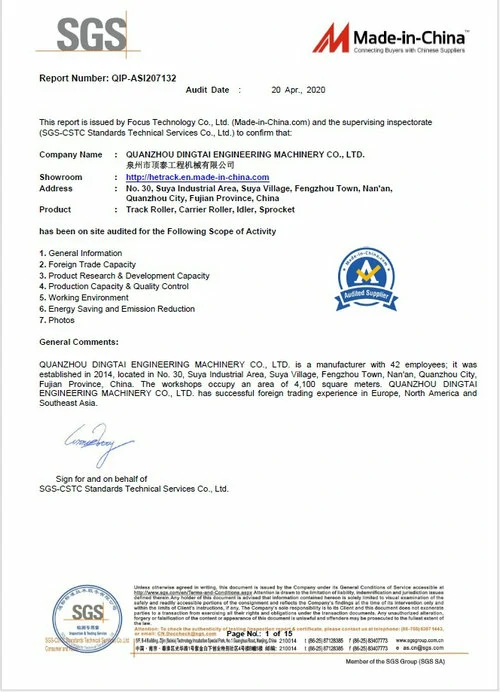
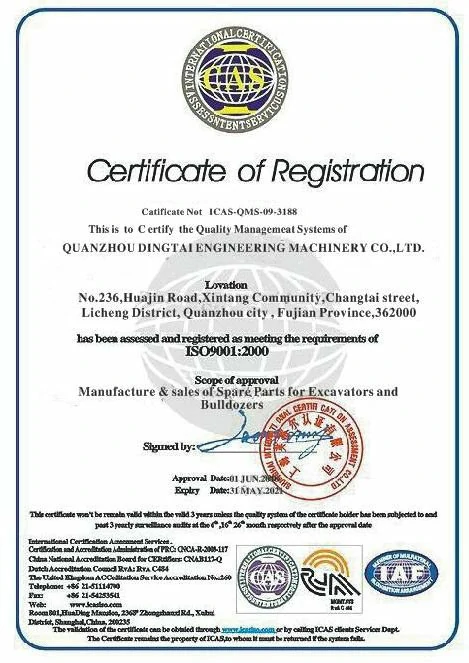
As someone who has built a business (Dingtai) on ISO9001 certification 11 and 100% quality checks, I find it very strange when a "manufacturer" doesn't have a warranty. A warranty isn't just a sales tool; it's a core part of our quality control system. It forces us to be accountable.

So, when a supplier tells you they don't have one, you should ask why.

Decoding the "No Warranty" Excuse

Their answer tells you everything.

  • "We are new." This means they are inexperienced. They likely haven't had to handle a major, costly failure yet. You will be their test case.
  • "Our quality is so good, we don't need one." This is just arrogant and naive. Every manufacturing process, even ours, has a statistical possibility of error. A good company plans for it.
  • "It's too complicated." This means they are disorganized. If they can't handle writing a policy, how will they handle a complex, international warranty claim? This points directly to the pain point of dealing with unprofessional suppliers.

A supplier without a warranty policy is telling you that you must bear 100% of the risk. This is not a partnership.

Your Options: How to Proceed

You have three choices, and I would list them in this order of preference:

1.  Walk Away (Recommended): In a global market, there are many professional suppliers (like us) who do provide clear warranties. Why take the risk on one who doesn't? This is the safest choice.
2.  Draft Your Own: If you are in a situation where you must use this supplier, then you must do the work for them. Draft a simple "Warranty Agreement" appendix. List the key terms: duration, coverage, exclusions, claims. Have them sign it as part of the PO. If they refuse to sign your basic terms, you have your answer.
3.  Proceed with High Risk: You can choose to buy from them anyway. But you must do so knowing that you have zero protection. The money you might save on the purchase price is a gamble. You must be prepared to pay for 100% of any failures yourself.

Here's a simple risk comparison for this scenario:

Supplier Type Has Formal Warranty No Formal Warranty
Accountability High (Contractual) Low (Verbal only)
Risk to Buyer Low Very High
Professionalism High (ISO, QC-focused) Low (Disorganized)
Long-Term Partner? Yes Unlikely

My advice? Don't take the risk. Your time is too valuable to spend arguing over a failed part that should have been covered.

Conclusion

So, yes, always demand a written warranty. It's not just a piece of paper. It's your most important tool for ensuring quality, accountability, and a stable supply chain.


Footnotes

1. Importance of written contracts in international trade. ↩︎
2. Guide to identifying and procuring heavy-wear undercarriage parts. ↩︎
3. Checklist for professional procurement best practices and supplier management. ↩︎
4. Strategies for managing multi-million dollar capital equipment and parts inventory. ↩︎
5. Role and responsibilities of a procurement director in a large organization. ↩︎
6. Detailed breakdown of key clauses found in a standard commercial warranty policy. ↩︎
7. Best practices for maximizing construction fleet uptime and minimizing costly downtime. ↩︎
8. Simple guide to common legal terms used in business contracts and warranties. ↩︎
9. Essential considerations for international buyers sourcing industrial components from overseas. ↩︎
10. How to build and maintain stable, transparent long-term supplier relationships in a global market. ↩︎
11. Learn how ISO 9001 certification ensures consistent quality management systems in manufacturing. ↩︎

Free Quote & Information Request

Leave your inquiry, we will provide you with quality products and services!

Excavator & Bulldozer Undercarriage Parts Expert - Quality Track Roller, Carrier Roller, Sprocket Wheel
Privacy Overview

This website uses cookies so that we can provide you with the best user experience possible. Cookie information is stored in your browser and performs functions such as recognising you when you return to our website and helping our team to understand which sections of the website you find most interesting and useful.