Who pays the shipping costs for replacement undercarriage parts for excavators under warranty?

  Excavator grading muddy railway track under stormy sky; worker oversees construction

A key roller fails. Your machine is down. You file a warranty claim, but then the supplier asks you to pay the shipping. It's a frustrating situation I see often.

In my 20 years at Dingtai, I've seen it all. Typically, the warranty covers the part, but not the shipping costs, unless we explicitly write it into the contract. You should expect to pay for shipping unless your supplier clearly states otherwise.

This "hidden cost" causes major disputes. As a purchasing manager like David, you need clarity before you buy. Let's break down the common questions I hear from clients about warranty shipping, starting with the most urgent ones.


Should I expect the supplier to cover the air freight cost for urgent replacement parts?

Your excavator is down, costing $2,000 a day. You need that part now via air freight. But who pays that huge bill? This is a major pain point for many buyers.

From my experience, almost no standard warranty covers expedited (air freight) shipping. Suppliers usually only cover standard sea or ground freight, if they cover shipping at all. If you need it fast, you will almost certainly pay the extra cost yourself.

Site supervisor inspecting excavator at muddy roadway during sunset

Air freight is extremely expensive for heavy undercarriage parts. A supplier might pay $200 for sea freight, but $2,000 for air freight. They simply will not absorb this high cost.

I had a client in the US, "David," who faced this exact problem. His machine was idle, and he demanded we air-ship a replacement drive sprocket. Our standard policy, like most in China, covers standard shipping if it's a confirmed quality defect. It does not cover the urgency.

We had to tell him the hard truth: We can ship it by sea (which takes 40 days) under the warranty terms, or you can pay the air freight to get it in 5 days.

He was very upset. We value our relationship, so we reached a compromise. He agreed to pay the difference between our standard sea freight cost and the air freight cost. This felt fair to both sides.

Why Suppliers Resist Paying for Air Freight

There are clear reasons why suppliers like me resist paying for emergency air shipping:

  • High Cost: The cost of air freight can easily erase the entire profit margin from the original sale.
  • Bad Precedent: If we do it for one client, we must do it for all. It becomes an unsustainable business practice 1.
  • Logistical Complexity: Air freight for heavy, bulky industrial parts requires special handling and paperwork 2, which is an extra service.

Your Options for Urgent Parts

When your machine is down, you have a few options:
1.  Pay the full cost: If your downtime cost is higher than the air freight, it makes business sense 3 to just pay for it.
2.  Negotiate the difference: This is what I did with David. Ask the supplier to cover their "standard" shipping cost, and you pay the rest.
3.  Use your own forwarder: Sometimes, your own logistics partner can get you a better rate 4 than the supplier's.

I also warn my clients about reimbursement. Some suppliers might say they'll "cover" it, but they mean you pay upfront, and they will reimburse you 30-60 days later. This can really hurt your cash flow 5. Always ask: "Do you pay the shipping company directly, or do I have to pay and wait for reimbursement?"

Table 1: Air Freight vs. Sea Freight (Example Cost)

Feature Standard Sea Freight Expedited Air Freight
Example Cost (100kg Roller) $150 $1,200
Transit Time (China to USA) 30-45 Days 5-7 Days
Who Usually Pays (Warranty) Supplier (if covered) or Buyer Buyer (or Buyer pays the $1,050 difference)
Best For Stock orders, non-urgent replacements Emergency, high-downtime situations

Can I negotiate this point and have it clearly stated in our supply agreement?

You're tired of arguing about shipping costs after a part fails. You feel trapped by vague warranty terms. There is a simple way to avoid this fight every single time.

Absolutely. As a manufacturer, I want you to negotiate this. You must get shipping terms defined 6 in the Purchase Agreement (PA) or supply contract. If it is not in writing, it does not exist. This protects both of us from disputes later.

Boardroom meeting reviewing performance dashboard on large screen

This is the single most important thing you can do. A good buyer like David Miller knows that the contract phase is where you make your money and save yourself from future headaches.

I remember a new customer from South America. We shipped his parts, and one track chain had a defect. He called me, very angry, demanding we pay the $1,000 air freight. I checked our contract. It only said we would "provide a replacement part." It said nothing about shipping.

We argued for a week. We finally agreed to split the cost 50/50, just to keep the relationship. But I learned a lesson: I now insist we clarify this with all new clients.

Key Shipping Terms to Define in Your Contract

When you draft the agreement, be specific.

  • 1. Responsibility for Freight (Inbound): Who pays to ship the defective part back to the factory for inspection? (Often, this is the buyer's cost).
  • 2. Responsibility for Freight (Outbound): Who pays to ship the new replacement part to you?
  • 3. Shipping Method: Does the warranty cover "standard ground/sea freight" only? If so, clearly state that "expedited or air freight costs are the buyer's responsibility."
  • 4. Location (Incoterms): This is a big trap. Does "free shipping" mean FOB (Free on Board) Shanghai, where the supplier only pays to get it to the Chinese port? Or does it mean DAP (Delivered at Place), where they pay for it to reach your warehouse (but you pay customs)?

I had a client mistake CIF (Cost, Insurance, Freight) for DDP. He was shocked when he got a bill for customs duties and inland trucking. He said, "But you said you'd pay the freight!" I had to explain that CIF only covers freight to his country's port. He had to pay for everything after that.

Not All Suppliers Are the Same

Policies vary widely. I've seen some big brands offer DDP warranty shipping 7 for their best distributors. It's part of their premium price. But other factories will only cover domestic shipping (e.g., to the port in China). As an international buyer, that policy is useless for you. You must ask: "What is your policy for international warranty shipping?"

Table 2: Common Incoterms for Warranty Parts

Incoterm Supplier Pays For Buyer Pays For My (Linda's) Note
EXW (Ex Works) Nothing. Part is at factory door. All shipping, customs, and risk. Never accept this for warranty.
FOB (Free on Board) Getting the part to the origin port (e.g., Shanghai). Ocean freight, insurance, customs, inland transport. Very common, but you still pay a lot.
CIF (Cost, Ins., Freight) FOB + Ocean freight and insurance. Customs duties, port fees, inland transport. This is the "hidden cost" trap.
DAP (Delivered at Place) Shipping to your address. All customs duties and taxes. This is much better.
DDP (Delivered Duty Paid) Everything. Part arrives at your door. Nothing. This is the best for you, but rare.

Does it matter who was at fault for the original part's failure?

Your track roller cracked. The supplier says your operator abused the machine, and the warranty is void. You're stuck with the bill. How do you prove it was their fault?

Yes, fault is everything. If the failure is due to a manufacturing defect 8, our warranty covers it. But if it's due to improper installation, poor maintenance, or abuse, the warranty is void. This distinction determines who pays for the part and the shipping.

Bulldozer pushing earth on rocky quarry slope at dusk

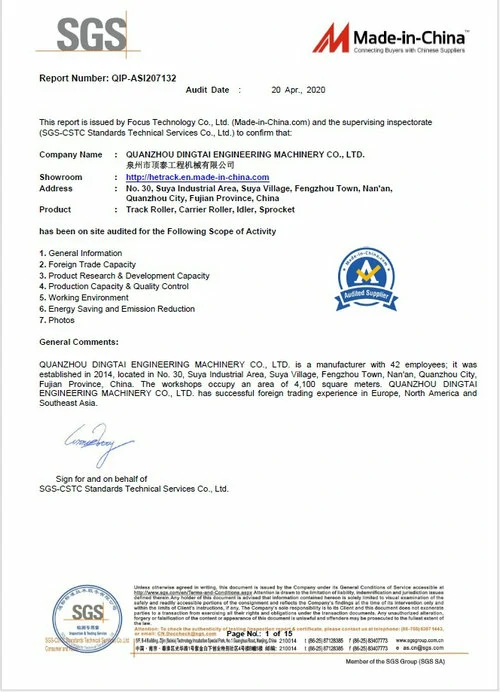
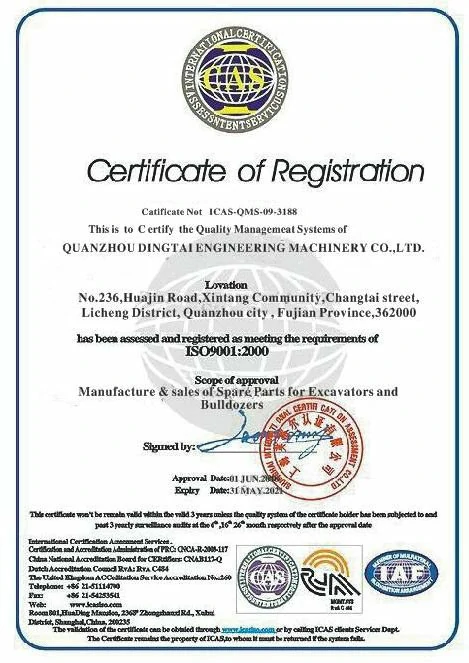
This is the most common and difficult dispute in our business. As a manufacturer, we (Dingtai) have strict quality control 9 (ISO9001, 100% inspection). We stand behind our products. But we also know that undercarriage parts live in a brutal environment.

I had a case I will never forget. A mining client in Australia said our rollers were failing early. He demanded 20 new rollers plus air freight. He was furious. Our engineers asked for photos. We saw the rollers were caked in dried concrete and mud. The seals had failed because the abrasive material was not being cleaned.

How We Determine Fault (The Inspection Process)

When you claim a defect, we (the supplier) will almost always ask for:
1.  Clear Photos: We need to see the failure point, the part number, and the surrounding parts.
2.  Operating Conditions: What material is the machine digging? What is the environment (mud, rock, sand)?
3.  Maintenance Logs: When was the undercarriage last cleaned or inspected?
4.  Return the Part: For serious claims, we will ask you to ship the part back to our lab in China (often at your initial expense) for a full metallurgical analysis.

My client in Australia insisted it was our quality. I insisted it was his maintenance. We were stuck. He said, "I'm not paying to ship 20 broken rollers to China just for you to blame me!"

I suggested a compromise: "Get a local, independent testing lab to analyze the failure." He did. The lab report came back: "Seal failure due to extreme abrasive material packing." This proved it was an operational issue, not a manufacturing defect. The warranty claim was denied. He was not happy, but he respected that we used a third-party to prove it.

Sometimes, the "fault" is small, but the part is big. I've seen suppliers who will replace a small, failed bolt and pay the air freight because it's cheap. But when a 300kg track shoe fails, they fight hard, because the shipping cost is huge. This isn't fair, but it happens. A defect should be a defect, regardless of size.

Common Reasons a Warranty Claim is Denied

  • Improper Installation: Using the wrong tools, incorrect torque.
  • Lack of Maintenance: Not cleaning tracks, not checking tension.
  • Misapplication: Using a standard machine in an extreme-duty rock quarry.
  • Accident or Abuse: Operator error, hitting obstacles.

Table 3: Fault Determines Responsibility

Scenario Who is at Fault? Who Pays for Part? Who Pays for Shipping?
Manufacturing Defect Supplier (Dingtai) Supplier As per contract (Negotiable)
Installation Error Buyer / Mechanic Buyer Buyer
Improper Maintenance Buyer / Operator Buyer Buyer
Shipping Damage Shipping Company Shipping Company (Insurance) Shipping Company (Insurance)

What about the customs duties and taxes for the replacement part?

Your "free" replacement part arrives. Then you get a bill from customs for 25% duties and taxes. This is a nasty surprise that many buyers, even experienced ones, forget to ask about.

Unless you negotiated a DDP (Delivered Duty Paid) term, you (the buyer) are almost always responsible for all import duties and taxes. As a supplier, I cannot control or pay your country's local taxes. This cost is separate from "freight."

Industrial bearing and packed box on pallets with shipping paperwork in warehouse

This is the "last-mile" trap. I've seen this happen so many times. We agree to send a warranty part. We pay for CIF (Cost, Insurance, Freight) to the port of Los Angeles. Our part of the deal is done.

Then I get an angry call from the client. "Linda, the parts are stuck at the port! DHL is asking for $500 in import duties!"

I have to gently explain that freight (what I paid) and duties (what his government charges) are two different things. Import duties, VAT, or tariffs 10 are set by the buyer's country. We, as a Chinese exporter, have no legal way to pay them.

How to Handle Warranty Part Imports

You are not helpless. Here is how to handle this situation correctly.

  • 1. Check Your Incoterm: This all goes back to the contract. If your contract says CIF or DAP, you pay duties. If it says DDP, the supplier pays. (DDP is very rare for warranty parts).
  • 2. Use a "Warranty/Repair" Code: Many countries have a special customs declaration for warranty or repair items. You can sometimes import them at a 0% duty rate.
  • 3. Talk to Your Broker: You (the buyer) must talk to your customs broker about this before the part ships. You will need paperwork from the supplier (me) stating this is a "No Commercial Value (NCV)" shipment for warranty purposes.
  • 4. "No Commercial Value" Invoice: We (the supplier) must create a Commercial Invoice for customs. We cannot put $0. We will put the real value (e.g., "$1,500") but add a statement: "NO COMMERCIAL VALUE. REPLACEMENT PART SUPPLIED FREE OF CHARGE UNDER WARRANTY." This tells customs why you are not paying us for it, but they will still charge you duties on the value of the item ($1,500) unless you file for an exemption (see point 2).

Don't get caught by this. When your supplier agrees to send a warranty part, ask them this exact question: "What value will you declare on the invoice, and can you please mark it as a 'no commercial value warranty replacement'?" Then, immediately call your customs broker.

Conclusion

When it comes to warranty shipping, clarity is everything. Don't assume anything. Get every detail about freight, fault, and taxes in your contract before you sign the order.


Footnotes  

1. Explore the principles of sustainable business practice and its long-term viability. ↩︎  
2. Guide to international shipping requirements for special handling and paperwork. ↩︎  
3. Learn how to calculate the business sense of paying for expedited freight versus machine downtime. ↩︎  
4. Strategies for procuring better shipping rates through a dedicated logistics partner. ↩︎  
5. Understanding how large, unexpected payments like air freight impact a company's cash flow. ↩︎  
6. Detailed explanation of essential shipping terms to define in a procurement contract. ↩︎  
7. Comprehensive guide to Delivered Duty Paid (DDP) Incoterms for warranty and premium shipments. ↩︎  
8. Analysis of common causes and definitions of a manufacturing defect in heavy machinery parts. ↩︎  
9. Standards and requirements of strict quality control systems like ISO9001 in manufacturing. ↩︎  
10. Overview of global import duties, VAT, and tariffs on commercial goods and replacement parts. ↩︎

Free Quote & Information Request

Leave your inquiry, we will provide you with quality products and services!

Excavator & Bulldozer Undercarriage Parts Expert - Quality Track Roller, Carrier Roller, Sprocket Wheel
Privacy Overview

This website uses cookies so that we can provide you with the best user experience possible. Cookie information is stored in your browser and performs functions such as recognising you when you return to our website and helping our team to understand which sections of the website you find most interesting and useful.