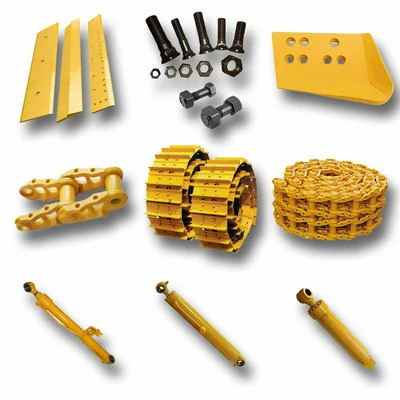
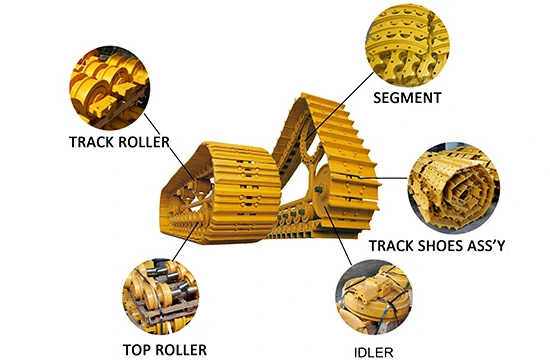
Suppliers manage rush orders by prioritizing production processes 1, often incurring additional expenses to meet urgent deadlines.
Rush orders typically involve expedited processes 2 and increased costs, including air freight 3, additional labor, and overtime fees, to swiftly deliver undercarriage parts for excavators.
What is the fastest possible lead time they can offer for an urgent order?
Analyze feasible timelines for rush jobs.
The fastest lead time 4 for a rush order might range from two to four weeks, contingent on inventory availability 5 and production capacity 6 at the time of request.
Rush order timelines
- Inventory Influence: Immediate shipment if in-stock items are available.
- Production Capacity: Availability of production lines to handle urgent requests.
Lead time considerations
| Factor | Description | Impact on Lead Time |
|---|---|---|
| Inventory Status | Stock Availability | Immediate vs. Adjusted Lead Time |
| Production Capacity | Line Availability | Fastness Potential |
Will I have to pay an expedite fee or air freight charges for a rush order?
Evaluating cost implications for speeding up orders.
Expect to incur additional fees such as an expedite fee 7, often 10%-30% of the unit price, and significantly higher air freight expenses compared to standard sea freight 8.
Cost breakdown
- Expedite Fees: For shorter production timelines.
- Shipping Charges: Air freight as the main driver of cost.
Additional costs
| Element | Cost Factor | Financial Impact |
|---|---|---|
| Expedite Fee | Percentage Surcharge | Higher Unit Costs |
| Air Freight | Shipping Expense | Significant Increase |
Can they guarantee the same level of quality for a rush order as a standard one?
Quality assurance under time constraints.
While suppliers strive to maintain quality standards, the compressed timeline of a rush order might impact inspection stringency and quality control measures 9.
Considerations for quality
- Inspection Integrity: Challenge of maintaining thoroughness.
- Potential Risk: Likelihood of overlooking minor issues.
Quality assurance
| Aspect | Practice | Reliability |
|---|---|---|
| Inspection Rigor | Process Adherence | Maintaining Standards |
| Quality Consistency | Potential Variability | Managed Trade-offs |
Do they have a formal process for handling urgent requests?
Process formalization ensures efficiency in urgencies.
Suppliers generally establish a formal procedure for handling rush orders, outlining prioritization strategies 10, resource allocation, and communication methods.
Urgent order handling
- Strategic Prioritization: Allocating necessary resources efficiently.
- Clear Communication: Effectively managing expectations and progress.
Process protocol
| Protocol Aspect | Element | Efficiency Gain |
|---|---|---|
| Prioritization | Resource Allocation | Faster Response |
| Communication | Expectation Management | Coordination Clarity |
Conclusion
Managing rush orders for undercarriage parts involves strategies like expedited shipping and enhanced production coordination, often at additional costs, to ensure timely delivery without sacrificing critical quality standards.
Anticipating rush demands with effective planning, suppliers can mitigate delays and maintain quality, ensuring timely delivery.
Footnotes L
1. Learn about different strategies for prioritizing production line processes. ↩︎
2. An explanation of expedited processes in the manufacturing industry. ↩︎
3. A guide to understanding air freight logistics and its costs. ↩︎
4. Techniques for reducing manufacturing lead times for urgent orders. ↩︎
5. How inventory availability impacts order fulfillment and lead times. ↩︎s
6. Methods for assessing a factory's true production capacity. ↩︎
7. A definition of expedite fees and when they are applied. ↩︎
8. A cost and time comparison between standard sea and air freight. ↩︎
9. Overview of essential quality control measures in manufacturing. ↩︎
10. Effective techniques for resource and task prioritization. ↩︎s