If I pay for undercarriage parts for excavators with a Letter of Credit (L/C), what is the process and cost?

Searching for suppliers online

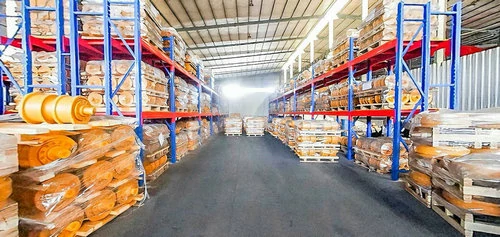
  Illustration of warehouse operations with vehicles and containers

Paying with a Letter of Credit (L/C) 1 provides a structured payment system that protects both parties in an international trade transaction. It ensures payment upon compliance with set terms through a bank's guarantee.

The L/C process involves a sales agreement, application, issuance, shipment, document presentation 2, bank review, payment, and document collection for the buyer. Costs and fees are higher than typical transfers.


What are the bank fees I will have to pay to open an L/C?

Opening an L/C incurs specific bank fees.

Bank fees to open an L/C typically range from 0.5% to 2% of the invoice amount. For a $50,000 order, expect charges between $250 and $1,000. Amendment, collateral, and discrepancy fees 3 apply additionally.

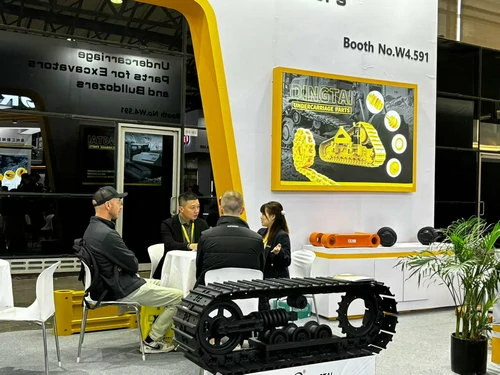
Business meeting with modern city view background

Breakdown of potential costs

  • Issuance Fee: A percentage of the L/C value, charged by your bank (the Issuing Bank) for opening the credit.
  • Collateral Cost: Your bank may require you to set aside funds or use your credit line as collateral 4, tying up your working capital.
  • Amendment Fee: Charged for any modifications made to the L/C after it is issued.
  • Discrepancy Fee: Applies if your supplier's documentation doesn't perfectly match the L/C terms, and you agree to waive the errors.

L/C costs

Fee Type Charge Range Typical %
Issuance $250 - $1,000 0.5% - 2%
Amendment $50 - $150 Per change

What documents will the supplier need to present to the bank to get paid?

Supplier documentation must meet L/C terms.

The supplier must provide documents like the Bill of Lading 5, commercial invoice, packing list, and certificate of origin 6 to their bank for payment under an L/C.

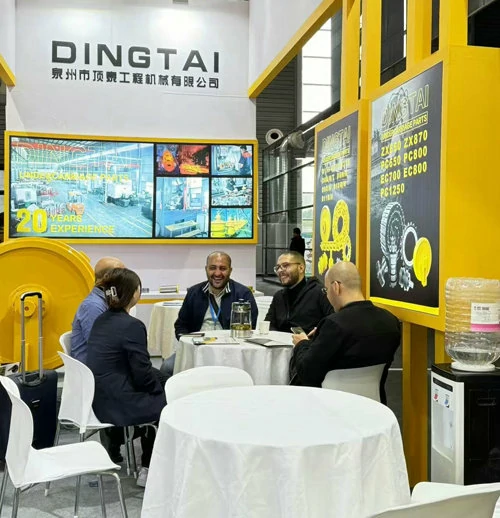
Reception area with business professionals discussing documents

Required documentation

  • Bill of Lading: Proof of shipment and a document of title for the goods.
  • Invoice: Detailed cost breakdown.
  • Packing List: Cargo contents, weights, and dimensions.
  • Certificate of Origin: Identifies product source.
  • Inspection Certificate: (If required by the L/C) Proof that goods were inspected.

Needed documents

Document Type Purpose Role in Payment
B/L Shipment Verification Essential
Invoice Financial Proof Mandatory

How can an L/C protect me as a buyer if the supplier doesn't ship the goods?

An L/C offers security against non-delivery.

An L/C safeguards the buyer by guaranteeing payment only upon presentation of compliant documents 7, ensuring goods are shipped before payment is released.

Man reviewing logistics over laptop near shipyard

Protection mechanisms

  • Payment Assurance: Payment is conditional on the supplier proving they shipped the goods as per the L/C terms.
  • Risk Mitigation: If the supplier doesn't ship, they cannot obtain the Bill of Lading and other required documents. No documents, no payment.
  • Bank Guarantee: The bank verifies the documents, not just the supplier's claim, before releasing your funds.

Protection aspects

Feature Buyer Advantage Risk Reduction
Document-Based Payment security Assurance
Compliance Necessary Non-payment if unmet Conditional

Why are some smaller suppliers hesitant to accept payment by L/C?

Smaller suppliers might shy away from L/Cs due to complexities.

Smaller suppliers may avoid L/Cs due to the complexity, cost of compliance 8, and working capital constraints 9 tied up until the L/C concludes. They often prefer less formal payments like T/T.

Warehouse manager conducting inventory check

Supplier challenges

  • Complexity: L/Cs require strict adherence to terms. A single typo can lead to a "discrepancy" and payment delays.
  • Cost: The supplier's bank (Advising Bank) also charges fees for advising, checking, and negotiating the L/C.
  • Capital Tie-Up: The process is slower than a direct transfer. The supplier's funds are tied up until after shipment and document processing.

Supplier concerns

Concern Type Issue Preferred Alternative
Complexity High Simpler methods
Cost Elevated Reduced fees

Conclusion

Using an L/C to pay for undercarriage parts ensures secure transactions tied to document compliance, albeit with higher associated costs compared to simpler payment methods. Understanding these nuances ensures smooth international trade 10 operations.


Footnotes  

1. A comprehensive guide explaining what a Letter of

Free Quote & Information Request

Leave your inquiry, we will provide you with quality products and services!

Excavator & Bulldozer Undercarriage Parts Expert - Quality Track Roller, Carrier Roller, Sprocket Wheel
Privacy Overview

This website uses cookies so that we can provide you with the best user experience possible. Cookie information is stored in your browser and performs functions such as recognising you when you return to our website and helping our team to understand which sections of the website you find most interesting and useful.