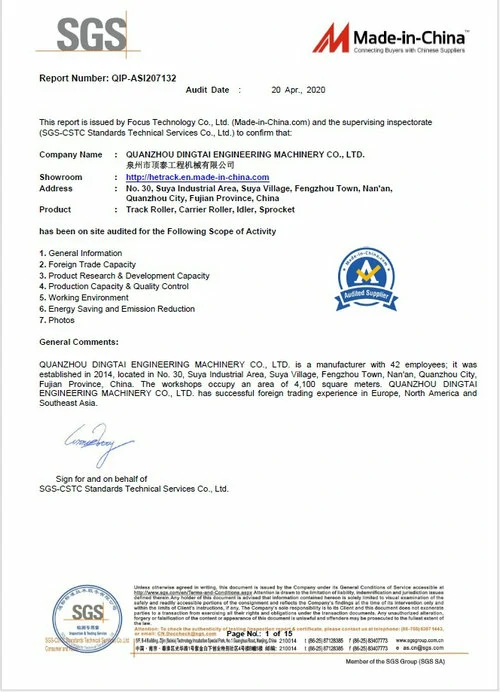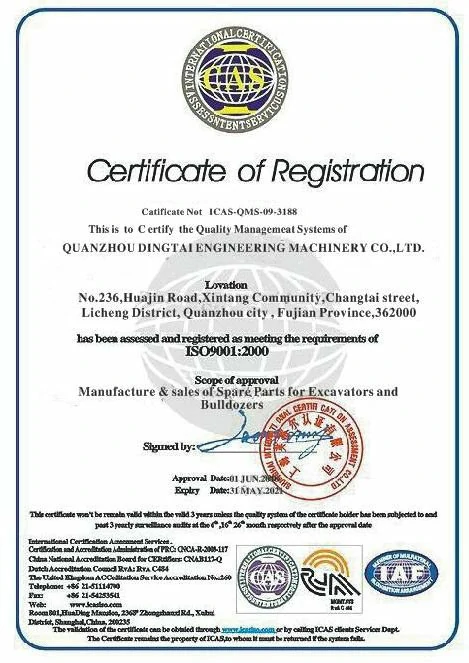
Yes, absolutely. While ISO 9001 confirms a supplier has a quality management system, it doesn't define the actual product quality (e.g., material hardness or strength). To ensure durability and performance, you should look for suppliers who also adhere to specific technical, environmental, and social standards.
Adhering to these additional standards demonstrates a supplier's commitment to product specifications, environmental responsibility, and ethical operations.
Should I look for suppliers with environmental management certification like ISO 14001?
Integrating environmental considerations is increasingly important for sustainable operations.
Yes, looking for ISO 14001 1 certification is a smart move. This standard indicates a supplier's commitment to environmental sustainability. For you, this means they actively work to reduce waste, manage energy consumption, and control pollution in their manufacturing processes. This not only minimizes environmental impact but often leads to greater operational efficiency and cost control.
Environmental management impact
- Sustainable Practices: Certification assures proactive management of environmental impacts.
- Resource Efficiency: Emphasizes reduced energy and material usage, which can stabilize costs.
- Regulatory Compliance: Shows the supplier is serious about meeting global environmental regulations.
Environmental certification factors
| Standard | Focus | Benefits |
|---|---|---|
| ISO 14001 | Environmental management | Sustainability, efficiency, compliance |
Are there any standards related to material testing, like ASTM, that I should know?
Material testing standards ensure reliable and consistent material properties.
Yes, this is critical. ASTM International 2 (American Society for Testing and Materials) provides the technical standards that define the quality of the steel itself. You should ask suppliers if their materials and testing methods comply with key ASTM standards.
Material standards impact
- Specification Adherence: Ensures the steel's chemical composition and mechanical properties are correct.
- Durability Assurance: Confirms the part meets specific requirements for hardness, strength, and toughness.
- Key Standards to Ask About:
- ASTM E10 3 / ASTM E18 4: Defines the methods for Brinell and Rockwell hardness testing, which is vital for wear life.
- ASTM E8 5: Standard test methods for the tensile (pull) strength of metals, ensuring parts won't break under load.
- ASTM A370 6: Covers the standard mechanical testing procedures for steel products.
Material testing standards
| Standard | Application | Benefits |
|---|---|---|
| ASTM | Material performance & testing | Quality assurance, durability, safety |
Do any of the major OEMs impose their own specific supplier quality standards?
OEM-specific standards tighten part compatibility and performance assurance.
Yes, major OEMs like Caterpillar, Komatsu, and Volvo have their own proprietary supplier quality systems that go beyond ISO 9001. If a supplier manufactures parts for these OEMs, it's a very strong indicator of high-level quality control. These standards are often published in a Supplier Quality Assurance Manual (SQAM) 7 and include a Supplier Code of Conduct 8.
OEM standards specifics
- Tailored Requirements: Ensures parts match exact OEM specifications for fit, material, and performance.
- Process Audits: OEMs regularly audit their suppliers' manufacturing processes (e.g., heat treatment, welding) to ensure compliance.
- Proven Capability: Being an approved OEM supplier is a strong endorsement of the factory's technical and quality capabilities.
OEM standards
| OEM | Standard Type | Importance |
|---|---|---|
| Caterpillar, Komatsu, Volvo | Supplier Quality Manuals | Performance consistency, high-level QC |
Are there any social accountability standards, like SA8000, that might be relevant?
Social accountability underscores ethical manufacturing practices.
Yes, SA8000 9 is a key standard in this area. It ensures ethical practices in the supply chain. This certification demonstrates a supplier's commitment to fair labor practices, safe working conditions, and fundamental human rights. For a global buyer, this is crucial for corporate social responsibility (CSR) 10 and protecting your brand's reputation from being associated with unethical manufacturing.
Social accountability standards
- Labor Rights Focus: Ensures no child labor, forced labor, and guarantees fair working hours and wages.
- Health & Safety: Mandates a safe and healthy workplace environment.
- Reputation Management: Strengthens your brand image by ensuring an ethical supply chain.
Social accountability relevance
| Standard | Focus | Ethical Impact |
|---|---|---|
| SA8000 | Labor and human rights | Corporate social responsibility |
Conclusion
While ISO 9001 is a good start, a truly robust supplier will also be able to prove compliance with ISO 14001 for environmental management, ASTM standards for material quality, and SA8000 for social accountability. Furthermore, if they are an approved supplier for a major OEM, it serves as a powerful testament to their quality and process control.
Footnotess
1. Learn what the ISO 14001 Environmental Management standard includes. ↩︎
2. Overview of ASTM International's role in product testing and material standards. ↩︎
3. Explanation of ASTM E10 standard for Brinell hardness testing of metals. ↩︎
4. Guide to ASTM E18 standard for Rockwell hardness testing. ↩︎s
5. Understanding the ASTM E8 standard for metal tensile strength testing. ↩︎
6. Details on ASTM A370, the standard for mechanical testing of steel products. ↩︎
7. What to look for in an OEM's Supplier Quality Assurance Manual (SQAM). ↩︎
8. The importance of a Supplier Code of Conduct for major manufacturers. ↩︎
9. What is SA8000 certification and what does it cover? ↩︎s
10. The role of Corporate Social Responsibility (CSR) in modern supply chains. ↩︎