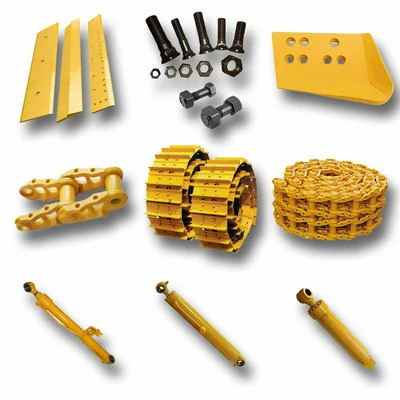
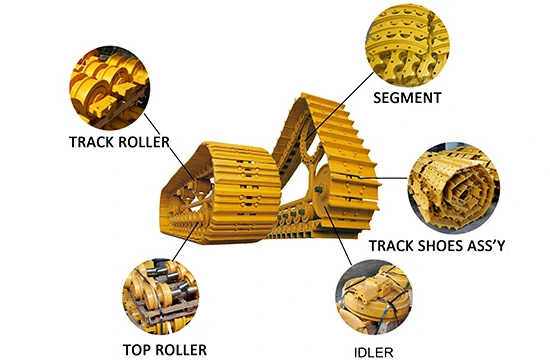
Carefully reviewing key dimensions and tolerances is critical when dealing with undercarriage parts for excavators 1. These measurements ensure proper fit and performance. A minor discrepancy may lead to severe equipment damage 2 and operational issues.
Always examine bolt hole sizes, component lengths and widths, and crucial interface dimensions. This guarantees seamless integration and functionality.
Below are the essential dimensions and tolerances to consider.
Why are the tolerances for mounting holes and critical interface points so important?
Mounting holes and interface points bear the brunt of mechanical stress 3. Their accuracy affects machine function and durability 4.
Precise tolerances for these areas ensure robust assembly and prevent parts loosening, which could lead to excessive wear or catastrophic failure.
Critical interface tolerances
- Mounting Hole Precision 5: Ensures secure attachment; +/- 0.2 mm for high-stress fittings.
- Interface Fit Tolerance: Prevents movement or vibration; crucial for load-bearing points.
- Consistent Fit: Deviations can result in poor alignment, affecting overall machine performance.
Essential tolerances
| Dimension | Importance | Tolerance Range |
|---|---|---|
| Mounting Hole Diameter | Ensures secure fit | +/- 0.2 mm |
| Interface Point | Protects structural integrity | +/- 0.2 mm |
| Bore Compatibility | Prevents loosening | +/- 0.3 mm |
How can I be sure the supplier's measurement standards are the same as mine?
Aligning measurement standards 6 is vital to ensure consistency and compatibility across manufacturing and assembly processes.
Confirm the supplier adheres to industry-standard measurement protocols and compare with your specifications to verify fit and compatibility.
Standard alignment strategies
- Industry Standards Reference: ISO and ANSI standards 7 confirm uniformity in measurements.
- Technical Communications: Regular dialogues ensure alignment in interpretation of dimensions and tolerances.
- Inspection Reports 8: Demand comprehensive testing and inspection data from suppliers to validate dimensions.
Ensuring equivalency
| Method | Description | Outcome |
|---|---|---|
| Standards Reference | Adheres to ISO/ANSI | Consistent fitment |
| Regular Discussions | Clarifies expectations | Avoids misinterpretation |
| Data Validation | Review inspection results | Confirms precision |
Should the drawings specify material type, hardness, and other technical requirements?
Providing detailed specifications helps establish a clear understanding of performance expectations and compliance needs 9.
Yes, drawings should detail material type, hardness levels, and other technical aspects to assure compatibility and function in intended applications.
Importance of specification details
- Material Type: Communicates necessary performance qualities like strength or flexibility.
- Hardness Levels: Ensures durability standards match operational requirements.
- Technical Details: Influences component longevity and proper function under stress.
Key specifications in drawings
| Specification | Purpose | Significance |
|---|---|---|
| Material Type | Confirms properties | Ensures compatibility |
| Hardness Levels | Determines wear resistance | Affects component life |
| Additional Details | Implementation specifics | Guides proper usage |
What should I do if my technical requirements differ from their standard product drawings?
Addressing discrepancies early prevents miscommunication and ensures the product meets precise operational needs 10.
Communicate any differing requirements promptly with suppliers, discussing custom options or modifications to standard drawings to meet specific needs.
Managing technical differences
- Open Dialogue: Share specific needs and negotiate amendments.
- Modifications and Customization: Request adjustments to standard drawings, potentially involving additional considerations.
- Formal Documentation: Specify custom requirements and confirm acceptance in contractual agreements.
Handling variations
| Step | Action | Result |
|---|---|---|
| Communicate Needs | Discuss with supplier | Recognizes differences |
| Negotiate Changes | Request modifications | Ensures compliance |
| Formal Agreement | Document changes | Guarantees conformity |
Conclusion
Careful examination and clarity on dimensions and tolerances ensure undercarriage parts fit effectively and enhance productivity. Engage thoroughly with suppliers and utilize comprehensive technical specifications for optimal compatibility.
Footnotes
1. A comprehensive guide to different excavator undercarriage components. ↩︎
2. Learn about common causes of heavy machinery failure. ↩︎
3. Definition and impact of mechanical stress in engineering components. ↩︎
4. How to test and ensure heavy machinery function and durability. ↩︎
5. The importance of precision machining for mounting holes. ↩︎
6. Guide to metrology and the importance of standard alignment. ↩︎
7. Official information on ISO and ANSI manufacturing standards. ↩︎
8. How to read and utilize quality control inspection reports. ↩︎
9. Defining performance and compliance standards in manufacturing. ↩︎
10. Best practices for defining operational needs for custom parts. [↩︎](#ref-1