I have learned that understanding a supplier's export background to the USA is critical for smooth transactions. Here, I’ll explain how I determine if a supplier has a solid export history to the United States.
I look for explicit mentions of U.S. experience on their website, utilize public customs databases, and request shipment documentation. Additionally, I ask detailed questions about their knowledge of U.S. regulations and logistics.
Let's dive into the methods I use to ensure that my supplier is ready for the U.S. market.
Can I ask for redacted copies of shipping documents like the Bill of Lading to prove their export history?
Yes, requesting redacted export documents is a standard practice. It verifies their shipping record while respecting confidentiality.
Redacted bills of lading show me past U.S. deliveries without exposing full private details. They display shipper, consignee, dates, and cargo terms essential for validation. 1
What to request and verify
For proof, I regularly ask for the following:
- Redacted Bill of Lading: shows shipping parties and port dates.
- Export Invoices: verify HS classification and tariff applications.
- ISF filings: these are critical for compliance to speed clearances.
By examining these, I know the supplier understands U.S. export and customs processes. Reliable exporters keep records organized and accessible.
Key document elements
| Document | Validation Details | Why It Matters |
|---|---|---|
| Bill of Lading (BOL) | Shipper, consignee, U.S. port, description | Confirms executed shipments |
| Export Invoice | HS codes, tariffs, payment terms | Shows attention to detail and compliance |
| ISF Filing | U.S.-specific security filing | Critical for U.S. customs readiness |
Practical tips for document requests
- Accept PDF formats, insist on clear redactions.
- Match BOL dates with supplier's claimed experience timeline.
- Verify contact redactions to protect privacy, not legitimacy.
Are there public US customs databases where I can look up a supplier's import records?
Yes, public databases detail U.S. import activity. Use these to cross-verify supplier claims.
I utilize ImportGenius 2, Volza 3, and Seair 4 for import records, and USITC 5 databases for trade data. These reveal shipment volume, supplier transactions, and U.S. customer ties.
Database access and usage
I start by searching supplier names in these services:
- ImportGenius/Volza: track specific exporter-importer connections.
- ImportYeti: provides transparency on shipped volumes.
- USITC DataWeb: lists broader import details and trends.
These tools let me see who the supplier works with in America, verifying claims with real data. They offer shipment counts, commodity values, and more.
Useful platform elements
| Platform | What You Find | How It Helps |
|---|---|---|
| ImportGenius | Bill of Lading history | Tracks last-mile shipments |
| Volza | Import volumes, partners | Validates claims with partners |
| ImportYeti | Transaction transparency | Shows trading frequency |
| USITC DataWeb | General trade data | Reveals market role |
Best practices for using such tools
- Verify results by direct comparison with provided documents.
- Use multiple platforms for result integrity.
- Cross-check HS codes and quantities against known products.
What specific questions should I ask about their experience with US customs and port procedures?
I ask targeted questions to reduce ambiguity in shipping.
I ask about HS codes for components, port handling experience, ISF filings, customs clearance timelines, and past congestions. I check their comfort with U.S. regulations step by step. 6
Detailed questioning strategy
These specific questions uncover real U.S. experience:
- HS Code Usage: What codes are used for undercarriage parts? How do they manage tariff shifts?
- Port Procedures: Which U.S. ports manage most of their shipments? Familiarity with west/east coast differences?
- ISF Knowledge: Can they outline their standard ISF filing steps?
- Customs Holds: How they navigate holds or inspections?
- Logistical Partners: Do they have freight alliances within the U.S.?
Right answers reassure me they support smooth delivery and clearance. If they struggle with basic questions, it alerts me to oversight risks.
Sample essential questions
| Question | What to Assess | Red Flag Signs |
|---|---|---|
| HS Code accuracy? | Regulatory awareness, predictability in duties | Inconsistent codes |
| U.S. port preferences? | Route knowledge, schedule reliability | No main entry ports |
| ISF process comfort? | Compliance discipline | Hesitation in filing facts |
| Customs delay handling? | Response agility, problem-solving | Can’t cite past fixes |
| U.S. logistic partner ties? | Network integration | No U.S. partner basis |
Decision-making with answers
- Assess response speed and accuracy.
- Watch for jargon overuse or avoidance.
- Confirm their stated ports and routes with online shipment data.
Is it a good sign if they are familiar with US-specific requirements like ISF filing?
Yes, awareness of U.S.-specific filings signifies compliance and preparation.
Familiarity with ISF filings and deadlines signals a trustworthy exporter, prepared for U.S. market standards. It simplifies full shipments and reduces risk. 7
Why ISF knowledge matters
Importer Security Filings impact the clearance timeline. Knowledge of this U.S.-mandated initial filing assures me of a supplier’s competence under strict rules.
Exporters need to handle filings 24 hours before shipment departure. This readiness eases inspection and processing. Confidence in ISF handling shows a mature logistical skill set.
Compliance check elements
| Requirement | What to Assess | Importance |
|---|---|---|
| ISF Details | On-time intelligence | Reduces delays or fines risk |
| Filing Timeline | Pre-load schedule | Ensures secured cargo entry |
| Customs Integration | Compliance adaptability | Eases port transitions |
How to verify ISF competency
- Be direct: “How do you manage ISF filings?”
- Request example ISF submissions redacted for detail review.
- Assess ISF in correlation to BOL examples where applicable.
Conclusion
Verifying a supplier's U.S. market readiness involves thorough questions, document checks, and database verification. Skilled exporters match statutory practice and true experience effortlessly.
Footnotes
1. Importance of shipping document verification in export validation. ↩︎
2. ImportGenius database usage for import record access. ↩︎
3. Volza platform for U.S. trade data and partner validation. ↩︎
4. Seair database exploration for customs shipment insights. ↩︎
5. USITC DataWeb analysis for comprehensive trade information. ↩︎
6. Key U.S. customs questions to evaluate export readiness. ↩︎
7. Understanding ISF compliance for U.S. import regulation adherence. ↩︎
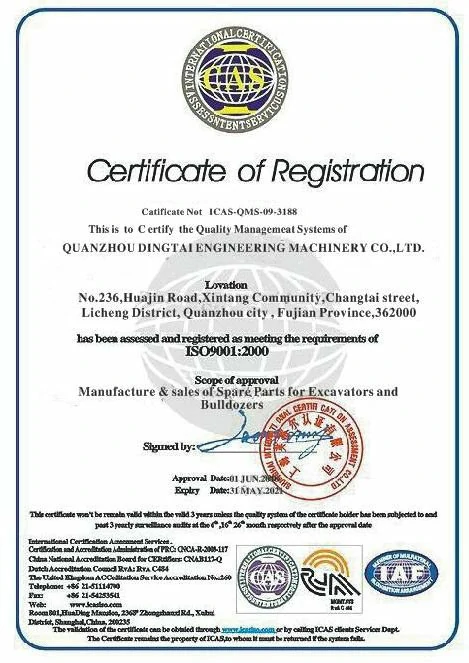
8. How ISO9001 impacts product quality and supplier reliability. ↩︎